

Chest Dip On Straight Bar vs Push-up: Complete Comparison Guide
Chest Dip On Straight Bar vs Push-up — you already know both move your chest, but which one serves your goals faster? This guide walks you through biomechanics, muscle activation, equipment needs, technique cues, progressions, and injury risk so you can pick the right move. You’ll get clear recommendations for hypertrophy, strength, beginners, and home training, plus rep ranges and specific joint-angle cues to help you perform each exercise safely and efficiently.
Exercise Comparison
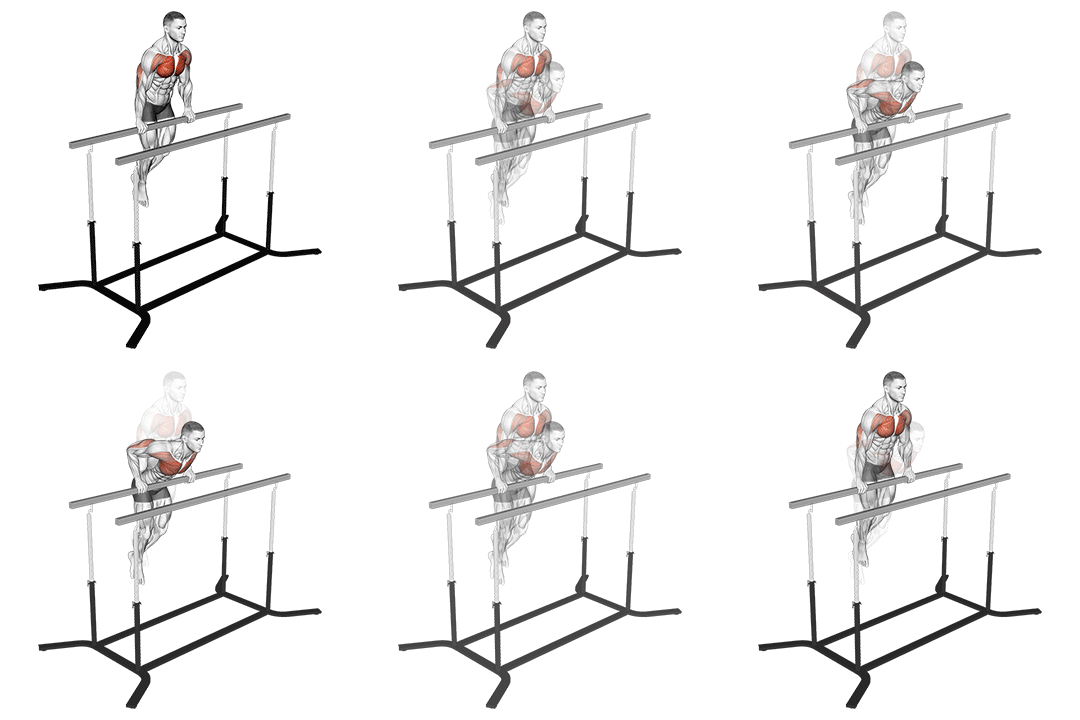
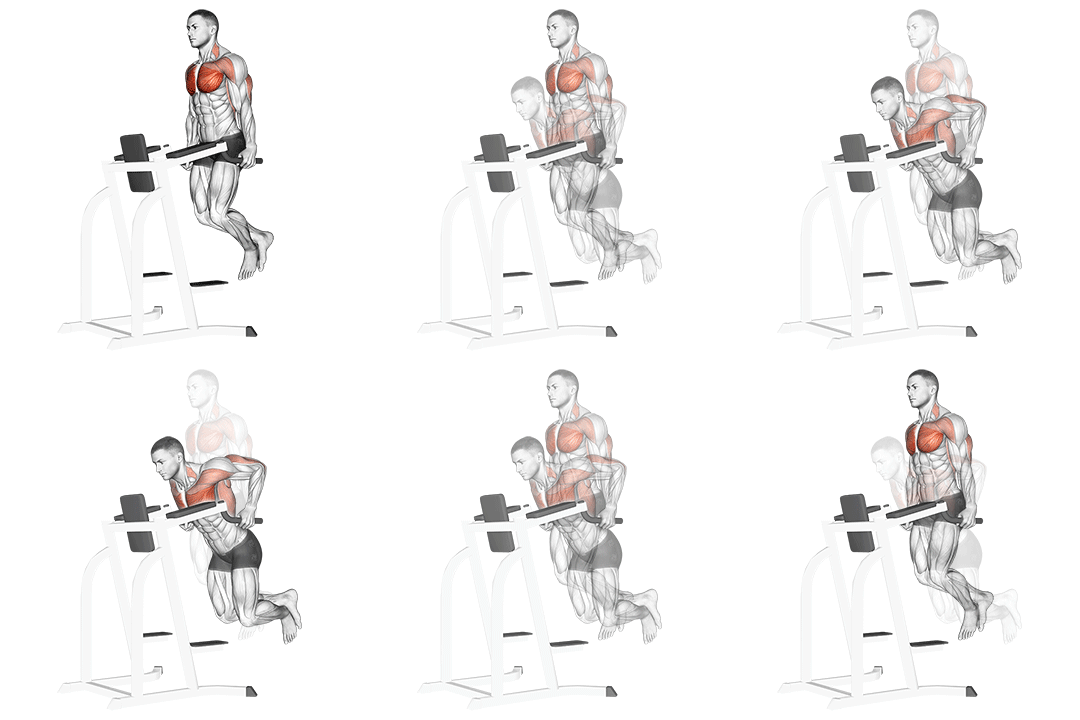
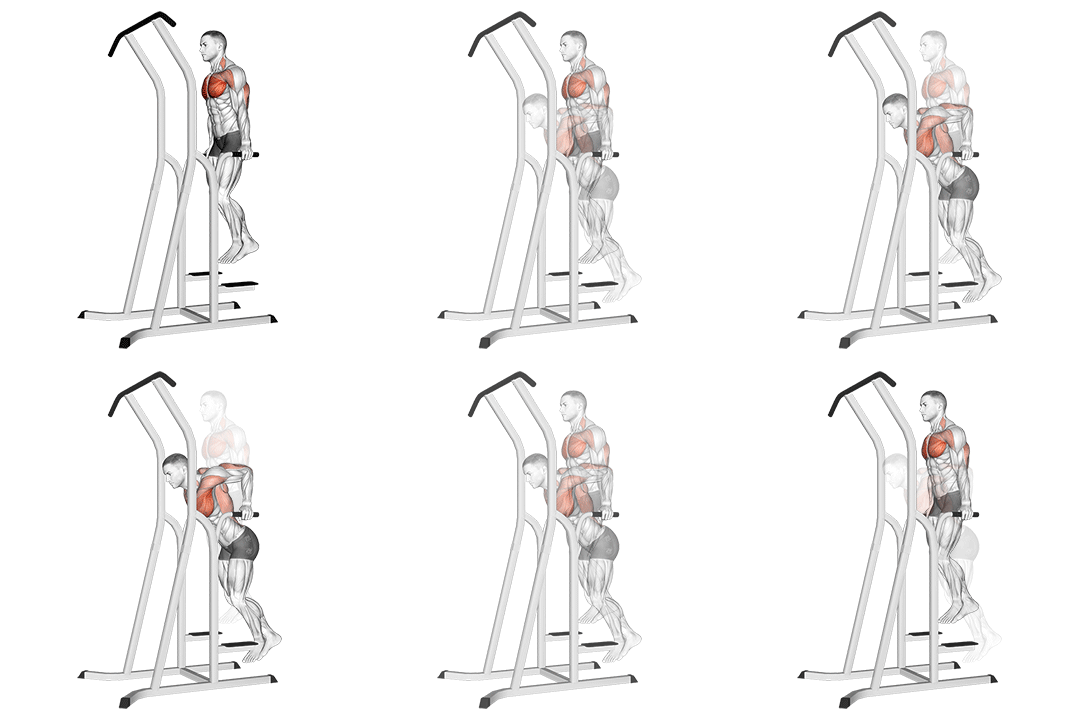
Chest Dip On Straight Bar
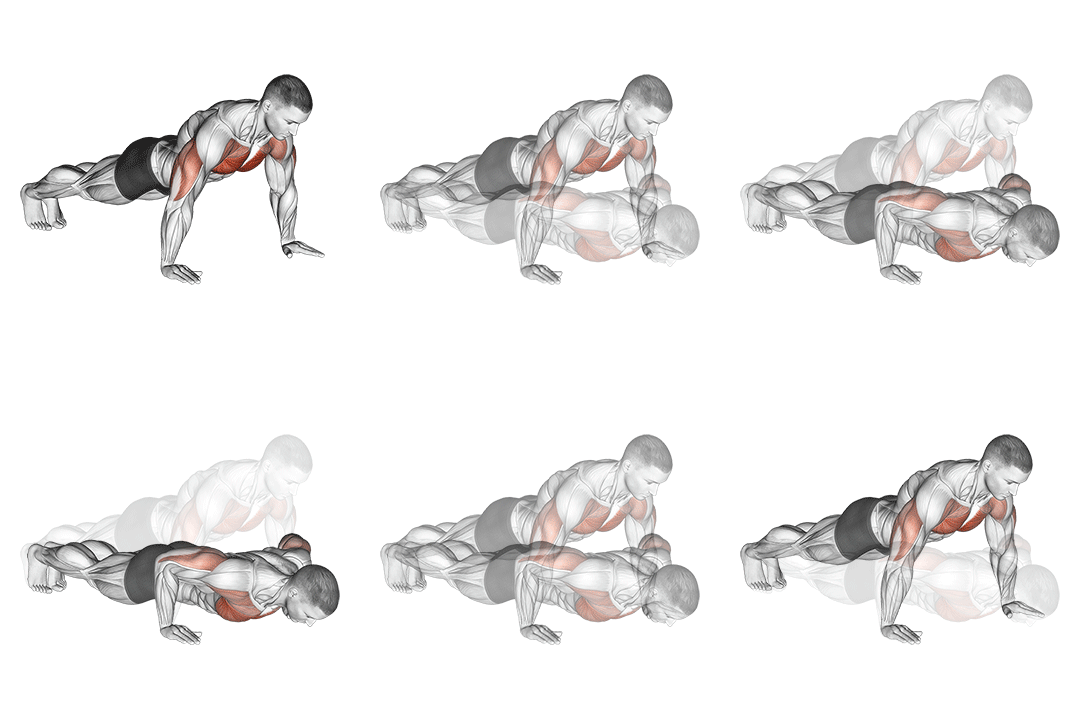
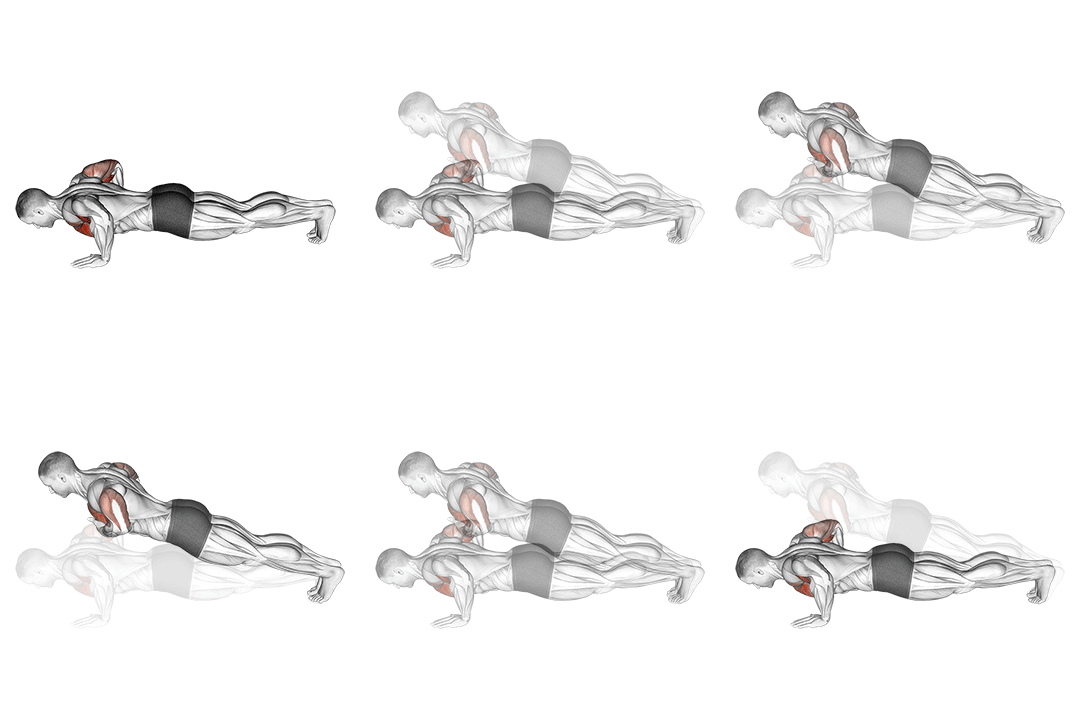
Push-up
Head-to-Head Comparison
| Attribute | Chest Dip On Straight Bar | Push-up |
|---|---|---|
| Target Muscle |
Pectorals
|
Pectorals
|
| Body Part |
Chest
|
Chest
|
| Equipment |
Body-weight
|
Body-weight
|
| Difficulty |
Intermediate
|
Intermediate
|
| Movement Type |
Compound
|
Compound
|
| Secondary Muscles |
2
|
3
|
Secondary Muscles Activated
Chest Dip On Straight Bar
Push-up
Visual Comparison
Overview
Chest Dip On Straight Bar vs Push-up — you already know both move your chest, but which one serves your goals faster? This guide walks you through biomechanics, muscle activation, equipment needs, technique cues, progressions, and injury risk so you can pick the right move. You’ll get clear recommendations for hypertrophy, strength, beginners, and home training, plus rep ranges and specific joint-angle cues to help you perform each exercise safely and efficiently.
Key Differences
- Both exercises target the Pectorals using Body-weight. The main differences are in their movement patterns and muscle activation angles.
Pros & Cons
Chest Dip On Straight Bar
+ Pros
- Greater peak pectoral tension from deep stretch and torso lean
- Easy to add progressive external load for strength (weighted dips)
- High transfer to pressing strength due to vertical loading component
- Compact, compound movement that also challenges triceps and shoulders
− Cons
- Requires bars or gym setup
- Higher shoulder stress—risk when taken too deep or with poor mobility
- Harder to scale for complete beginners without regressions
Push-up
+ Pros
- Zero-equipment and highly accessible anywhere
- Scalable with simple regressions (knees, incline) and progressions (decline, weighted vest)
- Lower shoulder shearing forces and safer learning curve
- Engages core and serratus anterior for stability and shoulder health
− Cons
- Harder to progressively overload with small weight increments
- Less peak pectoral stretch compared with deep dips
- Form breakdown (sagging hips, flared elbows) reduces effectiveness and can create low-back or shoulder strain
When Each Exercise Wins
Chest dips produce greater mechanical tension at longer muscle lengths due to deeper shoulder extension and chest stretch, which favors hypertrophy when performed in 6–12 rep ranges with good control.
Dips allow straightforward external loading and low-rep heavy sets (3–6 reps) that maximize force production and neuromuscular strength adaptations in pressing muscles.
Push-ups are easier to learn and regress (knee/incline) to build scapular control, core stability, and pressing mechanics before progressing to more demanding dip variations.
Push-ups require no specialized equipment, offer numerous regressions and progressions, and let you train chest effectively with just bodyweight or a simple elevation.
Frequently Asked Questions
Can I do both Chest Dip On Straight Bar and Push-up in the same workout?
Yes. Pair push-ups as a warm-up or stability-focused set (2–3 sets of 8–15) and follow with weighted or bodyweight dips for heavier strength work (3–5 sets of 4–8). Sequencing push-ups first primes scapular control and reduces risk in deeper dip reps.
Which exercise is better for beginners?
Push-ups are better for beginners because they teach core and scapular stability with easy regressions like knee or incline push-ups. Once you can hold a solid plank and perform 12–15 strict push-ups, start adding dip progressions if mobility and shoulder control are adequate.
How do the muscle activation patterns differ?
Push-ups keep the pecs near mid-range with constant horizontal force vectors and require anti-extension core work; dips lengthen the pecs more during descent and create a larger concentric drive from a stretched position, increasing mechanical tension. Dips also shift more load to triceps and anterior deltoids.
Can Push-up replace Chest Dip On Straight Bar?
Push-ups can substitute for dips for general chest development and conditioning, but they don’t fully replicate the deep stretch and progressive loading potential of weighted dips. If your goal is maximal strength or stretch-mediated hypertrophy, incorporate dips when you have the setup and shoulder readiness.
Expert Verdict
Use Chest Dips on a Straight Bar when your goal is maximal chest loading and strength—especially once you can control scapular movement and have adequate shoulder mobility. Dips excel for heavy, low-rep sets and produce a larger stretch-mediated stimulus for hypertrophy. Use Push-ups when you need accessibility, safer shoulder mechanics, and core engagement—ideal for beginners, high-volume hypertrophy (8–20 reps), and home routines. For balanced development, start with push-up progressions to build stability, then add dips or weighted variations to increase mechanical tension and overload the pectorals.
Also Compare
More comparisons with Chest Dip On Straight Bar
Compare More Exercises
Use our free comparison tool to analyze any two exercises head-to-head.
Compare Exercises