

Chest Dip vs Chest Dip (on Dip-pull-up Cage): Complete Comparison Guide
Chest Dip vs Chest Dip (on Dip-pull-up Cage) — if you want a stronger, fuller chest you need to know the subtle differences. I’ll walk you through how each variation loads the pectorals, how torso angle and bar spacing change muscle recruitment, what equipment you need, and clear technique cues you can use today. You’ll get rep-range and progression advice (3–6 for strength, 6–12 for hypertrophy), safety notes on shoulder ROM, and a decisive recommendation for your goal whether that’s size, strength, or learning the movement safely.
Exercise Comparison
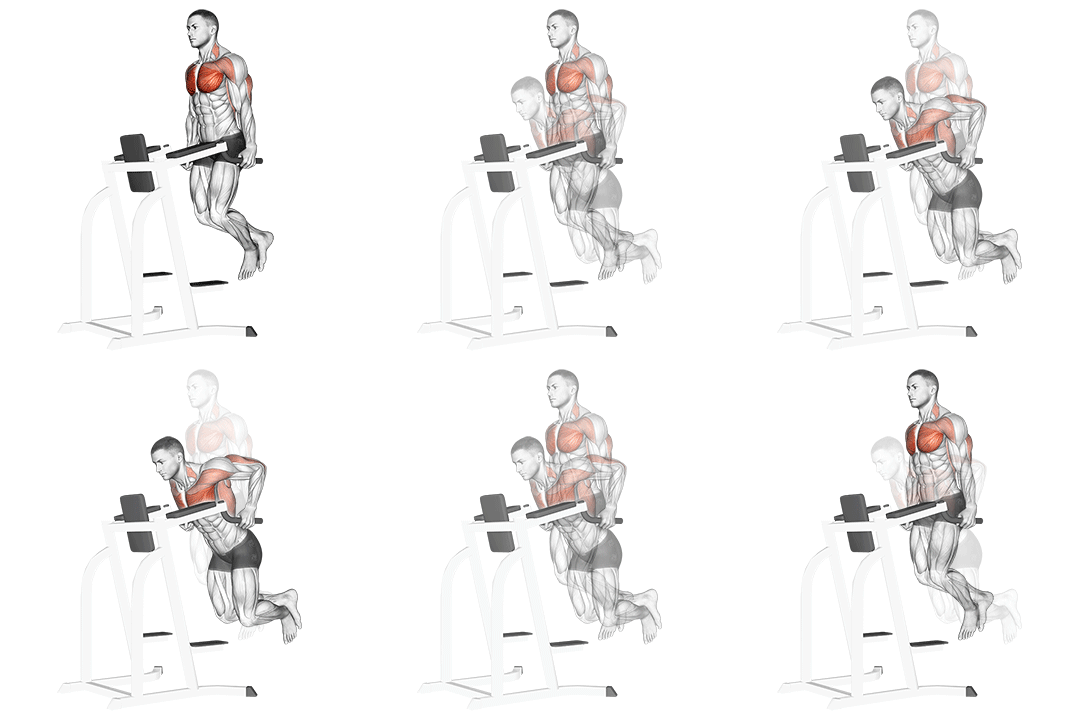
Chest Dip
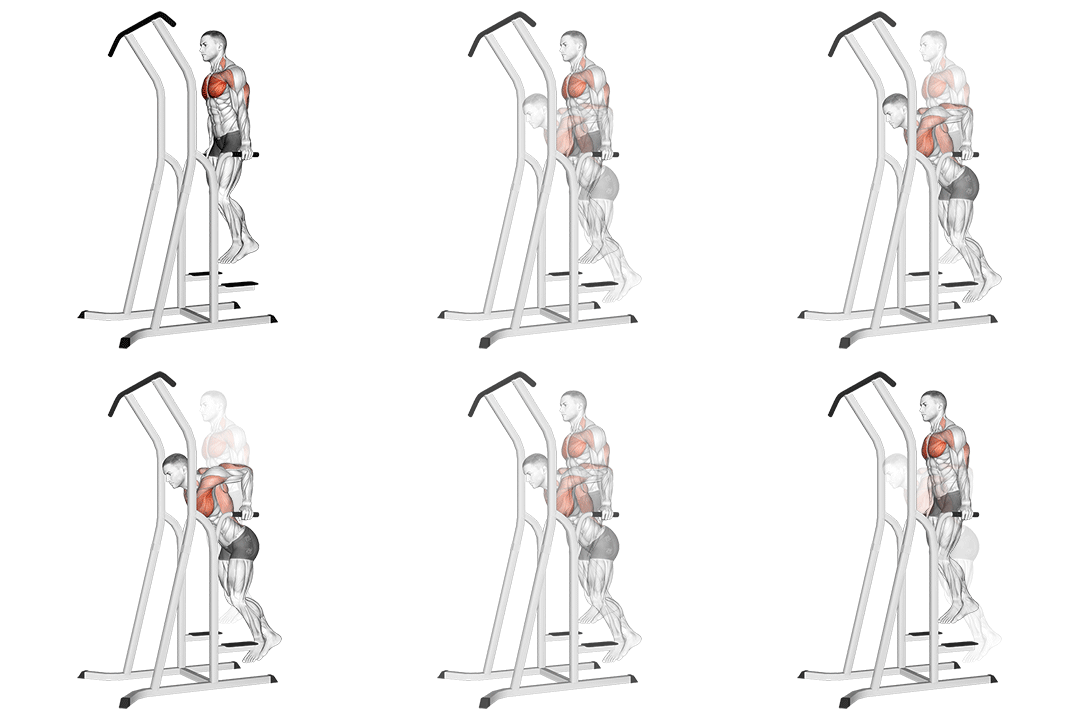
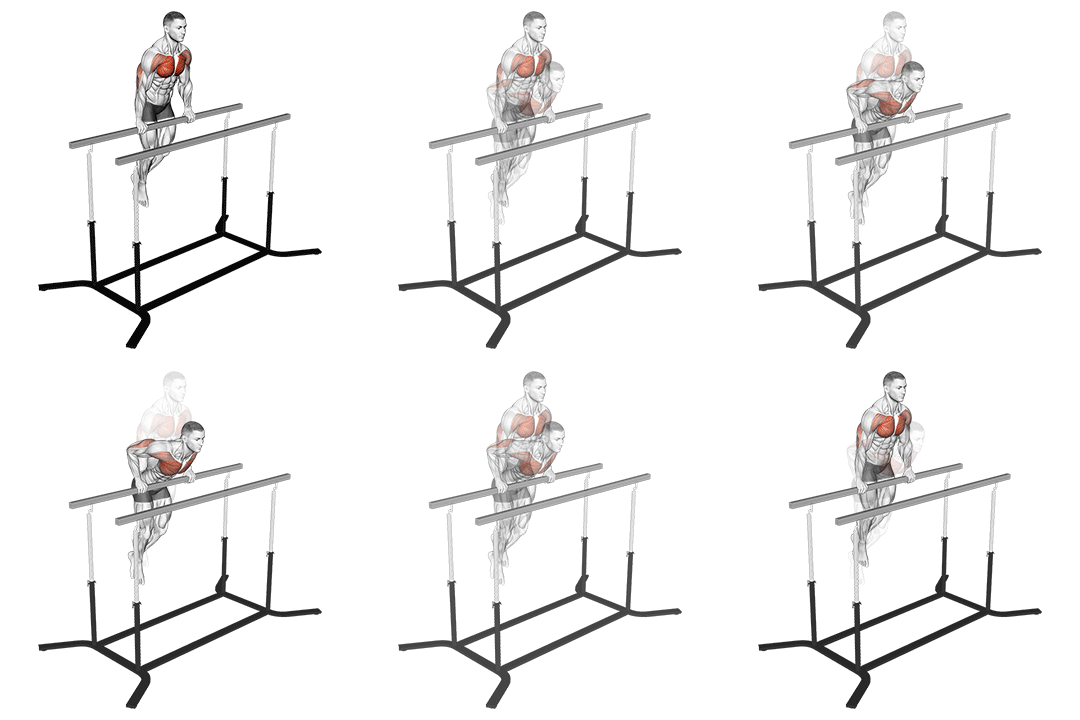
Chest Dip (on Dip-pull-up Cage)
Head-to-Head Comparison
| Attribute | Chest Dip | Chest Dip (on Dip-pull-up Cage) |
|---|---|---|
| Target Muscle |
Pectorals
|
Pectorals
|
| Body Part |
Chest
|
Chest
|
| Equipment |
Body-weight
|
Body-weight
|
| Difficulty |
Advanced
|
Intermediate
|
| Movement Type |
Compound
|
Compound
|
| Secondary Muscles |
2
|
2
|
Secondary Muscles Activated
Chest Dip
Chest Dip (on Dip-pull-up Cage)
Visual Comparison
Overview
Chest Dip vs Chest Dip (on Dip-pull-up Cage) — if you want a stronger, fuller chest you need to know the subtle differences. I’ll walk you through how each variation loads the pectorals, how torso angle and bar spacing change muscle recruitment, what equipment you need, and clear technique cues you can use today. You’ll get rep-range and progression advice (3–6 for strength, 6–12 for hypertrophy), safety notes on shoulder ROM, and a decisive recommendation for your goal whether that’s size, strength, or learning the movement safely.
Key Differences
- Difficulty levels differ: Chest Dip is advanced, while Chest Dip (on Dip-pull-up Cage) is intermediate.
- Both exercises target the Pectorals using Body-weight. The main differences are in their movement patterns and muscle activation angles.
Pros & Cons
Chest Dip
+ Pros
- Greater pec stretch and a larger range of motion for hypertrophy
- Easier to overload with dip belts and weighted vests
- Stronger horizontal adduction vector for lower-pec emphasis
- Better for low-rep strength work and advanced overload techniques
− Cons
- Higher shoulder stress at end range for some lifters
- Requires more shoulder and core stability to control path
- Less forgiving for beginners and those with mobility limits
Chest Dip (on Dip-pull-up Cage)
+ Pros
- More accessible and stable set-up for most gyms and homes
- Easier learning curve with reduced instability
- Safer shoulder position for many lifters due to shallower ROM
- Simple to pair with assisted options (bands, step, spot)
− Cons
- Slightly reduced pec stretch and chest loading compared to wide bars
- Fixed handle spacing can limit individual elbow tracking
- Less challenging for advanced lifters without added load
When Each Exercise Wins
Standard Chest Dip allows a larger stretch at the pecs and a stronger horizontal adduction vector when you lean 20–30°, making it better for mechanical tension and muscle growth in the lower chest using 6–12 reps.
The standard setup accepts heavier external loads and deeper ROM, allowing you to use 3–6 rep ranges and progressive overload more effectively for maximal strength development.
The cage variation stabilizes your path, limits excessive shoulder extension, and pairs easily with assisted regressions (bands, step-ups), so you can build technique and strength safely.
Many home power towers or multi-stations include dip handles; the fixed, compact setup and compatibility with band assistance make the cage option more practical for home use.
Frequently Asked Questions
Can I do both Chest Dip and Chest Dip (on Dip-pull-up Cage) in the same workout?
Yes. Start with the version you prioritize (usually standard Chest Dip for heavy work) and use the cage variation later as a volume or technique set. Keep total dip volume in a sensible range (10–30 hard sets/week) to avoid shoulder overload.
Which exercise is better for beginners?
Chest Dip (on Dip-pull-up Cage) is better for beginners because it offers a more stable path and easier regressions like band assistance or feet-on-step variations to learn proper torso angle and scapular control.
How do the muscle activation patterns differ?
The main difference is force vector: a 20–30° forward lean increases horizontal adduction and pec loading, while a more upright cage position shifts load toward vertical extension and the triceps. Scapular position also changes end-range mechanics and length-tension on the pecs.
Can Chest Dip (on Dip-pull-up Cage) replace Chest Dip?
It can replace it for beginners or safety-focused programs, but advanced lifters will lose some stretch and direct pec stimulus. If your goal is heavy overload and full ROM hypertrophy, keep the standard Chest Dip in your program when safe.
Expert Verdict
Use standard Chest Dip when you want maximal chest loading and have the mobility and shoulder health to control a deeper range with a 20–30° forward lean. It’s the better choice for advanced lifters chasing strength (3–6 reps) or hypertrophy (6–12 reps) via added load and full stretch. Choose Chest Dip (on Dip-pull-up Cage) if you’re newer, rehabbing, or training at home where a stable, more upright setup and assisted progressions speed learning. Either way keep elbows ~30° from the torso, descend to around 90° elbow flexion, brace your core, and prioritize scapular control to protect the shoulder.
Also Compare
More comparisons with Chest Dip
More comparisons with Chest Dip (on Dip-pull-up Cage)
Compare More Exercises
Use our free comparison tool to analyze any two exercises head-to-head.
Compare Exercises