

Chest Dip vs Chest Dip On Straight Bar: Complete Comparison Guide
Chest Dip vs Chest Dip On Straight Bar — if you want a stronger, thicker chest you should know the trade-offs. I’ll walk you through technique cues, muscle activation differences, equipment needs, and who should pick which variation. You’ll learn specific angles (aim for a 20–30° forward lean for chest emphasis), rep ranges (6–12 for strength, 8–20 for hypertrophy), and how each movement loads the pectoralis major differently. Read on and you’ll get clear, practical advice so you can pick the workhorse move for your program.
Exercise Comparison
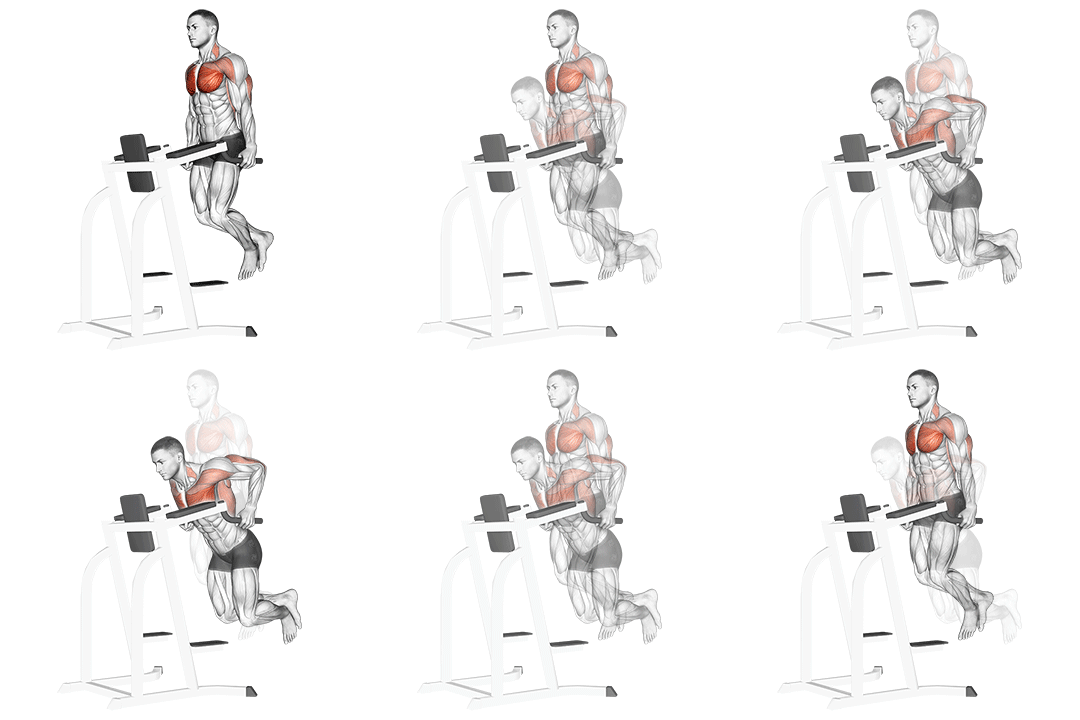
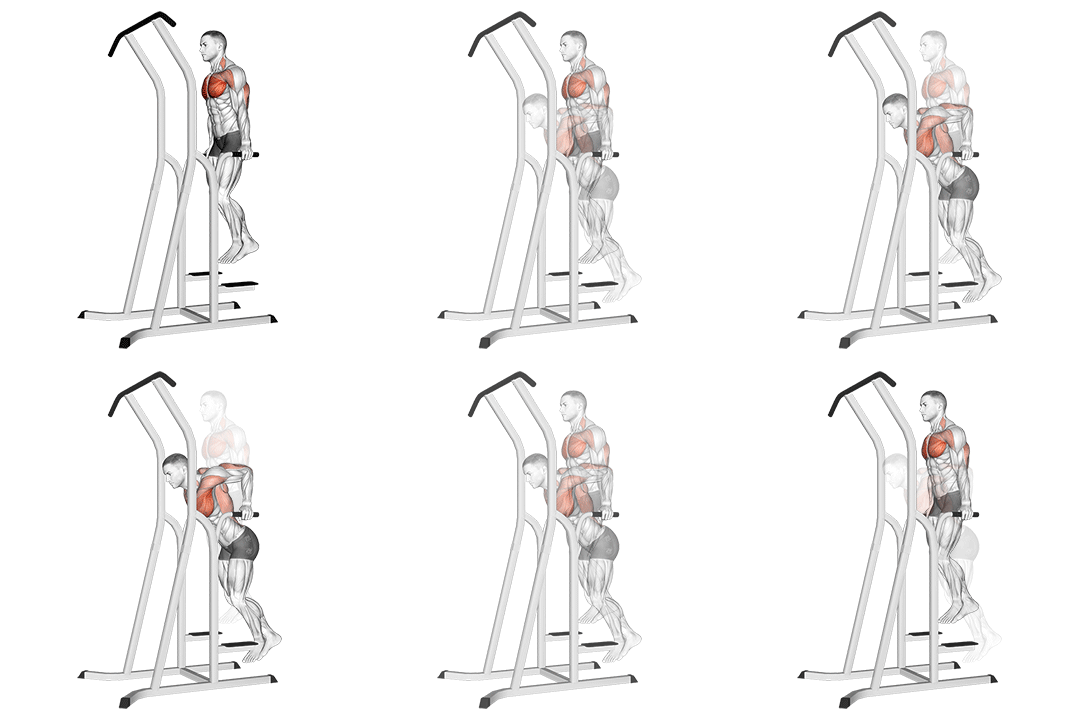
Chest Dip
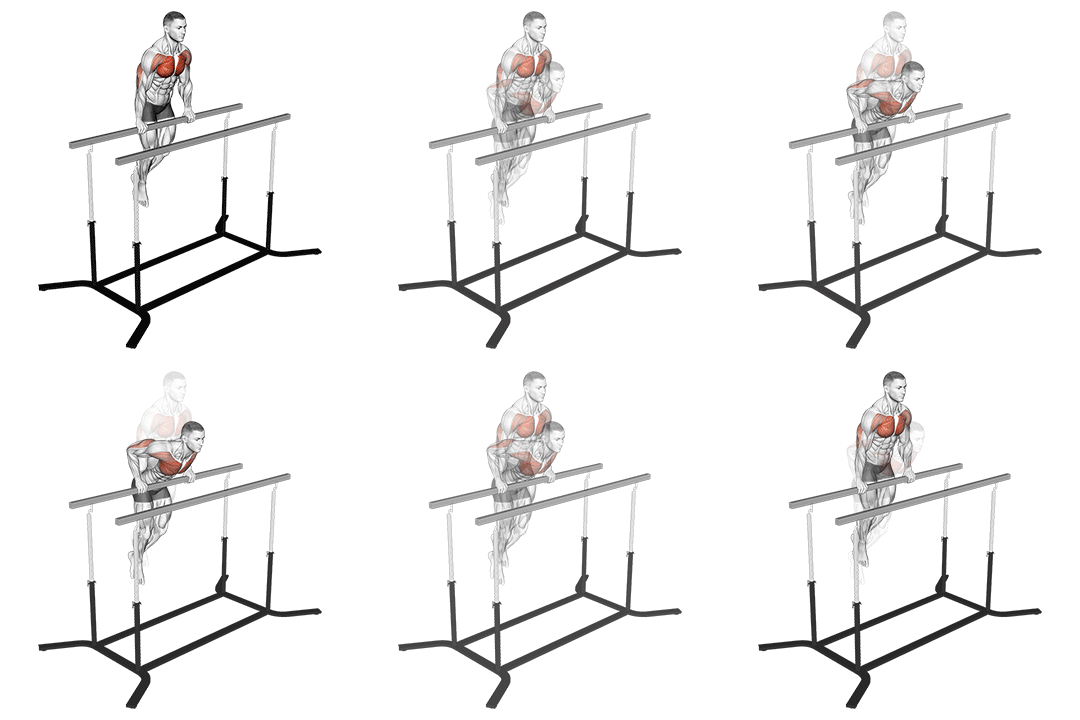
Chest Dip On Straight Bar
Head-to-Head Comparison
| Attribute | Chest Dip | Chest Dip On Straight Bar |
|---|---|---|
| Target Muscle |
Pectorals
|
Pectorals
|
| Body Part |
Chest
|
Chest
|
| Equipment |
Body-weight
|
Body-weight
|
| Difficulty |
Advanced
|
Intermediate
|
| Movement Type |
Compound
|
Compound
|
| Secondary Muscles |
2
|
2
|
Secondary Muscles Activated
Chest Dip
Chest Dip On Straight Bar
Visual Comparison
Overview
Chest Dip vs Chest Dip On Straight Bar — if you want a stronger, thicker chest you should know the trade-offs. I’ll walk you through technique cues, muscle activation differences, equipment needs, and who should pick which variation. You’ll learn specific angles (aim for a 20–30° forward lean for chest emphasis), rep ranges (6–12 for strength, 8–20 for hypertrophy), and how each movement loads the pectoralis major differently. Read on and you’ll get clear, practical advice so you can pick the workhorse move for your program.
Key Differences
- Difficulty levels differ: Chest Dip is advanced, while Chest Dip On Straight Bar is intermediate.
- Both exercises target the Pectorals using Body-weight. The main differences are in their movement patterns and muscle activation angles.
Pros & Cons
Chest Dip
+ Pros
- Greater pec stretch and lengthening stimulus for hypertrophy
- Easier to add heavy external load (dip belt) for strength progression
- Stronger horizontal force vector that targets lower-pectoral fibers
- High carryover to bench press lockout and pressing strength
− Cons
- Higher demand on shoulder mobility and scapular control
- Requires a dip station or parallel bars
- Increased risk of anterior shoulder stress if you go too deep
Chest Dip On Straight Bar
+ Pros
- More accessible—can use a standard pull-up or straight bar
- Shorter ROM makes it easier for intermediate trainees and rehab
- Easier to scale with bands and negatives
- Often less peak anterior shoulder stress for people with limited mobility
− Cons
- Slightly less peak pec activation compared to parallel-bar dips
- Harder to load progressively with heavy weights ergonomically
- Can shift emphasis to triceps and anterior delts if torso is too upright
When Each Exercise Wins
Parallel-bar chest dips allow a deeper eccentric stretch and a larger pec moment arm, producing stronger length-tension stimuli key for hypertrophy. You can also progressively overload easily with a dip belt in the 6–12 rep range.
Chest Dips permit heavier external loading and longer leverages that transfer to pressing strength. Use low-rep sets (3–6) with added weight and controlled 2–3 second eccentrics for maximal strength carryover.
Straight-bar dips have a shorter ROM and are easier to scale with bands or eccentric-only reps. They let you build scapular and shoulder stability before advancing to deeper parallel dips.
A straight bar or pull-up bar is more likely to be available at home than parallel dip bars. You can use band assistance, bench setups, or a low bar to replicate the movement safely.
Frequently Asked Questions
Can I do both Chest Dip and Chest Dip On Straight Bar in the same workout?
Yes. Use the straight-bar variation as a warm-up or volume work (3–4 sets of 8–15) and finish with heavier parallel-bar chest dips for strength (3–6 sets of 4–8 with added load). Keep total shoulder volume reasonable to avoid overuse.
Which exercise is better for beginners?
Chest Dip On Straight Bar is better for beginners because of its shorter ROM and easy scaling with bands or negatives. It builds scapular control and triceps strength before moving to deeper parallel-bar dips.
How do the muscle activation patterns differ?
Parallel-bar dips produce greater pec lengthening and peak activation during the bottom-to-mid range due to increased horizontal adduction. Straight-bar dips shorten the pec’s working range and increase relative triceps and anterior deltoid recruitment, shifting peak torque earlier in the concentric.
Can Chest Dip On Straight Bar replace Chest Dip?
Yes for many trainees—straight-bar dips can serve as an effective substitute when dip stations aren’t available or when you need lower shoulder stress. For maximal hypertrophy or heavy loading, parallel-bar chest dips remain the preferred option.
Expert Verdict
If your primary goal is chest hypertrophy or maximal pressing strength, prioritize Chest Dips on parallel bars because they create a larger pec stretch, stronger horizontal adduction moment, and clearer paths for weighted progression. Aim for 6–12 reps with a forward lean of 20–30° and controlled 2–4 second eccentrics. If you’re intermediate, training at home, rehabbing shoulders, or just starting to build dip-specific strength, choose Chest Dip On Straight Bar for its accessibility, shorter ROM, and easier scaling with bands and negatives. Ideally, cycle both: use straight-bar variations to build volume and technique, then progress to parallel-bar dips for heavy overload and targeted pec stimulation.
Also Compare
More comparisons with Chest Dip
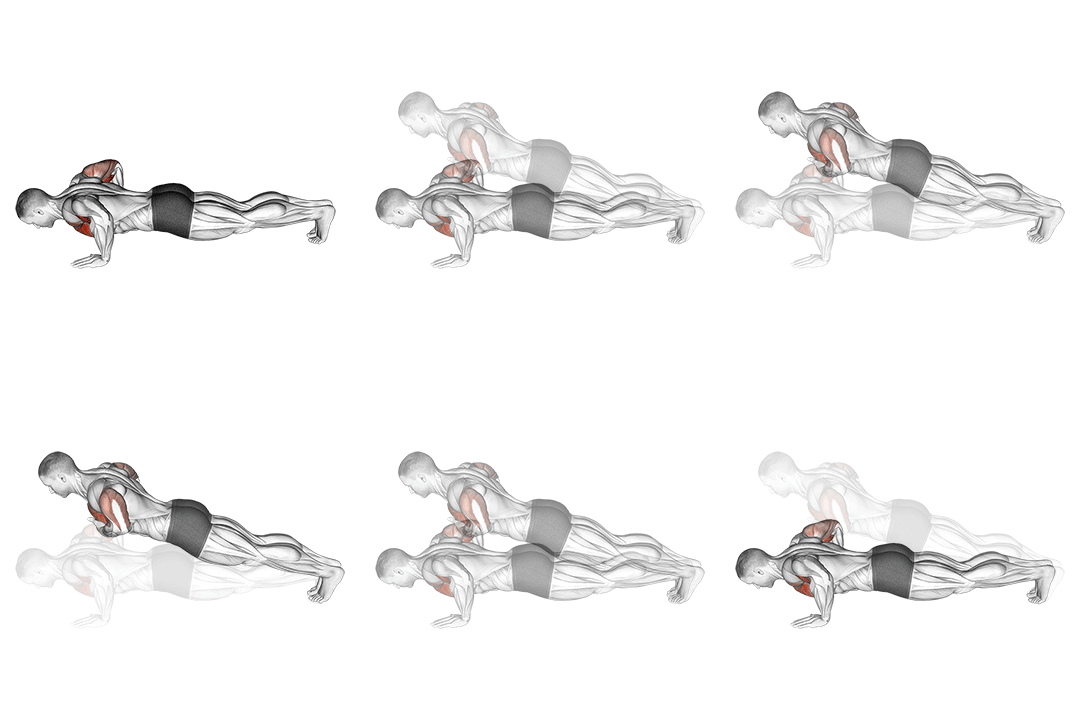
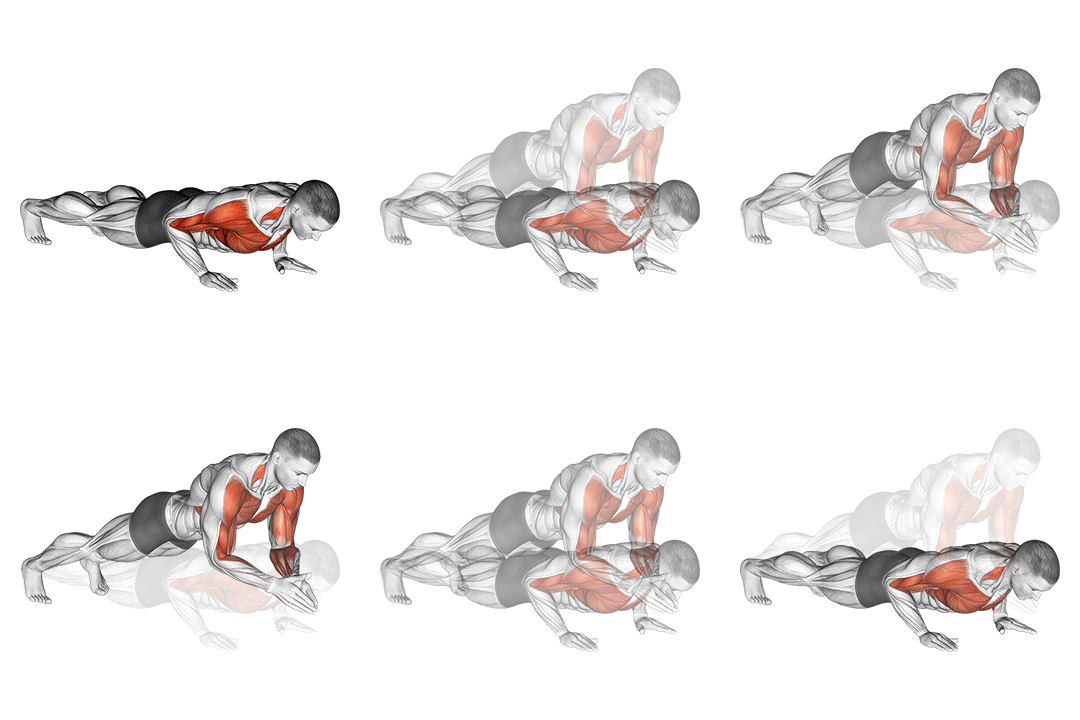
More comparisons with Chest Dip On Straight Bar
Compare More Exercises
Use our free comparison tool to analyze any two exercises head-to-head.
Compare Exercises