

Chest Dip vs Chest Tap Push-up (male): Complete Comparison Guide
Chest Dip vs Chest Tap Push-up (male) — you’re comparing two advanced bodyweight chest builders that both target the pectorals, triceps, and shoulders. In this guide you’ll get a clear breakdown of how each movement loads the chest (including force vectors and length-tension behavior), what equipment you need, specific technique cues, rep ranges for strength and hypertrophy, progression options, and relative injury risks. Read on so you can pick the drill that matches your goals and training environment, or learn how to use both effectively in a program.
Exercise Comparison
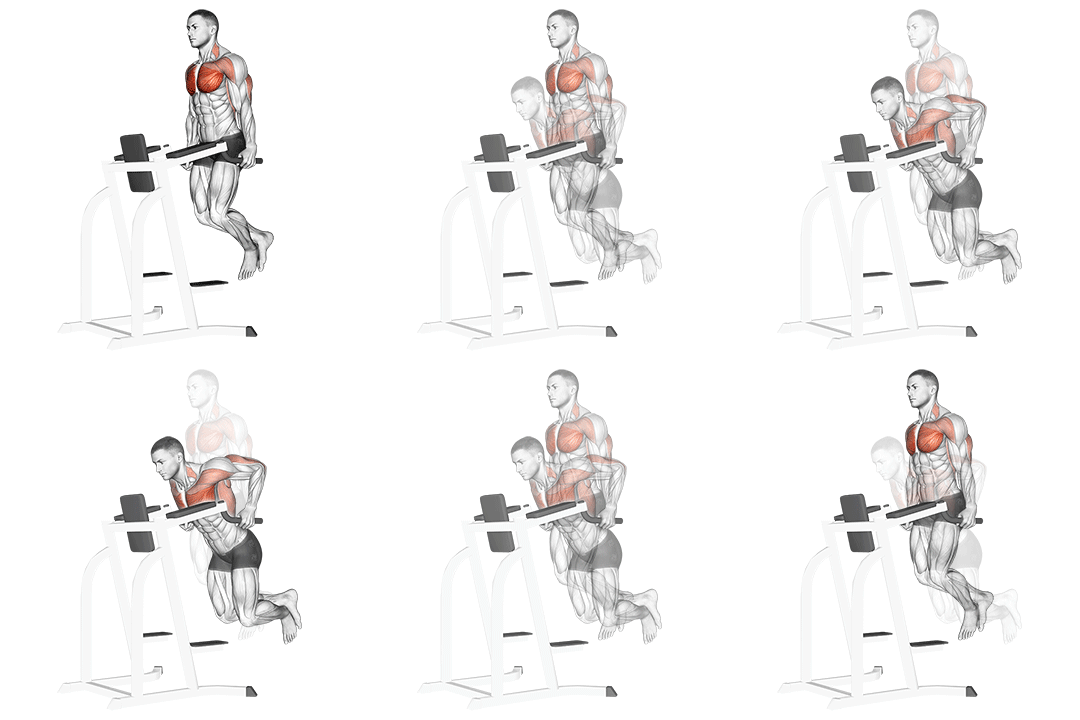
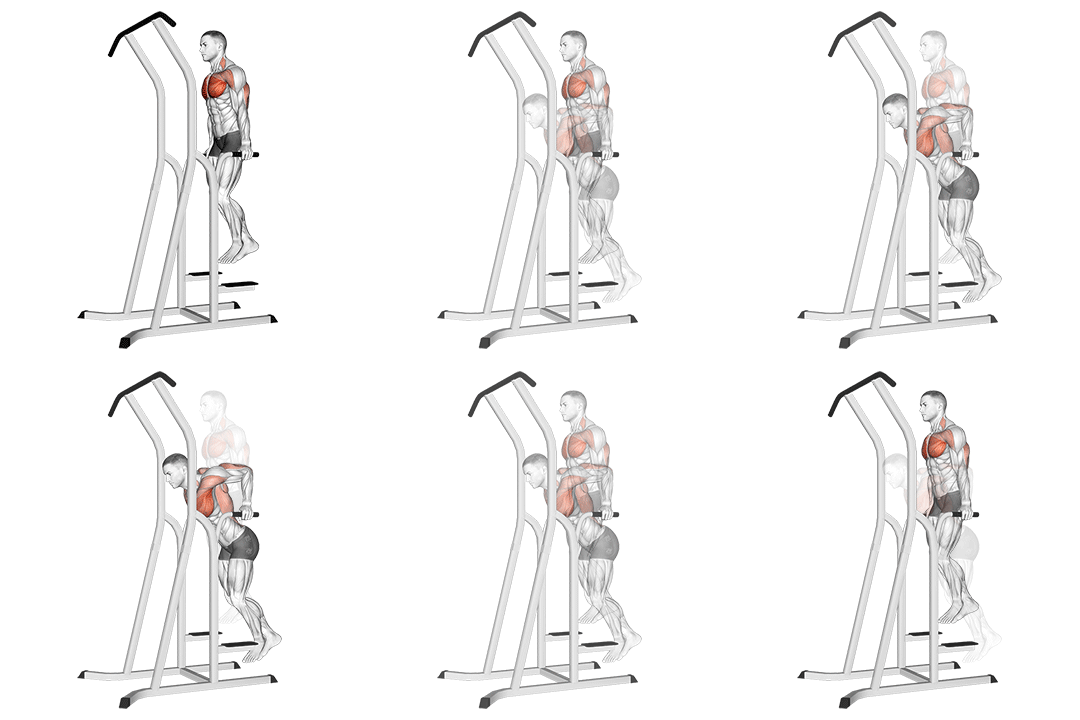
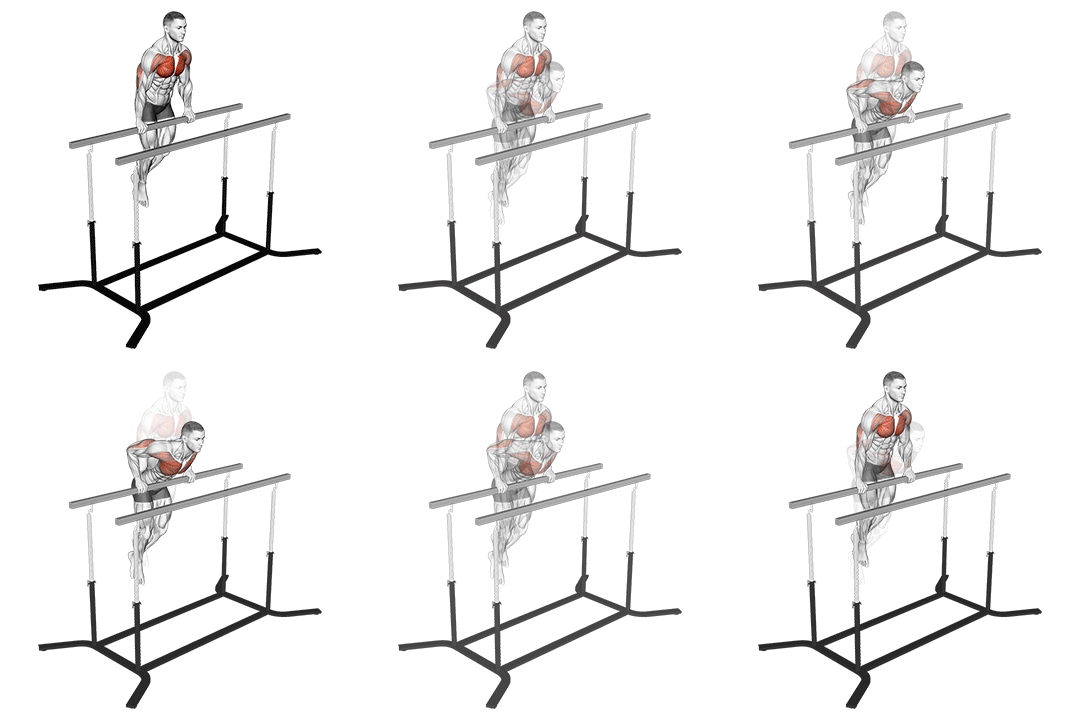
Chest Dip
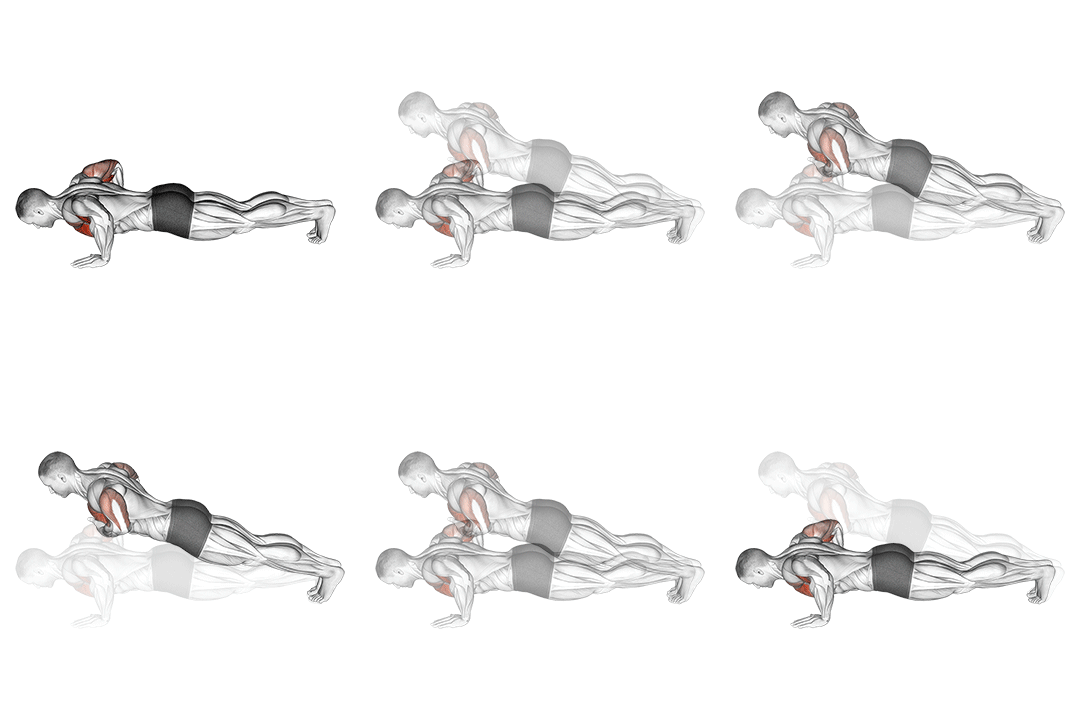
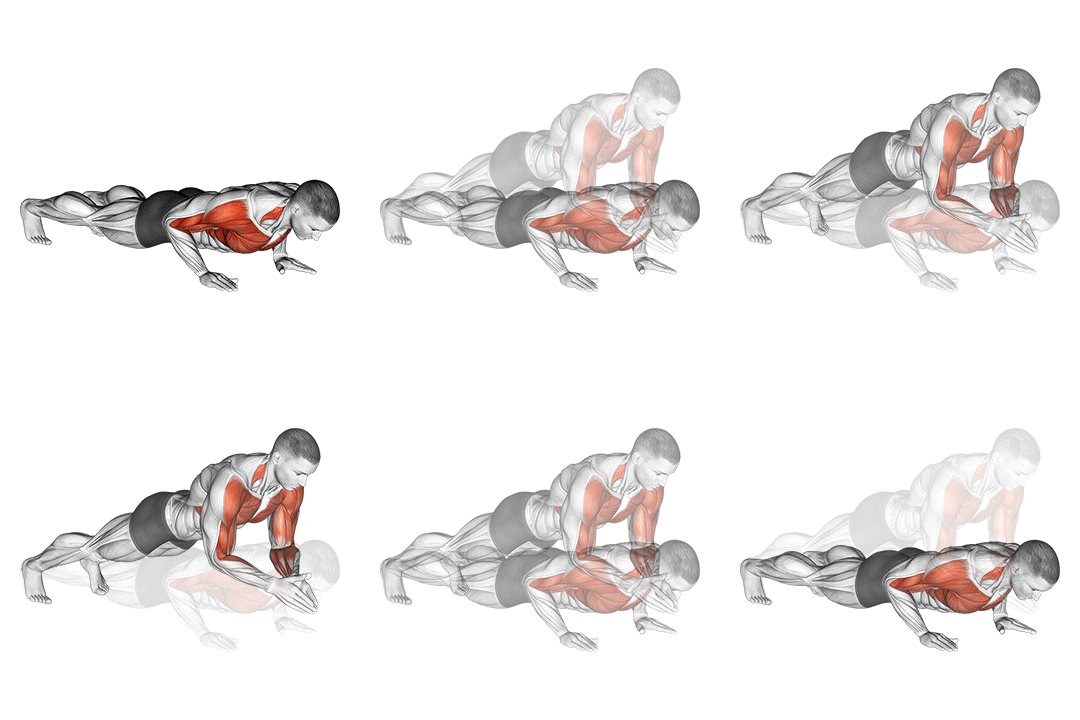
Chest Tap Push-up (male)
Head-to-Head Comparison
| Attribute | Chest Dip | Chest Tap Push-up (male) |
|---|---|---|
| Target Muscle |
Pectorals
|
Pectorals
|
| Body Part |
Chest
|
Chest
|
| Equipment |
Body-weight
|
Body-weight
|
| Difficulty |
Advanced
|
Advanced
|
| Movement Type |
Compound
|
Compound
|
| Secondary Muscles |
2
|
2
|
Secondary Muscles Activated
Chest Dip
Chest Tap Push-up (male)
Visual Comparison
Overview
Chest Dip vs Chest Tap Push-up (male) — you’re comparing two advanced bodyweight chest builders that both target the pectorals, triceps, and shoulders. In this guide you’ll get a clear breakdown of how each movement loads the chest (including force vectors and length-tension behavior), what equipment you need, specific technique cues, rep ranges for strength and hypertrophy, progression options, and relative injury risks. Read on so you can pick the drill that matches your goals and training environment, or learn how to use both effectively in a program.
Key Differences
- Both exercises target the Pectorals using Body-weight. The main differences are in their movement patterns and muscle activation angles.
Pros & Cons
Chest Dip
+ Pros
- High mechanical tension on lower pectorals due to deep shoulder extension
- Easy to add external load for progressive overload (weighted belt/vest)
- Strong carryover to vertical pushing strength and real-world pushing
- Long eccentric and range-of-motion that favor hypertrophy when performed with control
− Cons
- Requires dip bars or rings and space for full range of motion
- Higher shoulder impingement risk if you lack mobility or scapular control
- Harder to regress; novices may struggle to build sufficient base strength
Chest Tap Push-up (male)
+ Pros
- Minimal equipment — can be done anywhere on the floor
- Explosive concentric force improves power and fast-twitch recruitment
- Easier to scale with regressions (incline, slow eccentrics) and progressions (weighted vest, unilateral)
- Increases scapular stability and core tension due to plank position
− Cons
- Lower sustained time under tension than dips for the same rep count
- Higher peak loads on wrists and potential for pec strain when done explosively
- Less straightforward for heavy linear overload compared with weighted dips
When Each Exercise Wins
Chest Dips create a large stretch at the pecs and allow precise progressive overload with added weight; do 6–12 controlled reps with a 2–3 second eccentric and pause near the bottom to maximize tension and muscle growth.
Weighted dips load the vertical pressing pattern effectively for raw pressing strength; use 4–6 heavy reps or sets of 6–8 with added weight to build maximal force production.
Push-up variations are simpler to regress (incline, knees, slow eccentrics) and teach core and scapular control before adding unilateral or explosive elements, making them safer for novices.
No special equipment is needed and you can modify intensity with tempo, elevation, or a backpack weight, so tap push-ups are the practical choice for training at home.
Frequently Asked Questions
Can I do both Chest Dip and Chest Tap Push-up (male) in the same workout?
Yes. Pair them strategically: use dips as your heavy compound for 4–8 working sets, then finish with 2–4 sets of explosive chest tap push-ups for power and hypertrophy density. Monitor fatigue so quality concentric power on tap push-ups doesn’t suffer after heavy dips.
Which exercise is better for beginners?
Chest Tap Push-ups are better for beginners because they’re easier to regress (incline, knees) and teach scapular stability and core tension. Dips require a base level of vertical pressing strength and shoulder mobility before loading heavily.
How do the muscle activation patterns differ?
Dips favor a long eccentric with greater pec stretch and higher triceps torque due to a vertical force vector, increasing time under tension. Chest tap push-ups create short eccentrics and explosive concentric peaks with greater demand on scapular stabilizers and unilateral control during the tap.
Can Chest Tap Push-up (male) replace Chest Dip?
It can fill the role in many programs, especially where equipment is limited or you need power work, but it won’t replicate the heavy, loaded vertical stress of weighted dips. If your goal is maximal hypertrophy and you can access bars, keep dips in your routine.
Expert Verdict
Choose Chest Dips when your priority is maximum mechanical tension, lower-pectoral stretch, and straightforward progressive overload — especially if you can perform dips with a 30–45° torso lean and maintain scapular control through 90°+ elbow flexion. Pick Chest Tap Push-ups if you need a highly accessible, scalable movement that trains explosive concentric force, scapular stability, and core tension with only floor space. For balanced development, cycle both: emphasize weighted dips for 6–12 rep hypertrophy blocks and add chest tap push-ups for power-focused sessions or conditioning. Always warm up the shoulders, limit dip depth if you have mobility limits, and progress explosiveness gradually.
Also Compare
More comparisons with Chest Dip
More comparisons with Chest Tap Push-up (male)
Compare More Exercises
Use our free comparison tool to analyze any two exercises head-to-head.
Compare Exercises