

Chest Dip vs Clap Push Up: Complete Comparison Guide
Chest Dip vs Clap Push Up — you’re choosing between two advanced, bodyweight chest staples. I’ll walk you through how each loads the pectorals, which secondary muscles take the hit, the equipment and mobility you need, injury considerations, and clear programming recommendations (rep ranges, progressions, and technique cues). By the end you’ll know which exercise to use for muscle growth, strength, power, or at-home training and how to modify each movement to match your current ability.
Exercise Comparison
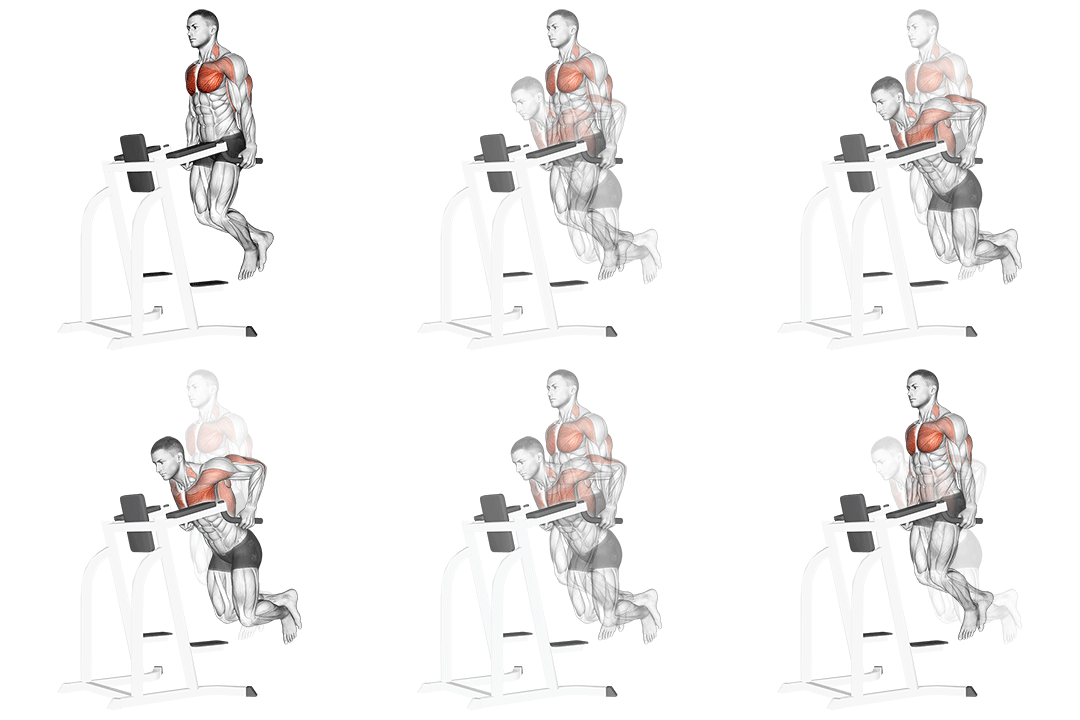
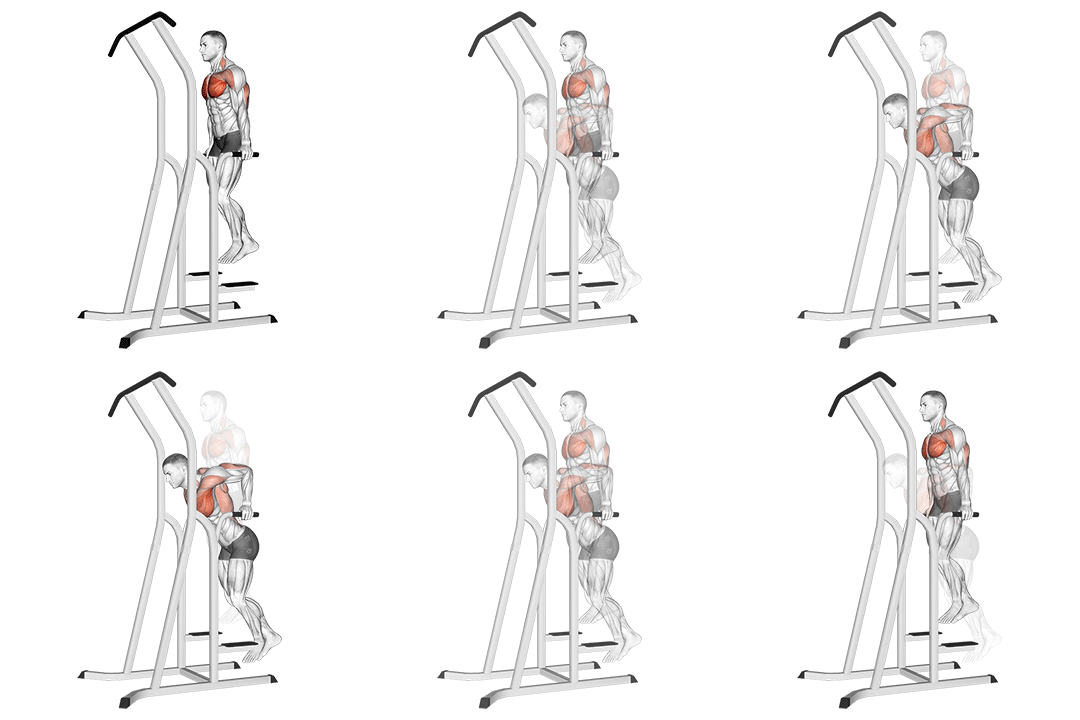
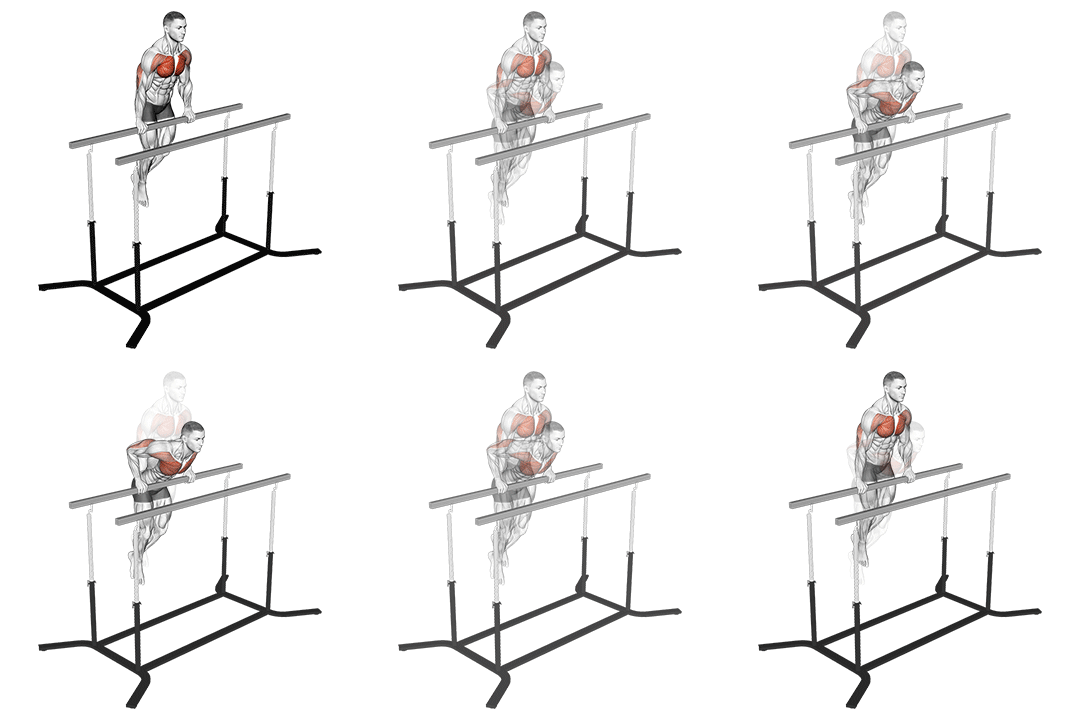
Chest Dip
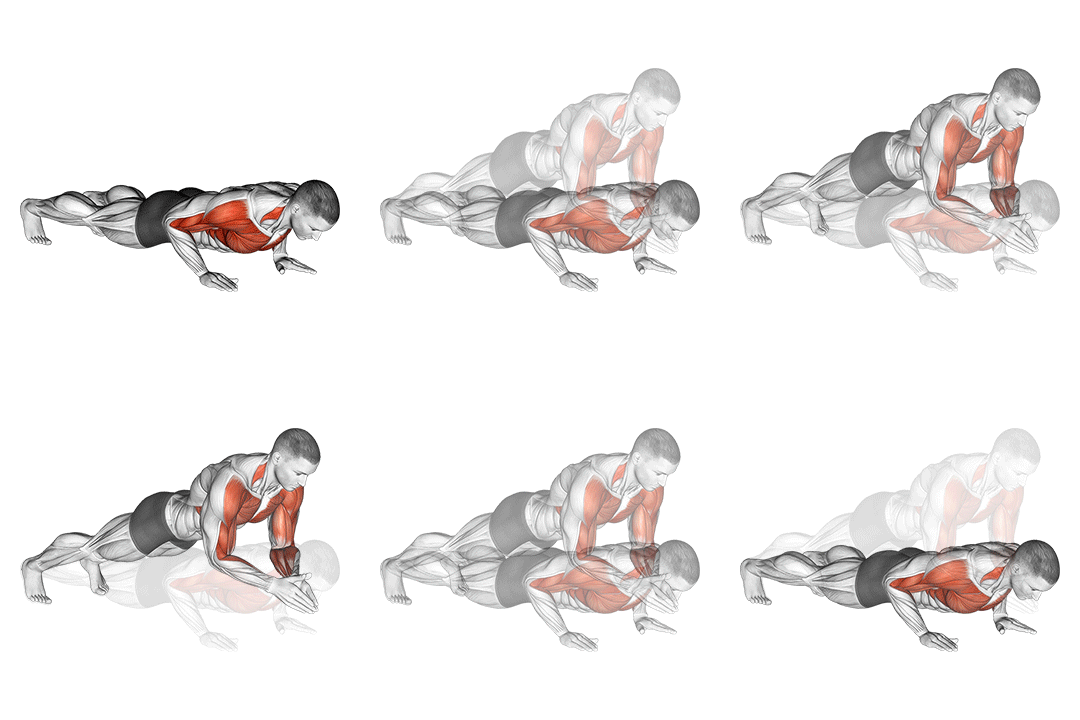
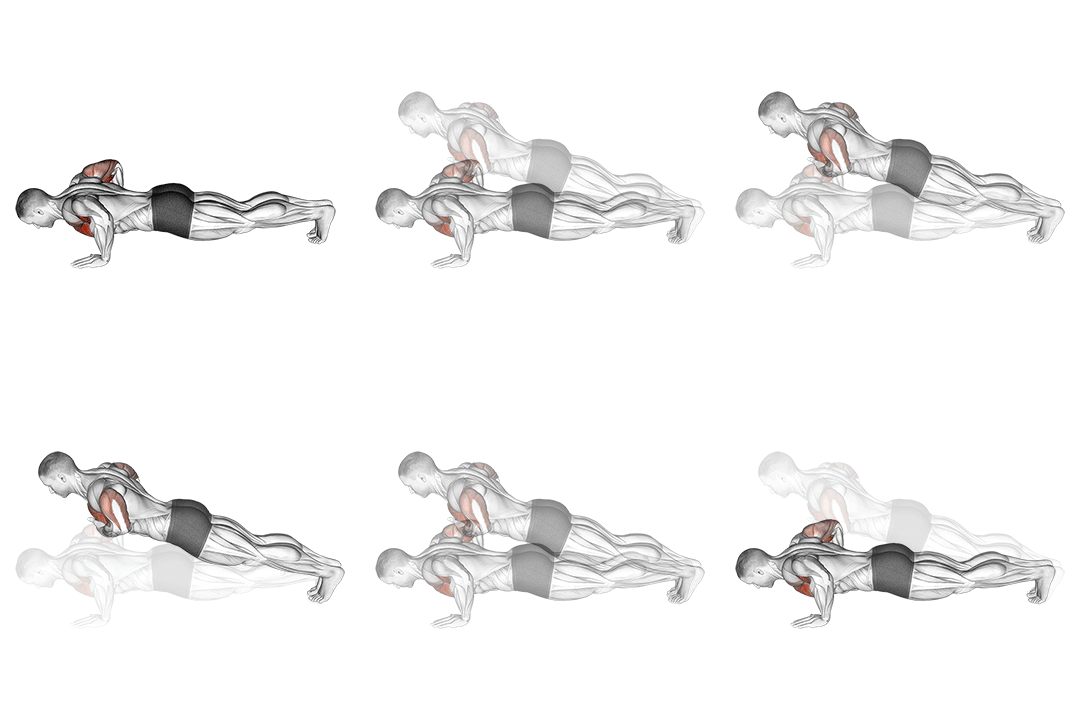
Clap Push Up
Head-to-Head Comparison
| Attribute | Chest Dip | Clap Push Up |
|---|---|---|
| Target Muscle |
Pectorals
|
Pectorals
|
| Body Part |
Chest
|
Chest
|
| Equipment |
Body-weight
|
Body-weight
|
| Difficulty |
Advanced
|
Advanced
|
| Movement Type |
Compound
|
Compound
|
| Secondary Muscles |
2
|
2
|
Secondary Muscles Activated
Chest Dip
Clap Push Up
Visual Comparison
Overview
Chest Dip vs Clap Push Up — you’re choosing between two advanced, bodyweight chest staples. I’ll walk you through how each loads the pectorals, which secondary muscles take the hit, the equipment and mobility you need, injury considerations, and clear programming recommendations (rep ranges, progressions, and technique cues). By the end you’ll know which exercise to use for muscle growth, strength, power, or at-home training and how to modify each movement to match your current ability.
Key Differences
- Both exercises target the Pectorals using Body-weight. The main differences are in their movement patterns and muscle activation angles.
Pros & Cons
Chest Dip
+ Pros
- Scalable with external load for maximal mechanical tension
- Strong lower-pec emphasis when leaning forward (20–40° torso tilt)
- Excellent for building pressing strength and triceps size
- Maintains high time-under-tension across long ROM
− Cons
- High shoulder stress at deep ROM (risk if mobility/stability lacking)
- Requires dip bars or rings — less home-friendly
- Harder to learn for people without baseline upper-body strength
Clap Push Up
+ Pros
- Minimal equipment — great for home and circuit work
- Develops power and rate-of-force development via stretch-shortening
- Easily programmed for conditioning or plyometric training
- Can be regressed or progressed (incline, deficit, single-arm)
− Cons
- Limited ability to add high maximal load for hypertrophy
- Requires good baseline push strength and plyometric control
- Higher acute impact on wrists/hands during landing
When Each Exercise Wins
Chest dips allow clear progressive overload (add 5–50+ lbs) and a long length-tension range when you descend past 90° shoulder flexion. Program 3–5 sets of 6–12 reps with controlled 2–3 second eccentrics to maximize time under tension.
Dips enable heavy loading and higher joint torque to build maximal pressing strength; use 3–6 rep sets with added weight to increase mechanical tension and neural adaptation.
Clap push-up variations can be regressed to incline, eccentric-only, or knee plyo patterns, making them easier to scale into. You can build base strength safely before moving to deep, loaded dips.
Clap push-ups require no bars and can be modified to fit small spaces and common equipment (mats, benches), making them superior for at-home programming and circuits.
Frequently Asked Questions
Can I do both Chest Dip and Clap Push Up in the same workout?
Yes. Pair them strategically: start with clap push-ups for neural and power work (3–6 explosive reps) then follow with weighted or bodyweight dips for hypertrophy/strength (3–5 sets of 6–12). That sequencing uses the stretch-shortening cycle first, then sustained mechanical tension.
Which exercise is better for beginners?
Clap push-ups (and their regressions) are easier to scale for beginners because you can use incline, eccentric-only, or knee variations to build base strength. Dips require solid shoulder stability and should be introduced only after mastering basic pressing strength.
How do the muscle activation patterns differ?
Dips keep the pecs under long-duration tension through a deep ROM, maximizing length-tension advantages for hypertrophy. Clap push-ups create a ballistic concentric phase after a rapid eccentric deceleration, increasing rate-of-force development and type II fiber recruitment.
Can Clap Push Up replace Chest Dip?
For power and conditioning, yes — clap push-ups can replace dips. For maximal hypertrophy or heavy strength development, no — dips allow greater external loading and longer time under tension, making them the superior choice.
Expert Verdict
Use chest dips when your primary goal is maximal muscle growth or heavy pressing strength and you have access to bars and good shoulder mobility. Dips provide superior overload options and a long pec stretch that stimulates hypertrophy when loaded for 6–12 reps or 3–6 for strength. Choose clap push-ups when you prioritize power, speed, or training with limited equipment — program short, explosive sets (3–6 reps) or higher-rep plyo circuits (8–15) for conditioning. If you train both, place explosive clap push-ups early for power and dips later for heavy mechanical tension.
Also Compare
More comparisons with Chest Dip
Compare More Exercises
Use our free comparison tool to analyze any two exercises head-to-head.
Compare Exercises