

Chest Tap Push-up (male) vs Clap Push Up: Complete Comparison Guide
Chest Tap Push-up (male) vs Clap Push Up — two advanced bodyweight chest exercises that test your power, control, and shoulder stability. If you want clear guidance on which to use, this comparison breaks down primary and secondary muscle activation, technique cues, equipment needs, progression paths, rep ranges, and injury risk. You’ll get specific coaching cues (hand placement, elbow angles, tempo), suggested rep ranges for power (3–6 reps) and hypertrophy-style work (6–12 reps variants), plus when to favor one exercise over the other based on your goals.
Exercise Comparison
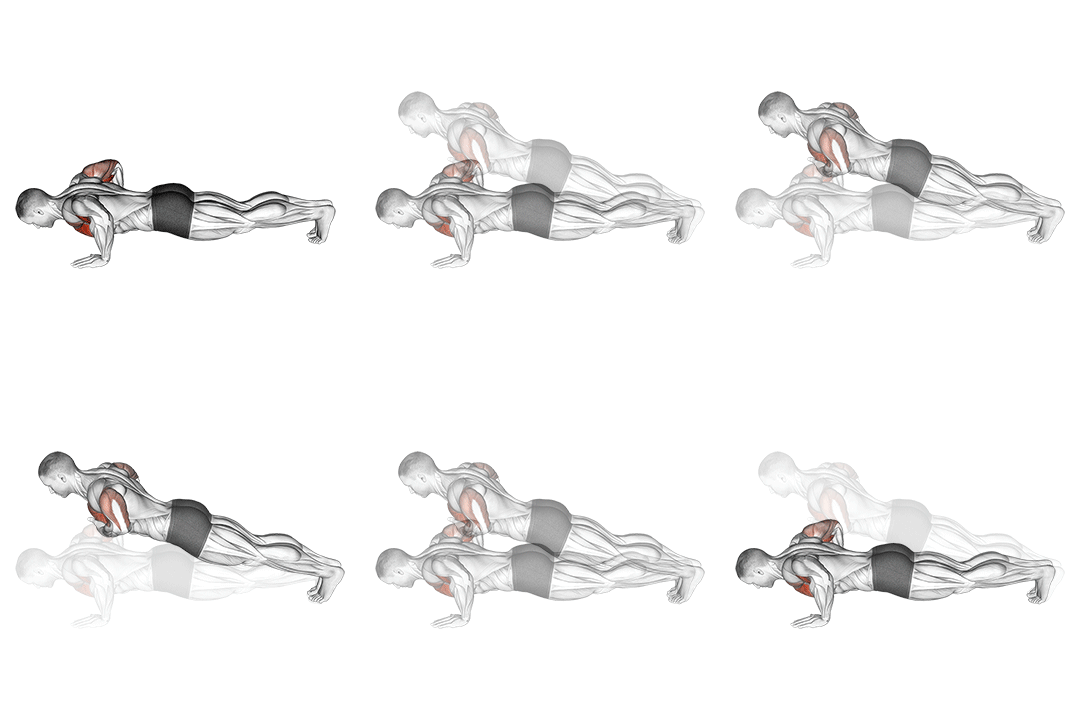
Chest Tap Push-up (male)
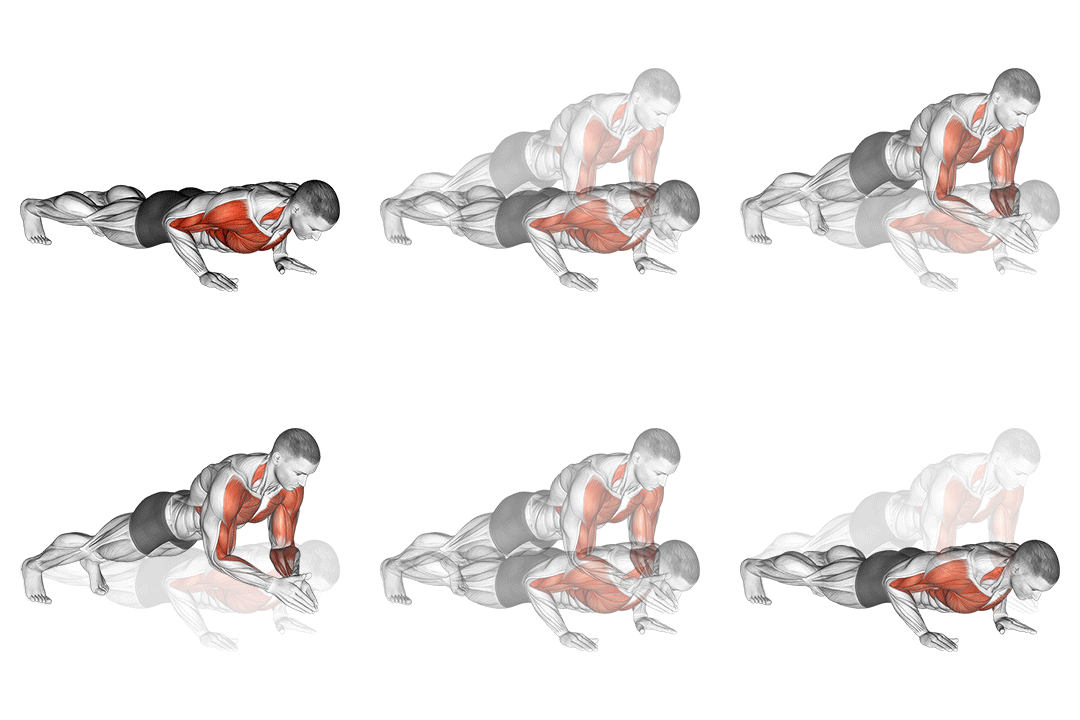
Clap Push Up
Head-to-Head Comparison
| Attribute | Chest Tap Push-up (male) | Clap Push Up |
|---|---|---|
| Target Muscle |
Pectorals
|
Pectorals
|
| Body Part |
Chest
|
Chest
|
| Equipment |
Body-weight
|
Body-weight
|
| Difficulty |
Advanced
|
Advanced
|
| Movement Type |
Compound
|
Compound
|
| Secondary Muscles |
2
|
2
|
Secondary Muscles Activated
Chest Tap Push-up (male)
Clap Push Up
Visual Comparison
Overview
Chest Tap Push-up (male) vs Clap Push Up — two advanced bodyweight chest exercises that test your power, control, and shoulder stability. If you want clear guidance on which to use, this comparison breaks down primary and secondary muscle activation, technique cues, equipment needs, progression paths, rep ranges, and injury risk. You’ll get specific coaching cues (hand placement, elbow angles, tempo), suggested rep ranges for power (3–6 reps) and hypertrophy-style work (6–12 reps variants), plus when to favor one exercise over the other based on your goals.
Key Differences
- Both exercises target the Pectorals using Body-weight. The main differences are in their movement patterns and muscle activation angles.
Pros & Cons
Chest Tap Push-up (male)
+ Pros
- Lower vertical impact than clap push-ups, easier on wrists and shoulders
- Increases scapular stability and serratus anterior activation through the tap and re-stabilization
- Simpler regressions (incline, reduced ROM) make it easier to build up from
- Supports unilateral and rotational progressions for balanced development
− Cons
- Less peak power development compared with clap push-ups
- Requires good torso stability; poor core control reduces effectiveness
- Tap can reduce momentum, limiting reps per set for pure power work
Clap Push Up
+ Pros
- Develops explosive elbow extension and rapid force production
- Directly targets fast-twitch fibers and power output for upper-body plyometrics
- Simple to measure progression via clearance height and contact time
- Can be varied (double clap, behind-the-back) for sport-specific demands
− Cons
- High-impact landings increase risk to wrists, elbows, and rotator cuff
- Requires precise timing and coordination—harder to learn safely
- Limited hypertrophy utility without supplementing with controlled-volume work
When Each Exercise Wins
Chest Tap Push-ups allow longer eccentric control and a short stabilization pause that increases time under tension. You can manipulate tempo (3–4 s eccentric) and reps (8–12) or add unilateral taps to overload the pectorals more effectively for muscle growth.
Clap Push Ups train rate of force development and peak concentric power, which transfers to maximal pushing speed and strength expression in dynamic movements. Use 3–6 explosive reps with 2–3 minutes rest to build power-specific strength.
Chest Tap Push-ups scale down more cleanly with incline or reduced ROM and emphasize control before power. Beginners can build scapular control and core stability first, then add explosiveness safely.
Both exercises require no equipment, but chest taps produce less high-impact landing forces and need less open space. That makes them safer and more practical in confined home environments.
Frequently Asked Questions
Can I do both Chest Tap Push-up (male) and Clap Push Up in the same workout?
Yes. Use clap push-ups early in the session when you’re fresh to train power (3–6 reps), then follow with chest tap push-ups for control and volume (8–12 reps). Keep total explosive reps low and allow 2–3 minutes rest between power sets.
Which exercise is better for beginners?
Neither is beginner-level; start with strict push-ups and incline push-ups to build strength and scapular control. Once you can do sets of 15–20 strict push-ups with good form, progress toward chest taps before attempting claps.
How do the muscle activation patterns differ?
Clap push-ups produce a short, high-velocity concentric burst that emphasizes triceps power and fast-twitch recruitment, followed by a high-impact eccentric. Chest tap push-ups increase concentric time under tension and require more serratus anterior and oblique activation for stabilization during the tap.
Can Clap Push Up replace Chest Tap Push-up (male)?
If your goal is power, clap push-ups can replace chest taps for that training block. For hypertrophy, scapular stability, or if you have shoulder/wrist concerns, chest taps are the better choice; consider programming both across different mesocycles for balanced development.
Expert Verdict
If your priority is power and rate of force development, choose Clap Push Ups and structure training around low-rep, high-rest sets (3–6 reps, 3–5 sets, 2–3 minutes rest). If your goal is chest development, scapular control, or safer home training, favor Chest Tap Push-ups and use slower eccentrics (2–4 s) with 8–12 rep ranges or unilateral progressions. Both are advanced and should follow a foundation of strict push-up strength and shoulder stability work. Rotate them in cycles: a 4–6 week power block with clap push-ups followed by a 4–6 week control/hypertrophy block using chest taps for balanced progress.
Also Compare
More comparisons with Chest Tap Push-up (male)
Compare More Exercises
Use our free comparison tool to analyze any two exercises head-to-head.
Compare Exercises