

Chest Tap Push-up (male) vs Push-up: Complete Comparison Guide
Chest Tap Push-up (male) vs Push-up — you’re choosing between a plyometric, advanced chest drill and the classic compound push pattern. I’ll walk you through how each movement loads the pectorals, the secondary demand on triceps, deltoids and core, and who should prioritize which version. You’ll get clear cues for technique, numeric rep ranges (hypertrophy: 8–12, power: 3–6), and practical progressions so you can pick the right option for muscle growth, strength or home training.
Exercise Comparison
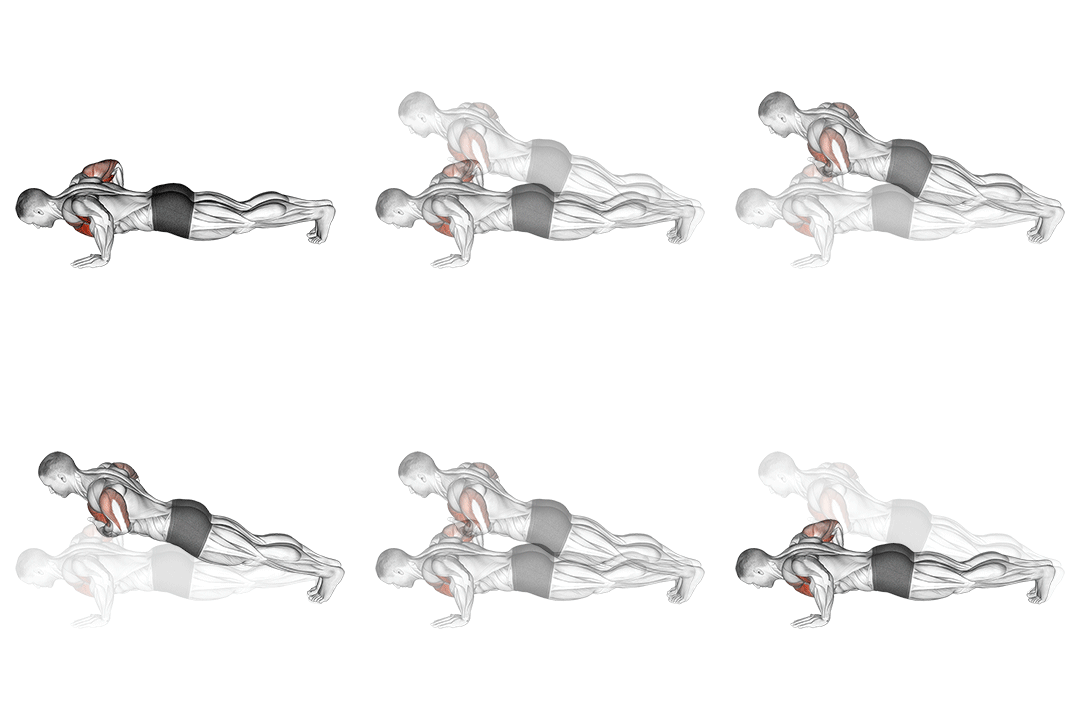
Chest Tap Push-up (male)
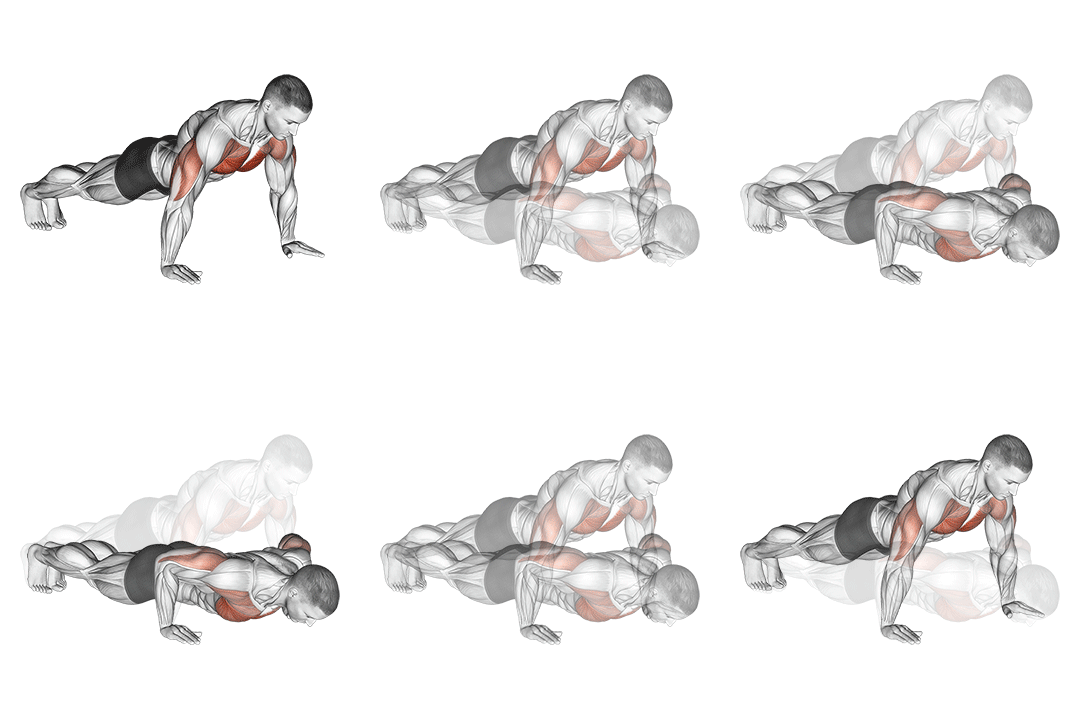
Push-up
Head-to-Head Comparison
| Attribute | Chest Tap Push-up (male) | Push-up |
|---|---|---|
| Target Muscle |
Pectorals
|
Pectorals
|
| Body Part |
Chest
|
Chest
|
| Equipment |
Body-weight
|
Body-weight
|
| Difficulty |
Advanced
|
Intermediate
|
| Movement Type |
Compound
|
Compound
|
| Secondary Muscles |
2
|
3
|
Secondary Muscles Activated
Chest Tap Push-up (male)
Push-up
Visual Comparison
Overview
Chest Tap Push-up (male) vs Push-up — you’re choosing between a plyometric, advanced chest drill and the classic compound push pattern. I’ll walk you through how each movement loads the pectorals, the secondary demand on triceps, deltoids and core, and who should prioritize which version. You’ll get clear cues for technique, numeric rep ranges (hypertrophy: 8–12, power: 3–6), and practical progressions so you can pick the right option for muscle growth, strength or home training.
Key Differences
- Difficulty levels differ: Chest Tap Push-up (male) is advanced, while Push-up is intermediate.
- Both exercises target the Pectorals using Body-weight. The main differences are in their movement patterns and muscle activation angles.
Pros & Cons
Chest Tap Push-up (male)
+ Pros
- Develops explosive concentric power and rate of force development
- Increases unilateral stability and proprioception
- Higher peak pectoral and triceps recruitment during the concentric burst
- Minimal equipment, high transfer to athletic jumping/throwing patterns
− Cons
- Higher shoulder and AC joint stress with poor technique
- Harder to control volume and time-under-tension for hypertrophy
- Requires solid baseline push-up strength and shoulder health
Push-up
+ Pros
- Easily scalable for beginners to advanced lifters
- Consistent time-under-tension suitable for muscle growth (8–12+ rep sets)
- Lower acute injury risk; teaches scapular and core control
- Simple to overload progressively with weight, tempo or bands
− Cons
- Less stimulus for explosive power and RFD
- Can become monotonous without structured variation
- Too much volume with poor form can stress the wrists and shoulders
When Each Exercise Wins
Push-ups let you control tempo, volume and time-under-tension (aim 8–12 reps, 3–4 sets) and are easier to progressive overload with added resistance or eccentric tempo, yielding superior mechanical tension for hypertrophy.
For neural strength and rate-of-force development, the Chest Tap's explosive concentric and plyometric eccentric loading recruit fast-twitch fibers and improve peak force expression; perform 3–6 explosive reps with 90–180 s rest to train RFD.
Push-up scales downward (knees, incline) and teaches scapular control and consistent loading, allowing beginners to build joint stability and reach full-range reps safely before advancing.
Both need no equipment, but the push-up’s scalable progressions and lower acute force demands make it safer and more versatile for unsupervised home sessions.
Frequently Asked Questions
Can I do both Chest Tap Push-up (male) and Push-up in the same workout?
Yes. Start with heavy or explosive work (Chest Tap Push-ups) when fresh to train power, then follow with higher-volume push-up sets for hypertrophy. Keep total weekly volume manageable and monitor shoulder fatigue.
Which exercise is better for beginners?
Push-up is better for beginners because it scales easily (knees, incline) and builds the scapular and core control needed before adding plyometric load. Aim for 3–4 sets of 8–12 controlled reps before progressing.
How do the muscle activation patterns differ?
Push-ups produce sustained, moderate activation across pectorals, triceps and deltoids throughout the rep. Chest Tap Push-ups create short, high-amplitude concentric bursts and rapid eccentrics that preferentially recruit fast-twitch fibers and increase peak activation during the explosive phase.
Can Push-up replace Chest Tap Push-up (male)?
For most goals—hypertrophy, general strength, and rehabilitation—push-ups can replace chest taps and are the safer, more progressive choice. If you need explosive power or sport-specific transfer, add chest taps after you’ve mastered standard push-up mechanics.
Expert Verdict
Use the push-up as your base chest builder: it gives controlled mechanical tension, easy progression (bands, weights, tempo) and is the safer choice for hypertrophy and skill development. Reserve Chest Tap Push-ups once you can perform 15–20 strict reps with perfect scapular mechanics and no pain; use them to train power, RFD and unilateral stabilization in short sets (3–6 explosive reps) or as a finish for athletic sessions. If your goal is muscle growth and steady strength increases, prioritize varied push-up progressions. If you need explosiveness and sport-specific transfer, add chest taps sparingly and with solid technique.
Also Compare
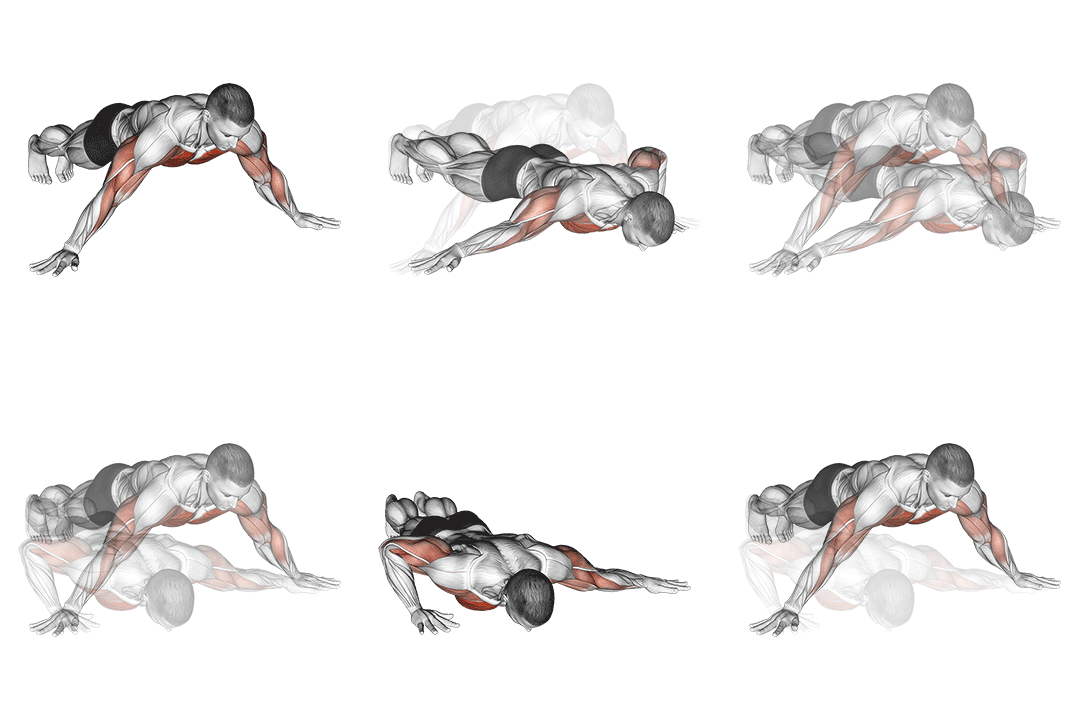
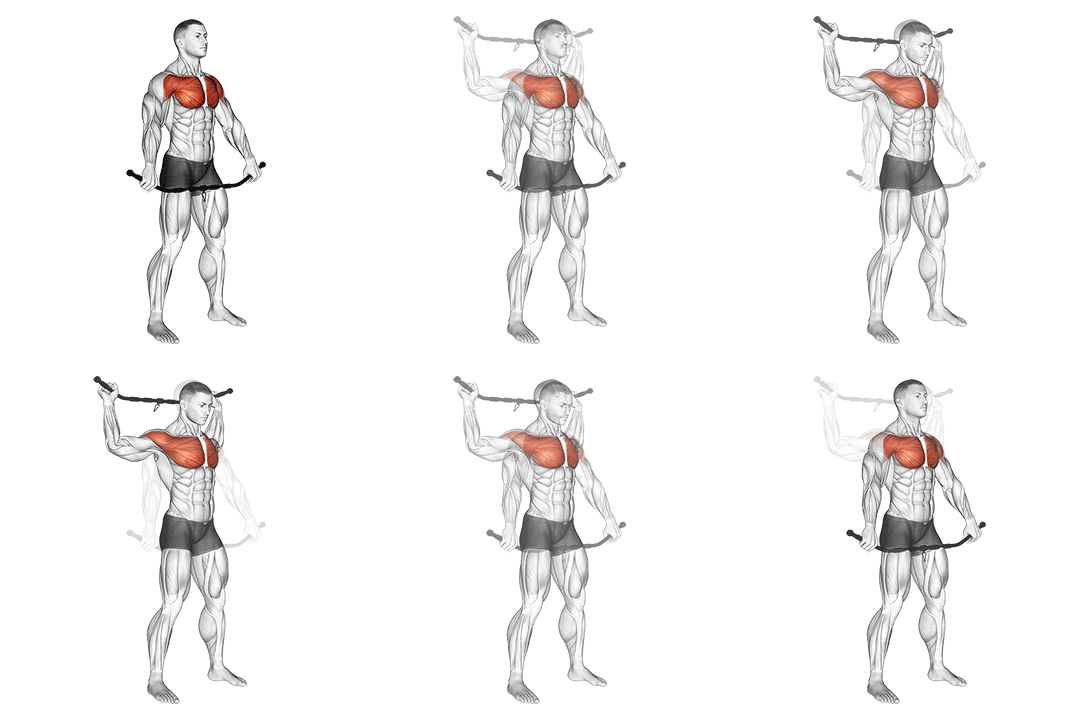
More comparisons with Chest Tap Push-up (male)
Compare More Exercises
Use our free comparison tool to analyze any two exercises head-to-head.
Compare Exercises