

Close-grip Push-up (on Knees) vs Diamond Push-up: Complete Comparison Guide
Close-grip Push-up (on Knees) vs Diamond Push-up — you’re choosing between two triceps-focused bodyweight moves that also tax chest and shoulders. I’ll walk you through how each exercise loads the triceps, how shoulder and wrist mechanics differ, which is easier to learn, and clear progressions and rep ranges to use (for example, 8–20 reps for the kneeling close-grip and 6–12 for diamond). You’ll get specific technique cues, biomechanics-based reasons to pick one over the other, and practical recommendations for beginners and advanced trainees.
Exercise Comparison
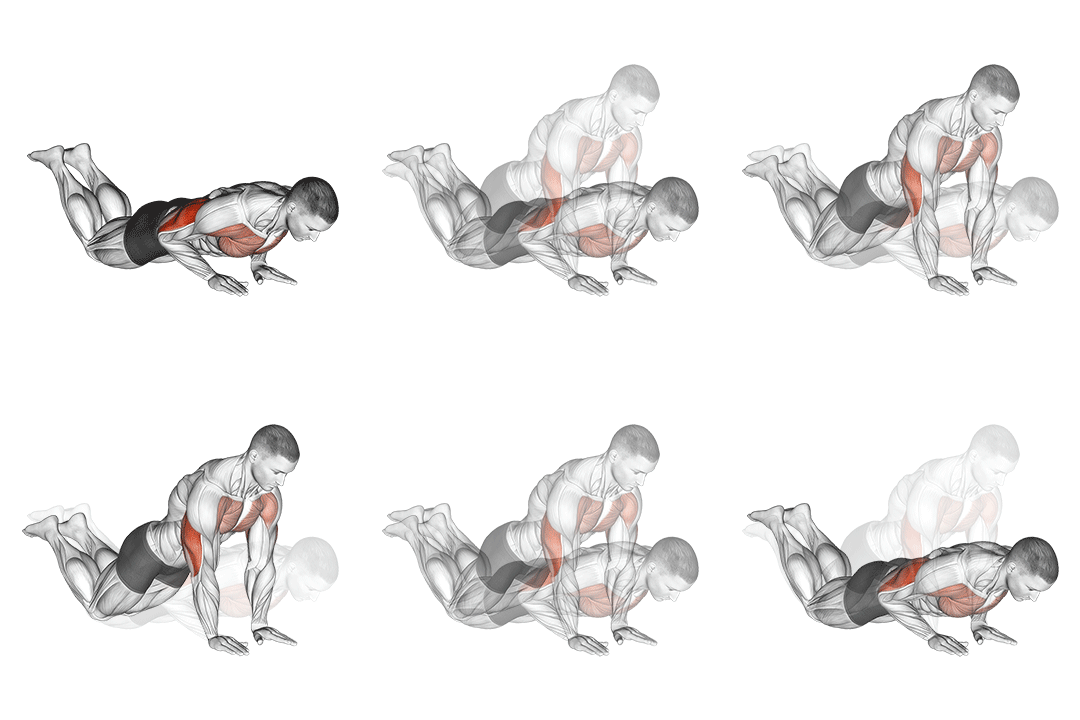
Close-grip Push-up (on Knees)
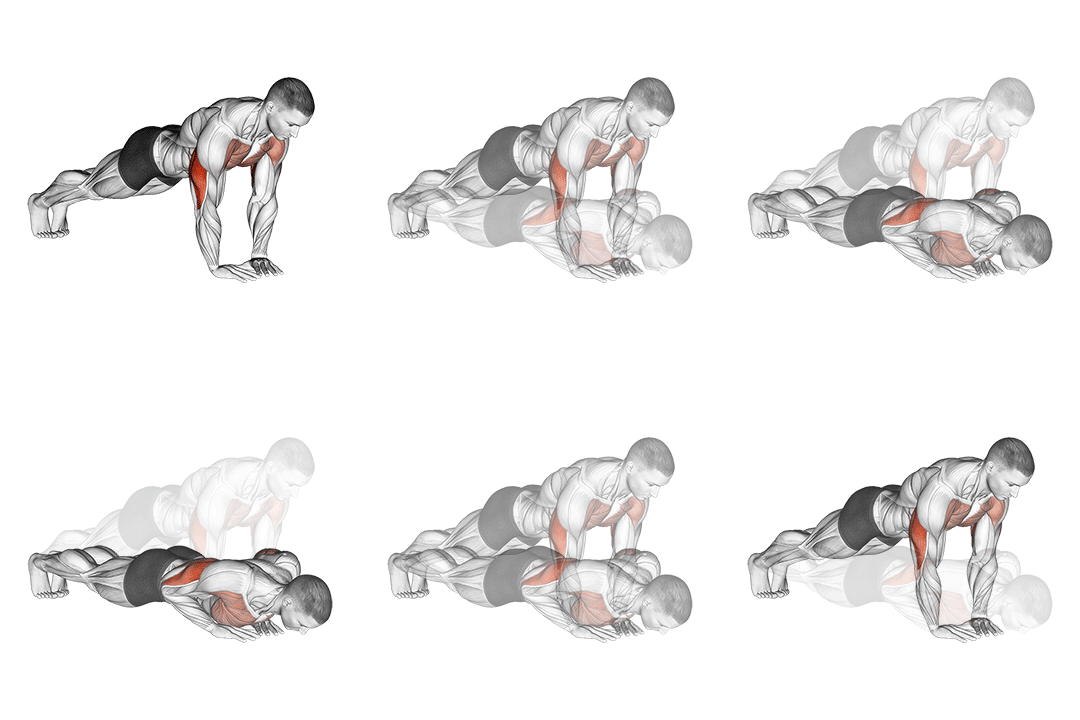
Diamond Push-up
Head-to-Head Comparison
| Attribute | Close-grip Push-up (on Knees) | Diamond Push-up |
|---|---|---|
| Target Muscle |
Triceps
|
Triceps
|
| Body Part |
Upper-arms
|
Upper-arms
|
| Equipment |
Body-weight
|
Body-weight
|
| Difficulty |
Beginner
|
Advanced
|
| Movement Type |
Compound
|
Compound
|
| Secondary Muscles |
2
|
2
|
Secondary Muscles Activated
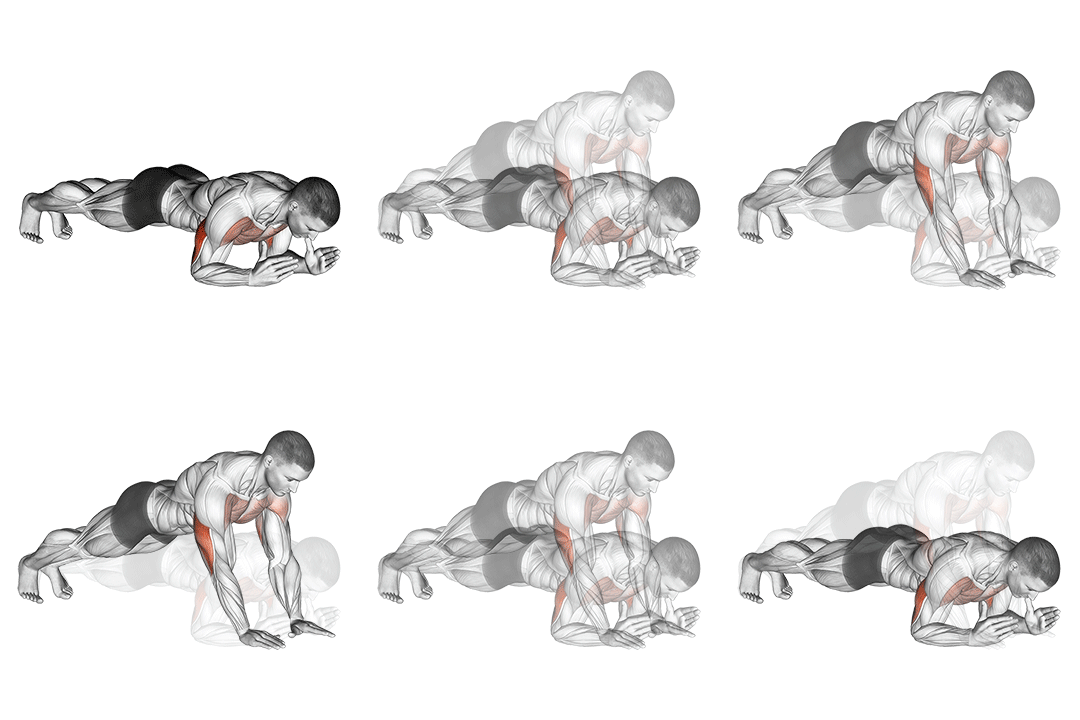
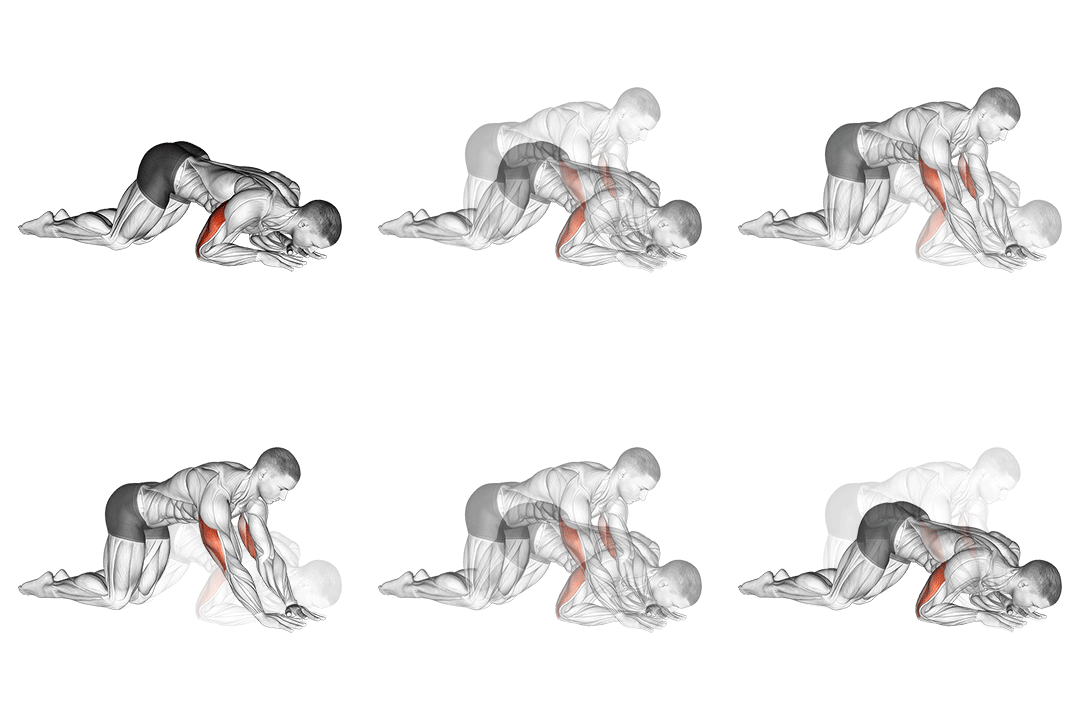
Close-grip Push-up (on Knees)
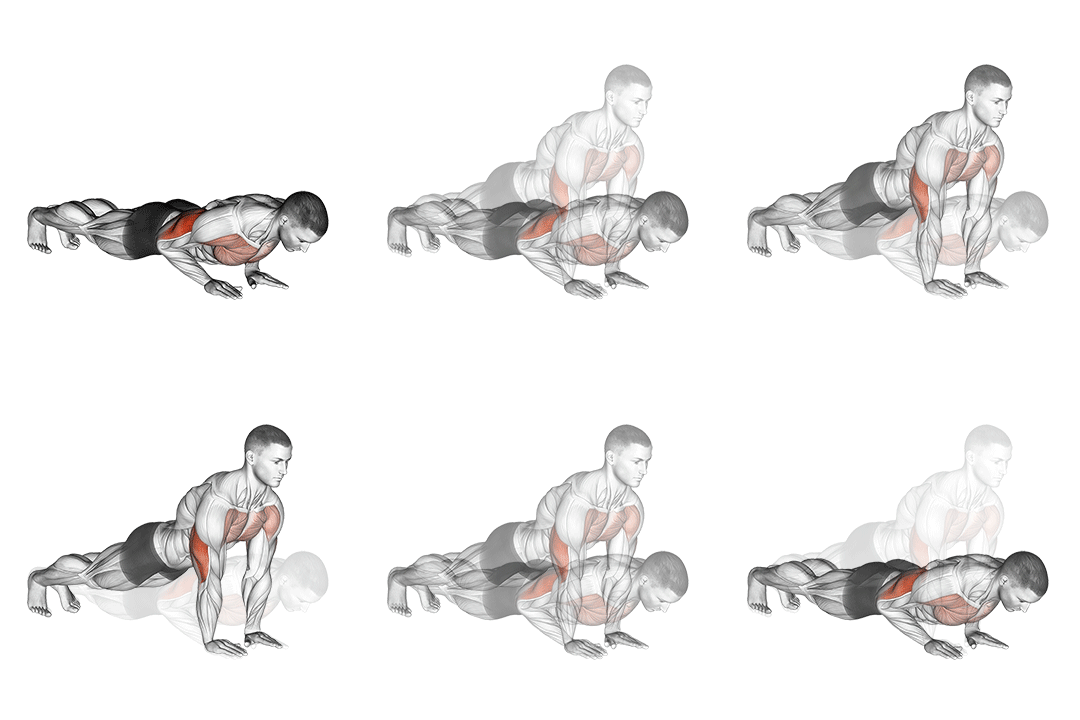
Diamond Push-up
Visual Comparison
Overview
Close-grip Push-up (on Knees) vs Diamond Push-up — you’re choosing between two triceps-focused bodyweight moves that also tax chest and shoulders. I’ll walk you through how each exercise loads the triceps, how shoulder and wrist mechanics differ, which is easier to learn, and clear progressions and rep ranges to use (for example, 8–20 reps for the kneeling close-grip and 6–12 for diamond). You’ll get specific technique cues, biomechanics-based reasons to pick one over the other, and practical recommendations for beginners and advanced trainees.
Key Differences
- Difficulty levels differ: Close-grip Push-up (on Knees) is beginner, while Diamond Push-up is advanced.
- Both exercises target the Triceps using Body-weight. The main differences are in their movement patterns and muscle activation angles.
Pros & Cons
Close-grip Push-up (on Knees)
+ Pros
- Lower absolute load—easy for beginners and higher rep sets
- Less shoulder and wrist strain compared with full diamond
- Good for building volume-based hypertrophy (8–20 reps)
- Simple progression path to full close-grip then diamond
− Cons
- Lower mechanical tension per rep than full diamond
- Can encourage sloppy torso alignment if core is weak
- Less carryover to maximal strength compared with full-body variations
Diamond Push-up
+ Pros
- Higher triceps activation and mechanical tension per rep
- Better for building raw pressing strength (6–12 reps)
- Strong carryover to narrow-grip pressing and dips
- Requires no equipment and scales with bodyweight intensity
− Cons
- Higher wrist and shoulder stress—can be painful for some
- Harder for novices to maintain scapular control and core tension
- Few reps possible for beginners without regressions
When Each Exercise Wins
Diamond push-ups produce greater triceps mechanical tension per rep, so they’re the stronger single-exercise choice for triceps hypertrophy if you can complete 6–12 quality reps. If you can’t, use kneeling close-grips to accumulate higher volume (3–4 sets of 10–20) and progress toward diamonds.
Because diamonds load a greater percentage of your bodyweight and increase elbow-extension torque, they drive greater raw triceps strength. Use low-rep sets (4–8) with full recovery and progress to weighted or deficit variations.
The kneeling variation cuts the external moment arm and reduces shoulder loading, letting you perfect elbow tracking (~20–45° tuck) and scapular control before advancing. Aim for consistent sets of 3–4 x 8–20 with clean form.
Both are home-friendly, but the kneeling close-grip lets you do more volume safely and progress without equipment. It’s the easiest way to accumulate time under tension and practice technique in limited space.
Frequently Asked Questions
Can I do both Close-grip Push-up (on Knees) and Diamond Push-up in the same workout?
Yes. Pair them strategically: start with diamonds as a heavy triceps set if you can perform them with perfect form, then use kneeling close-grips as a higher-rep finisher for metabolic stress. Keep total sets manageable (3–6 sets combined) and monitor shoulder fatigue.
Which exercise is better for beginners?
Close-grip Push-up (on Knees) is better for beginners because it lowers the external torque on the elbow and shoulder and allows you to practice elbow tracking and scapular control. Aim for 3–4 sets of 8–20 reps before progressing.
How do the muscle activation patterns differ?
Diamond push-ups increase elbow-extension torque and shoulder horizontal adduction, producing higher triceps EMG and more chest/shoulder involvement. Kneeling close-grips reduce the external moment arm, lowering peak triceps activation per rep but enabling higher total volume with less shoulder stress.
Can Diamond Push-up replace Close-grip Push-up (on Knees)?
Only if you can perform diamonds with clean technique and no pain. Diamonds can replace kneeling close-grips for advanced trainees seeking more tension, but beginners should use kneeling versions as regressions to build strength and scapular control first.
Expert Verdict
Pick the kneeling close-grip when you need an easy-to-learn, low-risk triceps isolation tool—it’s ideal for beginners, rehab, and volume-driven hypertrophy (8–20 reps). Choose the diamond push-up when you can maintain strict scapular control and want higher mechanical tension per rep for triceps strength and denser hypertrophy work (6–12 reps). Use technique cues: keep hands narrow (thumbs/index under sternum for diamond), elbows tracking 20–45° to the torso, full scapular control, neutral spine, and controlled tempo (2–3 sec descent). Progress from knees → full close-grip → diamond → weighted or deficit diamonds as strength increases.
Also Compare
More comparisons with Close-grip Push-up (on Knees)
Compare More Exercises
Use our free comparison tool to analyze any two exercises head-to-head.
Compare Exercises