

Close-grip Push-up vs Diamond Push-up: Complete Comparison Guide
Close-grip Push-up vs Diamond Push-up — two bodyweight presses that load the triceps heavily but feel very different. If you want clearer guidance on which one to use, this guide walks you through technique cues, biomechanics, muscle activation, difficulty, and programming. You’ll learn how hand position shifts the force vector, when to prefer each variation for muscle growth or strength, and practical progressions and rep ranges you can use in your workouts.
Exercise Comparison
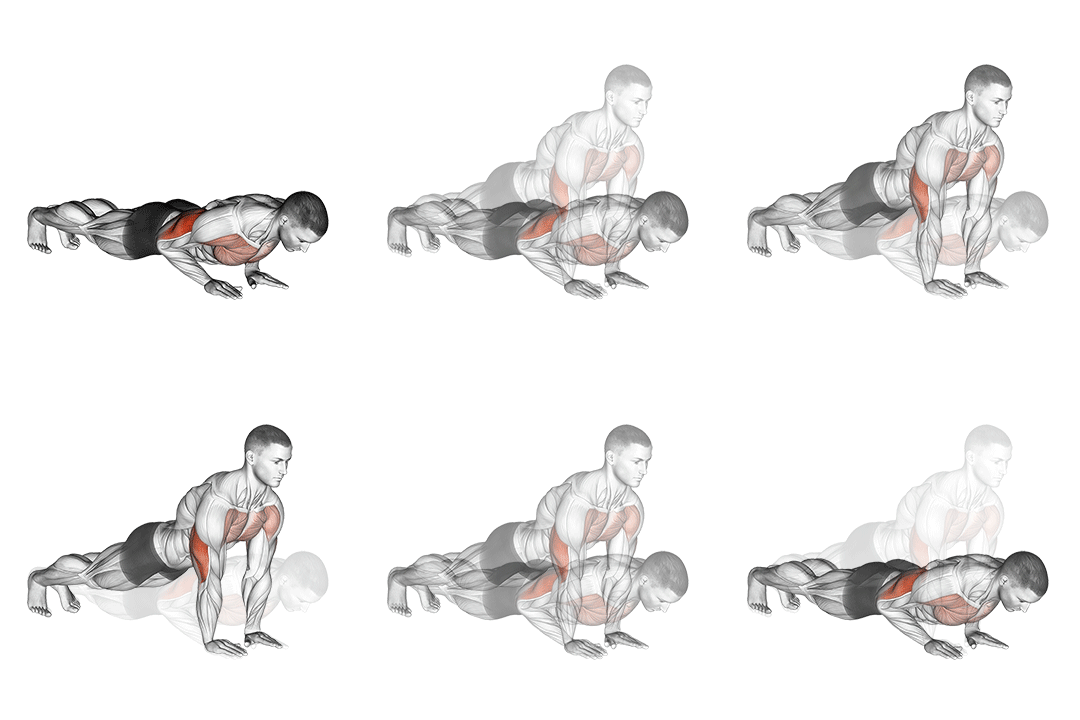
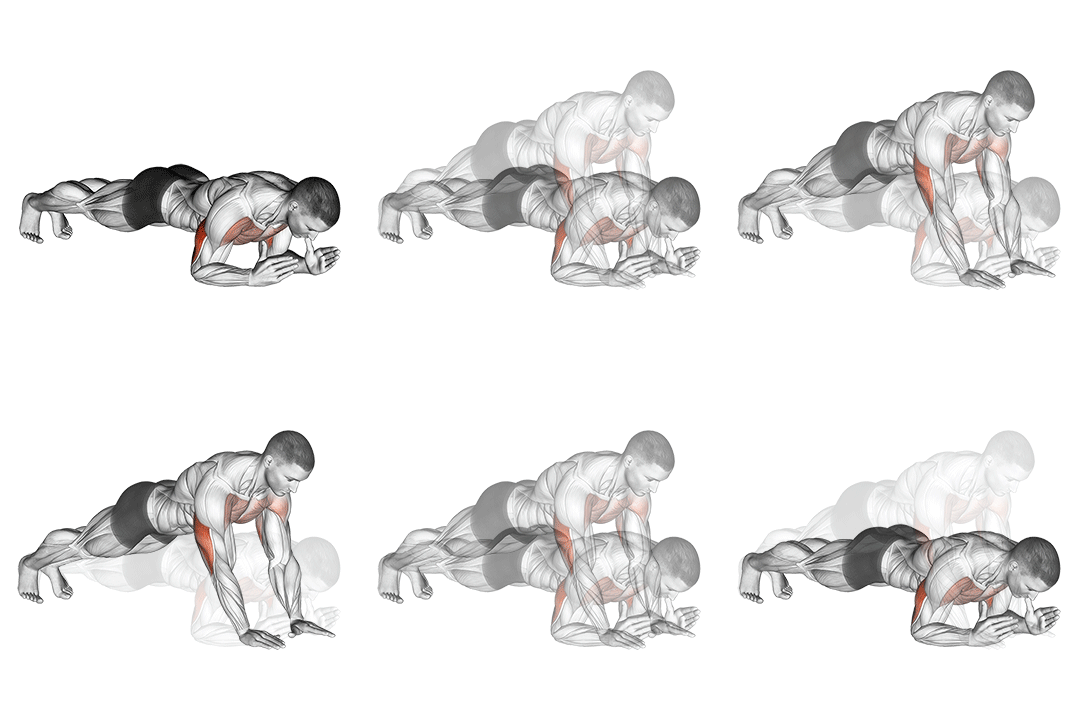
Close-grip Push-up
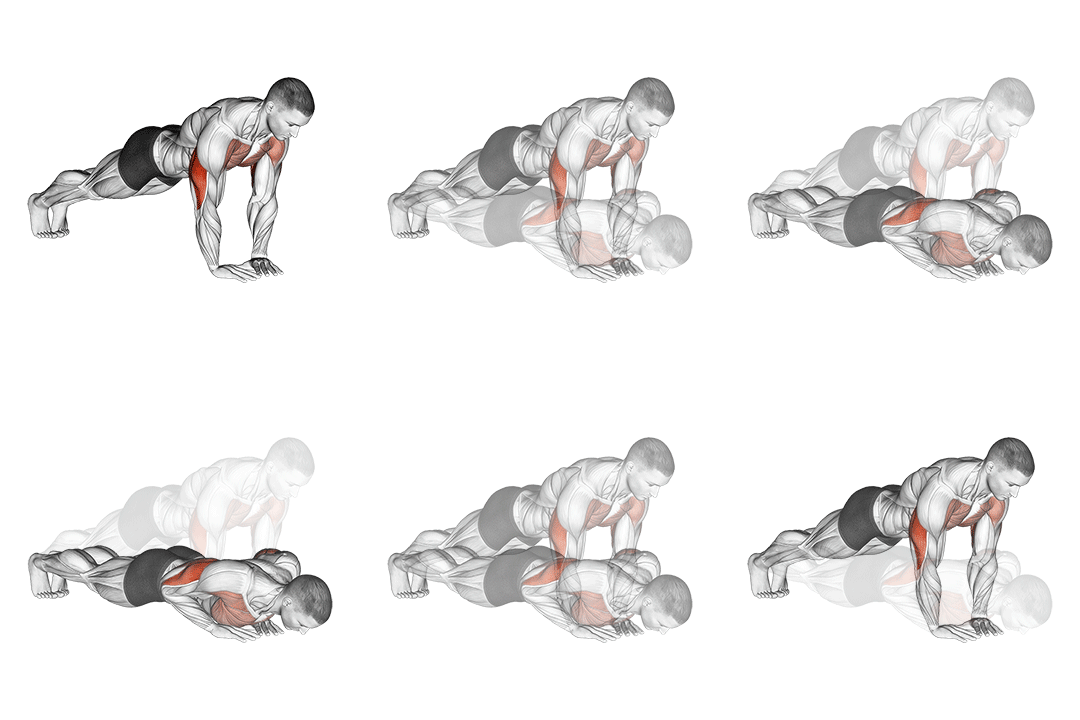
Diamond Push-up
Head-to-Head Comparison
| Attribute | Close-grip Push-up | Diamond Push-up |
|---|---|---|
| Target Muscle |
Triceps
|
Triceps
|
| Body Part |
Upper-arms
|
Upper-arms
|
| Equipment |
Body-weight
|
Body-weight
|
| Difficulty |
Intermediate
|
Advanced
|
| Movement Type |
Compound
|
Compound
|
| Secondary Muscles |
2
|
2
|
Secondary Muscles Activated
Close-grip Push-up
Diamond Push-up
Visual Comparison
Overview
Close-grip Push-up vs Diamond Push-up — two bodyweight presses that load the triceps heavily but feel very different. If you want clearer guidance on which one to use, this guide walks you through technique cues, biomechanics, muscle activation, difficulty, and programming. You’ll learn how hand position shifts the force vector, when to prefer each variation for muscle growth or strength, and practical progressions and rep ranges you can use in your workouts.
Key Differences
- Difficulty levels differ: Close-grip Push-up is intermediate, while Diamond Push-up is advanced.
- Both exercises target the Triceps using Body-weight. The main differences are in their movement patterns and muscle activation angles.
Pros & Cons
Close-grip Push-up
+ Pros
- Scalable for all levels using incline or knee variations
- Balances chest and triceps for higher total pressing volume
- Easier on wrists than extreme narrow grips
- Clear technical cues: hands just inside shoulder width, 45° elbow tuck
− Cons
- Less isolated triceps stimulus than diamond
- Can be easier to cheat with hip sag or excessive shoulder protraction
- Requires attention to scapular control to protect shoulders
Diamond Push-up
+ Pros
- Strong triceps overload, especially near lockout
- Minimal chest contribution improves isolation for upper-arm development
- Compact hand placement increases mechanical demand without extra equipment
- Short lever arm makes it a potent bodyweight progression for strength
− Cons
- Higher wrist and elbow stress—uncomfortable for some lifters
- Advanced difficulty; hard to accumulate high-volume reps for hypertrophy
- Technique breakdown (flare or flaring hips) quickly reduces effectiveness
When Each Exercise Wins
Close-grip allows higher rep ranges (8–20) and easier volume accumulation with less failure-induced form breakdown. The greater chest contribution spreads tension and lets you add external load or use inclines to hit progressive overload.
Diamond places more mechanical demand on the triceps and shortens the chest moment arm, making it better for increasing maximal elbow-extension strength. Use heavy sets of 3–6 reps with a weighted vest or deficit to progress.
Close-grip is easier to scale with incline and knee variations and requires less wrist mobility and absolute triceps strength. Start with a 30–45° incline and work toward flat close-grip sets of 8–15 reps.
Both need no equipment, but Close-grip is friendlier for most home settings because you can manage volume safely and reduce intensity with furniture or a bench. Diamond is fine if you already have strong wrists and solid form.
Frequently Asked Questions
Can I do both Close-grip Push-up and Diamond Push-up in the same workout?
Yes. Put Diamond Push-ups near the start if you want to prioritize triceps strength (3–6 hard sets), then use Close-grip for volume work (3–4 sets of 8–15) to accumulate tension without excessive joint stress.
Which exercise is better for beginners?
Close-grip Push-ups are better for beginners because you can scale intensity with inclines or knee support and practice scapular control. Progress gradually to flat and then narrower hand positions as strength and wrist tolerance improve.
How do the muscle activation patterns differ?
Diamond narrows hand placement, reducing shoulder horizontal adduction and increasing elbow-extension torque—this boosts triceps activation especially near lockout. Close-grip maintains more chest length-tension and shares load across pecs and triceps, producing a more distributed activation pattern.
Can Diamond Push-up replace Close-grip Push-up?
Diamond can replace Close-grip if your goal is triceps isolation and you can handle the joint stress, but it’s less suitable for high-volume hypertrophy and beginners. For balanced development, cycle both or use diamond for targeted triceps blocks.
Expert Verdict
Use the Close-grip Push-up when you need reliable volume, easier scaling, and a balanced chest-plus-triceps press. It’s the go-to for progressive hypertrophy cycles (8–20 reps, multiple sets) and for lifters building consistent pressing mechanics. Choose the Diamond Push-up when your primary goal is to overload the triceps and develop lockout strength—work in lower rep ranges (3–8) with added resistance once bodyweight becomes easy. If you have wrist or elbow pain, favor close-grip variations or use parallettes. Program both: alternate blocks of higher-volume close-grip work with focused diamond strength phases to maximize upper-arm development.
Also Compare
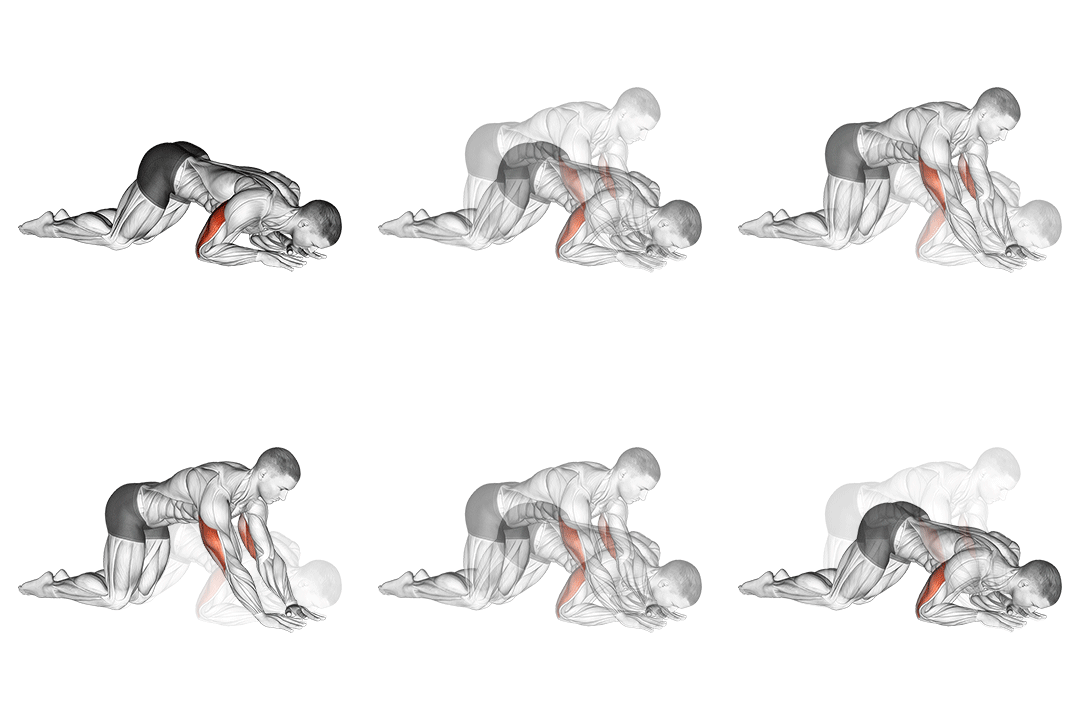
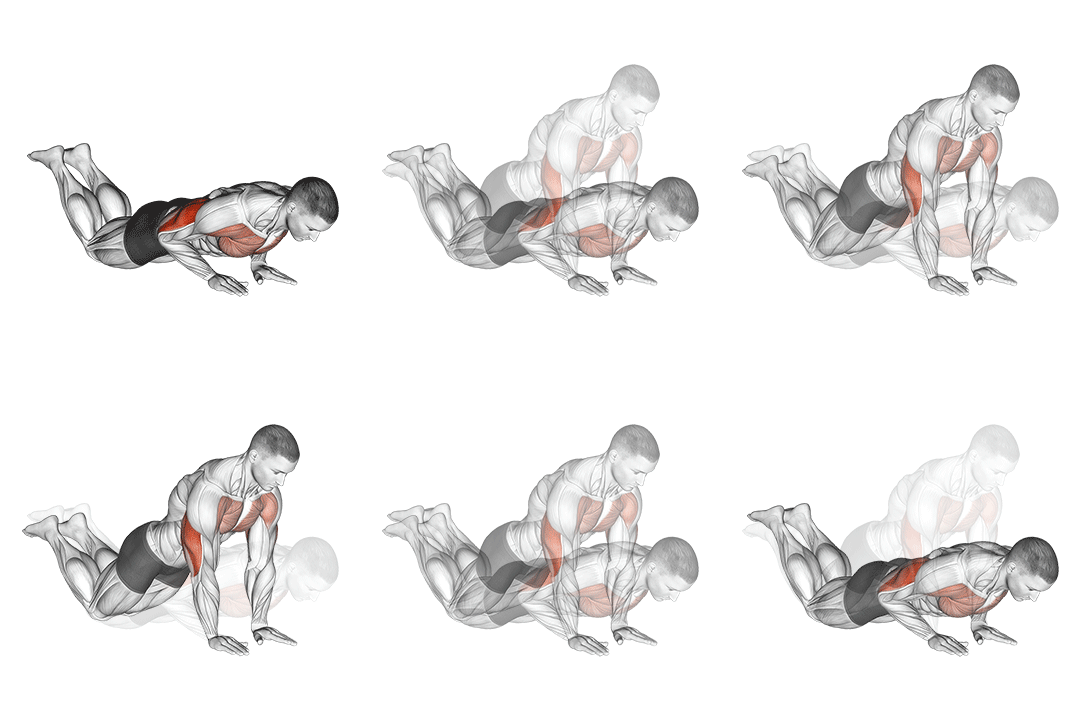
More comparisons with Close-grip Push-up
Compare More Exercises
Use our free comparison tool to analyze any two exercises head-to-head.
Compare Exercises