

Close-grip Push-up vs Dips - Triceps Version: Complete Comparison Guide
Close-grip Push-up vs Dips - Triceps Version — if you want bigger, stronger triceps, you should choose exercises that match your equipment, joint health, and progression plan. I’ll walk you through how each move loads the triceps, the different shoulder and chest involvement, practical technique cues, and clear progression routes. You’ll get specific biomechanics (angles, force vectors, length-tension), rep ranges for hypertrophy and strength, and safety tips so you can pick the right exercise for your goals or combine them effectively.
Exercise Comparison
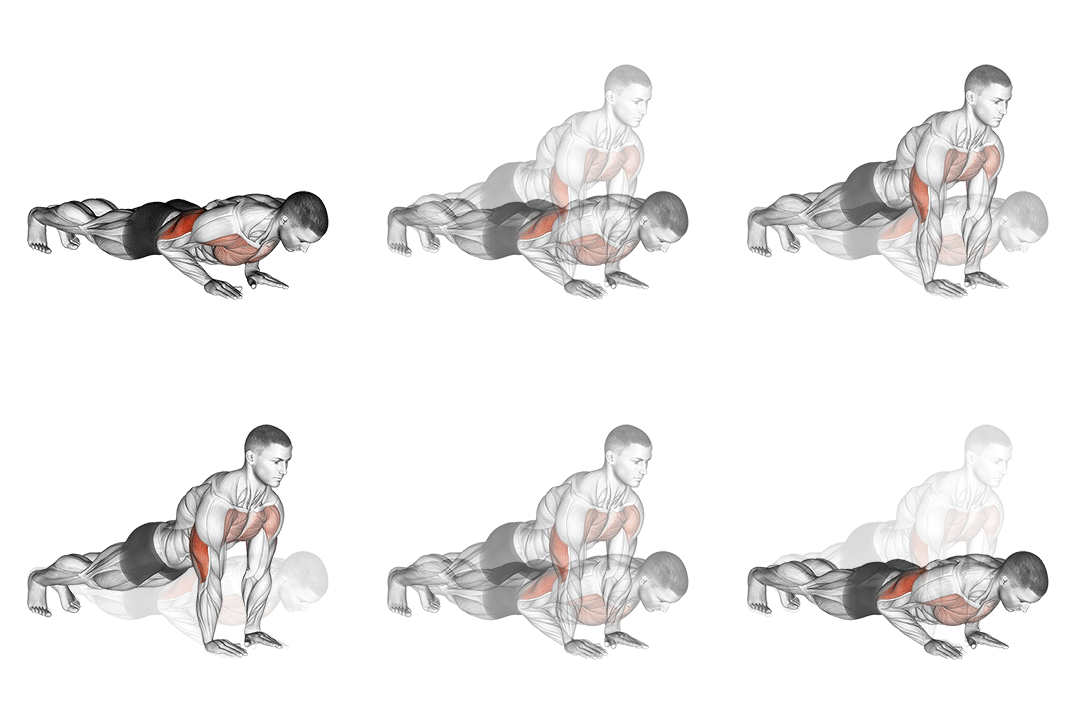
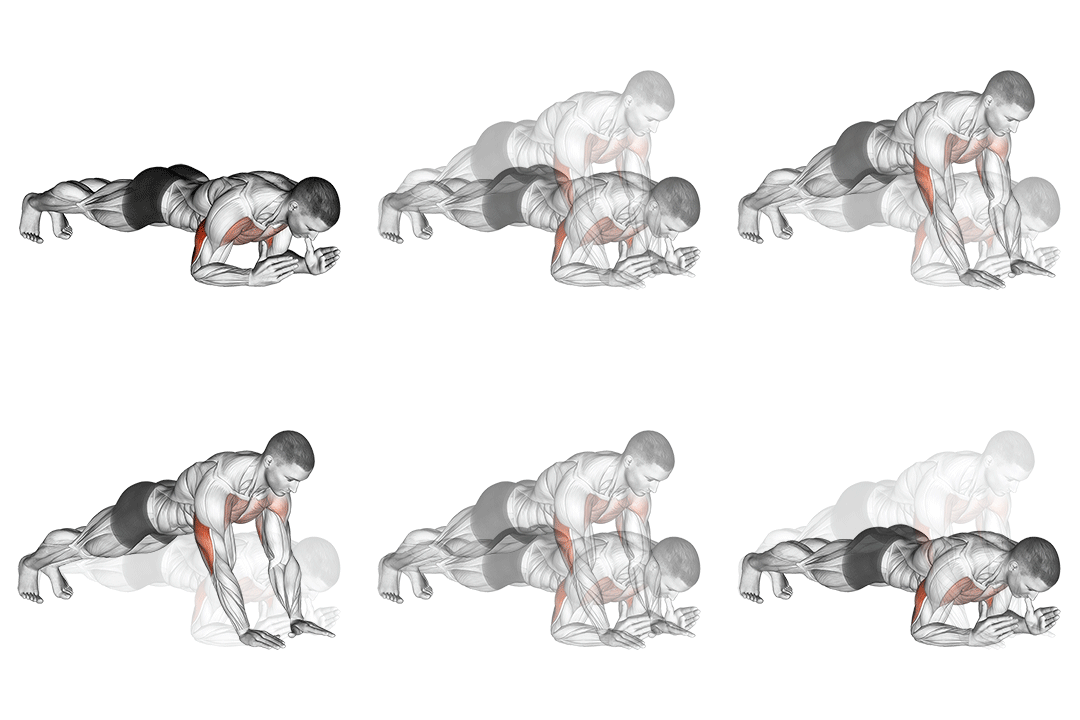
Close-grip Push-up
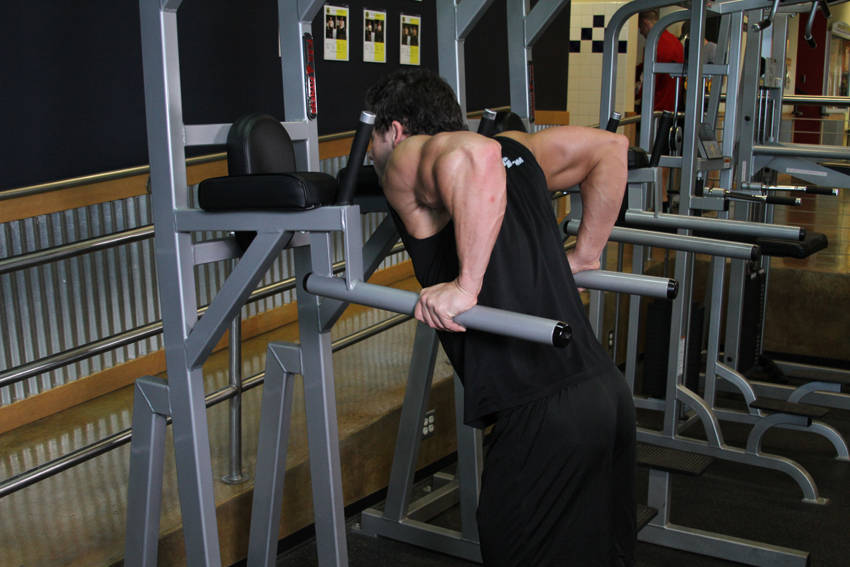
Dips - Triceps Version
Head-to-Head Comparison
| Attribute | Close-grip Push-up | Dips - Triceps Version |
|---|---|---|
| Target Muscle |
Triceps
|
Triceps
|
| Body Part |
Upper-arms
|
Upper-arms
|
| Equipment |
Body-weight
|
Body-weight
|
| Difficulty |
Intermediate
|
Intermediate
|
| Movement Type |
Compound
|
Compound
|
| Secondary Muscles |
2
|
2
|
Secondary Muscles Activated
Close-grip Push-up
Dips - Triceps Version
Visual Comparison
Overview
Close-grip Push-up vs Dips - Triceps Version — if you want bigger, stronger triceps, you should choose exercises that match your equipment, joint health, and progression plan. I’ll walk you through how each move loads the triceps, the different shoulder and chest involvement, practical technique cues, and clear progression routes. You’ll get specific biomechanics (angles, force vectors, length-tension), rep ranges for hypertrophy and strength, and safety tips so you can pick the right exercise for your goals or combine them effectively.
Key Differences
- Both exercises target the Triceps using Body-weight. The main differences are in their movement patterns and muscle activation angles.
Pros & Cons
Close-grip Push-up
+ Pros
- Requires no equipment and is easy to scale (incline, knee, tempo).
- Safer shoulder profile with elbows tucked 20–45°.
- Great for high-rep volume (15–30 reps) and conditioning.
- Allows tempo and isometric variations to target different triceps heads.
− Cons
- Limited absolute overload without equipment like a vest.
- Less long-head stretch compared with dips, potentially reducing hypertrophic stimulus at long muscle lengths.
- Wrist discomfort for some lifters when hands are flat on the floor.
Dips - Triceps Version
+ Pros
- Excellent for progressive overload with added weight for strength and hypertrophy.
- Larger ROM increases long-head tension, boosting hypertrophic stimulus.
- Vertical force vector transfers well to pressing strength.
- Multiple grips and torso angles let you bias triceps vs chest.
− Cons
- Higher shoulder stress and greater injury risk in those with limited mobility.
- Requires equipment (parallel bars or sturdy alternatives).
- Harder to scale for absolute beginners without regressions or assistance.
When Each Exercise Wins
Dips allow a larger shoulder and elbow ROM (≈60–90° shoulder flexion at bottom) and easier external loading, increasing long-head stretch and mechanical tension—both key drivers of hypertrophy. Use 6–12 reps with progressive loading for maximal size gains.
Because you can add heavy external weight with a belt or vest, dips let you overload the triceps more effectively for low-rep strength work (3–6 reps). The vertical force vector also transfers well to heavy pressing patterns.
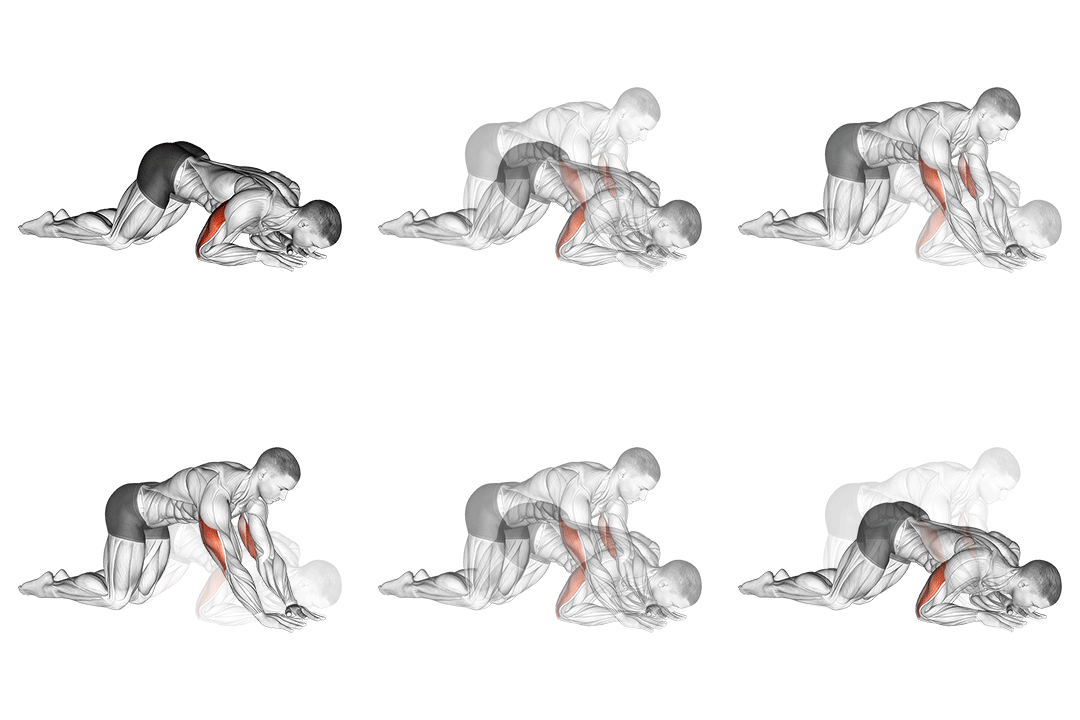
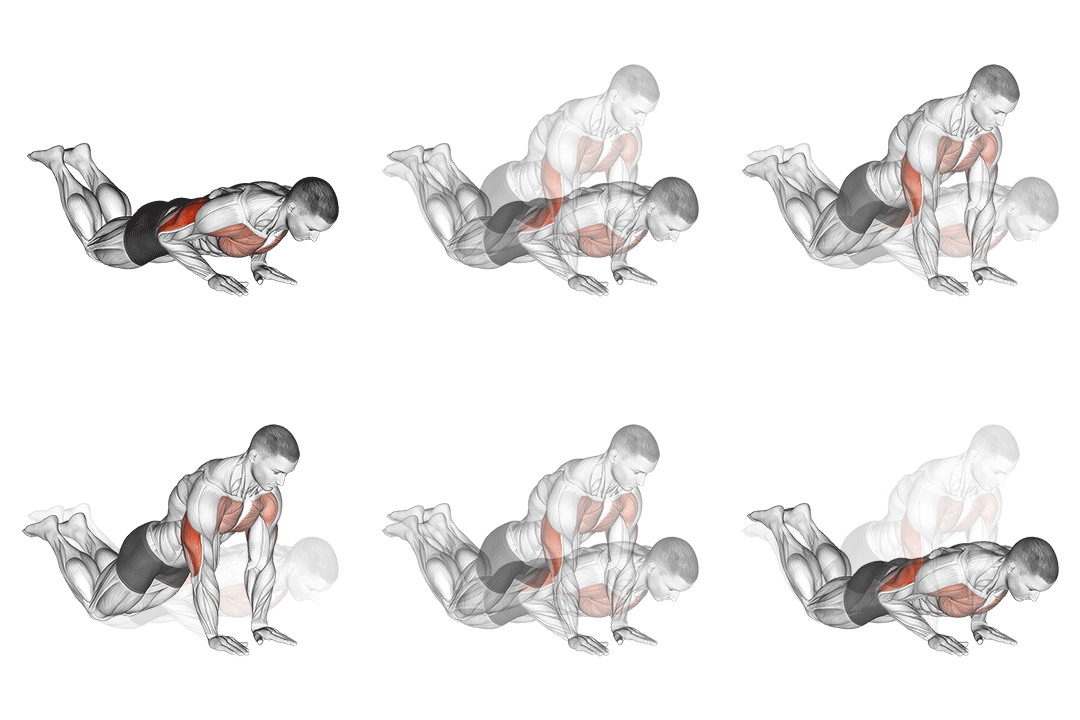
Push-ups are easier to regress (incline, knee), teach scapular control, and have a lower shoulder injury risk when performed with elbows tucked. Start with 8–15 controlled reps and progress by lowering incline or adding tempo.
No equipment is required and you can vary difficulty with hand position, elevation, or band resistance. This makes push-ups the practical choice for consistent triceps work at home.
Frequently Asked Questions
Can I do both Close-grip Push-up and Dips - Triceps Version in the same workout?
Yes. Pair them as a heavy-to-light superset—start with weighted dips for 3–6 heavy reps, then drop to close-grip push-ups for 10–20 reps to increase volume and metabolic stress. This covers both heavy mechanical tension and high-volume stimulus for hypertrophy.
Which exercise is better for beginners?
Close-grip push-ups are better for beginners because they’re easier to regress (incline, knees), teach proper elbow tracking, and reduce deep shoulder flexion. Build control and scapular stability before progressing to dips.
How do the muscle activation patterns differ?
Close-grip push-ups produce peak triceps activity in mid-range with a horizontal force vector, favoring the lateral and medial heads. Dips extend the shoulder and lengthen the long head, shifting peak torque deeper in the descent and increasing long-head recruitment across a larger ROM.
Can Dips - Triceps Version replace Close-grip Push-up?
Dips can replace push-ups if you have the mobility and equipment and want to prioritize strength or hypertrophy. For volume work, accessibility, or when shoulder health is a concern, keep close-grip push-ups in your program or use them as an accessory.
Expert Verdict
Use dips as your primary heavy triceps builder when you have the mobility and equipment to load them safely—they give superior long-head stretch and an easy path for progressive overload, making them ideal for strength and hypertrophy phases (3–6 reps for strength, 6–12 for size). Choose close-grip push-ups when you need accessibility, higher-volume work, or joint-friendly training; they’re easier to scale and excellent for technique, endurance, and accumulation sets (8–20+ reps). For balanced development, cycle both: prioritize dips during heavy blocks and use close-grip push-ups for volume, conditioning, or on lighter days. Always prioritize elbow tuck (~20–45°) and controlled tempo to protect the shoulder and maximize triceps tension.
Also Compare
More comparisons with Close-grip Push-up
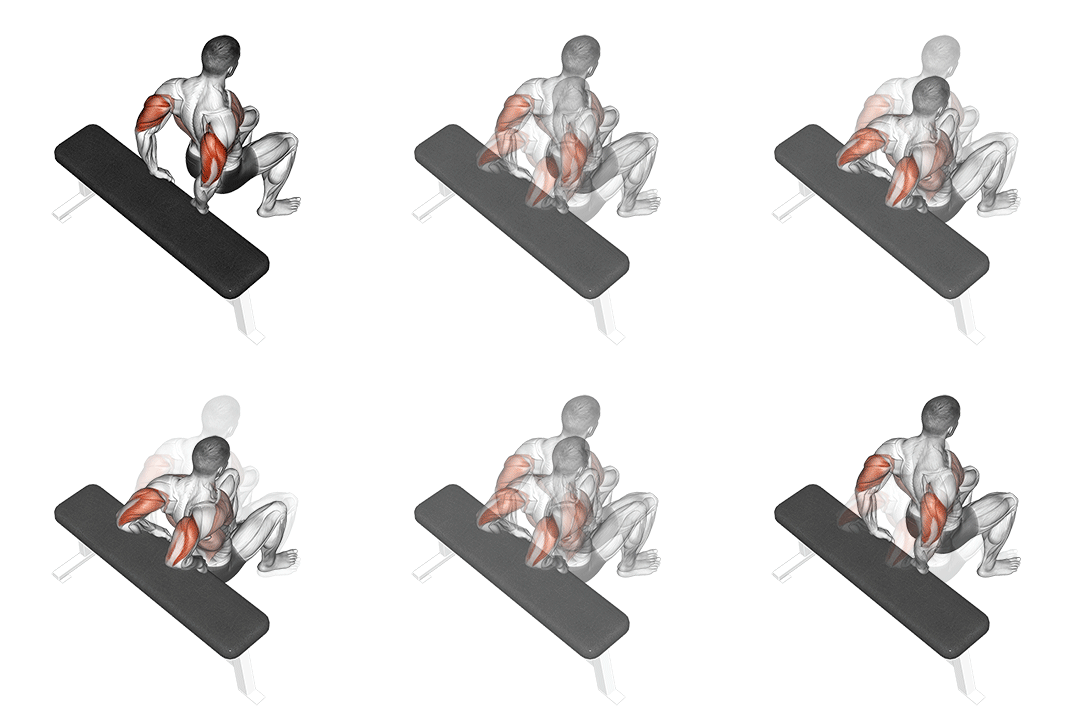
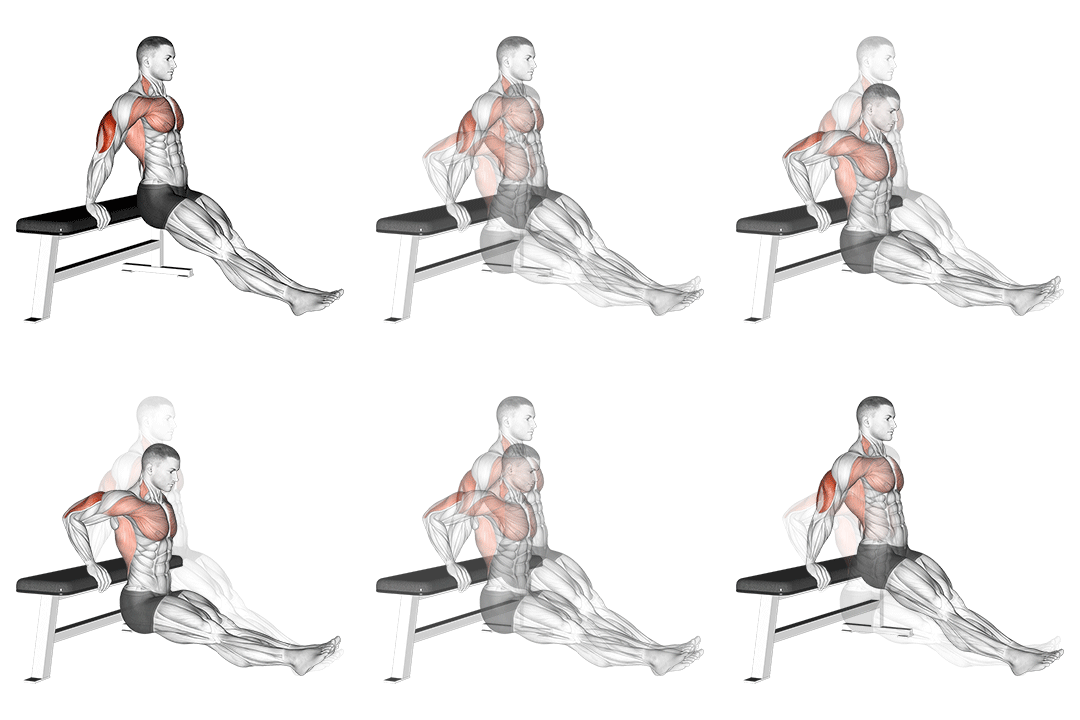
More comparisons with Dips - Triceps Version
Compare More Exercises
Use our free comparison tool to analyze any two exercises head-to-head.
Compare Exercises