

Dips - Chest Version vs Heavy Bag Thrust: Complete Comparison Guide
Dips - Chest Version vs Heavy Bag Thrust give you two different ways to load the pectorals with compound movement patterns. If you want clear guidance on which to pick, this guide breaks down muscle activation, biomechanics, equipment needs, progression options, injury risk, and programming cues. You'll get specific technique tips (eg. 30–45° forward lean for chest dips, hip-driven thrust mechanics for the heavy bag), rep ranges for hypertrophy and strength, and practical recommendations so you can choose the best tool for your goals and training environment.
Exercise Comparison
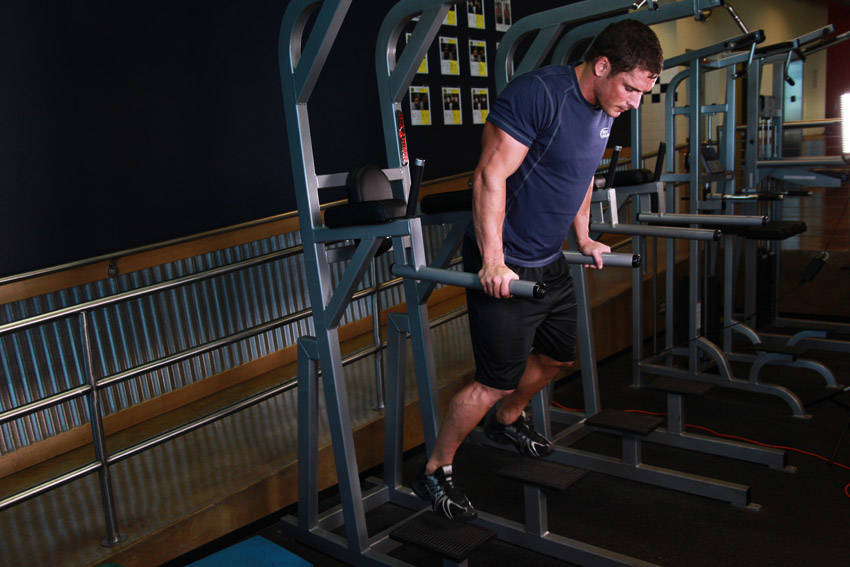
Dips - Chest Version
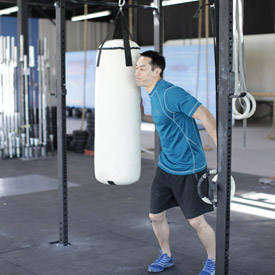
Heavy Bag Thrust
Head-to-Head Comparison
| Attribute | Dips - Chest Version | Heavy Bag Thrust |
|---|---|---|
| Target Muscle |
Pectorals
|
Pectorals
|
| Body Part |
Chest
|
Chest
|
| Equipment |
Other
|
Other
|
| Difficulty |
Intermediate
|
Intermediate
|
| Movement Type |
Compound
|
Compound
|
| Secondary Muscles |
2
|
3
|
Secondary Muscles Activated
Dips - Chest Version
Heavy Bag Thrust
Visual Comparison
Overview
Dips - Chest Version vs Heavy Bag Thrust give you two different ways to load the pectorals with compound movement patterns. If you want clear guidance on which to pick, this guide breaks down muscle activation, biomechanics, equipment needs, progression options, injury risk, and programming cues. You'll get specific technique tips (eg. 30–45° forward lean for chest dips, hip-driven thrust mechanics for the heavy bag), rep ranges for hypertrophy and strength, and practical recommendations so you can choose the best tool for your goals and training environment.
Key Differences
- Both exercises target the Pectorals using Other. The main differences are in their movement patterns and muscle activation angles.
Pros & Cons
Dips - Chest Version
+ Pros
- Direct lower-pec bias when leaning 30–45° forward
- Easy to progressively overload with dip belts or weight vests for strength (3–6 RM) and hypertrophy (6–12 reps)
- Compound pattern that also trains triceps and anterior deltoids under high mechanical tension
- Requires minimal specialized equipment (parallel bars or improvised supports)
− Cons
- Higher shoulder stress if you descend too deep or lack scapular control
- Harder for absolute beginners without regressions or assistance
- Range-of-motion and technique flaws can shift load off the pecs onto elbows and shoulders
Heavy Bag Thrust
+ Pros
- Trains explosive horizontal pushing and rate-of-force development
- Engages the abdominals and hip drive for force transfer—good for athletic conditioning
- Lower impingement risk in controlled ranges compared with deep dips
- Excellent for conditioning, power work, and sport-specific drills
− Cons
- Harder to quantify and progressively overload precisely for pure hypertrophy
- Requires a heavy bag, mounting, and space—less practical for some home users
- Explosive style reduces time under tension, so less optimal for pure muscle growth unless programmed for hypertrophy
When Each Exercise Wins
Dips allow sustained mechanical tension at longer muscle lengths and easy progressive overload (weighted dips, 6–12 reps, controlled 2–3s eccentrics). The 30–45° forward lean targets lower pec fibers more effectively than explosive thrusts.
You can add measurable external load and target low-rep high-tension sets (3–6 reps) with dips, producing greater maximal force adaptations than a heavy bag thrust, which is better for power than maximal strength.
The thrust is a simpler push pattern with lower shoulder mobility demands and immediate utility—start with a light bag and controlled reps to build coordination and core bracing before advancing to dips.
Dips can be performed on parallel surfaces or with two chairs and scaled with bands or weight vests, while a heavy bag requires purchase, space, and mounting that many home exercisers lack.
Frequently Asked Questions
Can I do both Dips - Chest Version and Heavy Bag Thrust in the same workout?
Yes. Pair heavy bag thrusts as a power primer (3–5 sets of 3–6 explosive reps) followed by dips for hypertrophy or strength (3–5 sets of 6–12 or 3–6 heavy reps). This sequence uses the thrust to raise rate-of-force development, then the dips to apply mechanical tension under controlled tempo.
Which exercise is better for beginners?
Heavy Bag Thrust is generally easier to learn because it requires less shoulder mobility and allows you to progress with a light bag and focus on bracing. Beginners can regress dips (bench or band-assisted) and work toward full chest dips once they build sufficient scapular and triceps strength.
How do the muscle activation patterns differ?
Dips produce a sustained eccentric-to-concentric activation with peak pec activity near the bottom-to-mid range and longer time under tension. Heavy Bag Thrust creates short, high-amplitude activation spikes during the explosive concentric phase, emphasizing rate-of-force development over continuous tension.
Can Heavy Bag Thrust replace Dips - Chest Version?
Not entirely. If your priority is hypertrophy or maximal strength, heavy bag thrusts are a poor substitute because they’re hard to quantify and provide less time under tension. For power, conditioning, or when dips aren’t available due to shoulder pain or equipment, the thrust is a viable alternative.
Expert Verdict
Use Dips - Chest Version when your primary goal is pectoral hypertrophy or raw pressing strength. The forward-lean dip shifts the force vector to the lower pecs, creates longer muscle length under tension, and accepts progressive overload via added weight. Program dips for 3–5 sets of 6–12 reps for growth or 3–6 reps heavy for strength, keeping a 30–45° trunk lean and scapula control. Choose Heavy Bag Thrust when you want power, conditioning, and core transfer—use short, explosive sets (3–6 reps, focus on hip drive, neutral spine, and rapid intent) or higher-rep circuits for conditioning. Both have value; pick dips for structure and loadability, thrusts for speed and sport specificity.
Also Compare
More comparisons with Dips - Chest Version
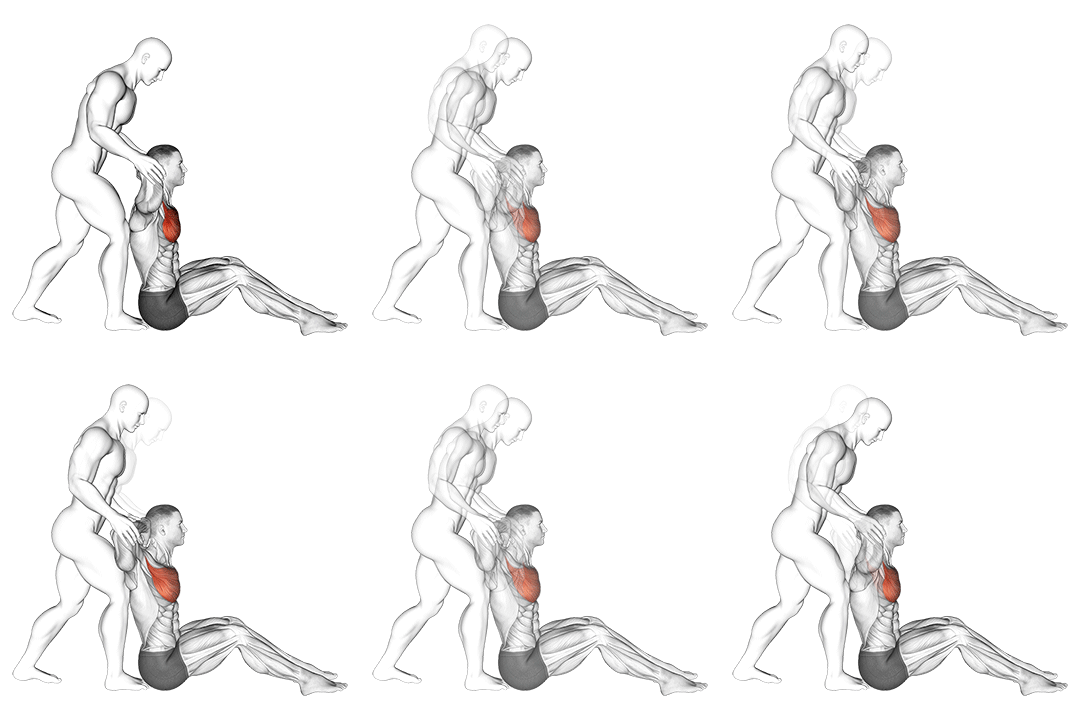
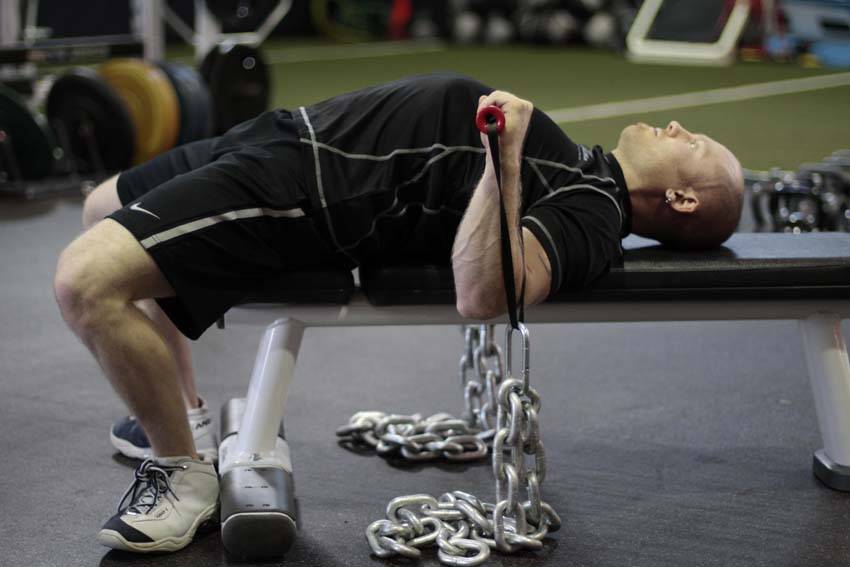

Compare More Exercises
Use our free comparison tool to analyze any two exercises head-to-head.
Compare Exercises