

Dumbbell Around Pullover vs Dumbbell Bench Press: Complete Comparison Guide
Dumbbell Around Pullover vs Dumbbell Bench Press — two compound dumbbell moves that both target the pectorals but load the chest differently. If you want clear answers about which to choose for muscle growth, strength, shoulder health, or home workouts, this guide has your back. You’ll get step-by-step technique cues, biomechanical explanations (length-tension, force vectors, scapular control), rep and progression recommendations, pros and cons, and scenario-based winners so you can pick the best exercise for your goals.
Exercise Comparison
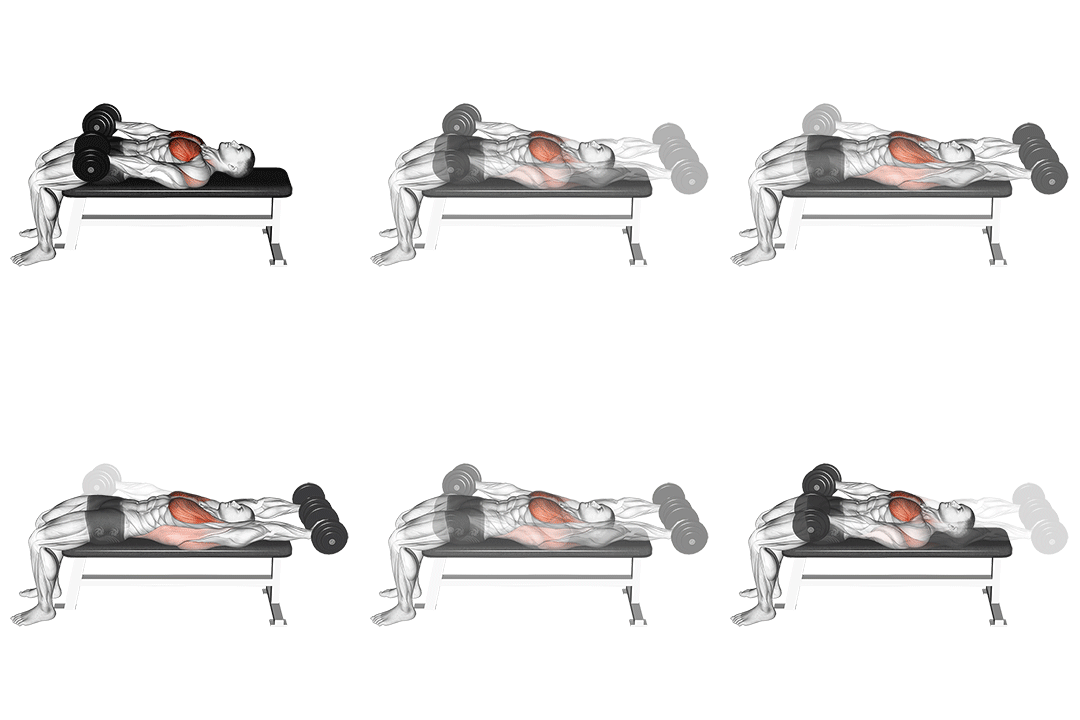
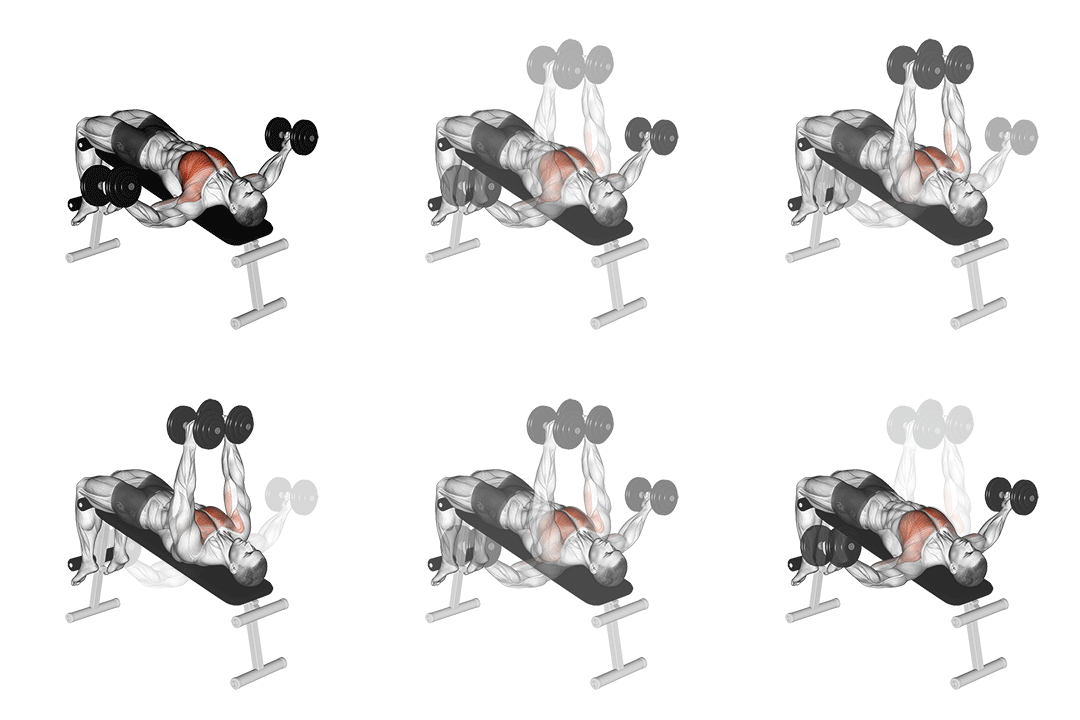
Dumbbell Around Pullover
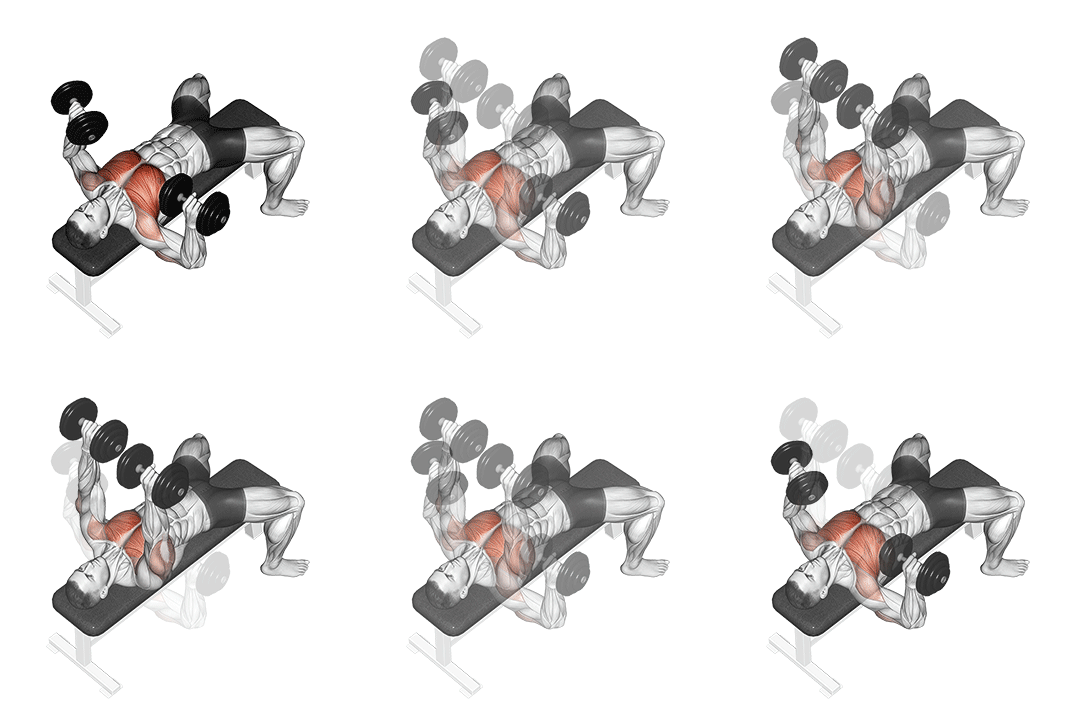
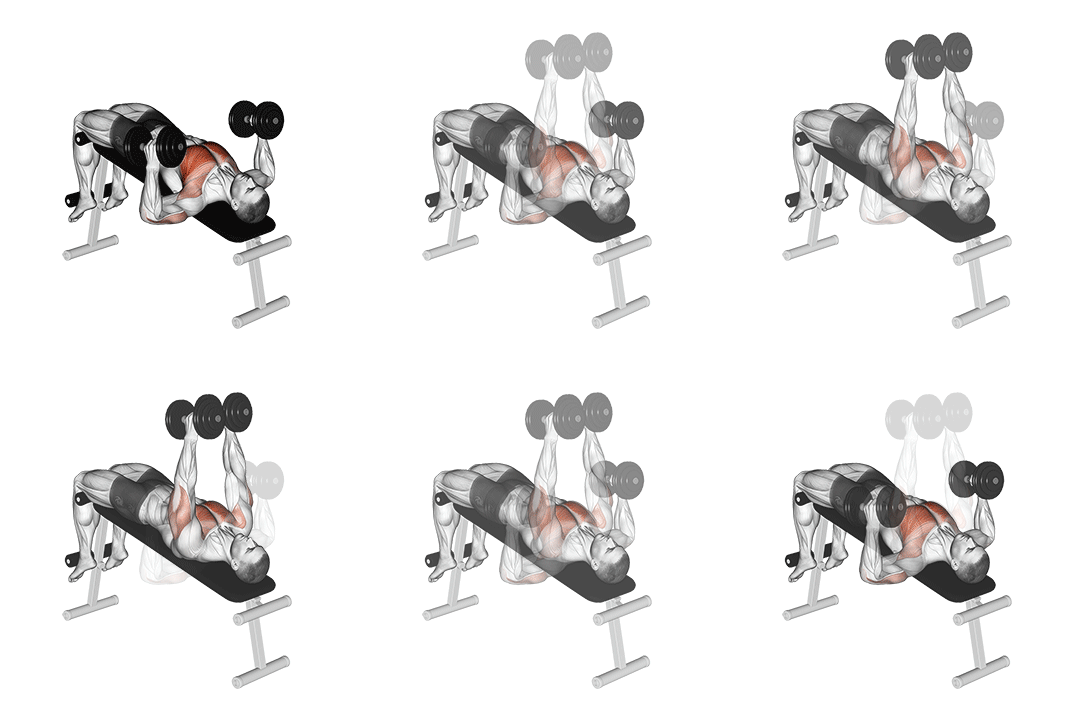
Dumbbell Bench Press
Head-to-Head Comparison
| Attribute | Dumbbell Around Pullover | Dumbbell Bench Press |
|---|---|---|
| Target Muscle |
Pectorals
|
Pectorals
|
| Body Part |
Chest
|
Chest
|
| Equipment |
Dumbbell
|
Dumbbell
|
| Difficulty |
Intermediate
|
Intermediate
|
| Movement Type |
Compound
|
Compound
|
| Secondary Muscles |
2
|
2
|
Secondary Muscles Activated
Dumbbell Around Pullover
Dumbbell Bench Press
Visual Comparison
Overview
Dumbbell Around Pullover vs Dumbbell Bench Press — two compound dumbbell moves that both target the pectorals but load the chest differently. If you want clear answers about which to choose for muscle growth, strength, shoulder health, or home workouts, this guide has your back. You’ll get step-by-step technique cues, biomechanical explanations (length-tension, force vectors, scapular control), rep and progression recommendations, pros and cons, and scenario-based winners so you can pick the best exercise for your goals.
Key Differences
- Both exercises target the Pectorals using Dumbbell. The main differences are in their movement patterns and muscle activation angles.
Pros & Cons
Dumbbell Around Pullover
+ Pros
- Loads the pecs at long muscle lengths to emphasize eccentric stretch and increase time under tension
- Strong secondary activation of latissimus dorsi and serratus for thoracic expansion and upper-body integration
- Can be performed with a single dumbbell on bench, ball, or floor — high equipment flexibility
- Useful as a finishing movement to target chest while reducing heavy pressing fatigue
− Cons
- Requires good shoulder and thoracic mobility; risk of impingement if range is excessive
- Harder to progressively overload compared with bench press; limited absolute loading
- Less direct carryover to heavy horizontal pressing strength
Dumbbell Bench Press
+ Pros
- Direct horizontal pressing movement that maximizes pectoral and triceps overload for hypertrophy and strength
- Easy to progressively load with incremental dumbbell increments and rep schemes
- Teaches a transferable pressing pattern used in many strength programs
- Dumbbells allow natural wrist rotation, reducing joint stress compared to fixed bars
− Cons
- Requires a bench and matched dumbbells for best loading — less flexible for minimal-equipment setups
- Can load the shoulders heavily if elbows flare beyond ~60°, increasing impingement risk
- May fatigue CNS and prime movers more, making it less suitable as a late-session isolation substitute
When Each Exercise Wins
The bench press allows higher absolute loads and easier progressive overload across the mid-range where pectoral activation peaks. Use 6–12 reps, controlled 2–3 second eccentrics, and occasional pause reps to maximize muscle fiber recruitment.
Strength improvements rely on moving heavier loads and specific pressing patterns; the bench press scales better for low-rep heavy sets (3–6 reps) and overload strategies like tempo, cluster sets, and heavier weekly loading.
Beginners learn a straightforward pressing pattern and can progressively increase weight safely. Basic cues (scapular retraction, elbows ~45°, feet drive) produce strong pectoral and triceps development with lower technical demand than the pullover.
Pullover can be done with a single dumbbell and a floor or stability ball and still deliver effective chest and lat stimulus. It’s easier to fit into minimal-equipment sessions while offering unique stretch-mediated stimulus.
Frequently Asked Questions
Can I do both Dumbbell Around Pullover and Dumbbell Bench Press in the same workout?
Yes. Use the bench press early in the workout as your main compound lift for heavier sets (3–6 or 6–12 reps), then add pullovers as an accessory for 8–15 reps to load the chest at longer muscle lengths and recruit lats without compromising pressing strength.
Which exercise is better for beginners?
Dumbbell Bench Press is generally better for beginners because the pressing pattern is easier to learn and scale. Start with light weights, focus on scapular retraction and elbows ~45°, and progress load or reps before adding more technical movements like the pullover.
How do the muscle activation patterns differ?
The pullover emphasizes eccentric loading of the pecs and greater lat/serratus involvement as the shoulder extends behind the torso, placing pec fibers at longer lengths. The bench press emphasizes concentric mid-range pectoral activation and heavier triceps contribution due to the horizontal pressing vector.
Can Dumbbell Bench Press replace Dumbbell Around Pullover?
For pure pressing strength and hypertrophy you can prioritize the bench press in most programs, but it won’t replicate the pullover’s stretch-mediated chest stimulus and lat integration. If you want those specific benefits, include both or rotate them across weeks.
Expert Verdict
If your primary goal is hypertrophy and measurable progression in pressing strength, prioritize the Dumbbell Bench Press as your main chest exercise — load it for 6–12 reps for size or 3–6 reps for strength and use progressive overload. Use the Dumbbell Around Pullover as a complementary movement to target the chest at long muscle lengths, improve thoracic mobility, and recruit lats and serratus; perform it for 8–15 controlled reps with elbows slightly bent and a focus on a smooth eccentric. For limited equipment or variety days, choose pullovers; for heavy pressing focus and systematic progress, choose bench presses.
Also Compare
More comparisons with Dumbbell Around Pullover
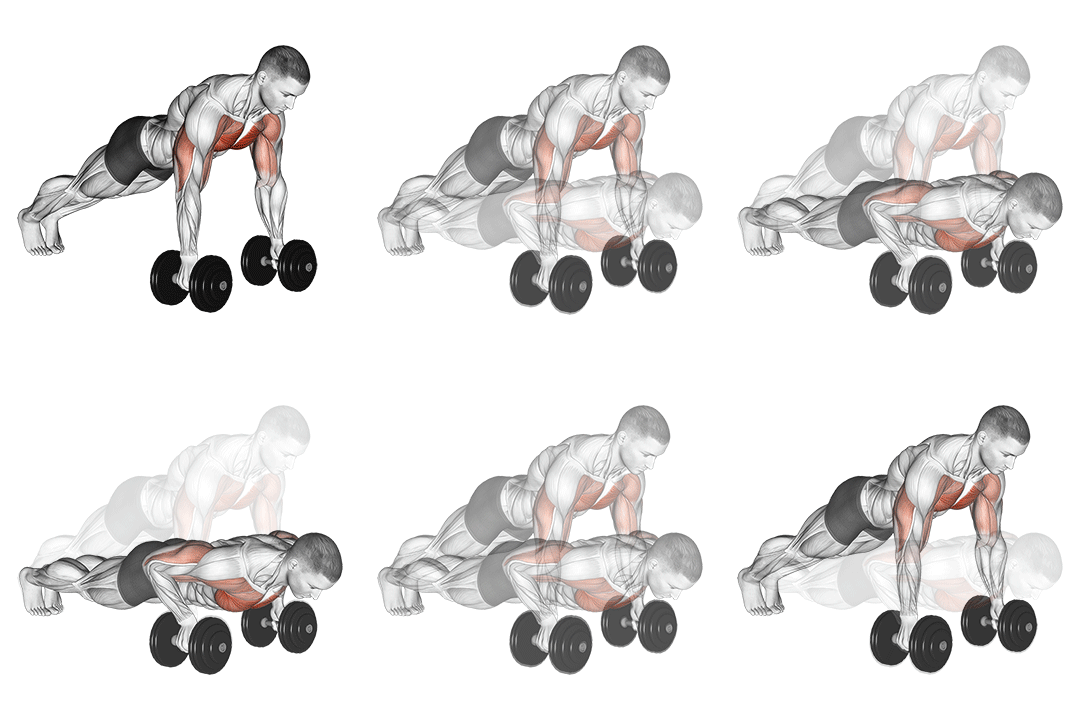
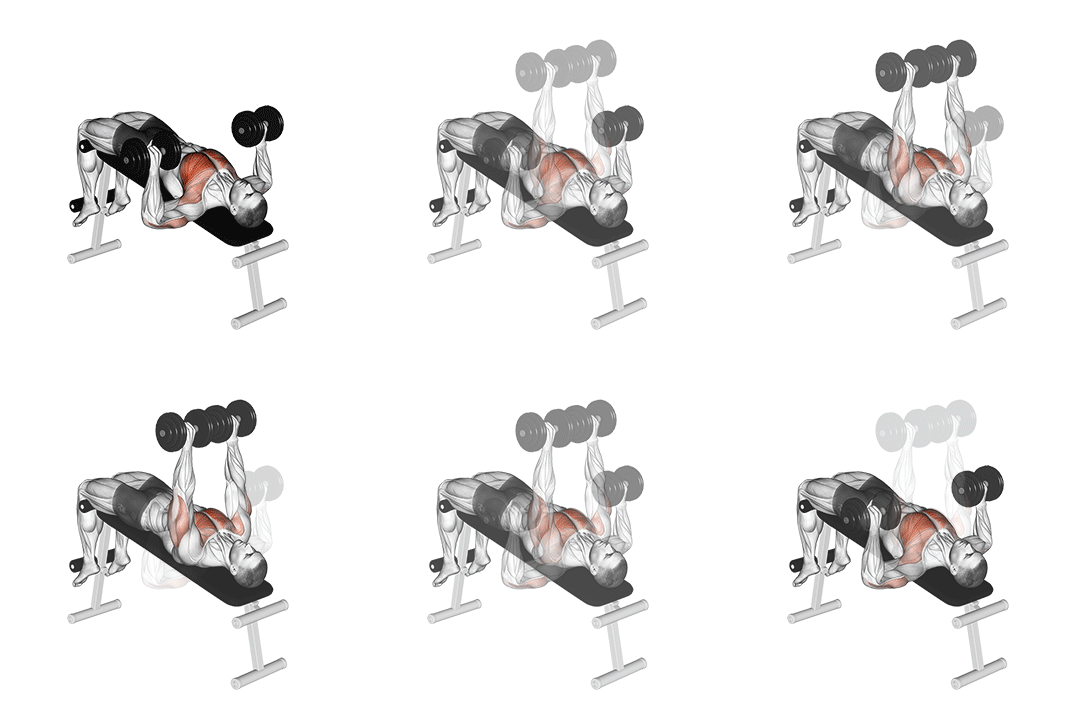
More comparisons with Dumbbell Bench Press
Compare More Exercises
Use our free comparison tool to analyze any two exercises head-to-head.
Compare Exercises