

Dumbbell Around Pullover vs Dumbbell Decline Fly: Complete Comparison Guide
Dumbbell Around Pullover vs Dumbbell Decline Fly puts two chest-focused dumbbell moves head-to-head so you can pick the right tool for your program. You’ll get clear comparisons of which movement hits the pectorals harder, how each recruits secondary muscles, what equipment and bench angles are needed, plus practical rep ranges and technique cues. Read on for biomechanics-based advice (length-tension, force vectors, moment arms), quick coaching cues, and recommendations for hypertrophy, strength, beginners, and home setups.
Exercise Comparison
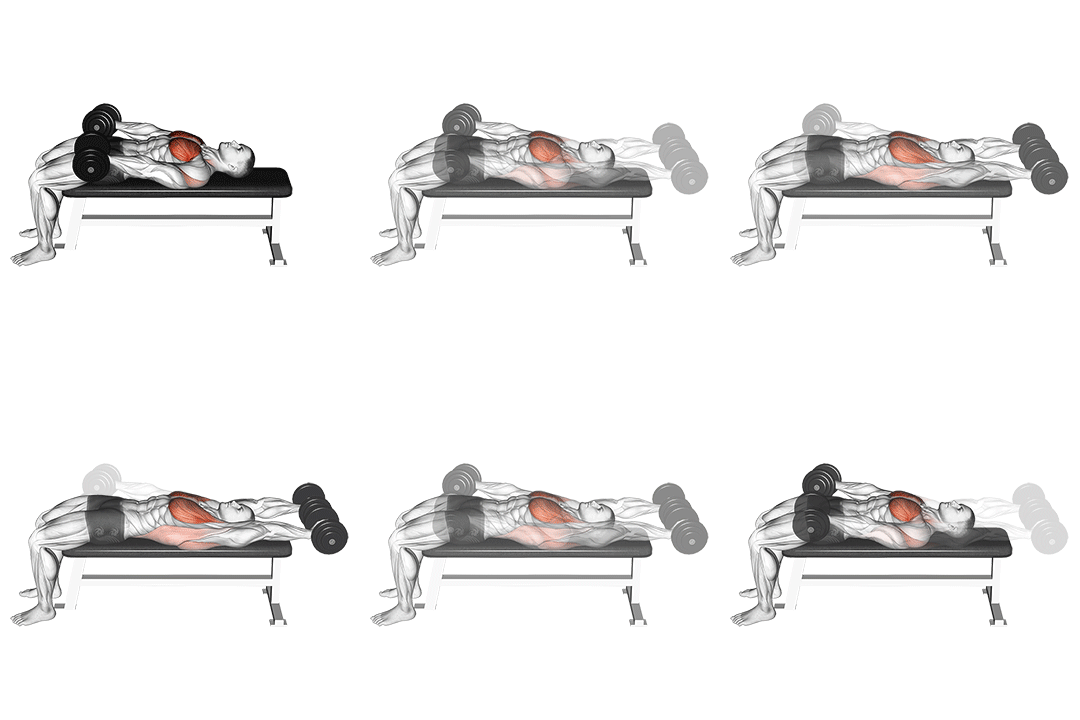
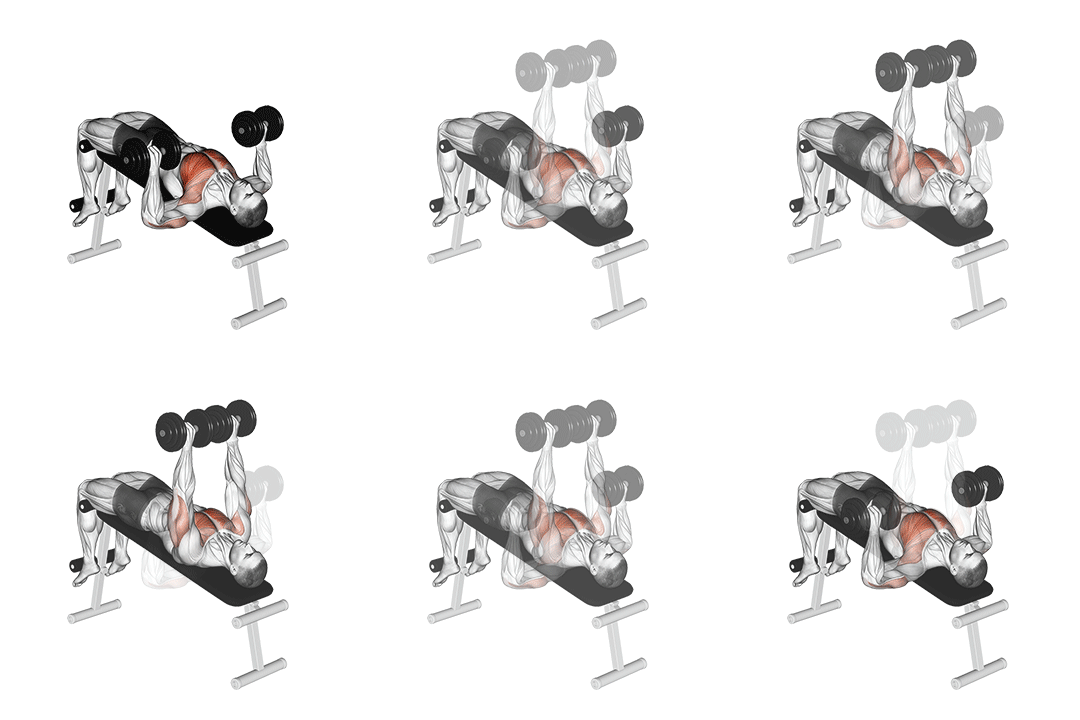
Dumbbell Around Pullover
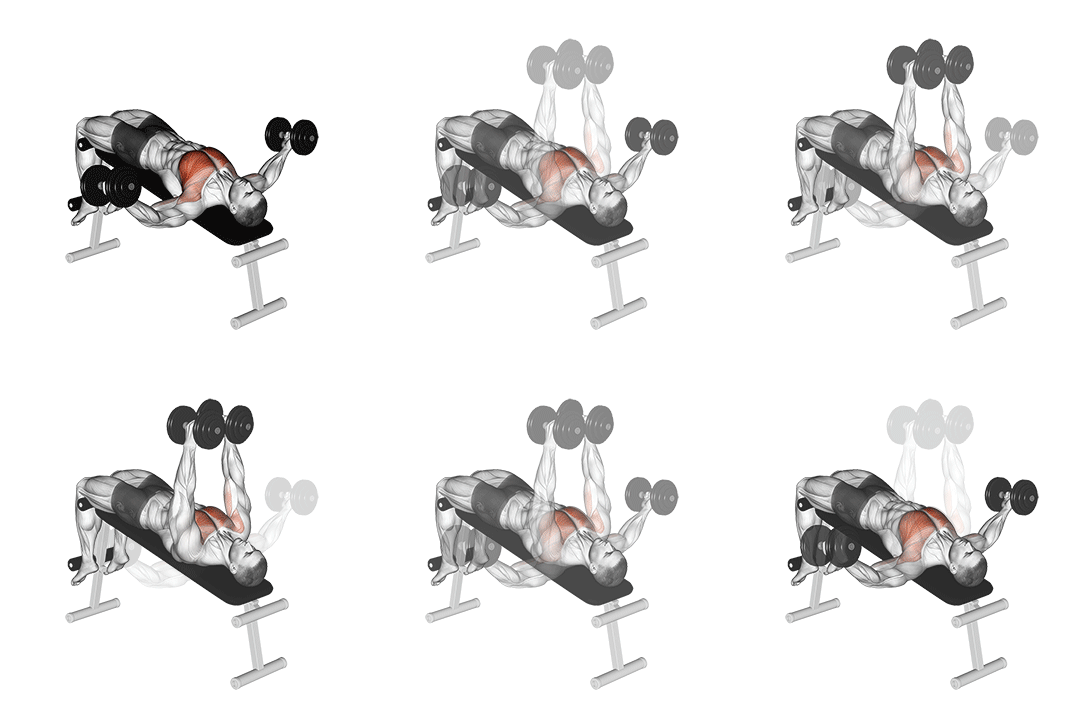
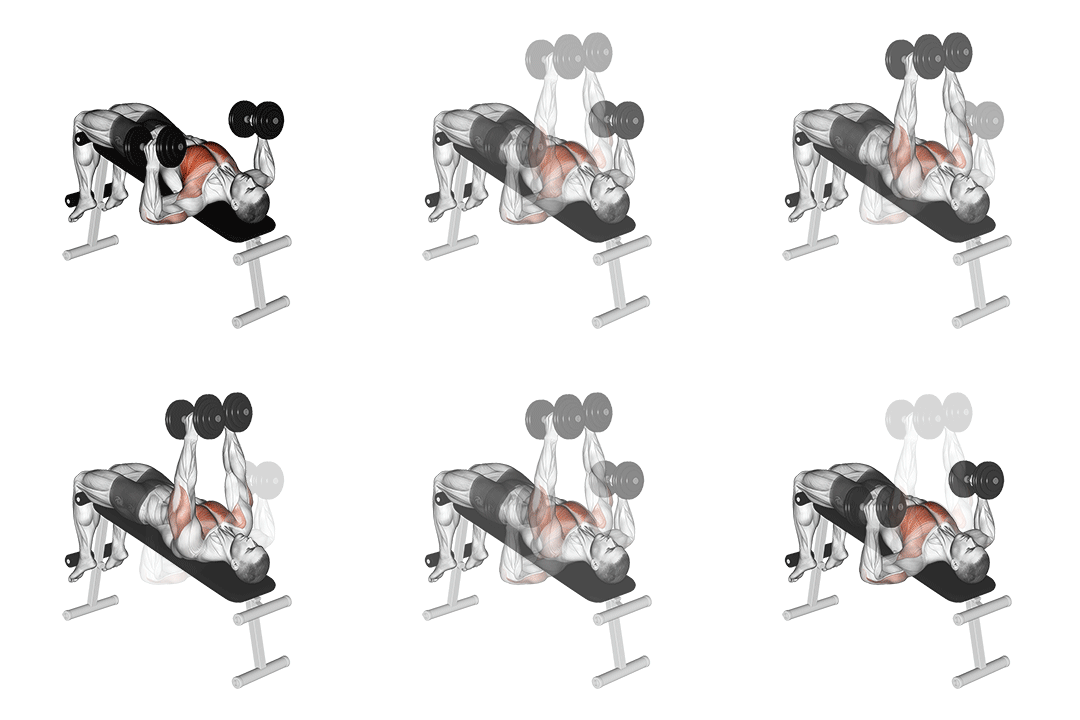
Dumbbell Decline Fly
Head-to-Head Comparison
| Attribute | Dumbbell Around Pullover | Dumbbell Decline Fly |
|---|---|---|
| Target Muscle |
Pectorals
|
Pectorals
|
| Body Part |
Chest
|
Chest
|
| Equipment |
Dumbbell
|
Dumbbell
|
| Difficulty |
Intermediate
|
Beginner
|
| Movement Type |
Compound
|
Isolation
|
| Secondary Muscles |
2
|
1
|
Secondary Muscles Activated
Dumbbell Around Pullover
Dumbbell Decline Fly
Visual Comparison
Overview
Dumbbell Around Pullover vs Dumbbell Decline Fly puts two chest-focused dumbbell moves head-to-head so you can pick the right tool for your program. You’ll get clear comparisons of which movement hits the pectorals harder, how each recruits secondary muscles, what equipment and bench angles are needed, plus practical rep ranges and technique cues. Read on for biomechanics-based advice (length-tension, force vectors, moment arms), quick coaching cues, and recommendations for hypertrophy, strength, beginners, and home setups.
Key Differences
- Dumbbell Around Pullover is a compound movement, while Dumbbell Decline Fly is an isolation exercise.
- Difficulty levels differ: Dumbbell Around Pullover is intermediate, while Dumbbell Decline Fly is beginner.
- Both exercises target the Pectorals using Dumbbell. The main differences are in their movement patterns and muscle activation angles.
Pros & Cons
Dumbbell Around Pullover
+ Pros
- Compound movement that develops chest and lats together
- Requires only one dumbbell and no decline bench
- High progression variety: load, ROM, tempo
- Longer lever creates strong stretch stimulus for muscle growth
− Cons
- Technical timing of shoulder extension and scapula control is required
- Can stress low back or shoulders if core and scapula aren’t braced
- Less isolated chest peak contraction than a fly
Dumbbell Decline Fly
+ Pros
- Isolates the pectorals via horizontal adduction
- Clear, single-plane movement easy to coach and monitor
- Excellent for peak contraction and time under tension (8–15 reps)
- Lower lat and triceps involvement keeps focus on the chest
− Cons
- Requires a decline bench for full effect
- Higher anterior shoulder strain at end range if overloaded
- Limited progression options without compromising shoulder health
When Each Exercise Wins
Decline fly produces focused horizontal adduction and maintains constant tension across the pecs, making it ideal for 8–15 rep sets and controlled eccentrics to maximize time under tension and fiber recruitment in the sternal pec.
Around pullover is a compound lift that lets you handle heavier absolute loads and train shoulder extension strength while engaging lats and triceps, which transfers better to pressing and pulling strength.
The fly follows one plane and requires simple cues (soft bend in elbow, controlled arc, scapula stable), making it easier to learn safe mechanics before progressing to more complex long-lever movements.
You can perform pullover variations with a single dumbbell on a floor or stability ball, so it fits tight spaces and minimal equipment while still offering a strong chest and lat stimulus.
Frequently Asked Questions
Can I do both Dumbbell Around Pullover and Dumbbell Decline Fly in the same workout?
Yes — pair them intelligently: do the compound pullover earlier to use heavier loads (6–10 reps), then follow with decline flies for isolation (8–15 reps) to pre-exhaust or add volume without heavy loading of the shoulder joint.
Which exercise is better for beginners?
Dumbbell Decline Fly is generally better for beginners because it uses a single-plane movement and lighter loads, making it easier to teach horizontal adduction and pec-specific tension safely.
How do the muscle activation patterns differ?
Pullover combines shoulder extension and circumduction, increasing lat and triceps co-activation as the pecs work through a long lever; decline fly focuses on horizontal adduction, keeping peak activation within the pectoral fibers and stressing the anterior deltoid as a synergist.
Can Dumbbell Decline Fly replace Dumbbell Around Pullover?
If your sole goal is pec isolation and hypertrophy, decline fly can replace the pullover. However, you’ll lose the lat and triceps carryover and the compound strength stimulus pullover provides, so keep pullovers in rotation if you want multi-joint development.
Expert Verdict
Use the Dumbbell Decline Fly when your primary goal is chest hypertrophy and you want a focused stretch–shortening cycle on the pectorals: aim for 8–15 reps with a 2–4 second eccentric and a 1–2 second peak contraction. Choose the Dumbbell Around Pullover when you want compound development that includes the lats and triceps or need an equipment-light option for home training; progress with heavier loads or longer eccentrics in 6–12 rep ranges. Prioritize form: keep scapular control and avoid excessive shoulder extension on flies. Combine both across phases—flies for isolation blocks, pullovers for compound strength and length-tension variety.
Also Compare
More comparisons with Dumbbell Around Pullover
More comparisons with Dumbbell Decline Fly
Compare More Exercises
Use our free comparison tool to analyze any two exercises head-to-head.
Compare Exercises