

Dumbbell Bent Over Row vs One-Arm Dumbbell Row: Complete Comparison Guide
Dumbbell Bent Over Row vs One-Arm Dumbbell Row — if you're building a thicker, stronger back you need to know which movement fits your goals. I'll break down how each exercise loads the lats, how the torso angle and force vectors change muscle tension, what equipment and space you need, and clear technique cues so you can lift safely. Expect actionable recommendations: rep ranges for hypertrophy and strength, progression options, and when to pick unilateral work to fix side-to-side imbalances.
Exercise Comparison
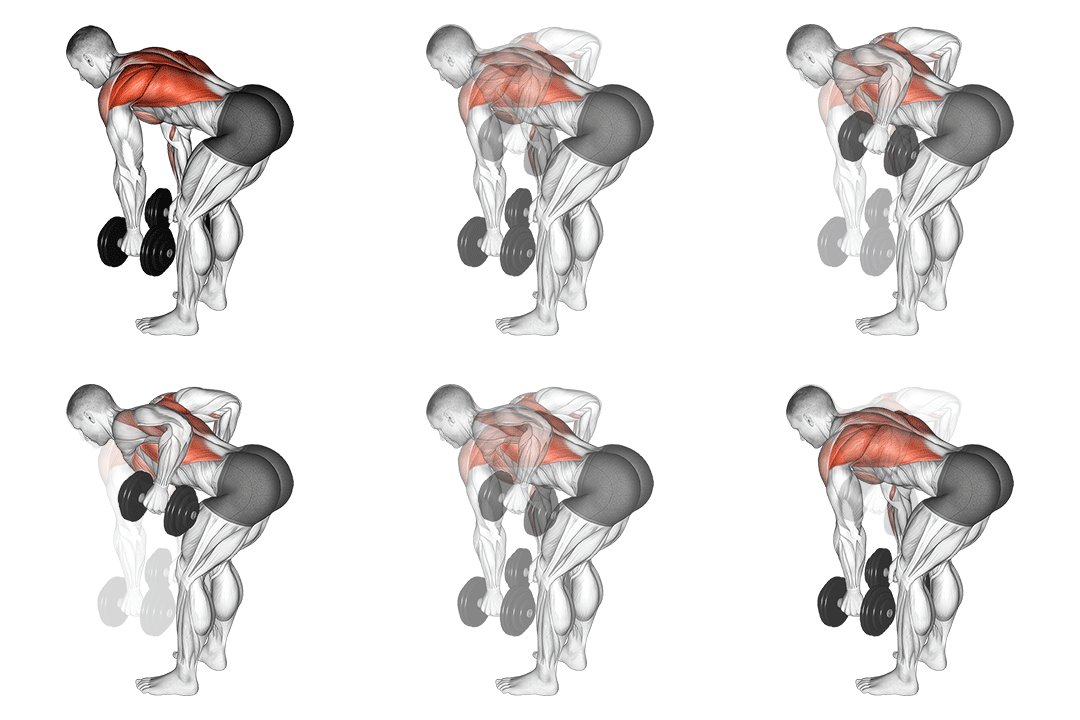
Dumbbell Bent Over Row
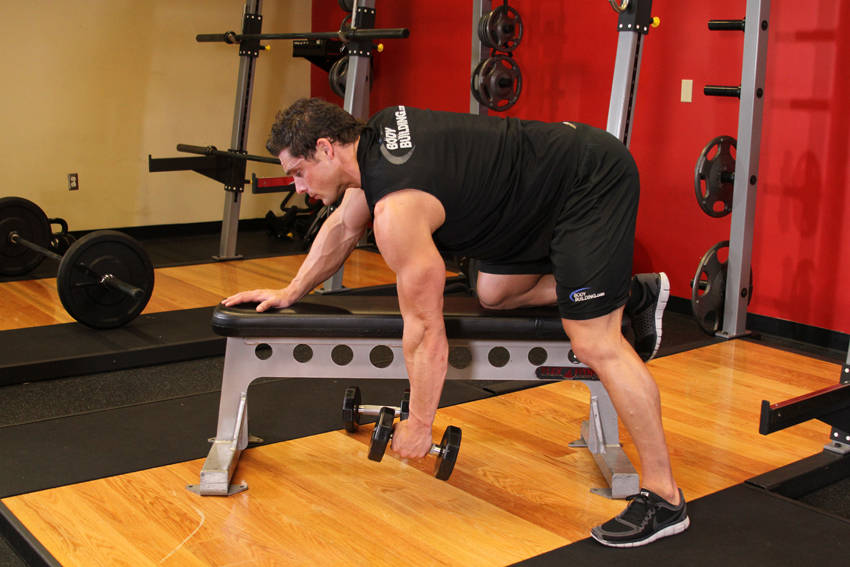
One-arm Dumbbell Row
Head-to-Head Comparison
| Attribute | Dumbbell Bent Over Row | One-arm Dumbbell Row |
|---|---|---|
| Target Muscle |
Lats
|
Lats
|
| Body Part |
Back
|
Back
|
| Equipment |
Dumbbell
|
Dumbbell
|
| Difficulty |
Intermediate
|
Intermediate
|
| Movement Type |
Compound
|
Compound
|
| Secondary Muscles |
2
|
3
|
Secondary Muscles Activated
Dumbbell Bent Over Row
One-arm Dumbbell Row
Visual Comparison
Overview
Dumbbell Bent Over Row vs One-Arm Dumbbell Row — if you're building a thicker, stronger back you need to know which movement fits your goals. I'll break down how each exercise loads the lats, how the torso angle and force vectors change muscle tension, what equipment and space you need, and clear technique cues so you can lift safely. Expect actionable recommendations: rep ranges for hypertrophy and strength, progression options, and when to pick unilateral work to fix side-to-side imbalances.
Key Differences
- Both exercises target the Lats using Dumbbell. The main differences are in their movement patterns and muscle activation angles.
Pros & Cons
Dumbbell Bent Over Row
+ Pros
- Higher total loading potential for raw strength work
- Better for building mid-back thickness and scapular retraction
- Efficient: trains both sides simultaneously to save time
- Improves hip-hinge stability and posterior chain coordination
− Cons
- Greater lower-back and spinal loading risk
- Harder to isolate side-to-side imbalances
- Requires disciplined torso angle and bracing to avoid form breakdown
One-arm Dumbbell Row
+ Pros
- Easier to learn with bench support and lower lumbar stress
- Better unilateral control to fix left-right strength gaps
- Often allows a fuller lat stretch and stronger peak contraction
- Requires less setup and can be done with a single dumbbell
− Cons
- Lower absolute loading potential compared to two-arm variations
- Can encourage shoulder rotation or torso cheating if not braced
- Takes longer per side when programming volume
When Each Exercise Wins
For hypertrophy, unilateral control and a longer range of motion help you hit the lats through a fuller length-tension cycle. Use 8–12 reps per side and emphasize a 1–2 second pause at peak contraction to increase time under tension.
Bent-over rows let you load both arms simultaneously and handle heavier absolute weight, which is better for low-rep strength cycles (4–6 reps). Maintaining a solid hip hinge and progressive overload builds raw pulling strength and spinal stability.
Beginners benefit from the bench support and simpler movement pattern that reduces lower-back demand and isolates elbow drive. Start with 8–12 reps and focus on scapular retraction and a neutral spine.
Most home gyms have limited equipment; a single dumbbell and a sturdy surface are enough for one-arm rows. They scale easily by increasing reps, tempo, or using time-under-tension techniques.
Frequently Asked Questions
Can I do both Dumbbell Bent Over Row and One-Arm Dumbbell Row in the same workout?
Yes. Pair them by doing bent-over rows as the main heavy compound (4–6 sets of 4–8 reps) and follow with one-arm rows for unilateral hypertrophy (2–3 sets of 8–12 reps per side). This sequence uses the bent-over row for load and the one-arm row to clean up range-of-motion and imbalances.
Which exercise is better for beginners?
One-arm rows are usually better for beginners because bench support reduces lumbar load and lets you focus on elbow drive and scapular mechanics. Start with light weight and 8–12 reps per side to build movement quality.
How do the muscle activation patterns differ?
Bent-over rows produce a more horizontal force vector, demanding greater scapular retraction and erector spinae stabilization, while one-arm rows allow a longer ROM and more vertical lockout emphasis, which can boost peak lat shortening and unilateral activation. Both strongly recruit lats and biceps but differ in stabilizer demand.
Can One-Arm Dumbbell Row replace Dumbbell Bent Over Row?
It can replace bent-over rows if your goal is hypertrophy, rehab, or you lack the lower-back capacity to hinge under heavy load. For maximal strength and mid-back thickness, keep bent-over rows in the program at least periodically.
Expert Verdict
Use the dumbbell bent-over row when your priority is building raw back strength and mid-back thickness and you can maintain a disciplined hip hinge and core brace. Program it for heavier sets (4–8 reps) with strict form to minimize lumbar shear. Choose the one-arm dumbbell row when you want unilateral control, a fuller lat stretch, or you need to reduce lower-back stress—ideal for hypertrophy blocks (8–12 reps) and correcting imbalances. Both belong in a balanced program: alternate them by phase or pair one as your heavy compound and the other as a targeted unilateral follow-up.
Also Compare
More comparisons with Dumbbell Bent Over Row
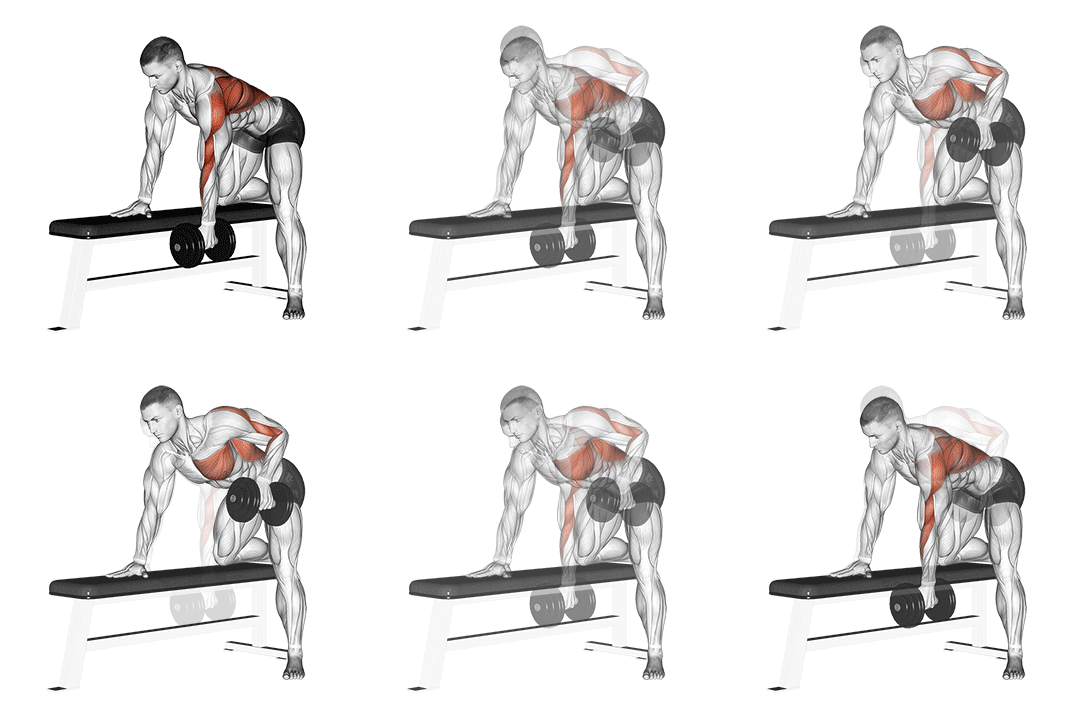
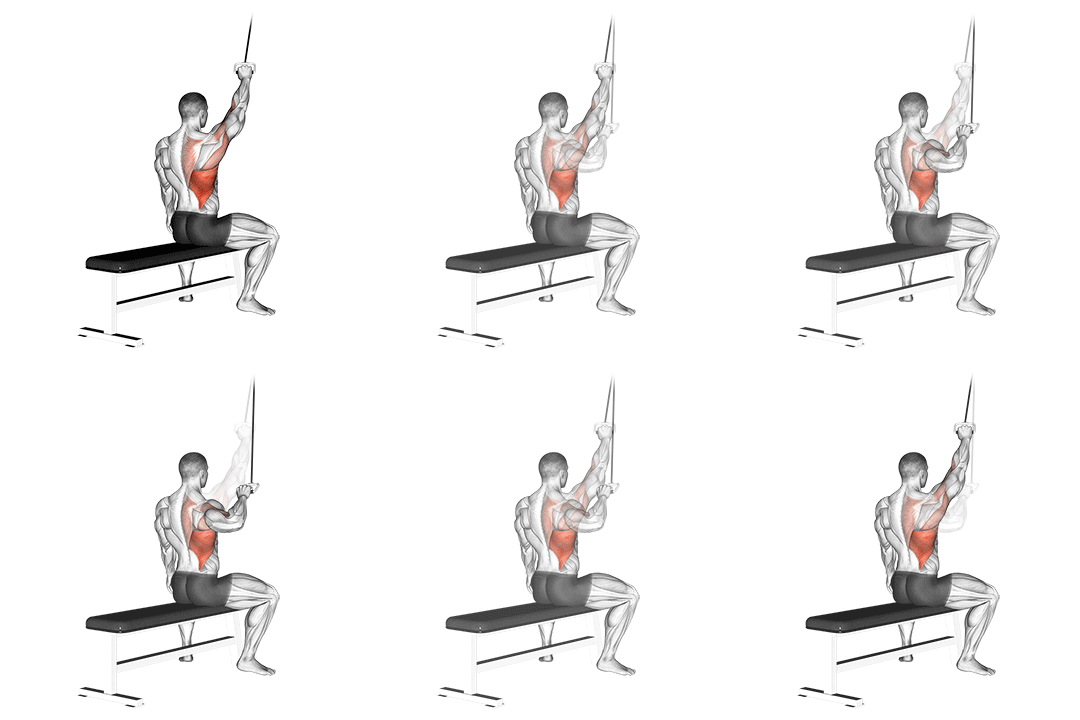
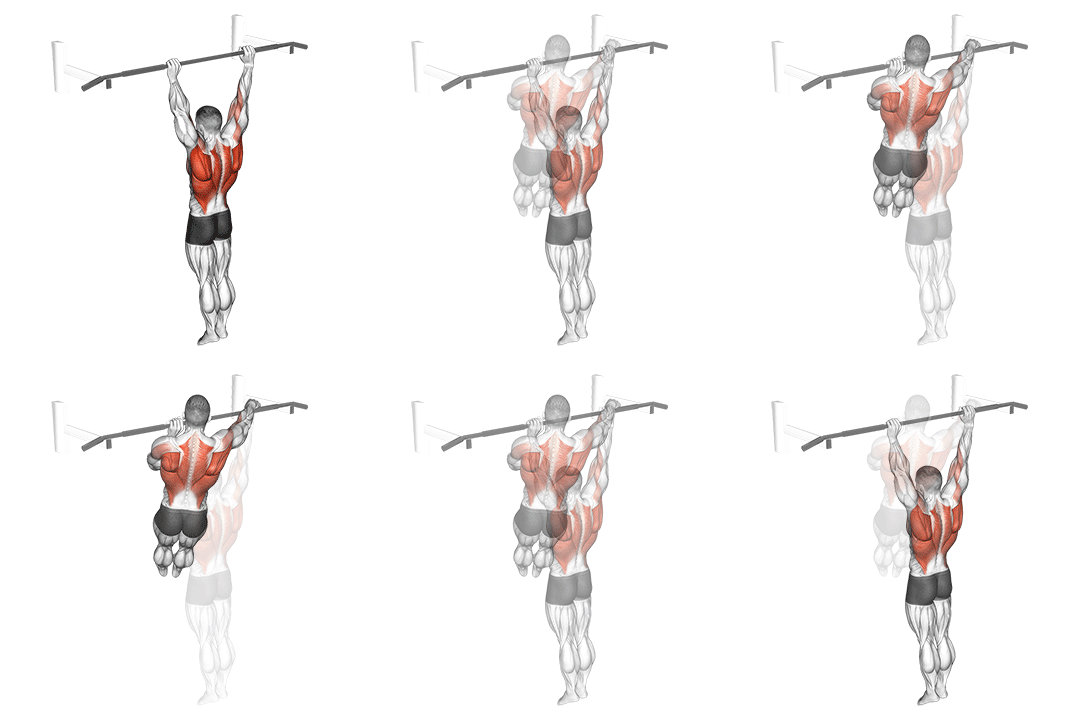
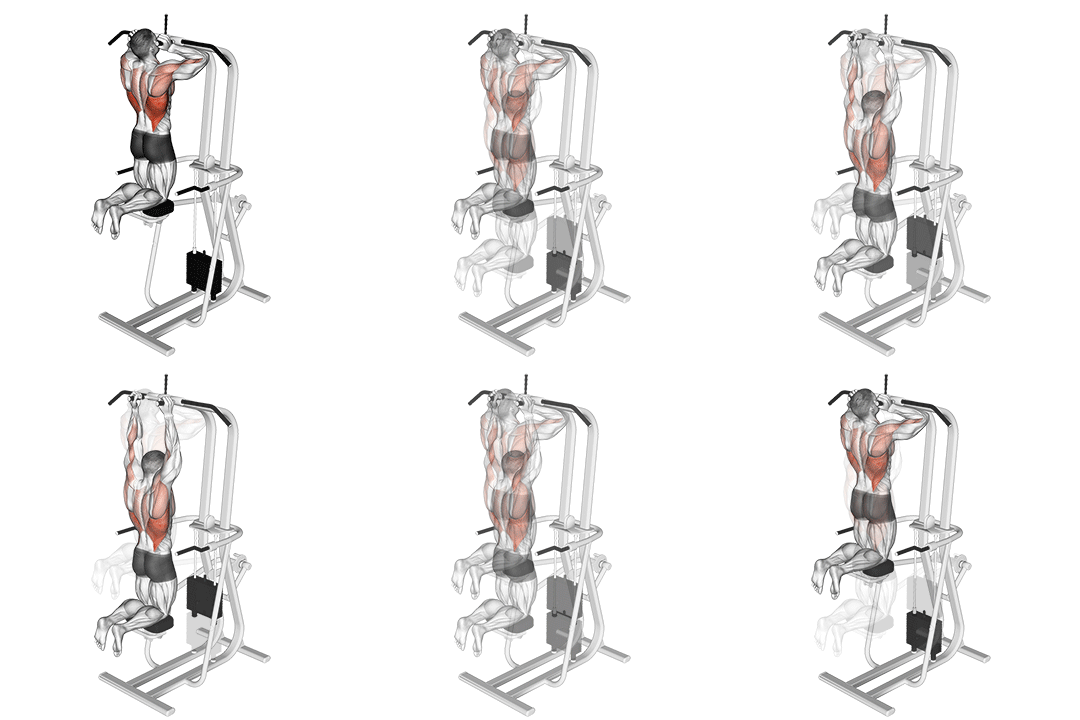
More comparisons with One-arm Dumbbell Row
Compare More Exercises
Use our free comparison tool to analyze any two exercises head-to-head.
Compare Exercises