

Jack Burpee vs Jack Jump (male): Complete Comparison Guide
Jack Burpee vs Jack Jump (male) — both are bodyweight, cardio-focused moves that raise heart rate fast. If you want efficient conditioning, you need to know how they differ in muscle recruitment, technical demand, and programming. In this guide you’ll get clear, actionable cues for each movement, a biomechanical breakdown of which muscles fire and when, rep-range and progression suggestions (sets of 3–5 rounds, 8–20 reps), and direct recommendations based on your goal: conditioning, muscle stimulus, or easy home workouts.
Exercise Comparison
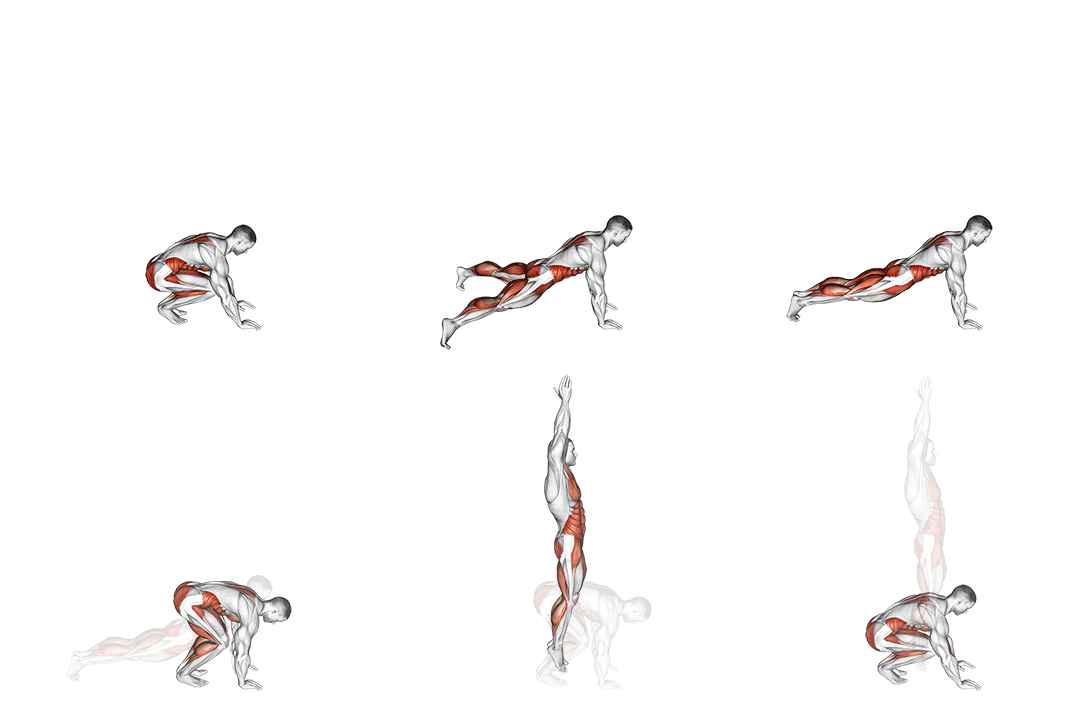
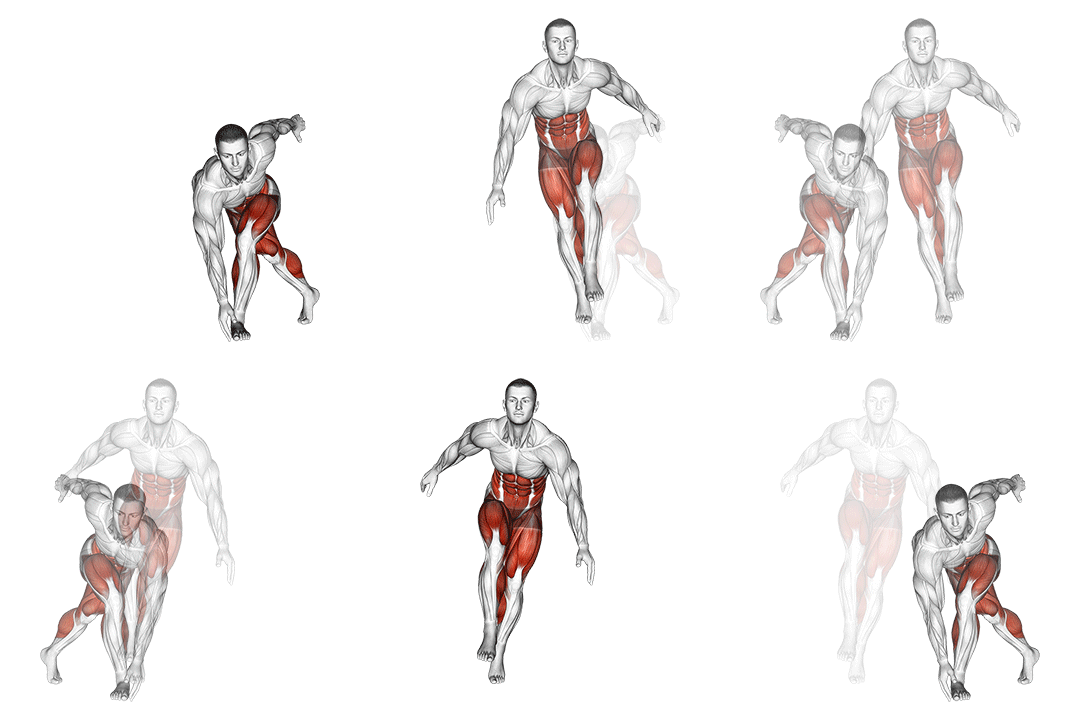
Jack Burpee
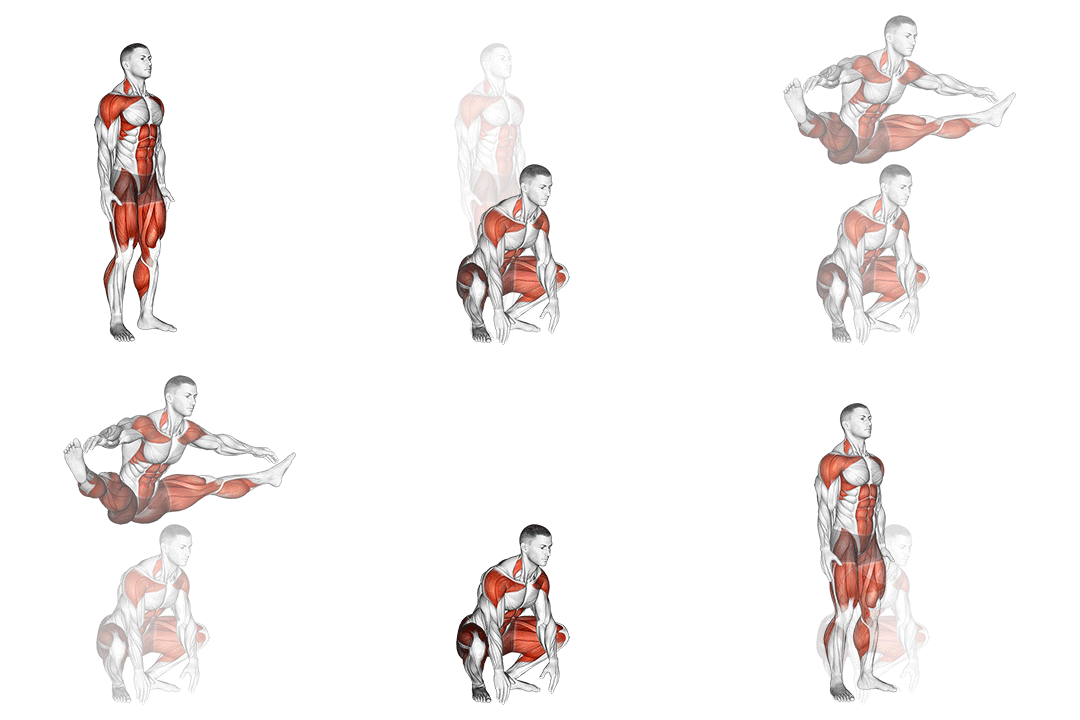
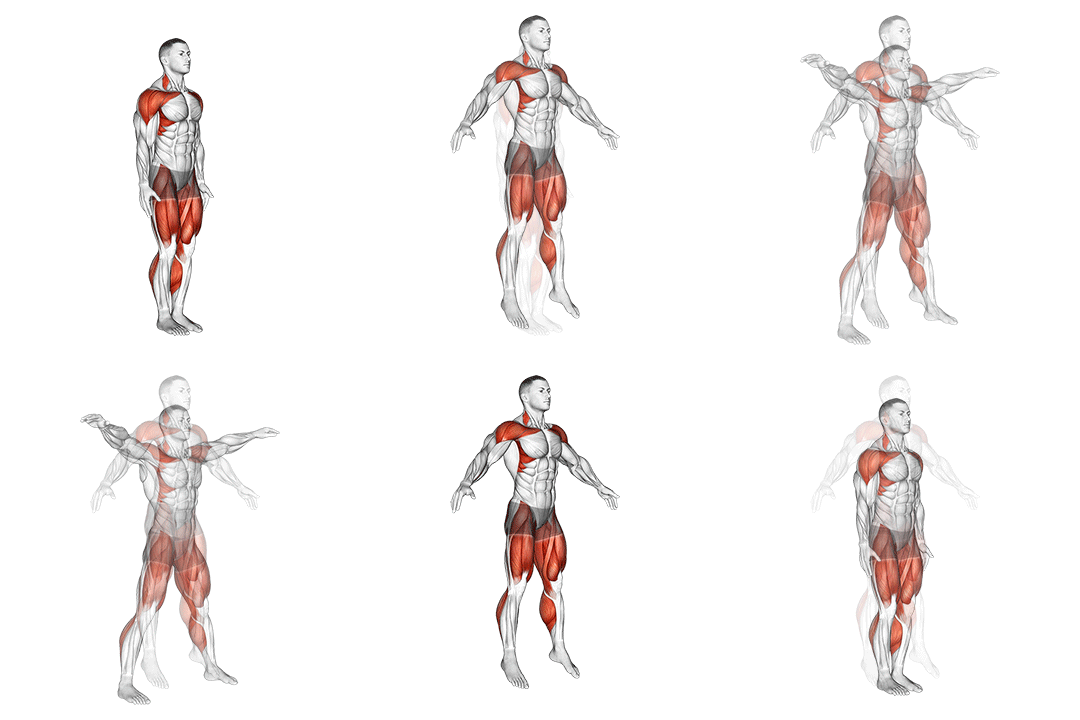
Jack Jump (male)
Head-to-Head Comparison
| Attribute | Jack Burpee | Jack Jump (male) |
|---|---|---|
| Target Muscle |
Cardiovascular
|
Cardiovascular
|
| Body Part |
Cardio
|
Cardio
|
| Equipment |
Body-weight
|
Body-weight
|
| Difficulty |
Intermediate
|
Beginner
|
| Movement Type |
Compound
|
Compound
|
| Secondary Muscles |
6
|
2
|
Secondary Muscles Activated
Jack Burpee
Jack Jump (male)
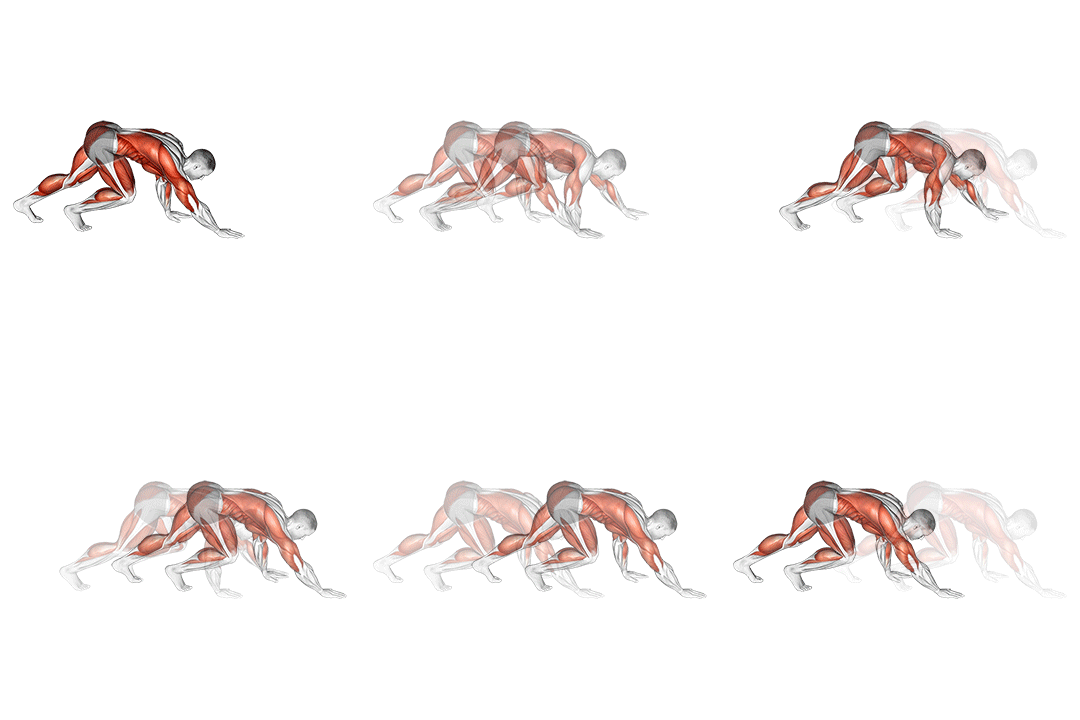
Visual Comparison
Overview
Jack Burpee vs Jack Jump (male) — both are bodyweight, cardio-focused moves that raise heart rate fast. If you want efficient conditioning, you need to know how they differ in muscle recruitment, technical demand, and programming. In this guide you’ll get clear, actionable cues for each movement, a biomechanical breakdown of which muscles fire and when, rep-range and progression suggestions (sets of 3–5 rounds, 8–20 reps), and direct recommendations based on your goal: conditioning, muscle stimulus, or easy home workouts.
Key Differences
- Difficulty levels differ: Jack Burpee is intermediate, while Jack Jump (male) is beginner.
- Both exercises target the Cardiovascular using Body-weight. The main differences are in their movement patterns and muscle activation angles.
Pros & Cons
Jack Burpee
+ Pros
- Full-body stimulus: adds upper-body push and core stability to each rep
- Higher muscle variety: shoulders, triceps, hamstrings and core all engage
- Easy to scale with weight vests, tempo changes, or explosive variants
- Great for mixed modal conditioning and circuit training
− Cons
- Higher technical demand—requires good plank and push-up mechanics
- Greater shoulder and wrist stress, which can limit volume
- Harder to sustain very high rep sets without form breakdown
Jack Jump (male)
+ Pros
- Beginner-friendly vertical conditioning with simple mechanics
- High-repetition cardio potential with lower upper-body demand
- Requires minimal mobility—easy to include in short HIIT sets
- Quick to teach and scale via rep tempo and jump height
− Cons
- Limited upper-body stimulus—less total-body muscle recruitment
- High repetitive load on calves and knees may irritate tendons
- Fewer obvious load-progressions for meaningful muscle growth
When Each Exercise Wins
Jack Burpee recruits more muscle groups per rep—adding push-up and core demands increases overall mechanical work. For bodyweight hypertrophy, multi-joint stress across chest, shoulders, quads and hamstrings produces more total muscle tension and metabolic stress than a lower-body-only jump.
While neither is ideal for maximal strength, the Burpee’s horizontal pushing plus hip extension offers a broader force profile and more options to increase load (weighted vests, slower eccentrics), which better stimulates strength adaptations than repeated unweighted vertical hops.
Jack Jump simplifies coordination to a vertical SSC movement with minimal joint transitions. You can teach safe landings and progressive jump height quickly, making it the safer, more approachable option for new exercisers.
Jack Jump needs less floor-space technique and no floor-to-plank transitions, so it’s quicker to do in confined spaces. If shoulder or wrist issues limit you, Jack Jump keeps training intensity high without extra equipment.
Frequently Asked Questions
Can I do both Jack Burpee and Jack Jump (male) in the same workout?
Yes—pairing them works well: use Jack Jumps for a warm-up SS C activation and quick metabolic sets, then program Jack Burpees for higher-intensity rounds or strength-endurance blocks. Alternate rounds (e.g., 30s Jack Jumps, 30s Burpees) to manage fatigue and maintain technique.
Which exercise is better for beginners?
Jack Jump (male) is better for beginners because it has simpler mechanics and less upper-body demand. Start with teaching soft landings, 30–40% knee flexion absorption and short contact times before progressing height or volume.
How do the muscle activation patterns differ?
Burpees combine a horizontal push (triceps, anterior deltoid) with vertical hip/knee extension (quads, glutes) and core stabilization, producing mixed sagittal force vectors. Jack Jumps emphasize rapid eccentric-to-concentric SSC at the ankle and knee, increasing calf and quadriceps cyclic activation with minimal upper-body involvement.
Can Jack Jump (male) replace Jack Burpee?
Jack Jump can replace Burpees when your goal is simple cardio or when shoulder/wrist issues limit push-ups. However, if you want total-body stimulus or to progress upper-body and core capacity, keep Burpees in your program rather than fully replacing them.
Expert Verdict
Use Jack Burpee when you want a higher total-body stimulus and more pathways to progression. The addition of a push-up and plank-to-jump sequence increases mechanical work across chest, shoulders, triceps, quads and hamstrings, so Burpees are better for conditioning that also challenges upper-body strength and core stability. Choose Jack Jump (male) when you need an easier-to-learn, lower-technical-load option focused on fast SSC work for cardio and leg endurance. Program Burpees for 6–12 reps or rounds of 3–5 for mixed conditioning; use Jack Jumps for higher-rep intervals (20–50 reps) or short-contact-time plyometric sets.
Also Compare
More comparisons with Jack Burpee
Compare More Exercises
Use our free comparison tool to analyze any two exercises head-to-head.
Compare Exercises