

Jack Burpee vs Mountain Climber: Complete Comparison Guide
Jack Burpee vs Mountain Climber — two staple bodyweight moves that spike your heart rate and test full-body coordination. If you want workouts that burn calories, build work capacity, and improve conditioning, you need to pick the right tool for your goal. This comparison walks you through primary and secondary muscle activation, technique cues, equipment needs, difficulty and injury risk, and when to use each move in rep ranges or timed intervals. Read on and I’ll give clear, actionable recommendations so you can choose the one that suits your program and progress reliably.
Exercise Comparison
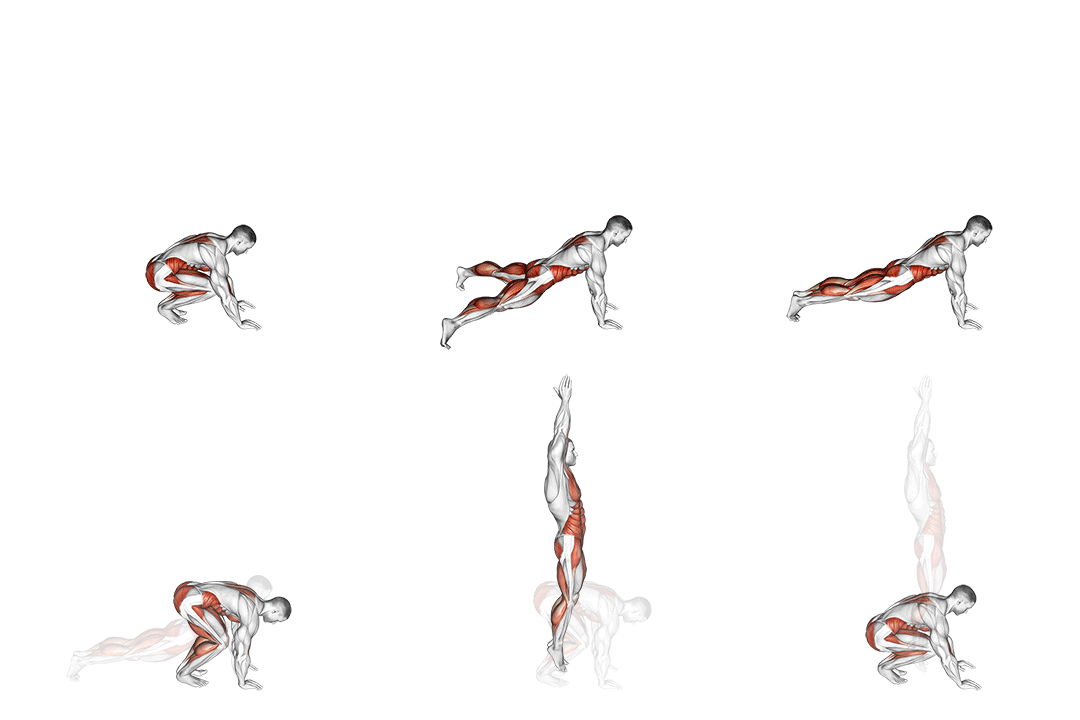
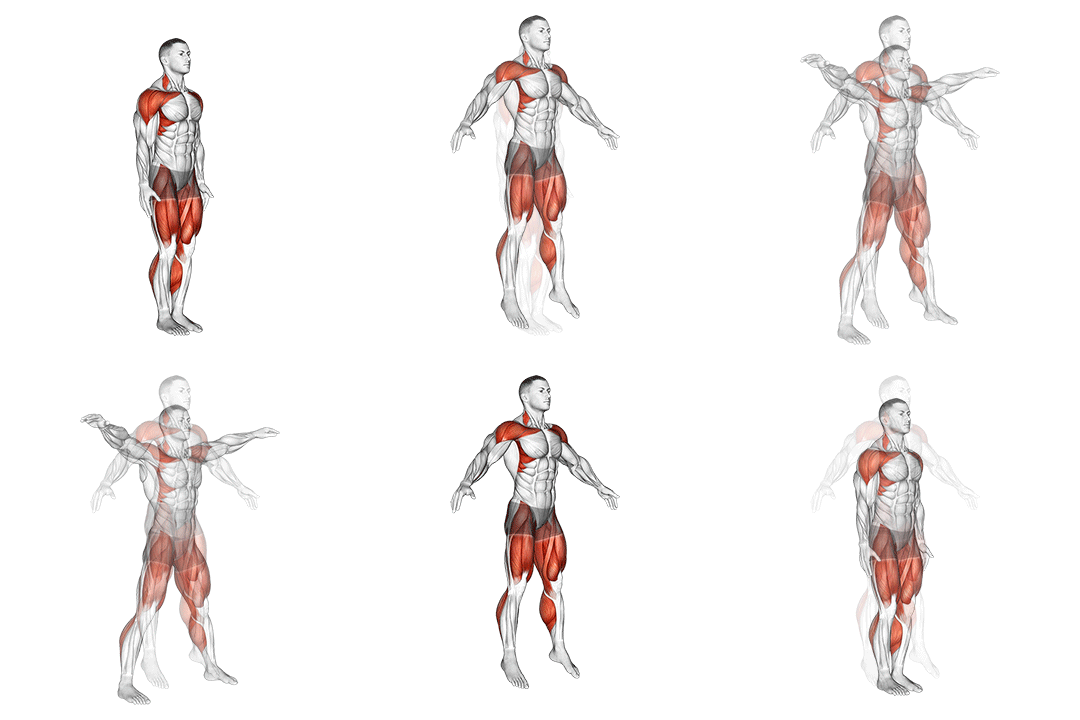
Jack Burpee
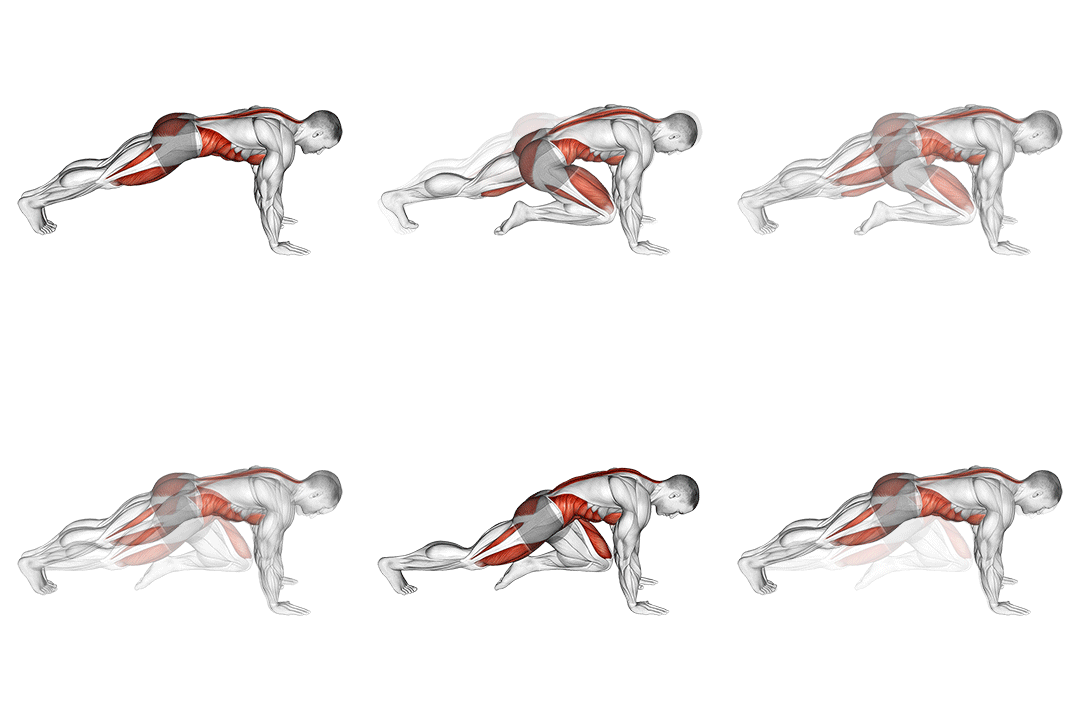
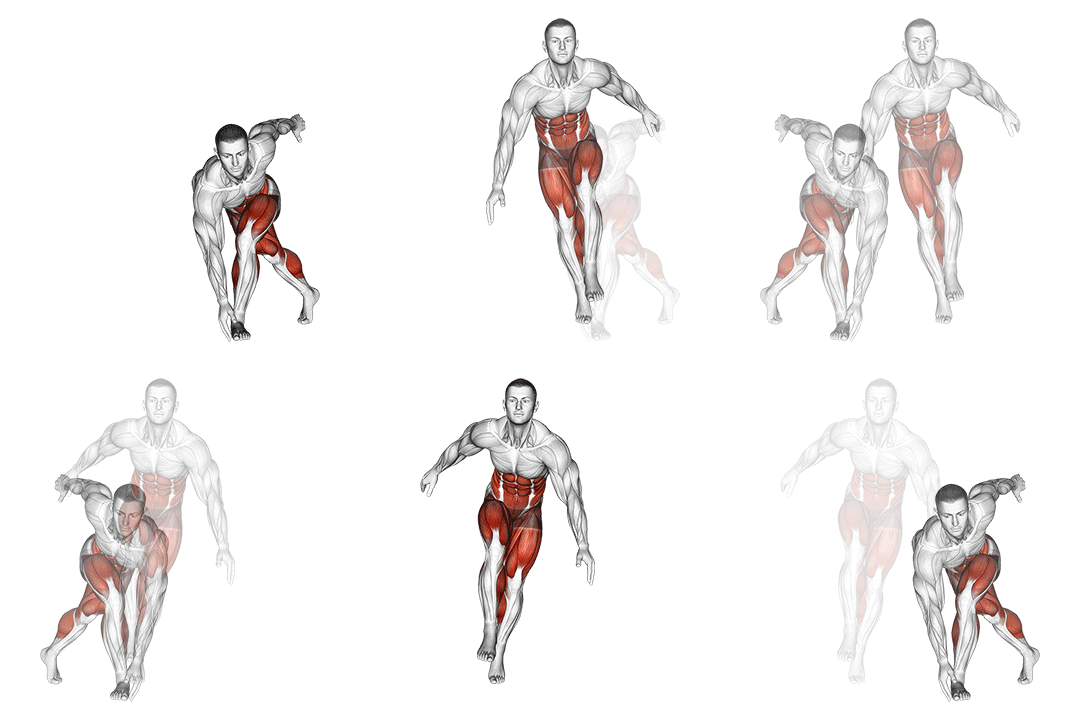
Mountain Climber
Head-to-Head Comparison
| Attribute | Jack Burpee | Mountain Climber |
|---|---|---|
| Target Muscle |
Cardiovascular
|
Cardiovascular
|
| Body Part |
Cardio
|
Cardio
|
| Equipment |
Body-weight
|
Body-weight
|
| Difficulty |
Intermediate
|
Intermediate
|
| Movement Type |
Compound
|
Compound
|
| Secondary Muscles |
6
|
3
|
Secondary Muscles Activated
Jack Burpee
Mountain Climber
Visual Comparison
Overview
Jack Burpee vs Mountain Climber — two staple bodyweight moves that spike your heart rate and test full-body coordination. If you want workouts that burn calories, build work capacity, and improve conditioning, you need to pick the right tool for your goal. This comparison walks you through primary and secondary muscle activation, technique cues, equipment needs, difficulty and injury risk, and when to use each move in rep ranges or timed intervals. Read on and I’ll give clear, actionable recommendations so you can choose the one that suits your program and progress reliably.
Key Differences
- Both exercises target the Cardiovascular using Body-weight. The main differences are in their movement patterns and muscle activation angles.
Pros & Cons
Jack Burpee
+ Pros
- Full-body power and conditioning — combines triple extension with upper-body pressing
- High calorie burn and elevated post-exercise oxygen consumption
- Easy to overload (weighted vest, single-leg, tempo variations)
- Improves coordination and athletic movement transitions
− Cons
- Higher impact — more stress on knees, ankles and lower back
- Requires more space and better movement sequencing
- Form degrades quickly when fatigued, increasing injury risk
Mountain Climber
+ Pros
- Low-impact, minimal space — ideal for apartments or limited areas
- Strong core anti-extension training with high metabolic cost
- Easier to maintain steady tempo and safer under fatigue
- Simple progressions for endurance and unilateral core control
− Cons
- Less lower-body power development and vertical force output
- Can overload wrists and shoulders during long sets
- Lower total-body loading for maximal strength adaptations
When Each Exercise Wins
Jack Burpees create larger eccentric and concentric loads across quads, hamstrings, chest and triceps through squat-to-jump and push-up phases. Use 3–4 sets of 8–15 reps with controlled tempo (2 s down on push-up, explosive jump) to stimulate muscle growth and mechanical tension.
Burpees offer more direct force-production work (triple extension and pressing) and can be overloaded with weight vests or single-leg variations to increase peak force. For strength-focused sessions, lower rep ranges or paired resistance (5–8 reps or loaded sets) produce better neuromuscular adaptations than high-rep climbers.
Mountain Climbers are easier to teach and scale—start with slow, 10–20 reps per side focusing on neutral spine and hip drive. They train core stability and conditioning without the coordination or impact required by burpees, making them friendlier for new exercisers.
Mountain Climbers need minimal space and no vertical clearance, and they keep impact low for apartment settings. You can still get high-intensity intervals (30–60 s rounds) without disturbing neighbors or risking joint stress from repeated jumps.
Frequently Asked Questions
Can I do both Jack Burpee and Mountain Climber in the same workout?
Yes. Pair them effectively: use burpees for power or strength intervals and mountain climbers as a core-focused finisher. For example, 4 rounds of 8 burpees followed by 30–45 s of mountain climbers keeps intensity high while shifting the force vector from vertical power to core anti-extension.
Which exercise is better for beginners?
Mountain Climbers are better for most beginners due to lower impact and simpler movement sequencing. Start slow, emphasize a neutral spine, and build to faster tempos or longer durations before adding burpees.
How do the muscle activation patterns differ?
Burpees alternate between vertical triple-extension (ankle/knee/hip) and horizontal pressing, producing concentric and eccentric work in quads, glutes, chest and triceps. Mountain Climbers maintain a plank and create repeated hip flexion with high anti-extension demand from the abs and obliques while shoulders resist horizontal shear.
Can Mountain Climber replace Jack Burpee?
They’re not direct substitutes: climbers can replace burpees when you need lower impact or limited space, but they won’t match the vertical force and multi-joint loading of burpees. Choose the climber for core/endurance emphasis and the burpee when you need full-body power and higher mechanical tension.
Expert Verdict
Choose Jack Burpee when your goal is full-body power, metabolic conditioning with higher mechanical load, or when you want to progress toward loaded or unilateral variations. Use burpees in sets of 8–20 reps or in HIIT rounds (20–40 s work) if you can maintain clean landing and push-up mechanics. Choose Mountain Climber when you want core-dominant conditioning, lower impact, or limited space—do 30–60 s intervals or 12–20 reps per side to build endurance and anti-extension strength. Both moves belong in a balanced program: prioritize the burpee for power and strength-focused blocks and the climber for core conditioning or low-impact conditioning phases.
Also Compare
More comparisons with Jack Burpee
Compare More Exercises
Use our free comparison tool to analyze any two exercises head-to-head.
Compare Exercises