

Jump Rope vs Mountain Climber: Complete Comparison Guide
Jump Rope vs Mountain Climber is a common decision when you want efficient cardio with different muscular emphasis. You’ll get a direct comparison so you can choose the right tool for your session. I’ll cover primary and secondary muscle activation, biomechanics, equipment needs, difficulty and progression, injury risks, and clear winner scenarios for hypertrophy, strength, beginners, and home workouts. Read the technique cues and rep ranges so you can use either move safely and effectively in interval sets, steady-state cardio, or conditioning circuits.
Exercise Comparison
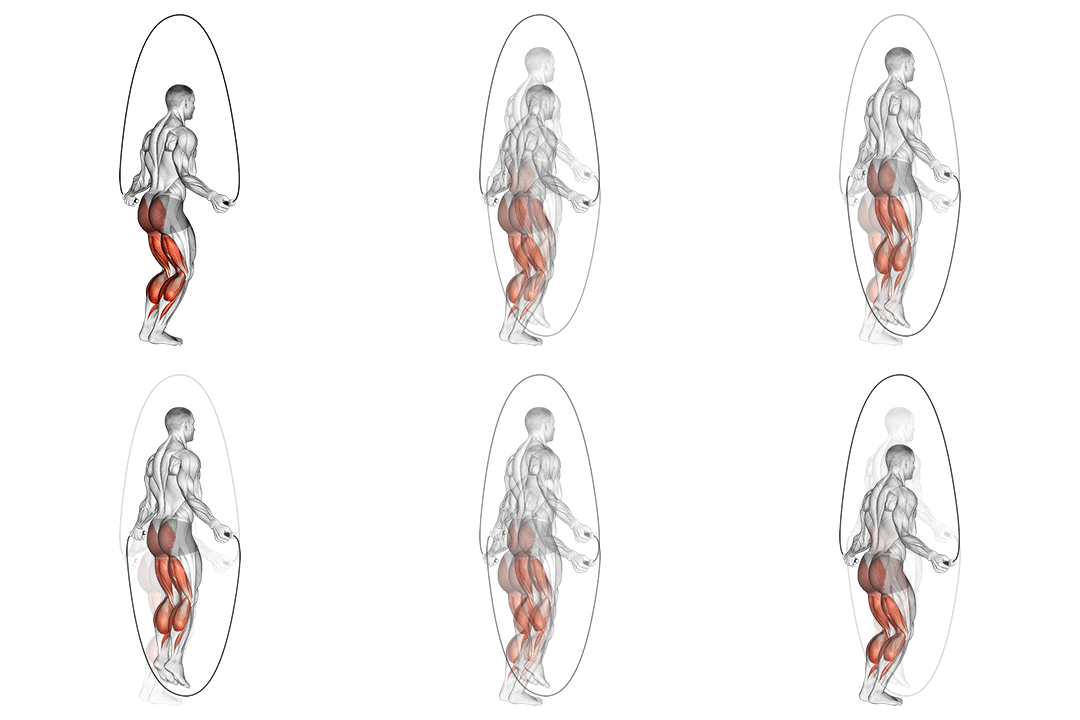
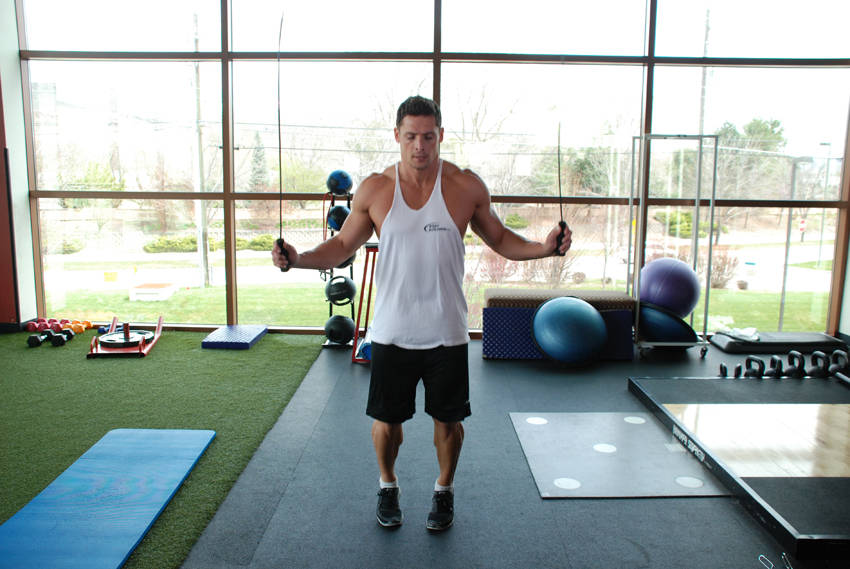
Jump Rope
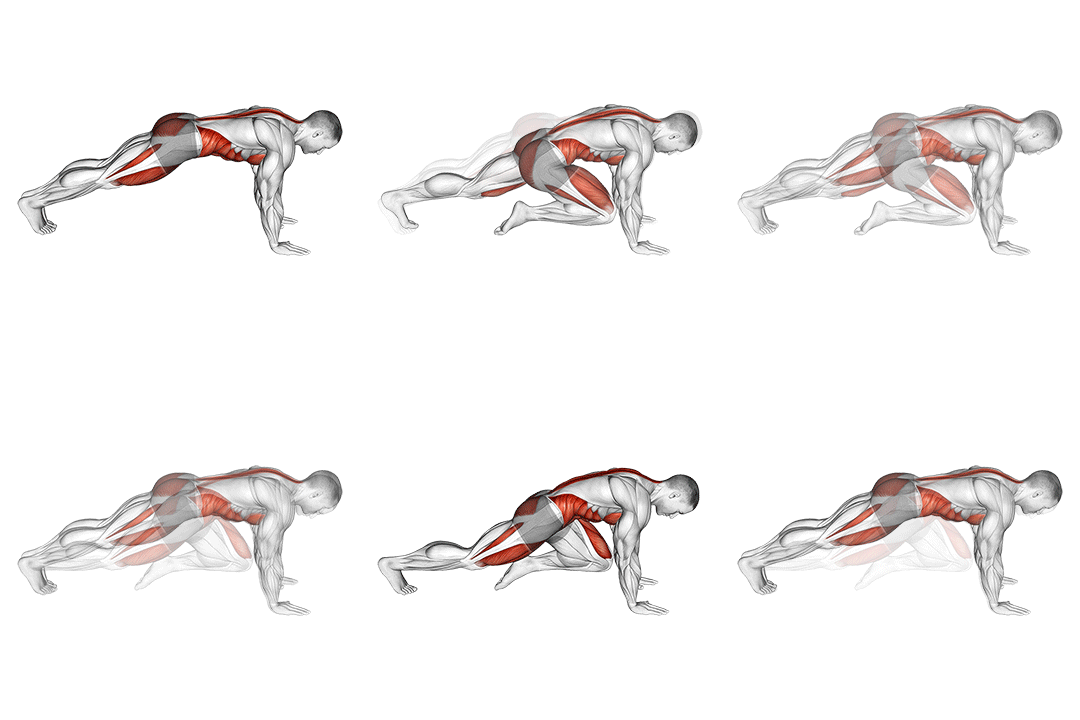
Mountain Climber
Head-to-Head Comparison
| Attribute | Jump Rope | Mountain Climber |
|---|---|---|
| Target Muscle |
Cardiovascular
|
Cardiovascular
|
| Body Part |
Cardio
|
Cardio
|
| Equipment |
Rope
|
Body-weight
|
| Difficulty |
Intermediate
|
Intermediate
|
| Movement Type |
Compound
|
Compound
|
| Secondary Muscles |
4
|
3
|
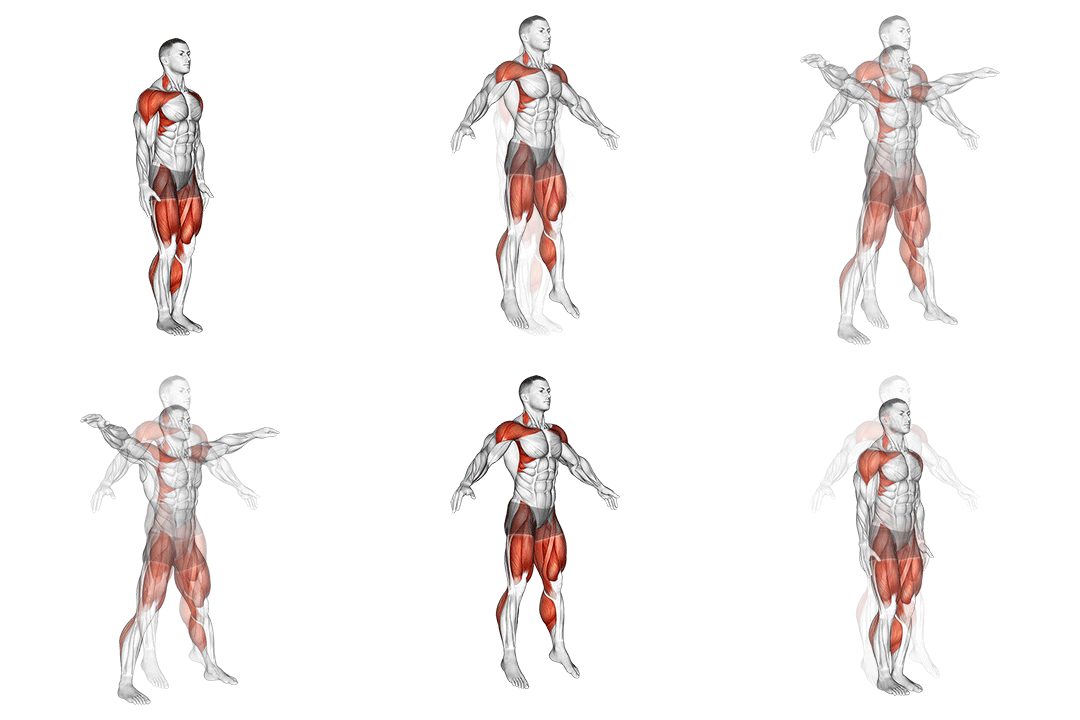
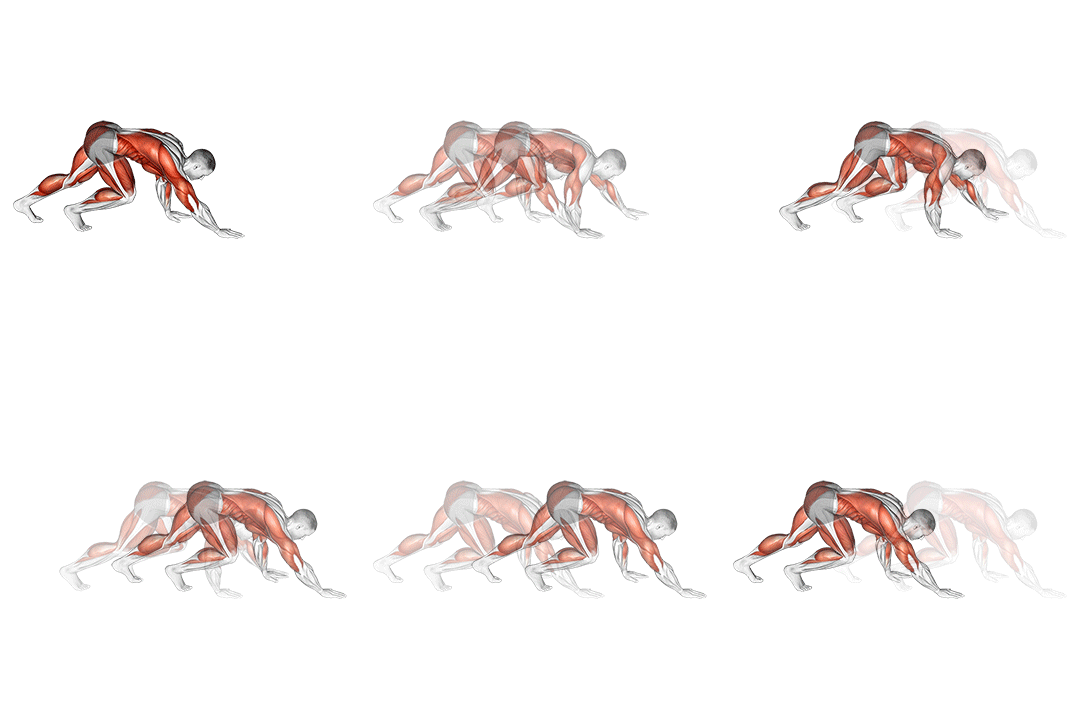
Secondary Muscles Activated
Jump Rope
Mountain Climber
Visual Comparison
Overview
Jump Rope vs Mountain Climber is a common decision when you want efficient cardio with different muscular emphasis. You’ll get a direct comparison so you can choose the right tool for your session. I’ll cover primary and secondary muscle activation, biomechanics, equipment needs, difficulty and progression, injury risks, and clear winner scenarios for hypertrophy, strength, beginners, and home workouts. Read the technique cues and rep ranges so you can use either move safely and effectively in interval sets, steady-state cardio, or conditioning circuits.
Key Differences
- Equipment differs: Jump Rope uses Rope, while Mountain Climber requires Body-weight.
Pros & Cons
Jump Rope
+ Pros
- High lower-limb power and calf conditioning through the stretch–shortening cycle
- Excellent for improving cadence, agility, and coordination (120–180 rpm work zones)
- Efficient calorie burn with short work intervals (30–90 seconds)
- Portable tool for fast conditioning sessions
− Cons
- Requires rope, ceiling clearance, and low-noise surface
- Higher repetitive impact on ankles/knees if technique or footwear is poor
- Steeper coordination learning curve for complex drills like double-unders
Mountain Climber
+ Pros
- No equipment and low space requirement — great for home or travel
- Stronger core and shoulder engagement with anti-extension loading
- Easy to scale by tempo, range, or adding elevation/weight
- Lower vertical impact than jumping, better for limited-impact training
− Cons
- Can overload wrists and shoulders without proper scapular control
- Less direct calf and ankle conditioning compared to jump rope
- Form breakdown (hip sag or excessive rotation) reduces benefit and raises injury risk
When Each Exercise Wins
Mountain Climbers create sustained core and shoulder time under tension and can be slowed to increase eccentric and concentric workload, which favors hypertrophy in the trunk and upper body. Jump Rope mainly stresses elastic, low-load repetitions in the calves and is less suited to progressive overload for muscle growth.
Mountain Climbers allow manipulation of leverage (decline, longer holds) and added load (weighted vest) to progressively overload the core and upper-body stabilizers for strength improvements. Jump Rope primarily improves power and reactive strength in the lower limb rather than absolute strength.
Mountain Climbers require simpler coordination — hold a strong plank and alternate knee drives — so beginners can achieve high cardiovascular work while learning trunk control. Jump Rope often needs multiple practice sessions to master timing and safe landings.
Mountain Climbers need zero equipment and minimal vertical clearance, making them ideal for small spaces and apartment living. Jump Rope can be excellent at home but is often limited by ceiling height, noise, and floor type.
Frequently Asked Questions
Can I do both Jump Rope and Mountain Climber in the same workout?
Yes. Pair them in circuit fashion — for example, 3 rounds of 60 seconds jump rope followed by 30 seconds mountain climbers to combine lower-limb reactive power with core-loaded cardio. That structure balances vertical impulse work with plank-based stabilization and reduces monotony.
Which exercise is better for beginners?
Mountain Climbers are generally better for beginners because they need less coordination and no equipment; start with controlled tempo (20–30 seconds) and focus on a neutral spine. Beginners can incorporate short jump rope drills after developing ankle stability and rhythm.
How do the muscle activation patterns differ?
Jump Rope relies on rapid plantarflexion and knee extension with short contact times and elastic energy return in the calf complex, producing vertical ground reaction forces. Mountain Climbers alternate concentric hip flexion while the core and shoulders hold an isometric anti-extension load, producing horizontal force transfer through the arms.
Can Mountain Climber replace Jump Rope?
Mountain Climbers can replace Jump Rope for cardiovascular conditioning, core strength, and low-impact work, but they don’t replicate the elastic ankle loading and high-rate reactive training that jump rope provides. Choose climbers for core/upper-body conditioning or when space/equipment is limited; use rope for agility and lower-leg power.
Expert Verdict
Use Jump Rope when your goal is high-rate lower-body power, ankle stiffness, agility, and fast cardio intervals — aim for 30–90 second rounds or 100–200 jumps per set with cadences around 120–180 rpm. Use Mountain Climbers when you need a no-equipment option that builds cardiovascular fitness while loading the core, shoulders, and hip flexors; do 20–60 second rounds or 20–40 reps per set, and slow the tempo to increase time under tension for strength or hypertrophy. If you need a single winner for versatility and accessibility, Mountain Climbers are the safer, more scalable home option. Alternate both across workouts: rope for reactive power days, climbers for core and strength-focused conditioning.
Also Compare
More comparisons with Jump Rope

Compare More Exercises
Use our free comparison tool to analyze any two exercises head-to-head.
Compare Exercises