

Lever Bent Over Row vs Lever One Arm Bent Over Row: Complete Comparison Guide
Lever Bent Over Row vs Lever One Arm Bent Over Row — you’re comparing two barbell-based, compound upper-back moves that both hit the lats, rhomboids, and traps while recruiting the biceps and forearms. If you want clear recommendations, this guide breaks down muscle activation, equipment needs, learning curve, injury risk, and practical progressions. You’ll get specific technique cues (hinge angle, elbow path, scapular retraction), rep ranges for hypertrophy and strength, and scenarios that name a winner so you can pick the row that matches your goals.
Exercise Comparison
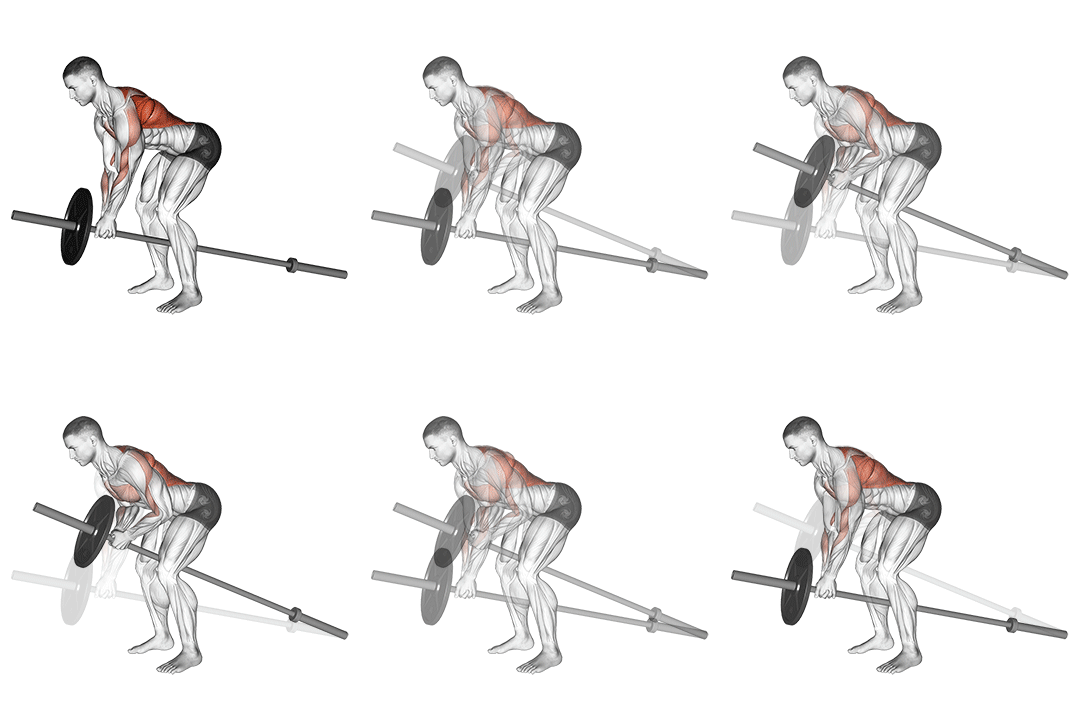
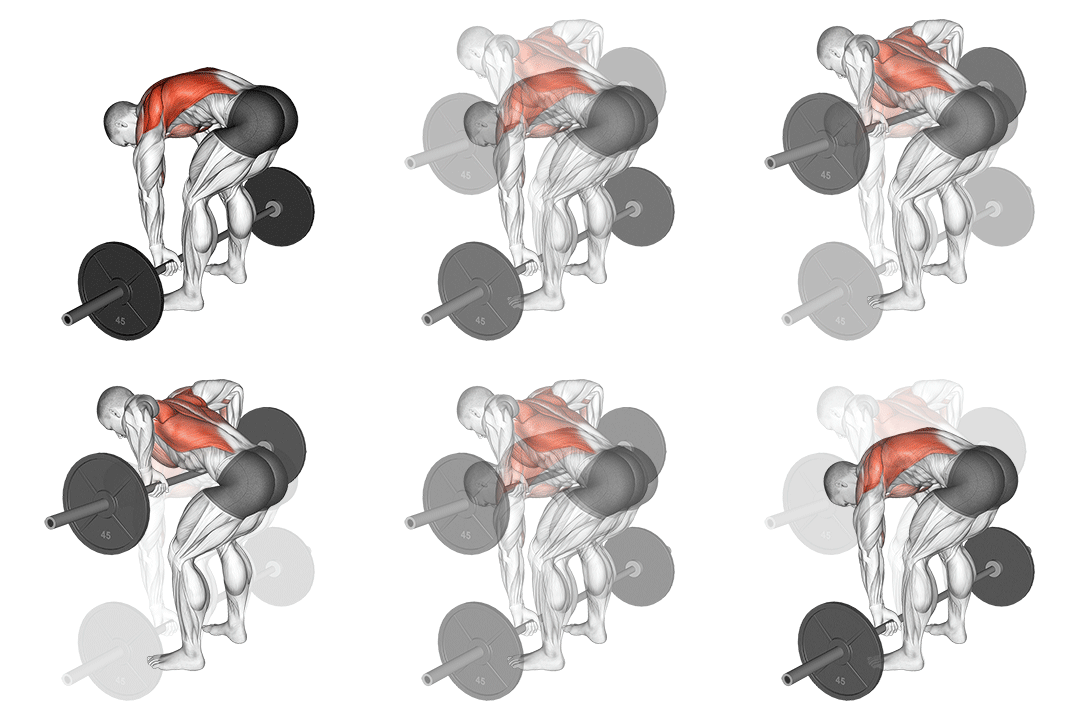
Lever Bent Over Row
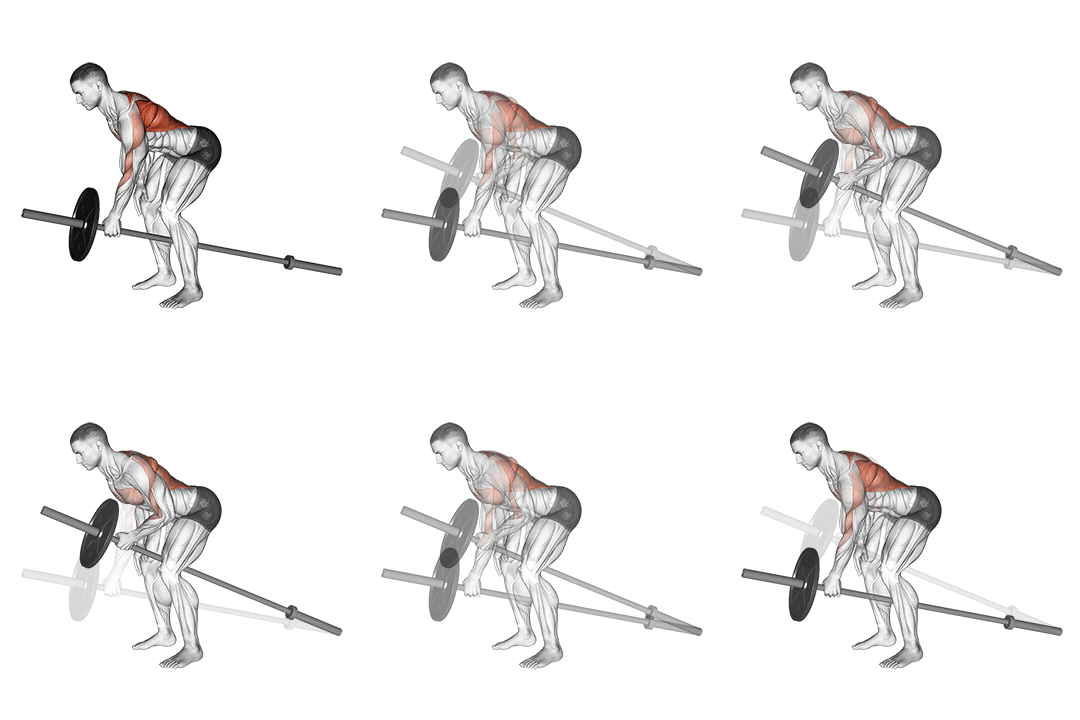
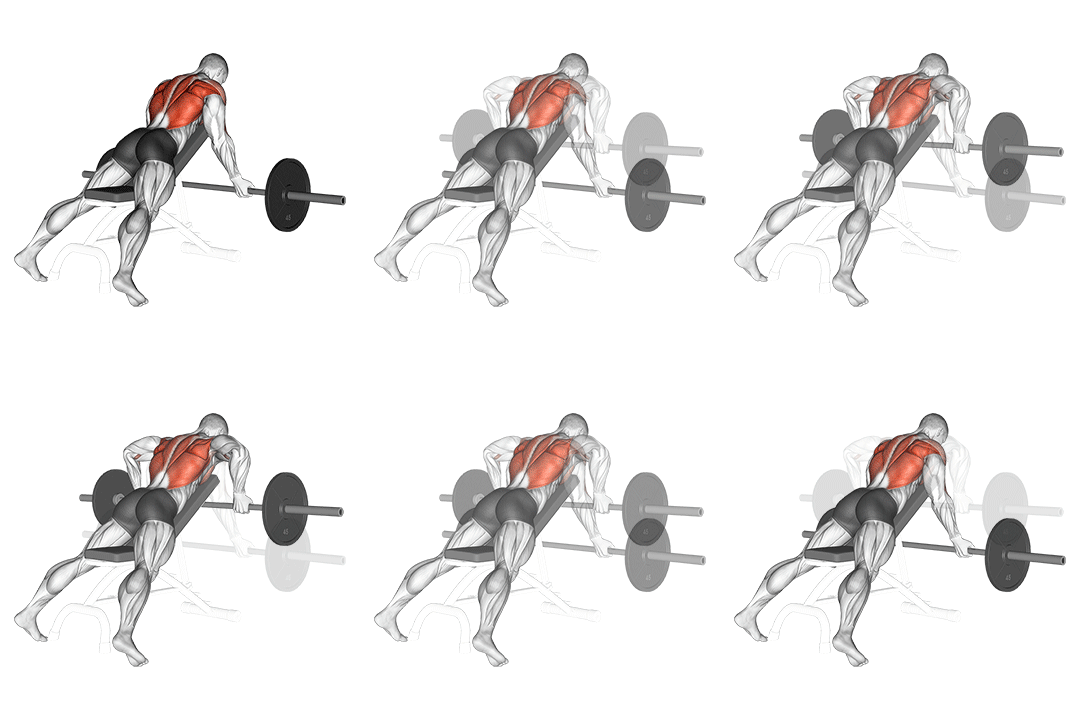
Lever One Arm Bent Over Row
Head-to-Head Comparison
| Attribute | Lever Bent Over Row | Lever One Arm Bent Over Row |
|---|---|---|
| Target Muscle |
Upper-back
|
Upper-back
|
| Body Part |
Back
|
Back
|
| Equipment |
Barbell
|
Barbell
|
| Difficulty |
Intermediate
|
Intermediate
|
| Movement Type |
Compound
|
Compound
|
| Secondary Muscles |
2
|
2
|
Secondary Muscles Activated
Lever Bent Over Row
Lever One Arm Bent Over Row
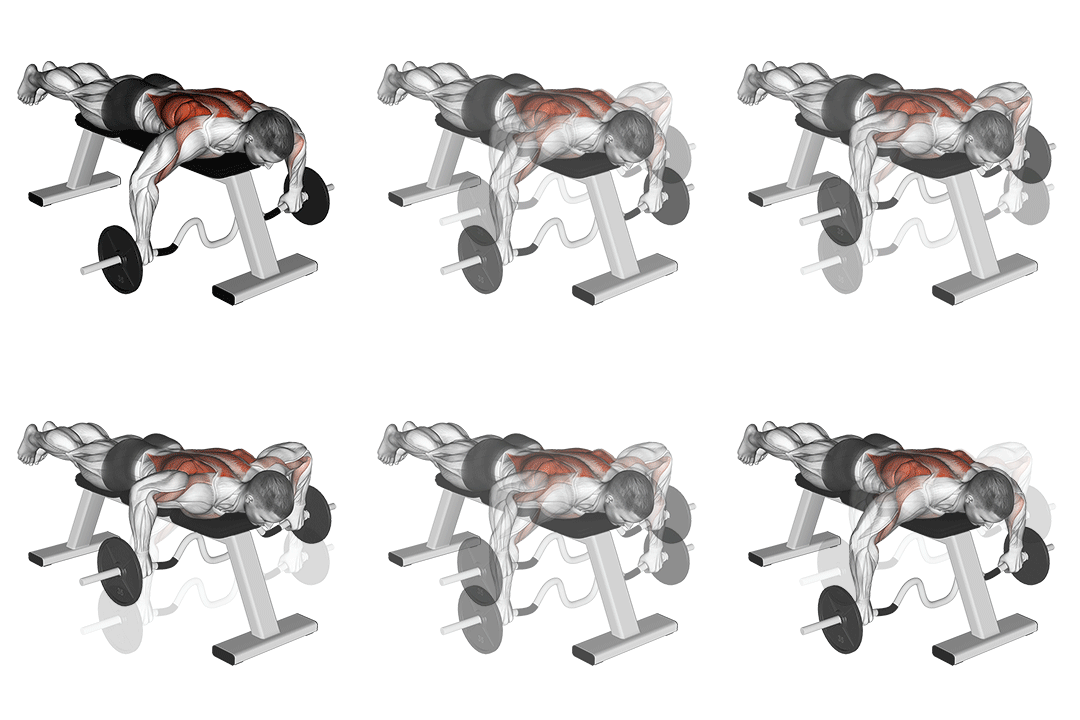
Visual Comparison
Overview
Lever Bent Over Row vs Lever One Arm Bent Over Row — you’re comparing two barbell-based, compound upper-back moves that both hit the lats, rhomboids, and traps while recruiting the biceps and forearms. If you want clear recommendations, this guide breaks down muscle activation, equipment needs, learning curve, injury risk, and practical progressions. You’ll get specific technique cues (hinge angle, elbow path, scapular retraction), rep ranges for hypertrophy and strength, and scenarios that name a winner so you can pick the row that matches your goals.
Key Differences
- Both exercises target the Upper-back using Barbell. The main differences are in their movement patterns and muscle activation angles.
Pros & Cons
Lever Bent Over Row
+ Pros
- Handles heavier absolute loads for maximal strength (3–6 rep range)
- Symmetrical force lowers rotation and balance demand
- Clean cueing: hinge 30–45°, neutral spine, drive elbows to hips
- Easy to progress by adding barbell load in larger increments
− Cons
- Higher spinal compressive load with very heavy sets
- Can mask left-right imbalances
- Requires two-handed grip strength that can limit sets without straps
Lever One Arm Bent Over Row
+ Pros
- Targets unilateral deficits and fixes strength asymmetries
- Increases core anti-rotation and oblique activation
- Allows slightly different pull angle to hit posterior delts
- Useful for controlled tempo and time-under-tension hypertrophy work
− Cons
- Harder to load progressively with a barbell in small increments
- Higher technical demand — more torso stabilization needed
- Potential for compensatory rotation or lumbar rounding if coached poorly
When Each Exercise Wins
The unilateral version increases time under tension per side and lets you eliminate dominance by performing strict single-arm sets in the 6–12 rep range. Its different pull angle also hits posterior delts and mid-traps in ways that add overall upper-back mass.
Two-arm rows allow higher absolute loads and more stable progressive overload (3–6 rep sets at 80–90% of working 1RM). The bilateral setup reduces rotational loss of force, making it superior for building raw pulling strength.
The bilateral pattern is simpler to learn: fewer stabilization demands, clearer cues (hinge, neutral spine, drive elbows back), and easier progression with heavier loads without complex unilateral coordination.
If you lack heavy plates, the one-arm variation lets you use moderate load and focus on tempo and unilateral volume to stimulate the upper-back. It also doubles as a corrective tool when you can’t load a barbell bilaterally.
Frequently Asked Questions
Can I do both Lever Bent Over Row and Lever One Arm Bent Over Row in the same workout?
Yes. Start with heavier bilateral Lever Bent Over Rows (3–6 reps) to build strength, then follow with unilateral Lever One Arm Bent Over Rows for 6–12 reps per side to address imbalances and extend time under tension.
Which exercise is better for beginners?
The two-arm Lever Bent Over Row is better for beginners because it demands less anti-rotation and simpler technique. Focus on a consistent hip hinge, neutral spine, and controlled scapular retraction before adding unilateral variations.
How do the muscle activation patterns differ?
Two-arm rows create balanced bilateral activation with high mid-trap and lat engagement; one-arm rows concentrate peak activation on the working side and increase oblique and anti-rotation core activity. The elbow path and slight change in pull vector shift load between posterior deltoid and mid-traps.
Can Lever One Arm Bent Over Row replace Lever Bent Over Row?
It can replace bilateral rows for hypertrophy-oriented or corrective phases, but it won’t match the two-arm row for absolute strength due to loading limits and greater stabilization demands. Use one-arm rows to complement, not always substitute, heavy bilateral work.
Expert Verdict
Use the Lever Bent Over Row when your goal is raw strength and heavy bilateral overload: hinge 30–45°, keep a braced core, retract the scapula, and aim for 3–6 heavy reps or 6–10 for mixed strength-hypertrophy work. Choose the Lever One Arm Bent Over Row when you want to correct imbalances, increase unilateral muscle activation, or emphasize time under tension for hypertrophy in the 6–12 rep range. Combine them across phases: prioritize two-arm heavy loading for strength blocks and add unilateral one-arm work later in the week for hypertrophy and imbalance correction.
Also Compare
More comparisons with Lever Bent Over Row
More comparisons with Lever One Arm Bent Over Row
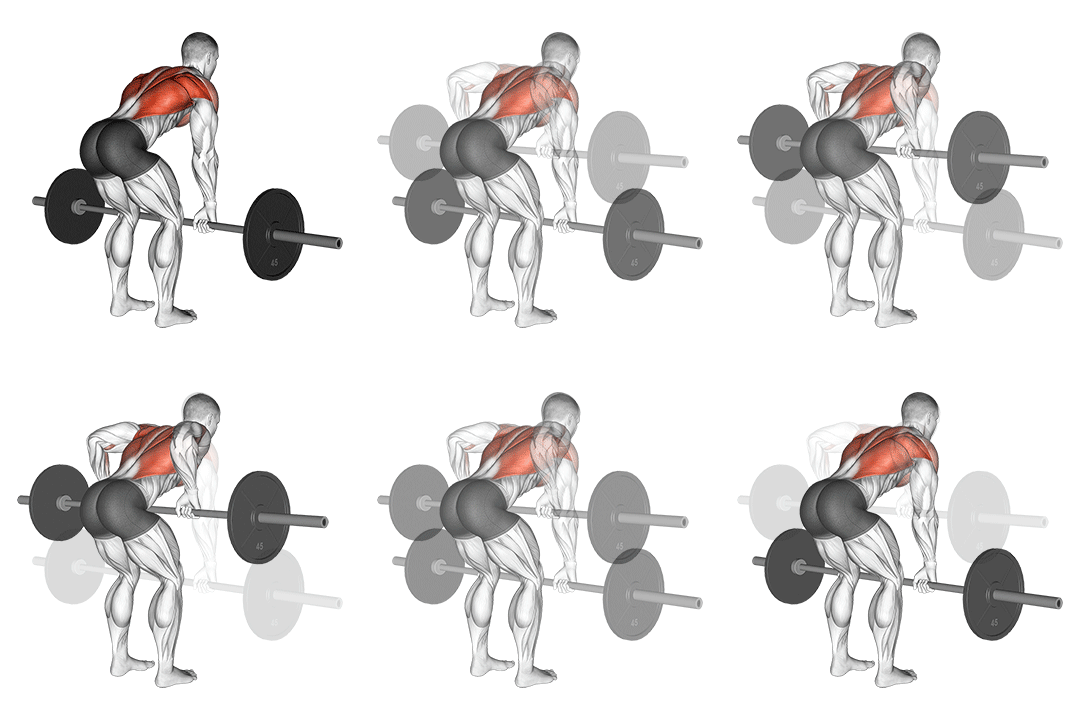
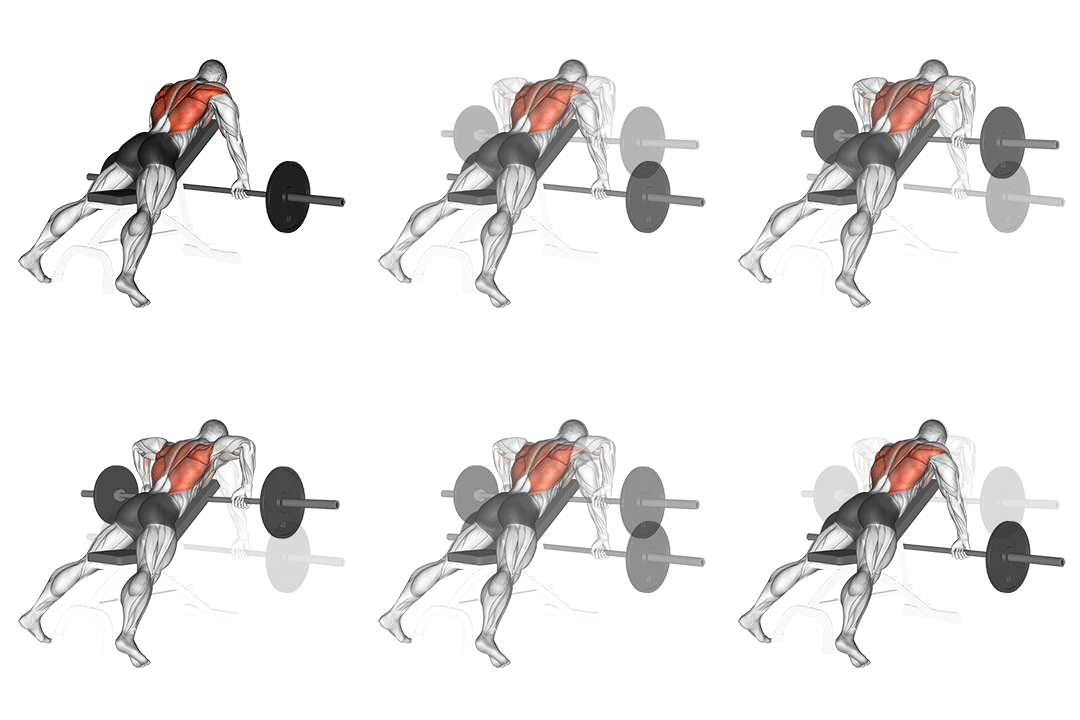
Compare More Exercises
Use our free comparison tool to analyze any two exercises head-to-head.
Compare Exercises