

10 Best Bodyweight Mid Row Alternatives for Home Workouts
If you can’t do a Bodyweight Mid Row, use horizontal-pull alternatives that target scapular retractors and the mid-traps. Try inverted rows (keep a straight plank line and pull chest to bar), resistance-band rows (lead with the elbow and squeeze scapula), or single-arm dumbbell rows for unilateral strength and better lat engagement.
Original Exercise: Bodyweight Mid Row
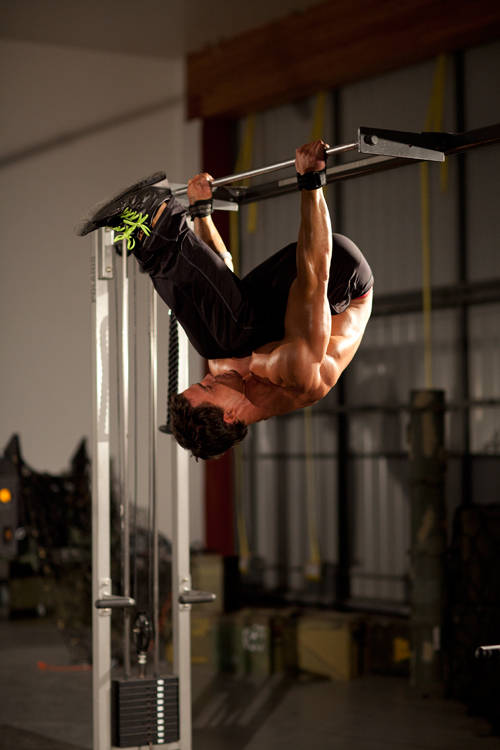
How to Perform Bodyweight Mid Row
- Begin by taking a medium to wide grip on a pull-up apparatus with your palms facing away from you. From a hanging position, tuck your knees to your chest, leaning back and getting your legs over your side of the pull-up apparatus. This will be your starting position.
- Beginning with your arms straight, flex the elbows and retract the shoulder blades to raise your body up until your legs contact the pull-up apparatus.
- After a brief pause, return to the starting position.
Pro Tips
- Category: Strength
- Force: Pull
- Movement type: Compound
Ranked Bodyweight Mid Row Alternatives
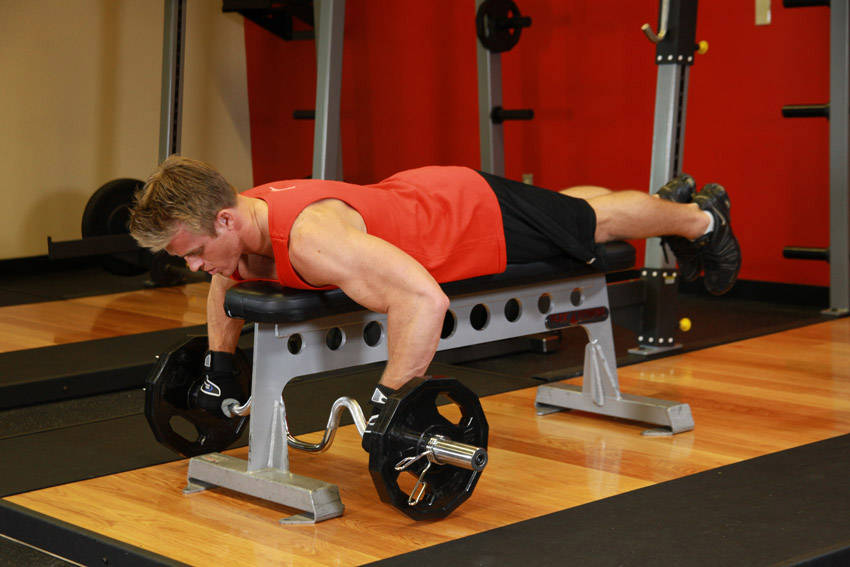
1. Lying Cambered Barbell Row
88.4% MatchHow to perform this exercise
- Place a cambered bar underneath an exercise bench.
- Lie face down on the exercise bench and grab the bar using a palms down (pronated grip) that is wider than shoulder width. This will be your starting position.
- As you exhale row the bar up as you keep the elbows close to your body to either your chest, in order to target the upper mid back, or to your stomach if targeting the lats is your goal.
- After a second hold at the top, lower back down to the starting position slowly as you inhale.
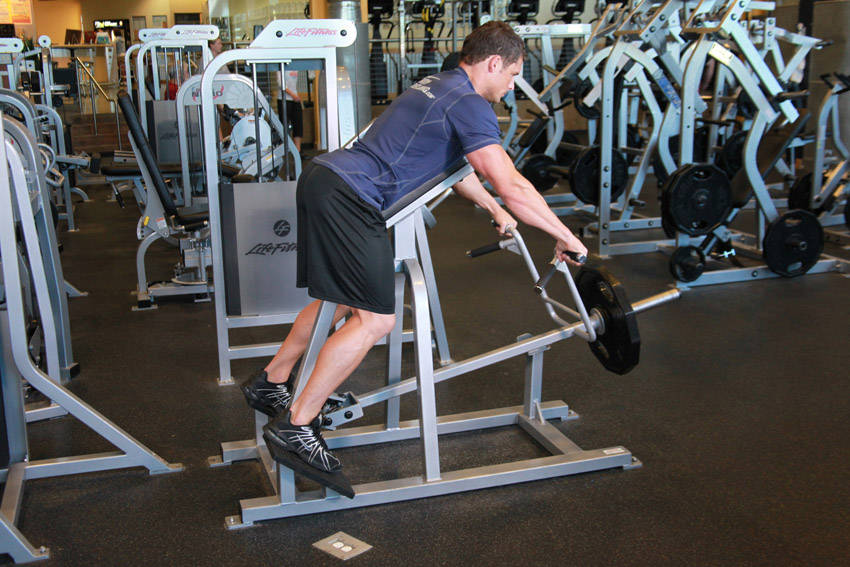
2. Lying T-Bar Row
82.6% MatchHow to perform this exercise
- Load up the T-bar Row Machine with the desired weight and adjust the leg height so that your upper chest is at the top of the pad. Tip: In some machines all you can do is stand on the appropriate step that allows you to be at a height that has the upper chest at the top of the pad.
- Lay face down on the pad and grab the handles. You can either use a palms down, palms up, or palms in position depending on what part of your back you want to emphasize.
- Lift the bar off the rack and extend your arms in front of you. This will be your starting position.
- As you exhale slowly pull the weight up and squeeze your back at the top of the movement. Tip: Keep the upper arms as close to the torso as possible throughout the movement in order to better engage the back muscles. Also, do not lift your body off of the pad at any time and refrain from using the biceps to lift the weight.
- After a second contraction at the top of the movement, as you inhale, slowly go back down to the starting position.
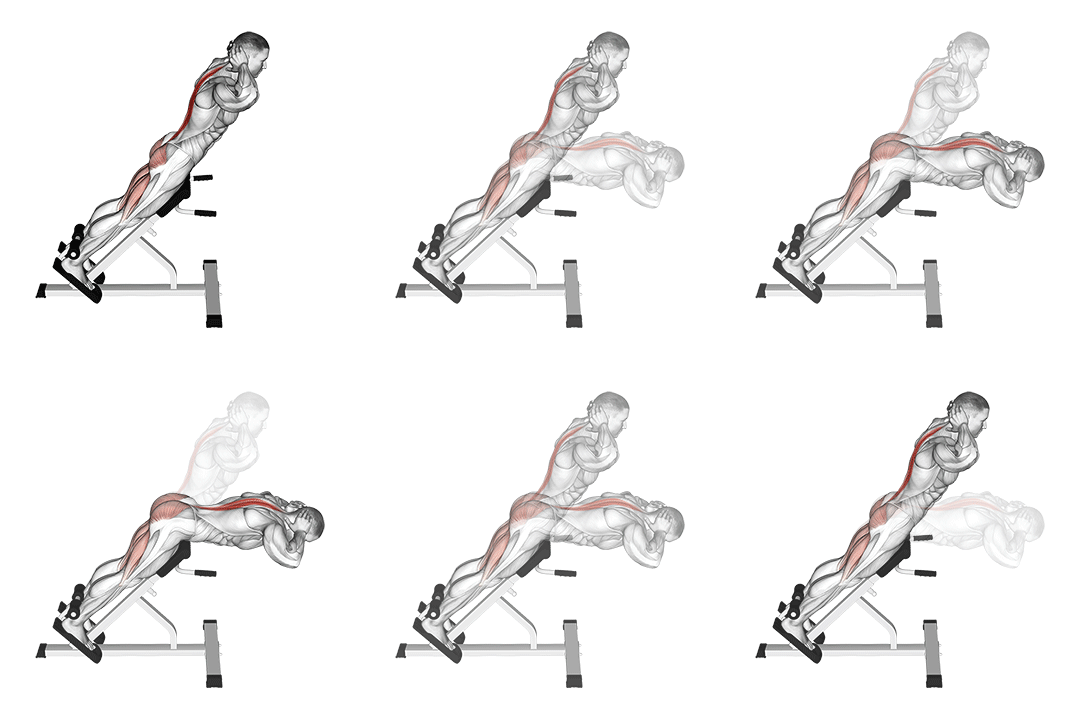
3. Hyperextension
78.1% MatchHow to perform this exercise
- Adjust the hyperextension bench so that your upper thighs are resting on the pad and your feet are secured.
- Cross your arms over your chest or place your hands behind your head.
- Lower your upper body towards the ground while keeping your back straight.
- Pause for a moment at the bottom, then raise your upper body back up until it is in line with your legs.
- Repeat for the desired number of repetitions.
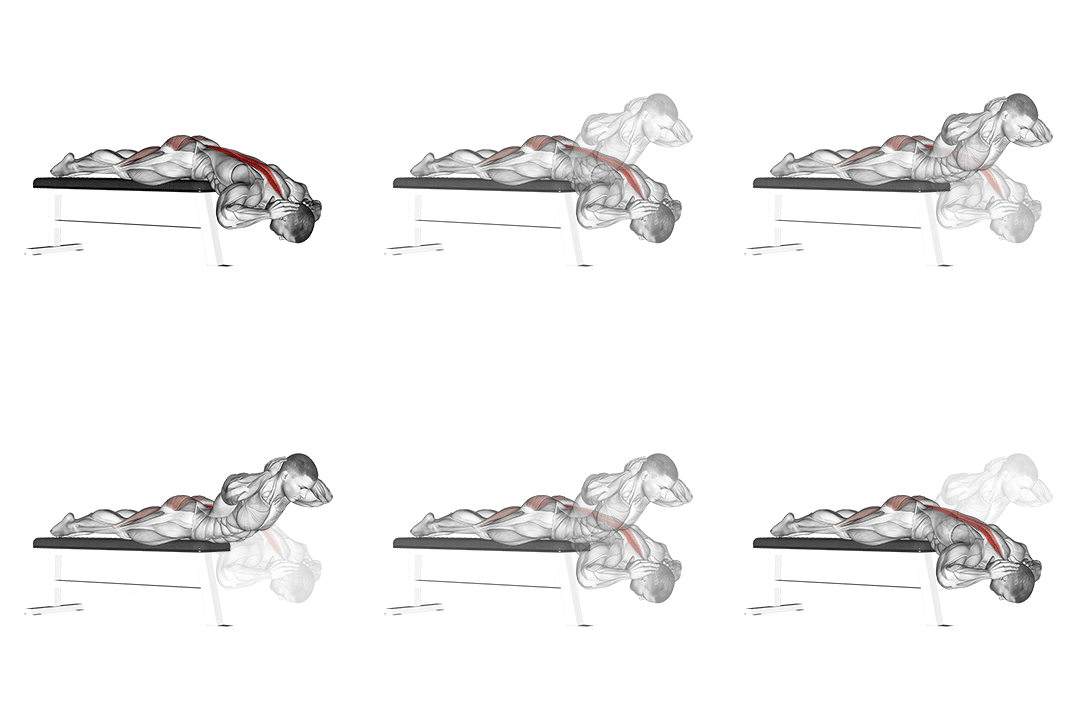
4. Hyperextension (on Bench)
78.1% MatchHow to perform this exercise
- Adjust the hyperextension bench so that your hips are resting comfortably on the pad and your feet are secured.
- Cross your arms over your chest or place your hands behind your head.
- Slowly lower your upper body towards the ground while keeping your back straight.
- Pause for a moment at the bottom, then raise your upper body back up until it is in line with your legs.
- Repeat for the desired number of repetitions.
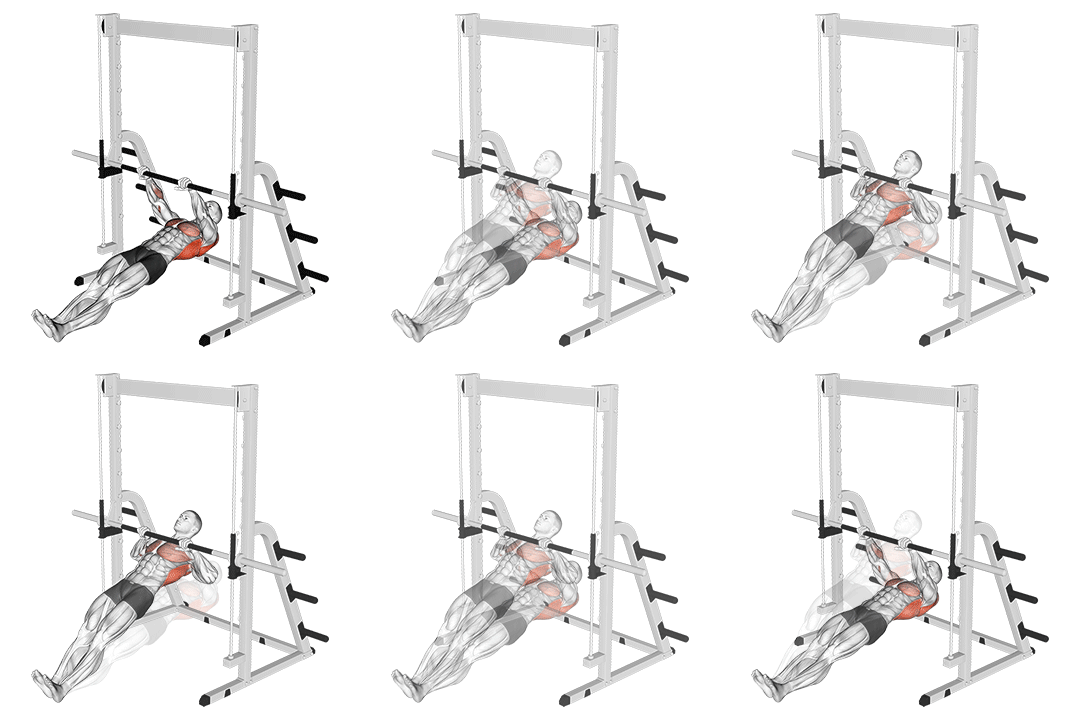
5. Inverted Row
77% MatchHow to perform this exercise
- Set up a bar at waist height or use a suspension trainer.
- Stand facing the bar or suspension trainer, with your feet shoulder-width apart.
- Grab the bar or handles with an overhand grip, slightly wider than shoulder-width apart.
- Lean back, keeping your body straight and your heels on the ground.
- Pull your chest towards the bar or handles, squeezing your shoulder blades together.
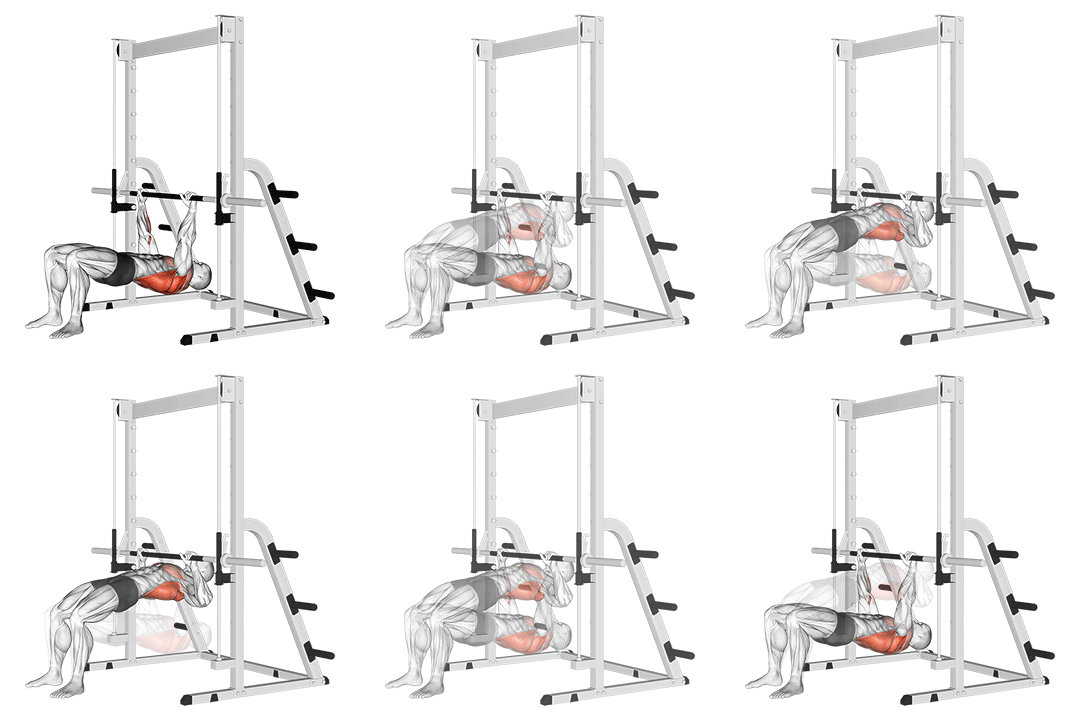
6. Inverted Row Bent Knees
77% MatchHow to perform this exercise
- Set up a bar at waist height and lie underneath it.
- Grab the bar with an overhand grip, slightly wider than shoulder-width apart.
- Position your body so that your heels are on the ground and your body is straight.
- Pull your chest up towards the bar by squeezing your shoulder blades together.
- Pause for a moment at the top, then slowly lower your body back down to the starting position.
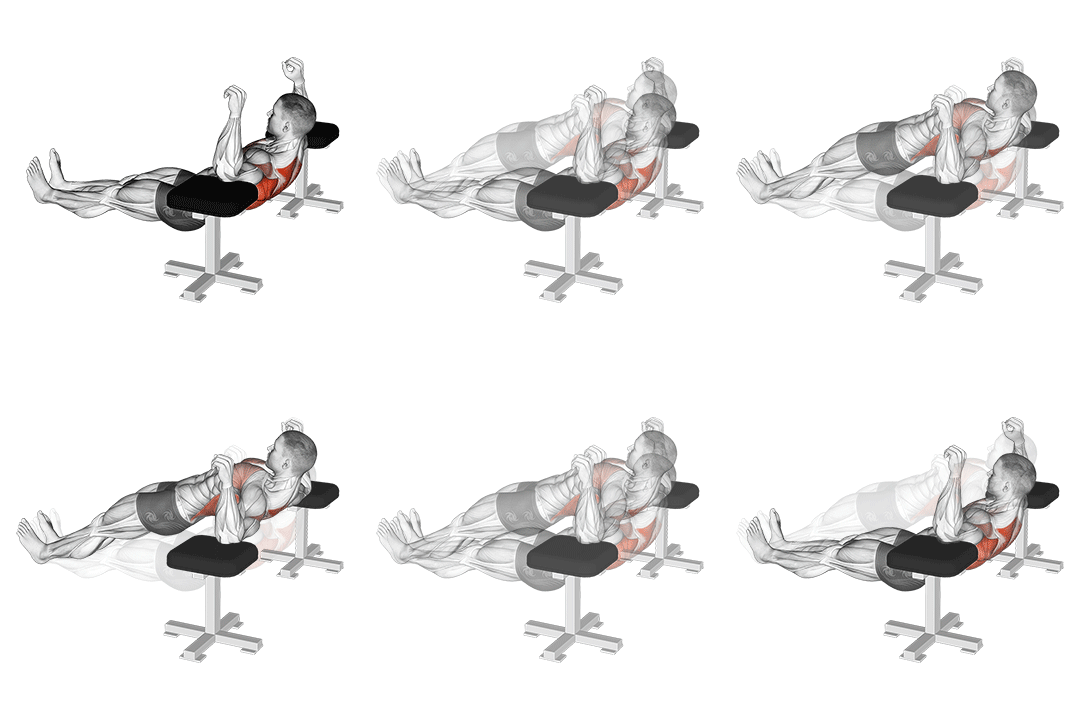
7. Elbow Lift - Reverse Push-up
76.2% MatchHow to perform this exercise
- Start by lying face down on the ground with your legs extended and your hands placed directly under your shoulders.
- Engage your core and press through your palms to lift your upper body off the ground, keeping your elbows close to your sides.
- Pause at the top for a moment, squeezing your upper back muscles.
- Slowly lower your body back down to the starting position.
- Repeat for the desired number of repetitions.
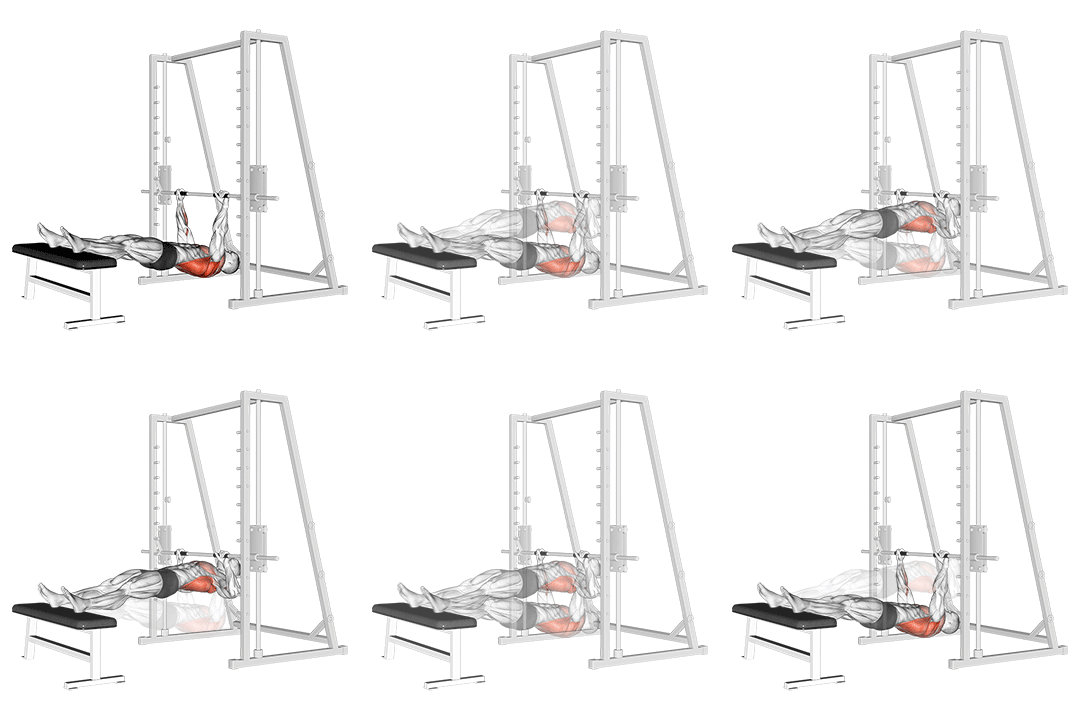
8. Inverted Row On Bench
75.7% MatchHow to perform this exercise
- Set up a bench at a height that allows your body to hang freely underneath it.
- Lie face up on the ground with your head towards the bench.
- Reach up and grab the bench with an overhand grip, slightly wider than shoulder-width apart.
- Position your body so that your heels are on the ground and your arms are fully extended.
- Engage your core and squeeze your shoulder blades together as you pull your chest up towards the bench.
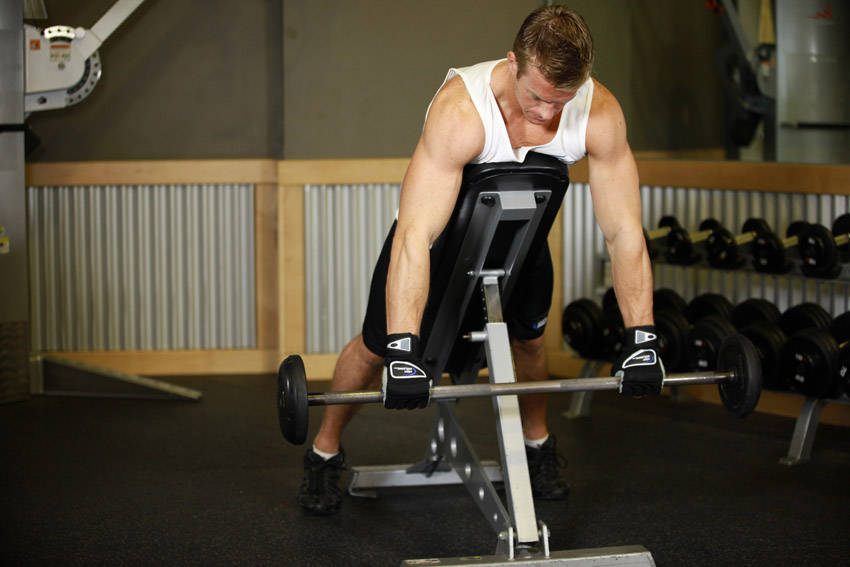
9. Incline Bench Pull
73.4% MatchHow to perform this exercise
- Grab a dumbbell in each hand and lie face down on an incline bench that is set to an incline that is approximately 30 degrees.
- Let the arms hang to your sides fully extended as they point to the floor.
- Turn the wrists until your hands have a pronated (palms down) grip.
- Now flare the elbows out. This will be your starting position.
- As you breathe out, start to pull the dumbbells up as if you are doing a reverse bench press. You will do this by bending at the elbows and bringing the upper arms up as you let the forearms hang. Continue this motion until the upper arms are at the same level as your back. Tip: The elbows will come out to the side and your upper arms and torso should make the letter "T" at the top of the movement. Hold the contraction at the top for a second.
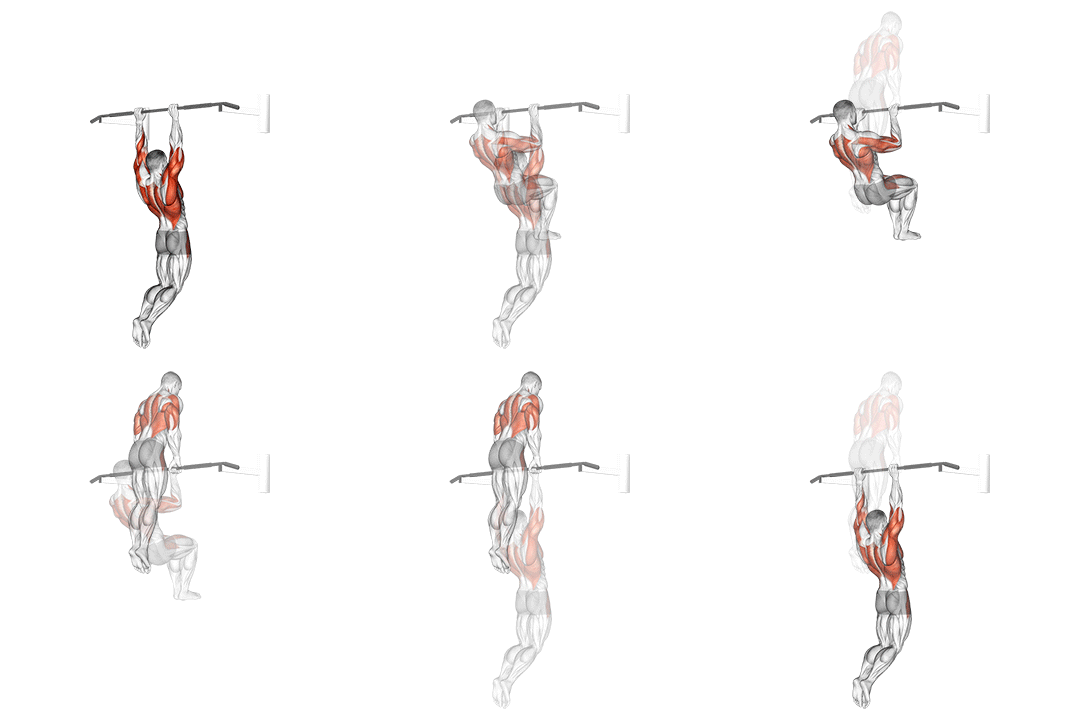
10. Muscle-up (on Vertical Bar)
73.2% MatchHow to perform this exercise
- Start by hanging from a vertical bar with your palms facing away from you and your arms fully extended.
- Engage your core and pull your body up towards the bar, leading with your chest.
- As you pull yourself up, lean back slightly and bring your elbows towards your sides.
- Continue pulling until your chest reaches the bar and your elbows are fully bent.
- Pause for a moment at the top, then slowly lower yourself back down to the starting position.
Why You Might Need a Bodyweight Mid Row Alternative
You may substitute the Bodyweight Mid Row because of limited equipment, shoulder pain, progression needs, or movement preferences. Lack of a stable anchor or pain with the horizontal pulling angle commonly prompts alternatives. Choose movements that preserve scapular retraction and thoracic stability so the middle trapezius and rhomboids remain primary drivers. For example, supine inverted rows shift load by changing torso angle (increase incline to reduce load), while band rows allow variable tension through the range of motion. Cue: retract scapula before you pull to prioritize mid-back activation and avoid dominant biceps recruitment.
How to Choose the Right Substitute
Select a substitute by matching load, range of motion, and scapular mechanics to the original exercise. If you need a bodyweight option, pick inverted rows and adjust foot position to change mechanical advantage; keep a rigid plank line to transfer load to the mid-back. For limited equipment, use resistance-band rows and focus on continuous tension and a full scapular retraction. Consider unilateral rows to correct side-to-side strength imbalances and ensure you initiate each rep by retracting the scapula so the rhomboids and mid-traps work first. Progress by changing torso angle, band tension, or adding tempo.
Frequently Asked Questions
What muscles does Bodyweight Mid Row work?
The Bodyweight Mid Row mainly targets the middle trapezius and rhomboids, with secondary involvement from the posterior deltoid and lats. Maintain scapular retraction on each rep to maximize mid-trap and rhomboid activation and limit biceps dominance.
What is the best bodyweight alternative to Bodyweight Mid Row?
The inverted row is the best bodyweight alternative because it preserves the horizontal pulling angle and scapular retraction pattern. Cue a straight plank line, pull the chest to the bar, and squeeze the shoulder blades together at the top to load the mid-back effectively.
Can I build muscle without doing Bodyweight Mid Row?
Yes, you can build middle-back muscle with a variety of horizontal-pull variations, bands, and unilateral rows as long as you apply progressive overload. Use tempo, increased sets, or harder body angles (more horizontal) and always initiate each rep with scapular retraction to bias mid-trap and rhomboid activation.
More Exercise Alternatives
Find Alternatives for Any Exercise
Use the exercise substitution finder to compare ranked alternatives for your available equipment and training preference.
Try the Exercise Substitution Finder →