

10 Best Dumbbell One-arm Seated Neutral Wrist Curl Alternatives
If you can’t perform the Dumbbell One-Arm Seated Neutral Wrist Curl, choose movements that load the wrist flexors and brachioradialis with controlled wrist flexion. Good substitutes include hammer-grip reverse curls, wrist rollers, and farmer holds. Cue: anchor your forearm on a stable surface, keep the elbow fixed, and drive the wrist through full flexion with a slow 2–3 second eccentric.
Original Exercise: Dumbbell One Arm Seated Neutral Wrist Curl
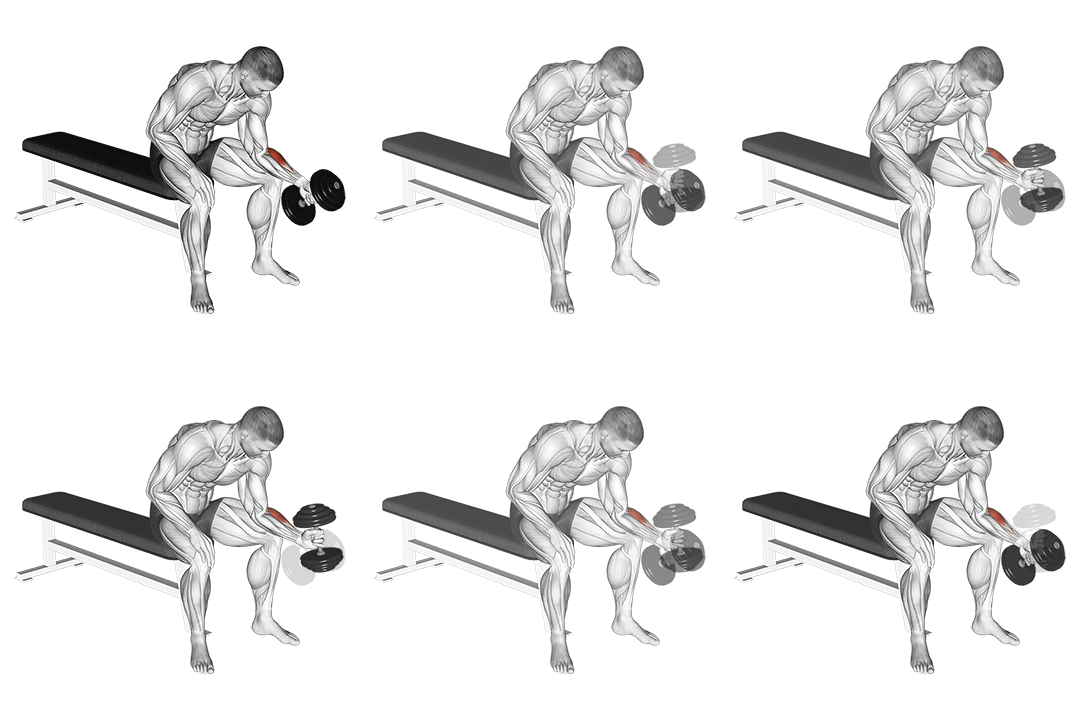
How to Perform Dumbbell One Arm Seated Neutral Wrist Curl
- Sit on a bench with your feet flat on the ground and hold a dumbbell in one hand, palm facing up.
- Rest your forearm on your thigh, allowing your wrist to hang off the edge.
- Keeping your forearm stationary, curl your wrist upward as far as possible.
- Pause for a moment at the top, then slowly lower your wrist back down to the starting position.
- Repeat for the desired number of repetitions, then switch to the other hand.
Ranked Dumbbell One Arm Seated Neutral Wrist Curl Alternatives
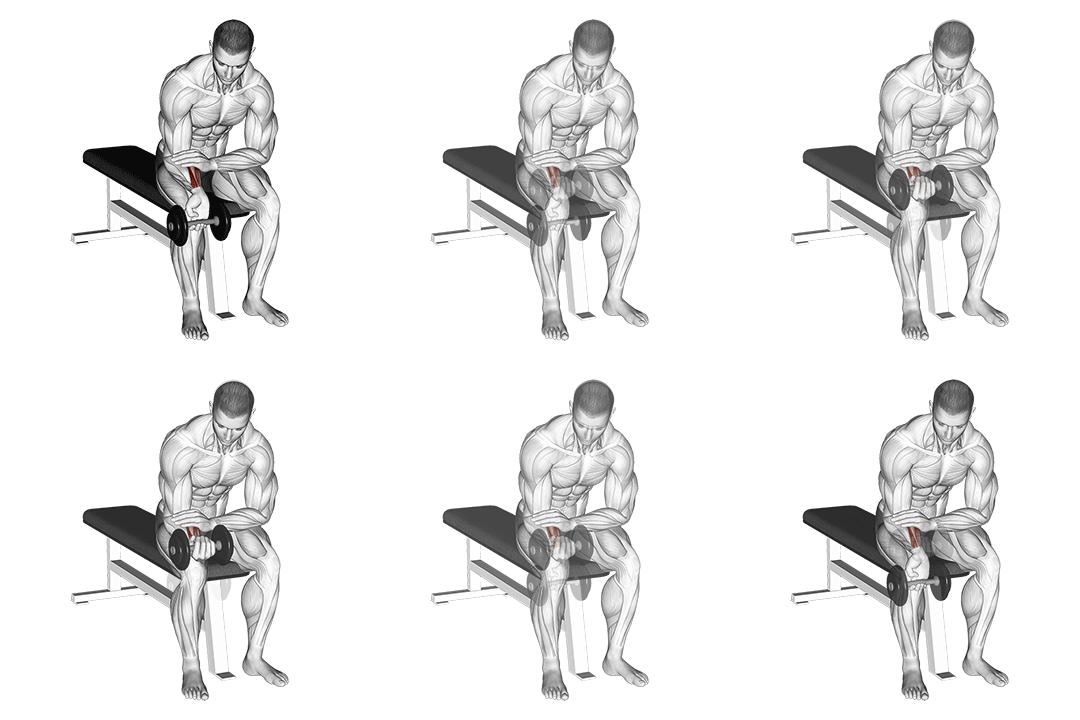
1. Dumbbell One Arm Wrist Curl
92% MatchHow to perform this exercise
- Sit on a bench or chair with your feet flat on the ground.
- Hold a dumbbell in one hand with an underhand grip, resting your forearm on your thigh.
- Allow your wrist to extend, letting the dumbbell roll down towards your fingers.
- Slowly curl your wrist back up, bringing the dumbbell towards your forearm.
- Repeat for the desired number of repetitions, then switch to the other hand.
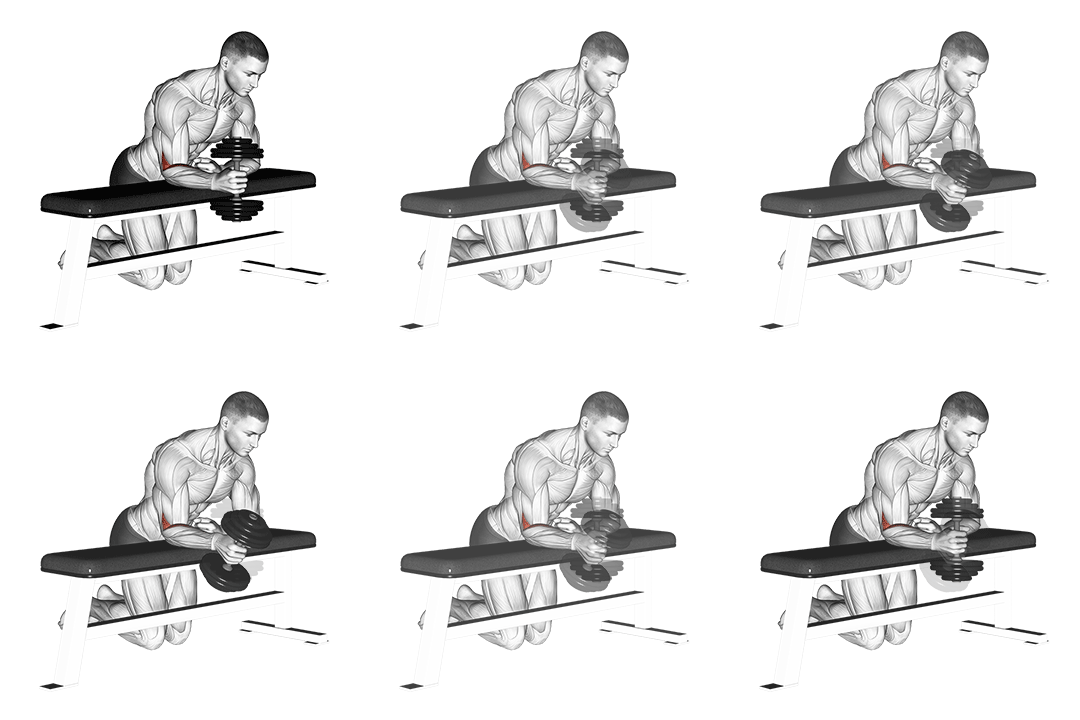
2. Dumbbell Over Bench One Arm Neutral Wrist Curl
91% MatchHow to perform this exercise
- Sit on a bench with a dumbbell in one hand and your arm extended over the bench, palm facing up.
- Keep your upper arm stationary and curl the dumbbell towards your shoulder, keeping your wrist in a neutral position.
- Pause for a moment at the top, then slowly lower the dumbbell back to the starting position.
- Repeat for the desired number of repetitions, then switch arms.
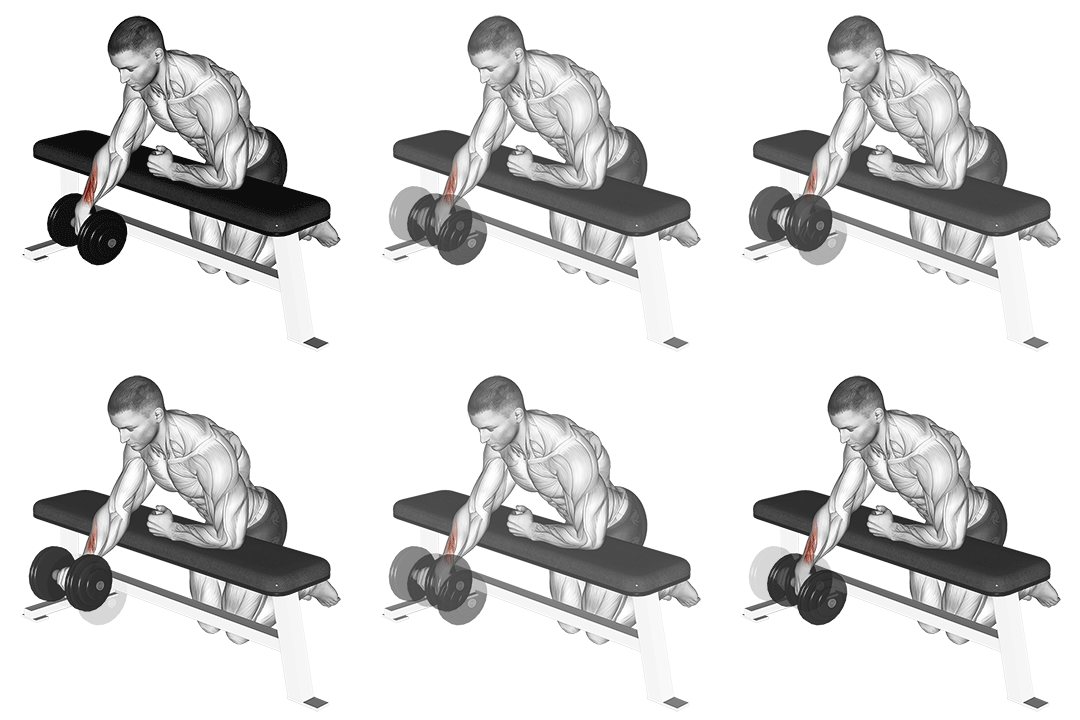
3. Dumbbell Over Bench One Arm Wrist Curl
87% MatchHow to perform this exercise
- Sit on a bench with your feet flat on the ground and hold a dumbbell in one hand, palm facing down.
- Rest your forearm on the bench with your wrist hanging off the edge.
- Slowly curl your wrist upwards, bringing the dumbbell towards your forearm.
- Pause for a moment at the top, then slowly lower the dumbbell back down to the starting position.
- Repeat for the desired number of repetitions, then switch to the other arm.
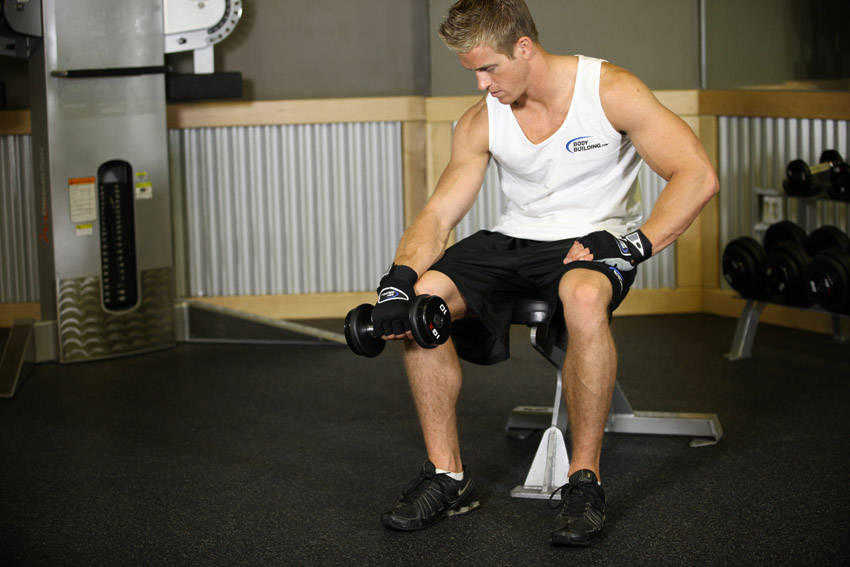
4. Seated One-Arm Dumbbell Palms-Down Wrist Curl
87% MatchHow to perform this exercise
- Sit on a flat bench with a dumbbell in your right hand.
- Place your feet flat on the floor, at a distance that is slightly wider than shoulder width apart.
- Lean forward and place your right forearm on top of your upper right thigh with your palm down. Tip: Make sure that the back of the wrist lies on top of your knees. This will be your starting position.
- Lower the dumbbell as far as possible as you keep a tight grip on the dumbbell. Inhale as you perform this movement.
- Now curl the dumbbell as high as possible as you contract the forearms and as you exhale. Keep the contraction for a second before you lower again. Tip: The only movement should happen at the wrist.
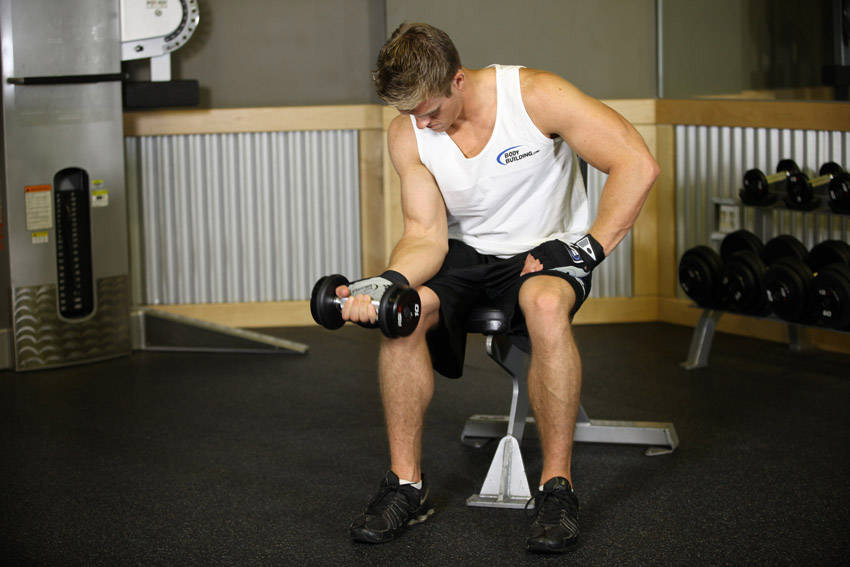
5. Seated One-Arm Dumbbell Palms-Up Wrist Curl
87% MatchHow to perform this exercise
- Sit on a flat bench with a dumbbell in your right hand.
- Place your feet flat on the floor, at a distance that is slightly wider than shoulder width apart.
- Lean forward and place your right forearm on top of your upper right thigh with your palm up. Tip: Make sure that the front of the wrist lies on top of your knees. This will be your starting position.
- Lower the dumbbell as far as possible as you keep a tight grip on the dumbbell. Inhale as you perform this movement.
- Now curl the dumbbell as high as possible as you contract the forearms and as you exhale. Keep the contraction for a second before you lower again. Tip: The only movement should happen at the wrist.
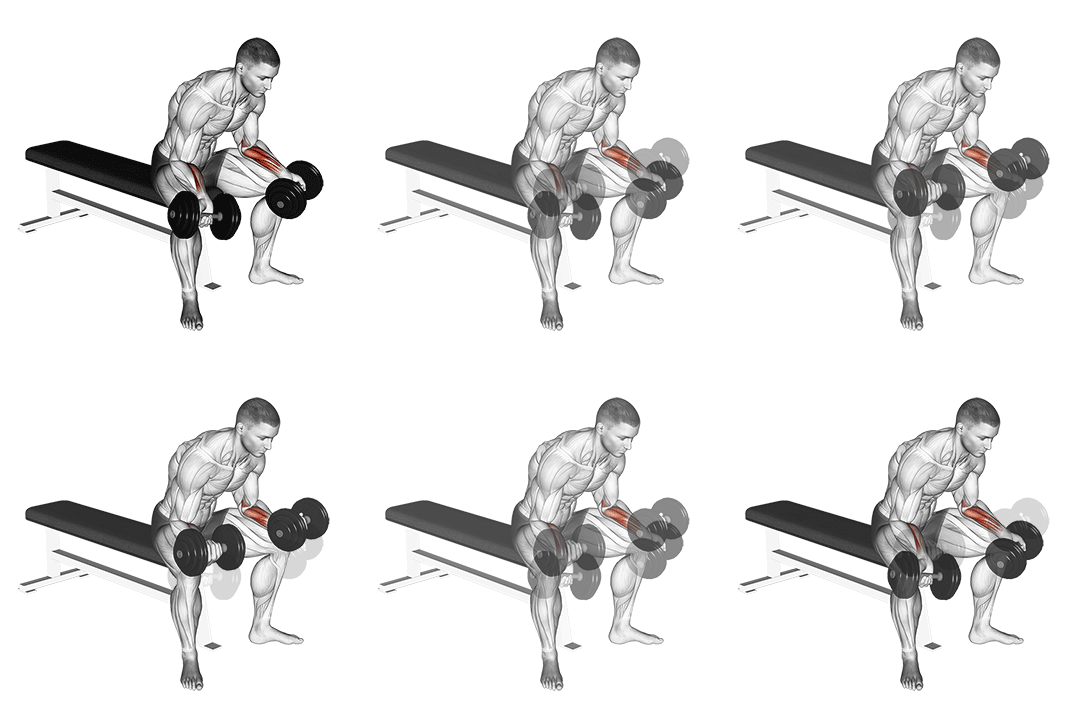
6. Dumbbell Seated Palms Up Wrist Curl
85% MatchHow to perform this exercise
- Sit on a bench with your feet flat on the ground and hold a dumbbell in each hand, palms facing up.
- Rest your forearms on your thighs, allowing your wrists to hang off the edge.
- Slowly curl your wrists upward, squeezing your forearms at the top of the movement.
- Pause for a moment, then lower your wrists back down to the starting position.
- Repeat for the desired number of repetitions.
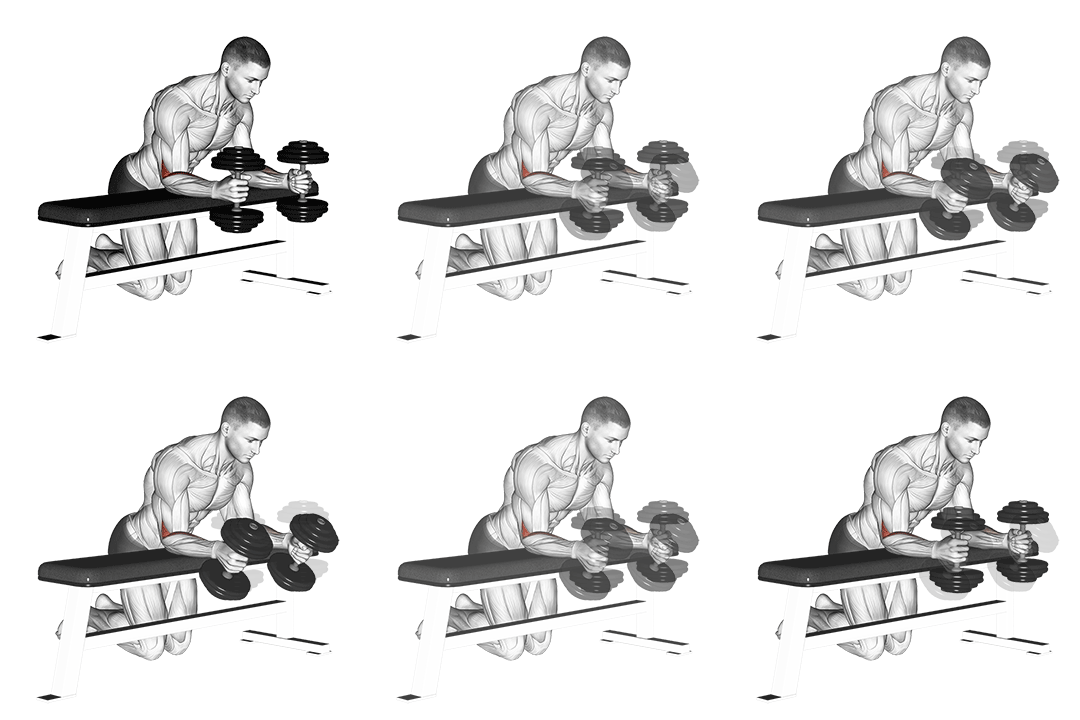
7. Dumbbell Over Bench Neutral Wrist Curl
84% MatchHow to perform this exercise
- Sit on a bench with your feet flat on the ground and hold a dumbbell in each hand, palms facing up.
- Rest your forearms on the bench, allowing your wrists to hang off the edge.
- Keeping your upper arms stationary, exhale and curl the dumbbells up towards your shoulders.
- Pause for a moment at the top, then inhale and slowly lower the dumbbells back down to the starting position.
- Repeat for the desired number of repetitions.
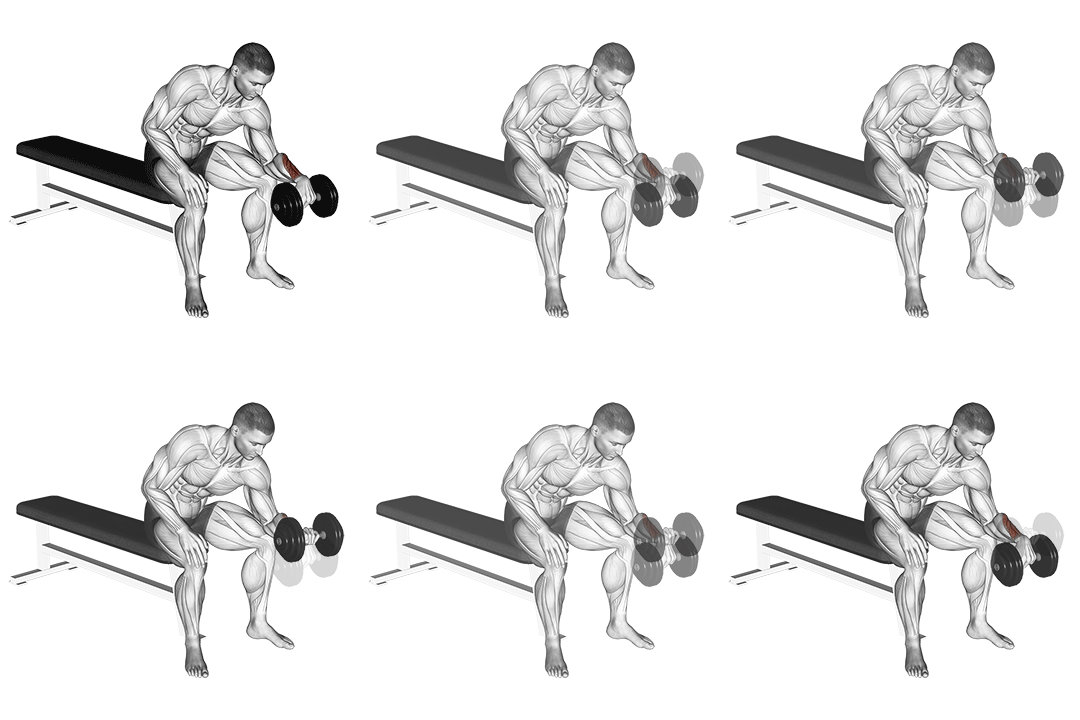
8. Dumbbell One Arm Reverse Wrist Curl
82% MatchHow to perform this exercise
- Sit on a bench or chair with your feet flat on the ground.
- Hold a dumbbell in one hand with an overhand grip, palm facing down.
- Rest your forearm on your thigh, with your wrist hanging off the edge.
- Slowly lower the dumbbell towards the ground by flexing your wrist.
- Pause for a moment at the bottom, then slowly curl your wrist back up towards your body.
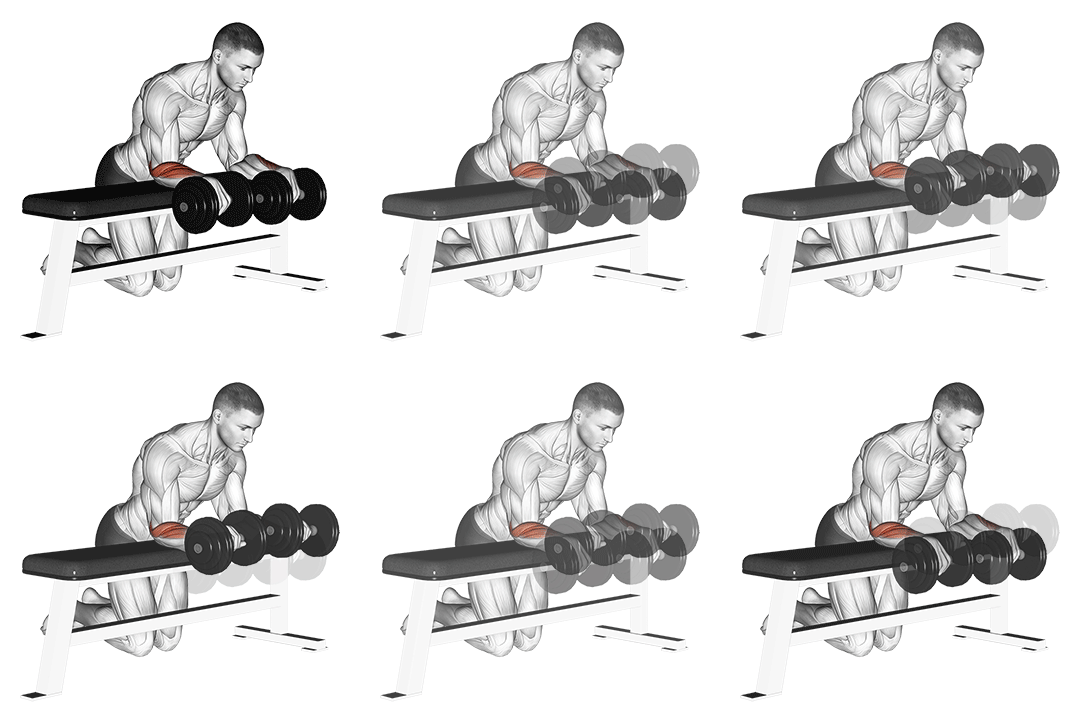
9. Dumbbell Over Bench Wrist Curl
80% MatchHow to perform this exercise
- Sit on a bench with your forearms resting on the bench and your palms facing up, holding a dumbbell in each hand.
- Allow your wrists to hang over the edge of the bench.
- Slowly curl your wrists upward, squeezing your forearms at the top of the movement.
- Pause for a moment, then slowly lower your wrists back down to the starting position.
- Repeat for the desired number of repetitions.
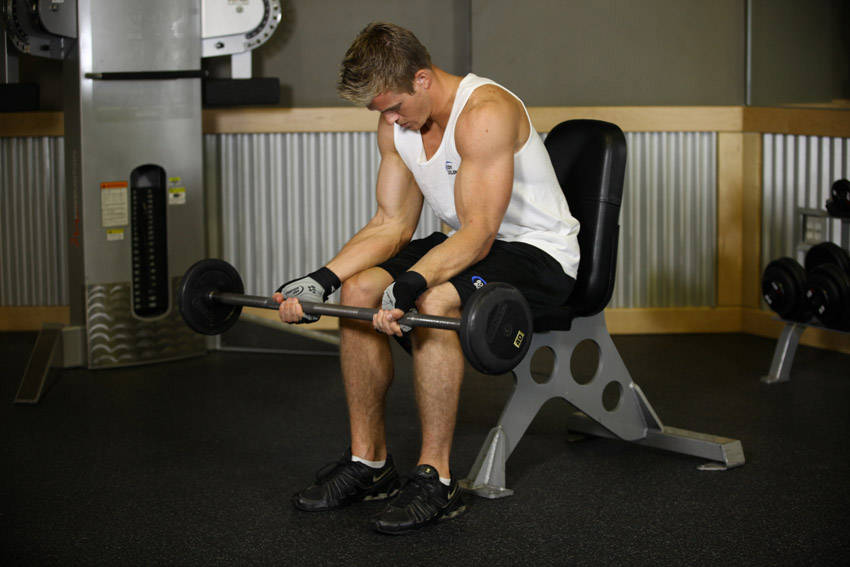
10. Seated Palm-Up Barbell Wrist Curl
80% MatchHow to perform this exercise
- Hold a barbell with both hands and your palms facing up; hands spaced about shoulder width.
- Place your feet flat on the floor, at a distance that is slightly wider than shoulder width apart.
- Lean forward and place your forearms on top of your upper thighs with your palms up. Tip: Make sure that the front of the wrists lay on top of your knees. This will be your starting position.
- Lower the bar as far as possible while inhaling and keeping a tight grip.
- Now curl bar up as high as possible while flexing the forearms and exhaling. Hold the contraction at the top for a second and Tip: Only the wrist should move.
Why You Might Need a Dumbbell One Arm Seated Neutral Wrist Curl Alternative
You might substitute this isolation exercise for several practical reasons: wrist pain from repetitive flexion, lack of a suitable dumbbell, or the need for greater grip and functional strength. Injuries such as TFCC irritation or severe carpal tunnel may limit wrist range, so you’d choose neutral-grip or isometric options to reduce shear. Equipment limits push you toward cables, bars, or bodyweight holds that still load the flexor carpi radialis/ulnaris and brachioradialis. Technique cue: when swapping, keep the forearm supported, drive motion from the wrist joint only, and prioritize slow eccentrics to maximize TUT and tendon adaptation.
How to Choose the Right Substitute
Select a substitute based on loading pattern, grip orientation, and isolation level. If you need strict wrist flexion isolation, use a wrist roller or supported supinated wrist curl and cue a 1–2 second hold at peak contraction. For grip endurance and functional transfer, pick farmer carries or towel grips to recruit intrinsic hand muscles and brachioradialis. If a wrist injury limits ROM, use partial-range isometrics or neutral-grip hammer curls to reduce shear while preserving stimulus. Progress by increasing load, reps, or time-under-tension and monitor forearm fatigue and wrist comfort closely.
Frequently Asked Questions
What muscles does Dumbbell One Arm Seated Neutral Wrist Curl work?
The movement primarily targets the wrist flexors, mainly flexor carpi radialis and flexor carpi ulnaris, with palmaris longus contribution. A neutral (thumb-up) grip increases brachioradialis involvement, so you also get forearm brachialis support during heavier loads.
What is the best bodyweight alternative to Dumbbell One Arm Seated Neutral Wrist Curl?
A supported fingertip or palm-down wrist isometric on a stable surface is the top bodyweight option; press your fingertips into a bench and hold maximal wrist flexion for 10–30 seconds. Cue: keep the forearm braced and avoid shoulder compensation to isolate wrist flexors.
Can I build muscle without doing Dumbbell One Arm Seated Neutral Wrist Curl?
Yes. You can hypertrophy the wrist flexors using alternatives that match load and time-under-tension, such as wrist rollers, barbell reverse curls, and heavy farmer carries. Ensure progressive overload and prioritize full concentric contraction with controlled 2–3 second eccentrics.
More Exercise Alternatives
Find Alternatives for Any Exercise
Use the exercise substitution finder to compare ranked alternatives for your available equipment and training preference.
Try the Exercise Substitution Finder →