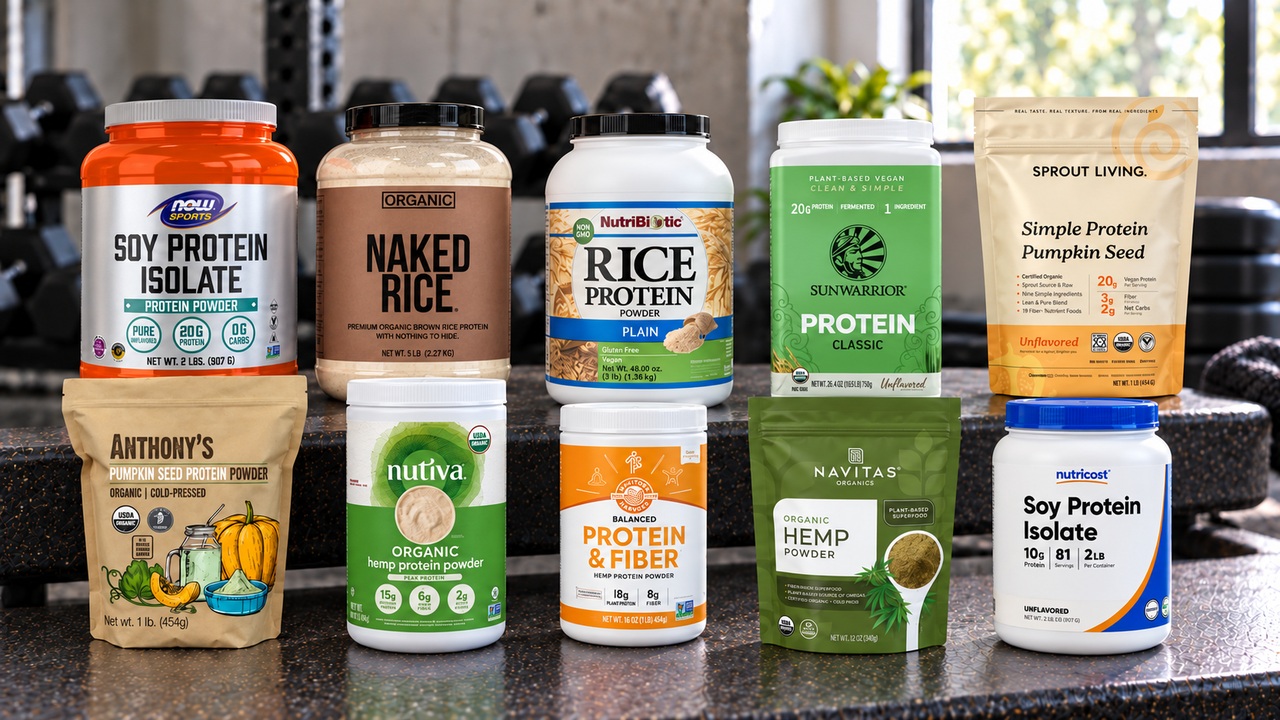
Skipping pea protein does not mean giving up plant protein. Soy and rice isolates can deliver a concentrated serving; hemp and pumpkin powders take a different route, often adding more fiber or requiring more powder for the same protein.
Written by Tom Miller, CSCS. Updated: October 2026.
Short on time? NOW Sports Soy Protein Isolate is our first choice if soy fits your diet: 20g protein in a 24g portion. Naked Rice is the bulk rice option; Sprout Living is the pumpkin-seed alternative. These exact formulas do not list pea ingredients. That is not a guarantee against allergen cross-contact.
How We Chose
We selected plant-protein powders whose named formulas do not list pea protein or another pea ingredient. We then compared protein per portion, portion weight, calories, fiber, other allergens and package size. Single-source powders make the ingredient choice easier to follow, but they are not nutritionally interchangeable. A tablespoon of pumpkin powder is not the same protein serving as a full scoop of soy isolate. Ratings favor a useful protein addition and clear tradeoffs for the intended buyer. Pea avoidance can be a preference or a medical need; an ingredient list answers the former more readily than it settles the latter.
Our Verdict
NOW Sports Soy Protein Isolate Unflavored
20g protein in a 24g portion makes this a concentrated pea-ingredient-free choice for buyers who can use soy.
Best for: Plant-based lifters comfortable with soy
Check Price on AmazonOur Top Picks
Best Overall If Soy Suits You: NOW Sports Soy Isolate
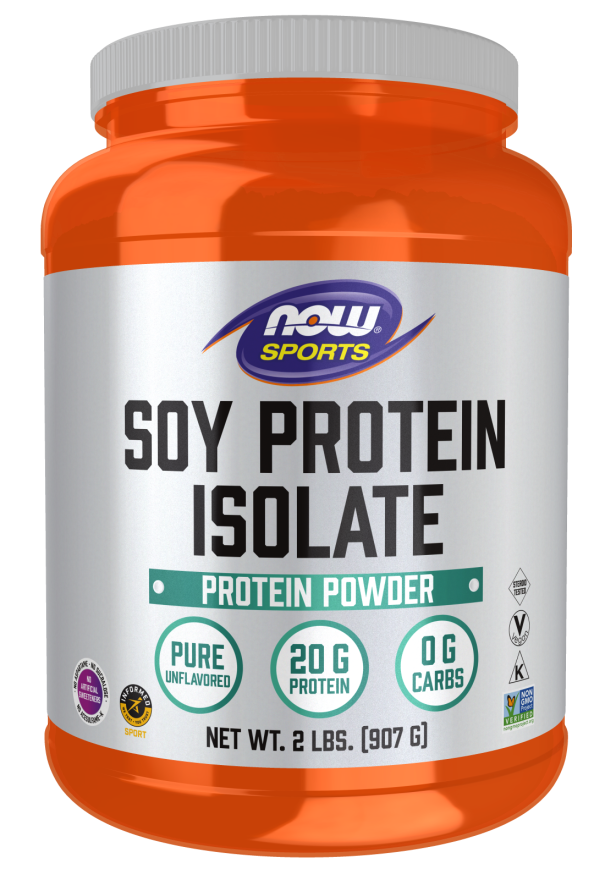
NOW Sports Soy Protein Isolate Unflavored 2lb
Best Overall With SoyAn unflavored soy isolate with 20g protein in a 24g portion, for buyers who avoid pea ingredients but can use soy.
Pros
- 20g protein per 24g portion
- 90 calories
- Single soy-protein ingredient
Cons
- Contains soy
- No-pea ingredient list is not a cross-contact guarantee
NOW supplies 20g protein and 90 calories per 24g portion, with zero declared carbohydrate. The selected 2lb tub contains about 38 servings. That is a concentrated protein addition rather than a seed powder bought mainly for fiber.
The ingredient is soy protein isolate, so the choice is straightforward if soy works for you. Skip this if you have a soy allergy or need a manufacturer-confirmed pea-allergen control plan. Nutricost’s soy isolate uses a smaller 10g protein serving; two of those servings reach NOW’s protein amount. Naked Rice is the next route to consider when soy is also off the table.
Best Large Rice Purchase: Naked Rice
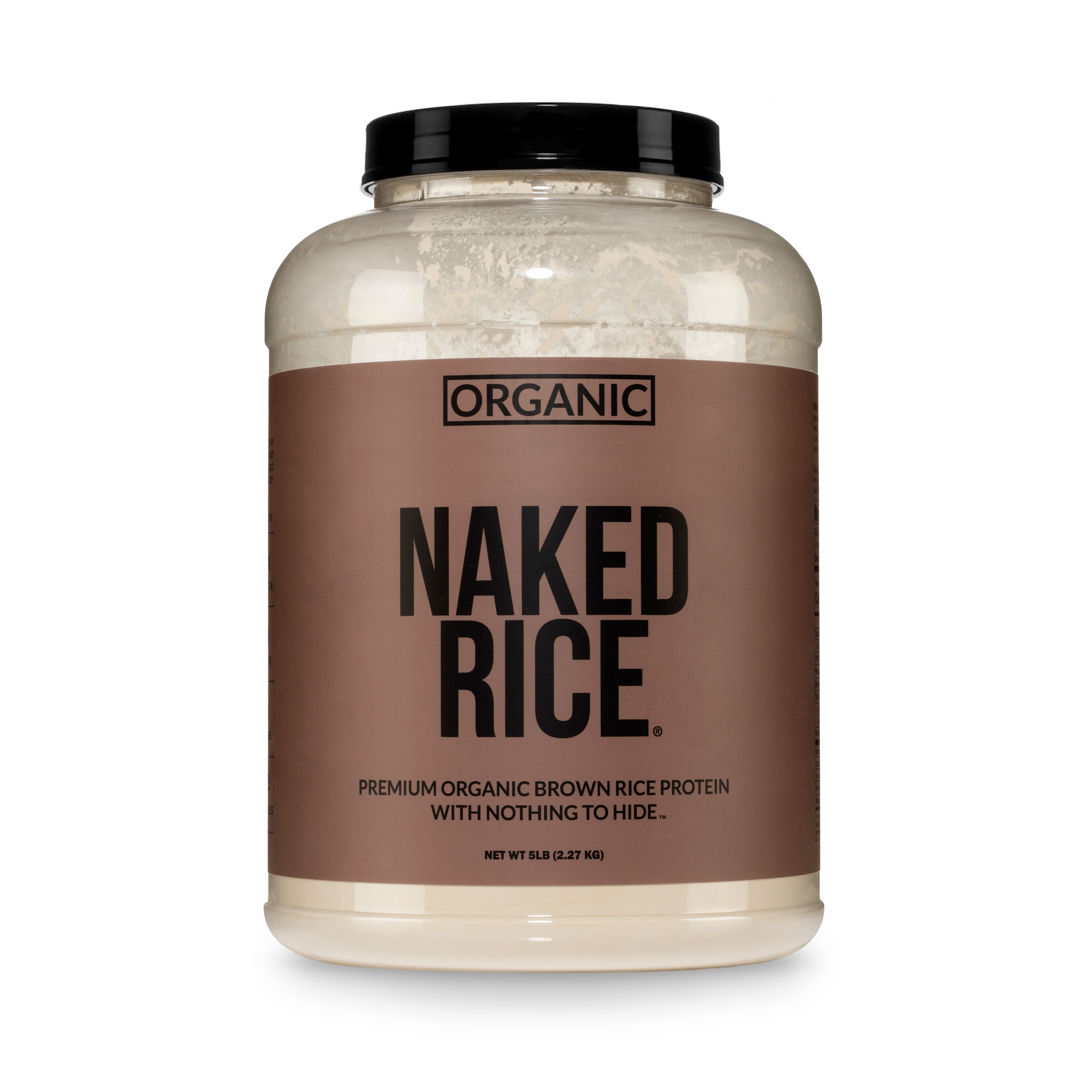
Naked Rice Unflavored Brown Rice Protein 5lb
Best Bulk RiceA large 5lb tub of single-ingredient brown rice protein, supplying 25g protein per 30g portion without a pea-protein blend.
Pros
- 25g protein per 30g portion
- 120 calories
- 76 servings in the selected 5lb tub
Cons
- Large first-purchase commitment
- A single rice source does not replace dietary variety
Naked Rice lists organic sprouted whole-grain brown rice protein as its ingredient. Each 30g portion supplies 25g protein, 120 calories and 4g carbohydrate. The selected 5lb tub holds 76 servings, considerably more than Sunwarrior’s 30-serving jar.
It suits someone already committed to rice protein, especially for frequent smoothie use. Skip this if you are still deciding which plant ingredient to use. NutriBiotic’s 12g labeled portion is easier to divide into smaller additions, while Sunwarrior is the smaller full-serving purchase. Do not assume Naked’s rice product is the same as its pea powder because the tubs share a design.
Best Smaller Rice Portion: NutriBiotic Plain Rice Protein
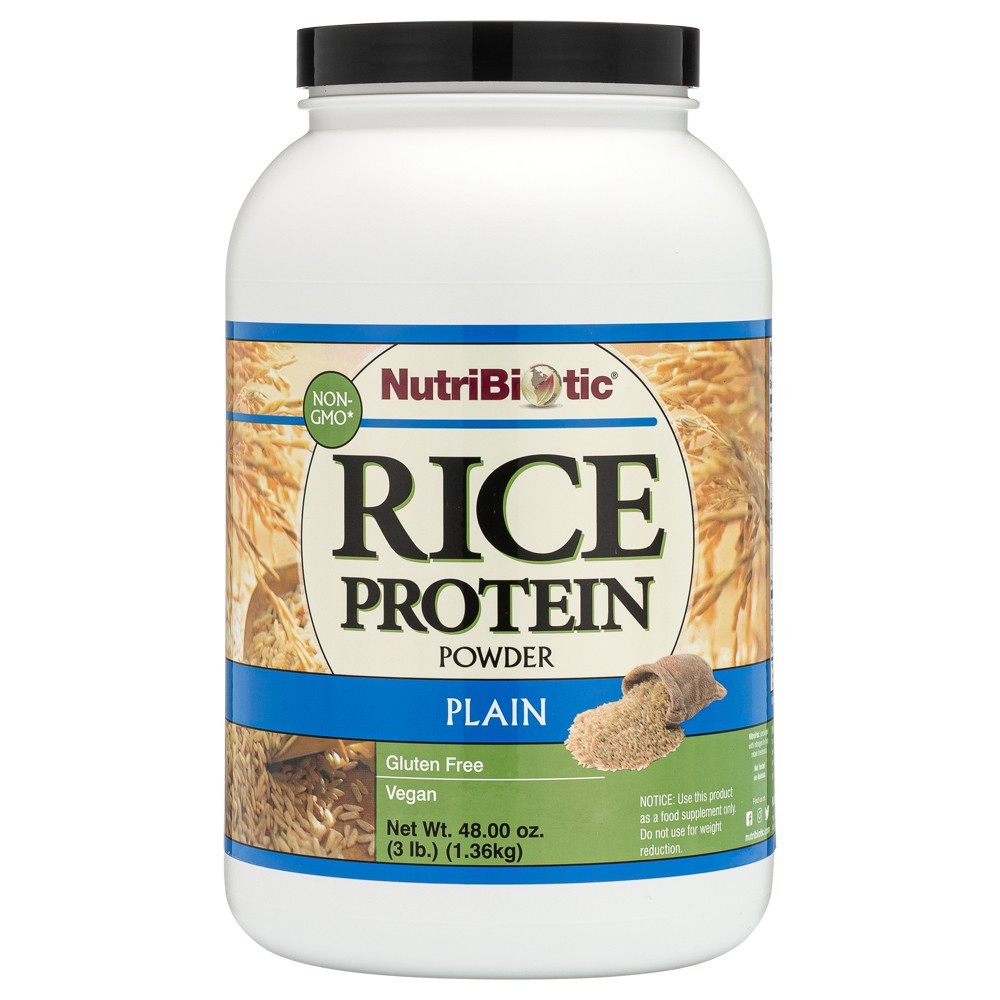
NutriBiotic Plain Rice Protein 3lb
Best Small Rice PortionA plain rice-protein powder with a modest 12g protein portion, useful for topping up a meal that already contains some protein.
Pros
- 12g protein per 15g portion
- 60 calories
- Plain single-source rice formula
Cons
- Two servings needed for 24g protein
- Selected Plain version is not the separate Organic line
NutriBiotic sets its serving at two tablespoons, 15g powder, supplying 12g protein and 60 calories. Two labeled portions give 24g protein and 120 calories, close to Naked’s 25g protein portion. A smaller serving does not make it a lower-protein purchase when measured equally.
The selected 3lb product is Plain Rice Protein, not the brand’s separately labeled organic version. Skip this if organic certification is a requirement for your purchase. Sunwarrior Classic is the organic rice alternative here. NutriBiotic makes more sense for people who want to add 12g at a time rather than commit to a large protein addition in every drink.
Best Smaller Organic Rice Jar: Sunwarrior Classic
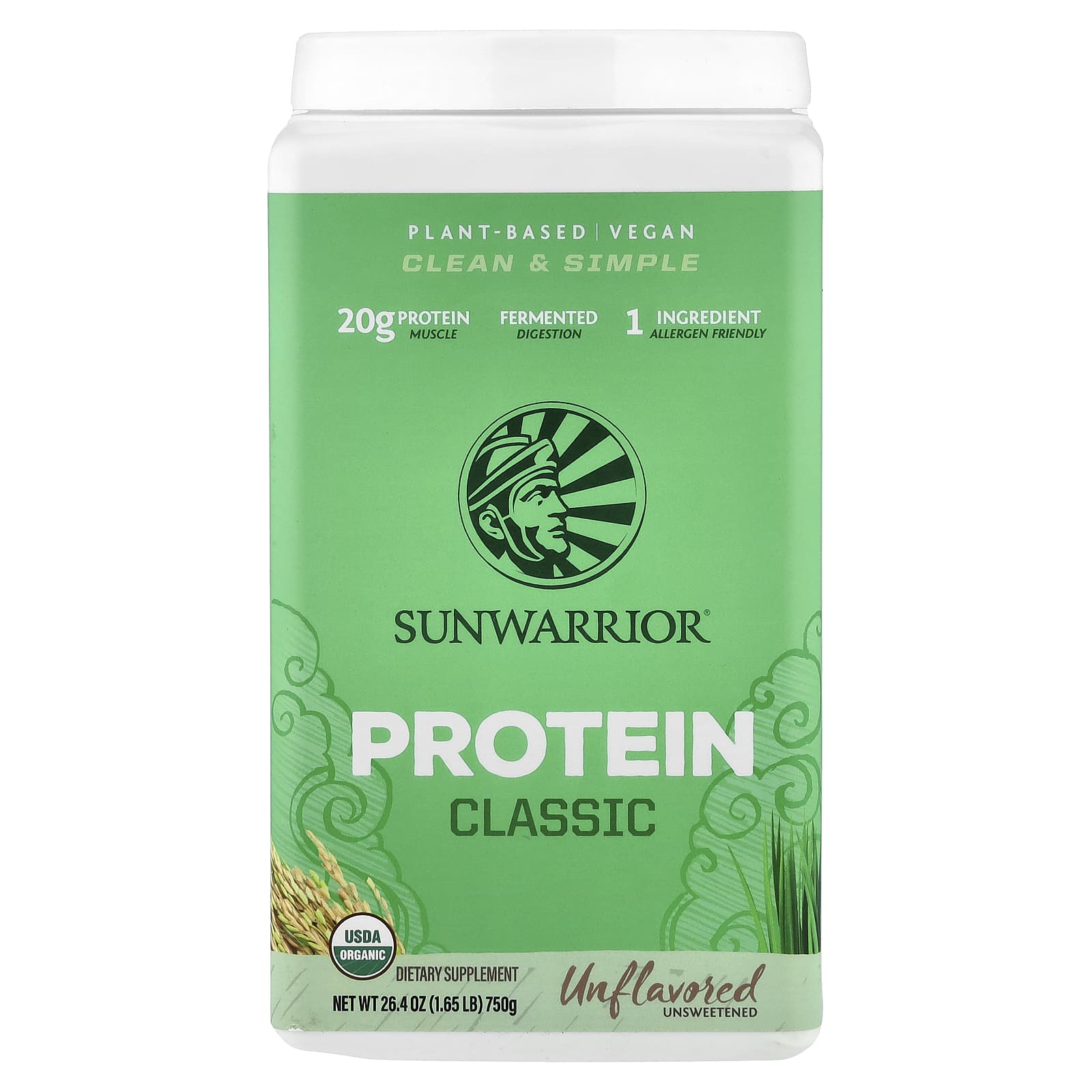
Sunwarrior Classic Protein Unflavored 750g
Best Organic Rice JarSunwarrior's original Classic Unflavored uses organic fermented brown rice protein, with 20g protein per 25g scoop and no pea ingredient.
Pros
- 20g protein per 25g scoop
- 100 calories
- One organic fermented brown-rice ingredient
Cons
- Facility notice includes peanuts or tree nuts
- Classic Plus and Warrior Blend are different formulas
The green Classic Protein Unflavored jar is the important detail. Its label lists one ingredient, organic fermented brown rice protein, with 20g protein and 100 calories per 25g scoop. The 750g package contains 30 servings.
Do not substitute Classic Plus or Warrior Blend: those are different formulas and can contain pea. Skip this if the peanut or tree-nut facility notice conflicts with your allergy plan. Compared with Naked Rice, Classic is a smaller purchase with a smaller protein portion. Fermented wording alone does not prove that it will be comfortable for every person to digest.
Best Pumpkin Protein Portion: Sprout Living Simple Pumpkin Seed
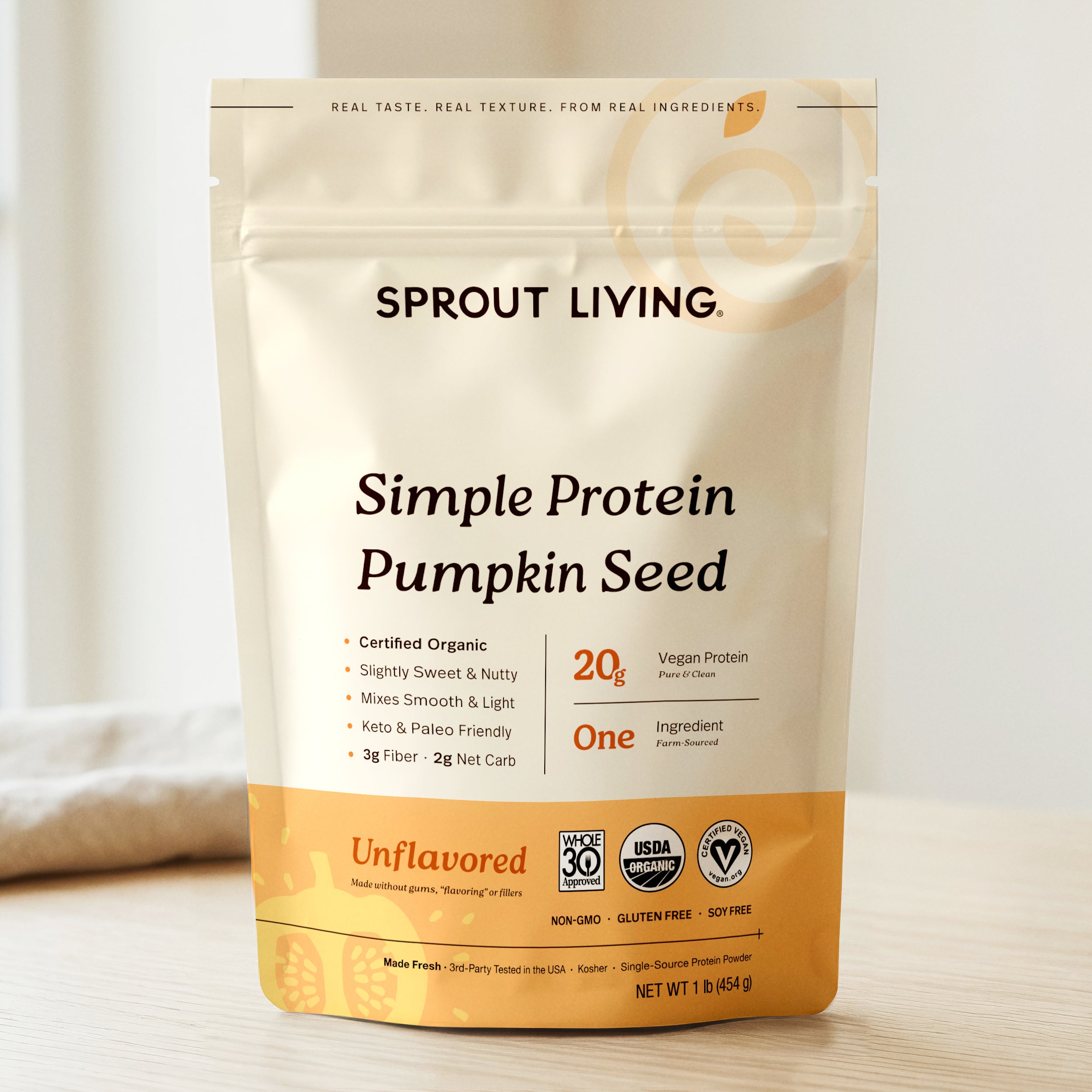
Sprout Living Simple Pumpkin Seed Protein Unflavored 1lb
Best Pumpkin PortionA pumpkin-seed protein powder with 20g protein and 3g fiber per portion, for buyers choosing a seed source rather than soy or rice.
Pros
- 20g protein per 32.5g portion
- 3g fiber
- One pumpkin-seed protein ingredient
Cons
- 150 calories per portion
- About 14 servings on the selected label
Sprout Living reaches 20g protein with a 32.5g, two-scoop portion. Its selected label lists 150 calories, 3g fiber and 14 servings. The serving count matters: a 1lb bag is not automatically a month’s supply at this amount.
It suits buyers who want a full 20g protein portion in one labeled serving. Skip this if you want the smallest calorie addition: NOW supplies 20g protein in 90 calories. Anthony’s is the other pumpkin route, but its 5g tablespoon serving needs multiplying before an equal-protein comparison. Check the named Simple Pumpkin Seed product rather than Sprout Living’s multi-ingredient blends.
Best Tablespoon-Size Seed Addition: Anthony’s Pumpkin Seed
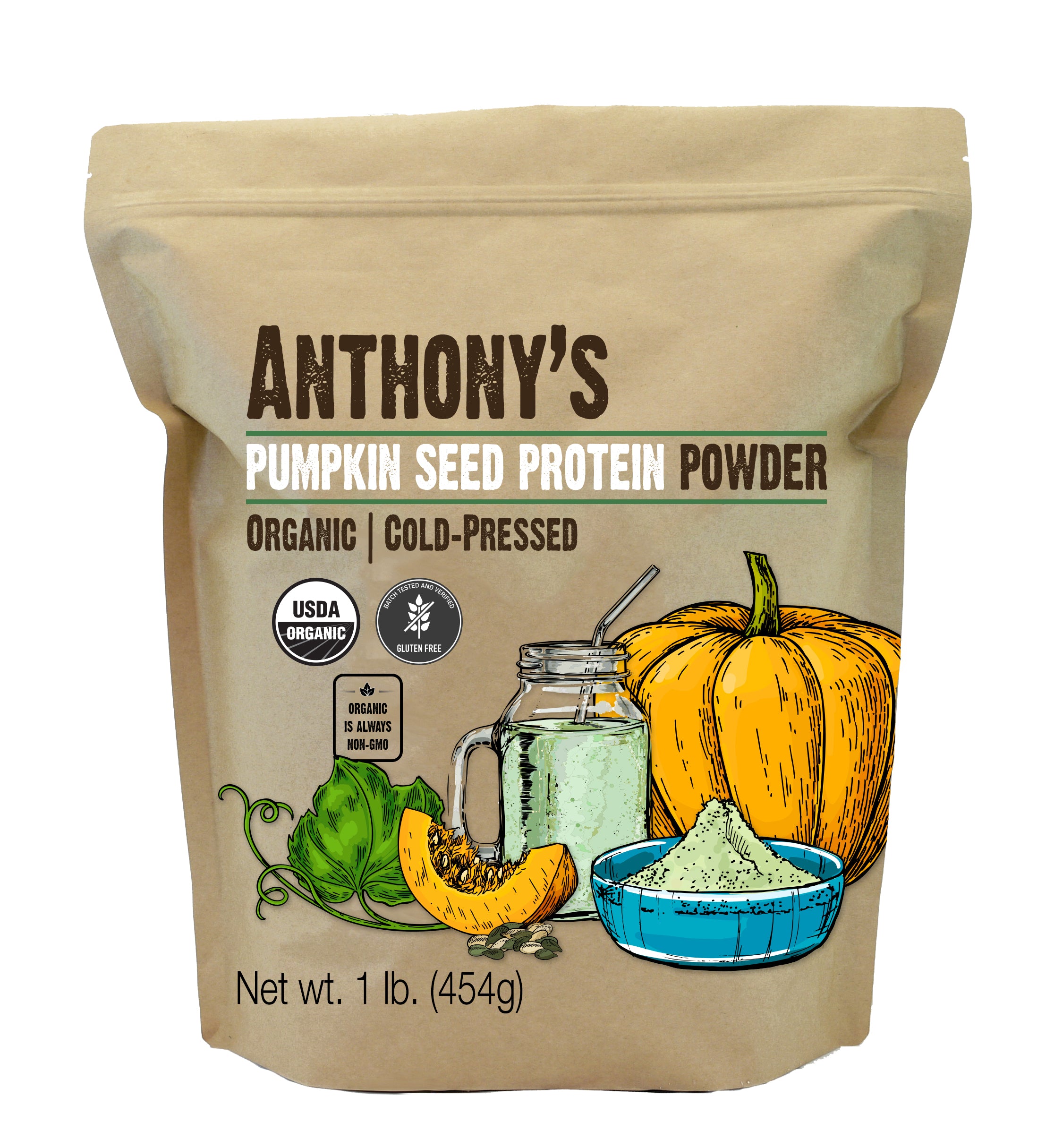
Anthony's Pumpkin Seed Protein Powder 1lb
Best Small Seed AdditionA pumpkin-seed powder labeled in 8g tablespoons, each with 5g protein, for small additions to food rather than a one-scoop 20g shake.
Pros
- 5g protein per 8g tablespoon
- 30 calories per tablespoon
- Single organic toasted pumpkin-seed ingredient
Cons
- Four tablespoons needed for 20g protein
- Not a high-fiber serving on the named panel
Anthony’s serving is just 8g powder, one tablespoon, containing 5g protein and 30 calories. Four of those portions supply 20g protein in 32g powder and 120 calories. The large 56-serving count is therefore not 56 full 20g protein portions.
This portioning makes sense for adding a little seed protein to several foods across the day. Skip this if you want one labeled serving to supply 20g or expect a substantial fiber boost. Sprout Living declares 3g fiber in its larger portion; Anthony’s named tablespoon panel lists 0g. Compare the amount you would actually use, not the serving count in isolation.
Best Moderate-Fiber Hemp Option: Nutiva Peak Protein
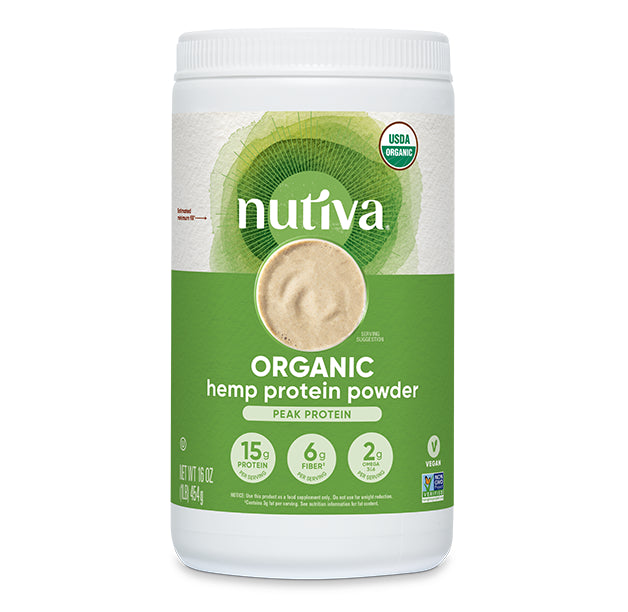
Nutiva Organic Hemp Protein Powder Peak Protein 16oz
Best Moderate-Fiber HempNutiva's Peak Protein hemp powder supplies 15g protein and 6g fiber per 30g portion, distinct from the higher-fiber companion formula.
Pros
- 15g protein per 30g portion
- 6g fiber
- 110 calories
Cons
- Less protein than the soy and rice isolates
- Peak Protein is different from Fiber Plus
Choose the Peak Protein tub, with 15g protein and 6g fiber on the front. Its 30g, four-tablespoon portion contains 110 calories, and the selected 16oz package holds 15 servings. Fiber Plus is a different product with a different balance.
This fits a smoothie where you want fiber as well as protein, rather than maximizing protein concentration. Skip this if you need 20-25g protein from a modest amount of powder. Naked Rice reaches 25g in the same 30g powder weight. Manitoba adds more fiber per labeled portion, so choose based on what the rest of your meal already supplies.
Best Higher-Fiber Hemp Portion: Manitoba Harvest Balanced
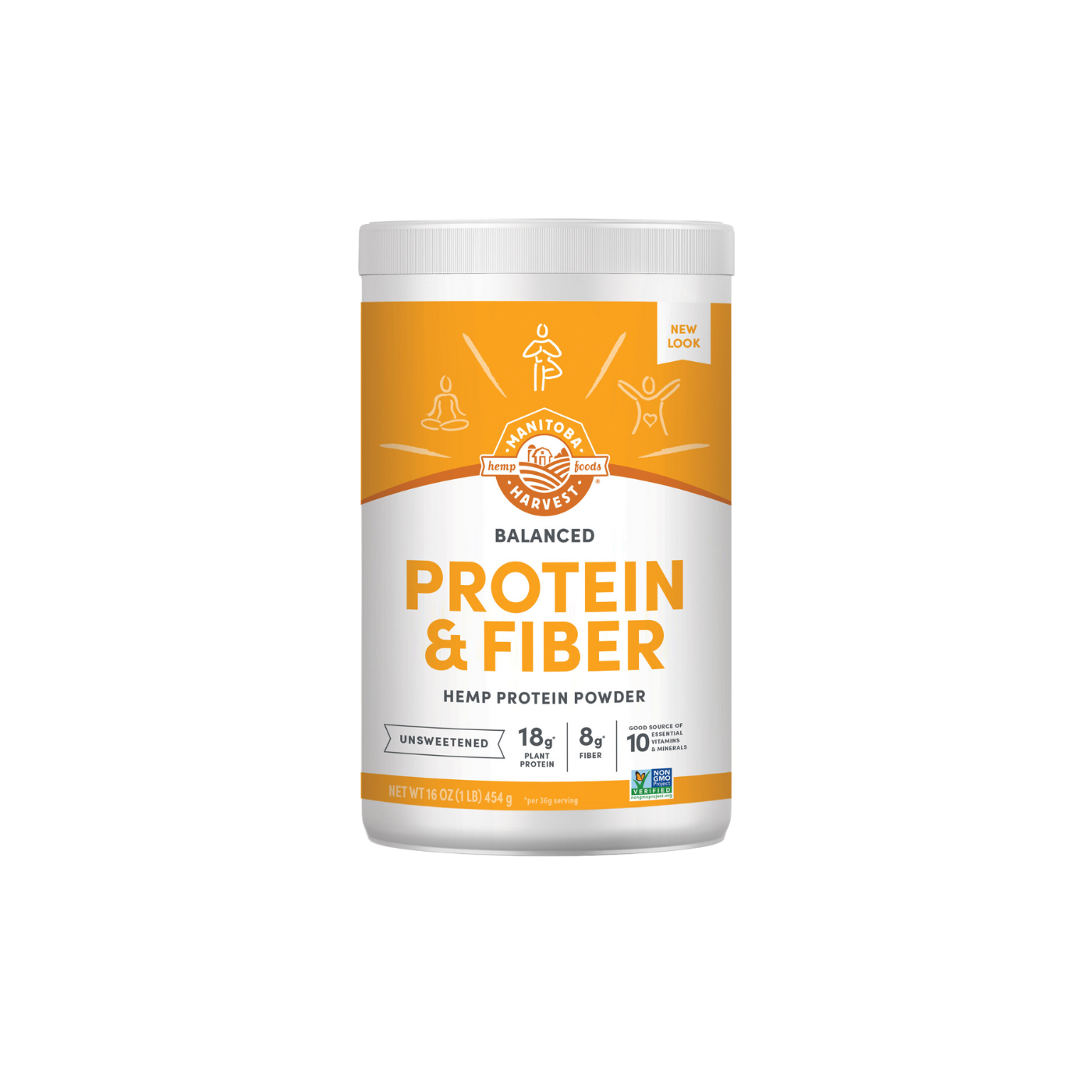
Manitoba Harvest Balanced Protein and Fiber Unsweetened 16oz
Best Higher-Fiber HempAn unsweetened hemp powder with 8g fiber per portion; check whether your package carries the current 18g or older 15g protein declaration.
Pros
- 8g fiber per 36g portion
- Single hemp-seed powder ingredient
- Unsweetened 16oz tub
Cons
- Current 18g protein label differs from legacy 15g listing
- A larger fiber serving may not suit pre-workout use
Manitoba’s current Balanced panel lists 18g protein, 8g fiber and 140 calories per 36g portion. The selected 16oz Amazon listing still describes a 15g protein version. Packaging revisions matter here: confirm the actual panel rather than assuming those protein amounts are interchangeable.
The constant buying reason is a substantial fiber addition from hemp-seed powder. Skip this if you need a guaranteed protein amount before ordering or prefer little fiber near training. NOW’s soy isolate is the more concentrated route. Nutiva supplies 6g fiber in its smaller portion, while Navitas combines a 30g portion with 7g fiber.
Best Hemp Pantry Pouch: Navitas Organics Hemp Powder
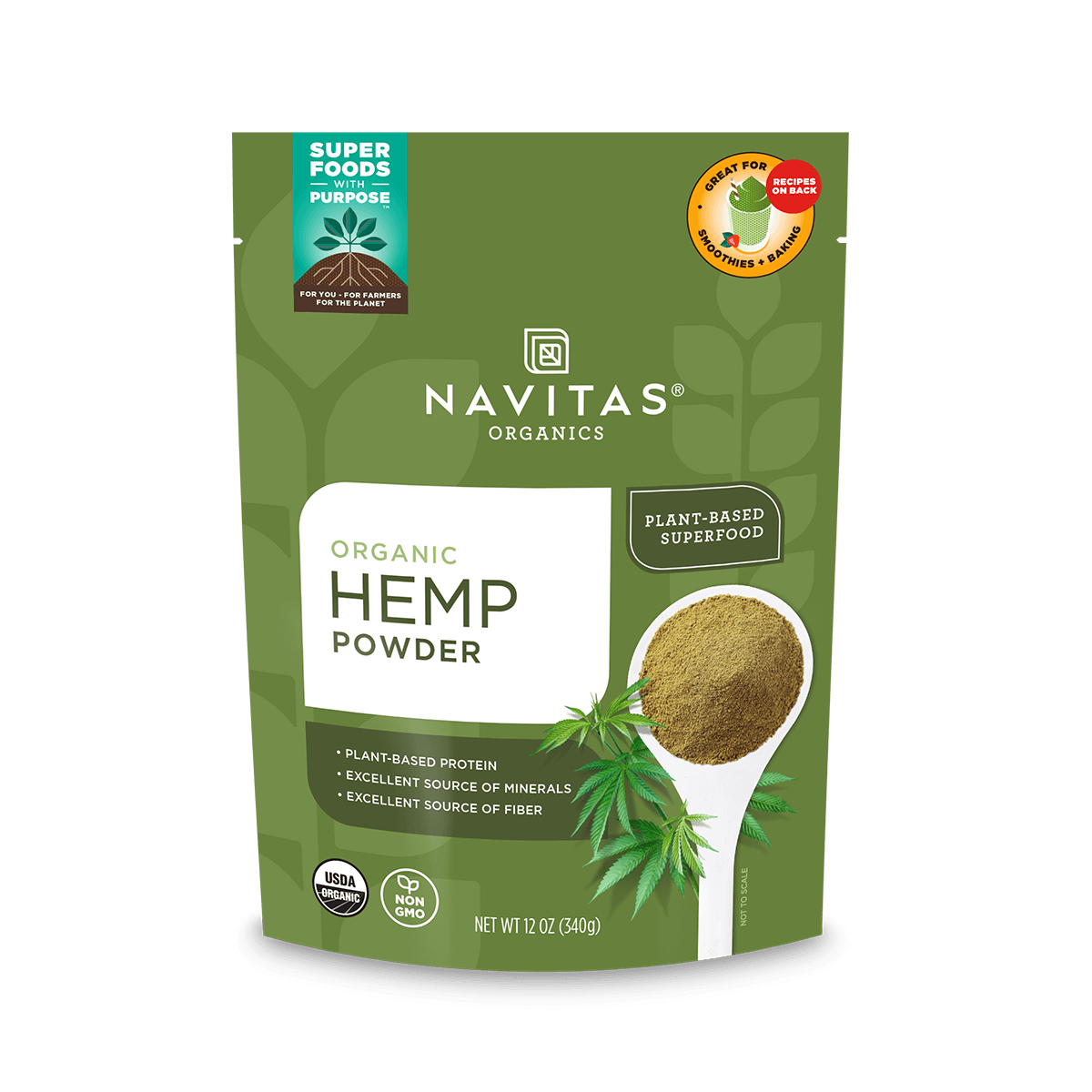
Navitas Organics Hemp Powder 12oz
Best Hemp Pantry PouchA 12oz hemp-powder pouch with 13g protein and 7g fiber per 30g portion, for adding both to smoothies or food.
Pros
- 13g protein per 30g portion
- 7g fiber
- One certified organic hemp ingredient
Cons
- 120 calories for 13g protein
- Not an efficient swap for a 25g isolate serving
Navitas’ panel lists 13g protein, 7g fiber and 120 calories per four-tablespoon, 30g portion. The 12oz pouch contains about 11 portions. It belongs in the seed-and-fiber end of this list, not alongside soy isolate as an equivalent protein concentrate.
Choose it when a hemp pantry ingredient fits what you cook or blend. Skip this if you are trying to get 25g protein with minimal powder and calories. Nutiva has 2g more protein and 1g less fiber in its 30g portion. Navitas’ smaller pouch can still be a sensible purchase, but its modest serving count is worth noticing before checkout.
Best Small Soy Protein Portion: Nutricost Soy Isolate
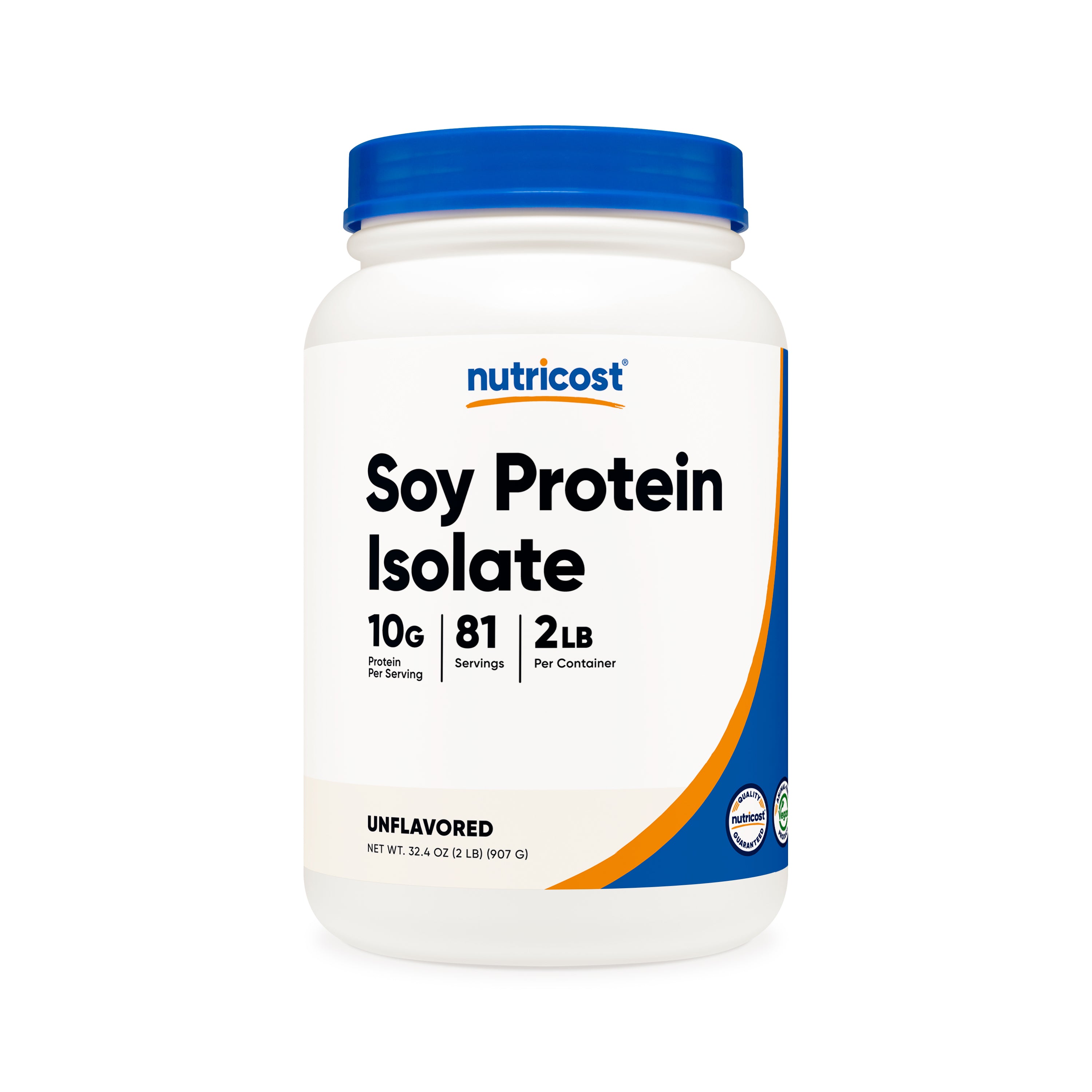
Nutricost Soy Protein Isolate Unflavored 2lb
Best Small Soy PortionA single-ingredient soy isolate measured in small 11g scoops, each with 10g protein, for buyers who prefer adjustable additions to meals.
Pros
- 10g protein per 11g scoop
- 40 calories per scoop
- 81 labeled servings in the 2lb tub
Cons
- Contains soy
- Two scoops needed for a 20g protein comparison
Nutricost’s 81-serving count comes from a small scoop: 11g powder with 10g protein and 40 calories. Two scoops give 20g protein in 22g powder and 80 calories. That is the fair comparison with NOW’s 20g protein portion, not one scoop against one scoop.
The unflavored ingredient is soy protein isolate. Skip this if you avoid soy, or if an 81-serving headline led you to expect 81 full 20g portions. NOW’s selected tub has about 38 of its larger servings; Nutricost has about 40.5 double servings. With the portions normalized, current total price can settle the choice.
Comparison Table
| Product | Key Spec | Best For | Price |
|---|---|---|---|
| NOW Sports Soy Protein Isolate Unflavored 2lb | 20g protein per 24g powder; 90 calories; soy | Best Overall With Soy | Check Price |
| Naked Rice Unflavored Brown Rice Protein 5lb | 25g protein per 30g powder; 120 calories; rice | Best Bulk Rice | Check Price |
| NutriBiotic Plain Rice Protein 3lb | 12g protein per 15g powder; 60 calories; rice | Best Small Rice Portion | Check Price |
| Sunwarrior Classic Protein Unflavored 750g | 20g protein per 25g powder; 100 calories; rice | Best Organic Rice Jar | Check Price |
| Sprout Living Simple Pumpkin Seed Protein Unflavored 1lb | 20g protein per 32.5g powder; 3g fiber; pumpkin | Best Pumpkin Portion | Check Price |
| Anthony's Pumpkin Seed Protein Powder 1lb | 5g protein per 8g tablespoon; 30 calories; pumpkin | Best Small Seed Addition | Check Price |
| Nutiva Organic Hemp Protein Powder Peak Protein 16oz | 15g protein per 30g powder; 6g fiber; hemp | Best Moderate-Fiber Hemp | Check Price |
| Manitoba Harvest Balanced Protein and Fiber Unsweetened 16oz | 8g fiber per 36g; current 18g versus legacy 15g protein; hemp | Best Higher-Fiber Hemp | Check Price |
| Navitas Organics Hemp Powder 12oz | 13g protein per 30g powder; 7g fiber; hemp | Best Hemp Pantry Pouch | Check Price |
| Nutricost Soy Protein Isolate Unflavored 2lb | 10g protein per 11g scoop; 40 calories; soy | Best Small Soy Portion | Check Price |
How to Choose a Plant Powder Without Pea Ingredients
Decide Why You Are Avoiding Pea
For an ingredient preference, the named formula’s ingredient list is the starting point. For a diagnosed allergy, you also need advice about shared equipment, facilities and supplier controls. No pea ingredient is not the same as a verified pea-free manufacturing environment. Sunwarrior’s label also mentions peanuts or tree nuts at the facility, and soy is itself a major allergen. The FDA’s food-allergy guidance explains the distinction between ingredients and unintended cross-contact. Contact the manufacturer for the exact product when that distinction affects safety.
Separate Protein Concentrates From Fiber Ingredients
NOW supplies 20g protein in 24g powder. Navitas supplies 13g in 30g powder, alongside 7g fiber. Neither is inherently the wrong food, but they solve different problems. Choose NOW or rice protein when a concentrated protein addition is the priority. Choose a hemp powder when adding fiber is part of the plan. Avoid automatically doubling a hemp portion to chase protein if that also adds more fiber than you intended.
Normalize Small Servings Before Comparing Prices
Nutricost’s 10g protein scoop and Anthony’s 5g tablespoon create large labeled serving counts. Compare both at the protein amount you need. For a hypothetical $24 tub containing eighty 10g protein portions, a 20g protein addition costs 60 cents, not 30 cents. Do the same calculation for the rice and seed powders. Include shipping and the selected package weight; the 16oz and 32oz Manitoba tubs are not the same purchase. Nutrition-label serving sizes keep those calculations grounded.
Keep the Rest of Your Diet in the Picture
A single-source powder is convenient, but the whole day’s food still matters. Build your protein target around meals and use powder for the remaining gap. Rice, soy, hemp and pumpkin do not have identical amino-acid profiles. Variety across your food choices is more useful than expecting one spoonful of seed powder to do everything. Our broader vegan protein guide also covers blended products, including formulas that would not qualify for this no-pea-ingredient list.
Match the Exact Product Line
Sunwarrior Classic is not Classic Plus. Nutiva Peak Protein is not Fiber Plus. Manitoba’s hemp-only Balanced formula is not its pea-containing Complete Plant Protein Blend. Those distinctions survive even when tubs share a logo or color. Recheck the selected flavor and ingredient list whenever a retailer substitutes a variation. If you want to compare one plant source more deeply, see our rice protein and hemp protein guides. This list instead compares the routes available when pea ingredients are the exclusion.
Frequently Asked Questions
Can a Vegan Protein Powder Be Made Without Pea?
Yes. The selections here use soy, brown rice, hemp or pumpkin seed rather than pea as a listed ingredient. Some are concentrated protein powders; others retain more fiber or other nutrients. Check the exact formula, because a brand that sells a single-source rice or hemp product can also sell pea-containing blends.
Which Option Is Best If I Also Avoid Soy?
Naked Rice, NutriBiotic Plain Rice and Sunwarrior Classic Unflavored are the rice routes here. Sprout Living and Anthony’s use pumpkin seed; Nutiva, Manitoba Balanced and Navitas use hemp. That ingredient distinction does not guarantee allergy safety. Check current labels and ask the manufacturer about cross-contact when a medical restriction is involved.
Does No Pea Ingredient Mean Pea-Allergy Safe?
No. An ingredient list does not establish how the factory handles pea-containing products or whether cross-contact can occur. Do not infer safety from vegan, single-ingredient or soy-free wording. A clinician and the manufacturer’s current product-specific guidance are the appropriate route for a diagnosed allergy.
Why Does One Powder Have 81 Servings and Another Only 14?
Serving sizes differ. Nutricost’s soy portion is 11g powder with 10g protein; Sprout Living’s pumpkin portion is 32.5g powder with 20g protein. The tubs and bags also differ in total weight. Compare the package’s total protein or the number of equal-protein portions rather than treating every labeled serving as the same amount.
Can Hemp Powder Replace Soy Isolate Gram for Gram?
Not for protein planning. Nutiva supplies 15g protein in 30g powder; NOW supplies 20g in 24g powder. Hemp also adds more fiber in these formulas. Substitution can still work in food, but recalculate the actual protein, fiber and powder quantity instead of copying the scoop amount.
Will Avoiding Pea Protein Fix Bloating?
Not necessarily. Serving size, added fibers, sweeteners, other ingredients and individual conditions can all matter. Several hemp options here contain substantial fiber even without pea. Change one variable at a time rather than assuming a different protein source guarantees comfort. Persistent or severe symptoms deserve medical advice, not a larger collection of supplements.
Bottom Line
NOW Sports Soy Isolate is our first choice for a concentrated plant-protein addition when soy suits your diet. Choose Naked Rice for an established rice-protein habit, Sprout Living for a substantial pumpkin portion, or a hemp powder when fiber is part of the goal. Normalize serving sizes and take the exact product name seriously. For an allergy, settle cross-contact questions before purchase. The daily protein calculator helps put any scoop in context.