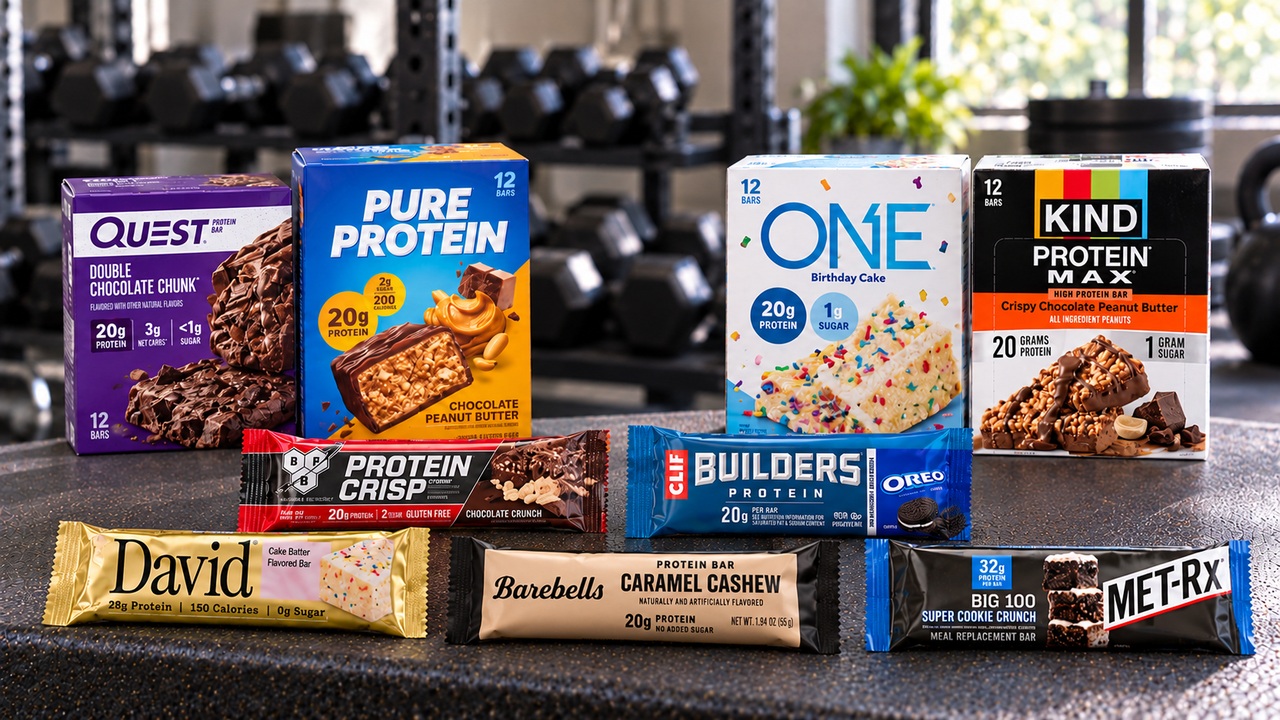
A 20g protein bar can contain 170 calories or more than 400. That difference matters when you want a small protein top-up rather than a meal-sized snack. Our picks start at 20g per single bar, then separate calorie-conscious options, plant-based formulas, and larger bars for days when you need more food.
Written by Tom Miller, CSCS. Updated: October 2026.
Short on time? Quest Double Chocolate Chunk is our pick for a compact protein top-up: 20g protein and 170 calories. Choose No Cow for a plant-based alternative, or MET-Rx Big 100 when you need a much larger snack.
How We Chose
Each selected flavor supplies at least 20g protein in one bar. We favor clear serving sizes, useful protein portions relative to calories, and ingredients that suit the intended buyer. Milk and soy proteins, plant blends, and collagen-containing formulas deserve separate consideration; the largest protein number does not settle the comparison. We also account for added sugar, sugar alcohols, fiber, allergens, and whether you are buying a 50g snack or a 100g meal bar. Ratings reflect these nutrition and buying criteria, rather than a taste score. Nutrition below applies to the named flavor; other flavors and older packages can differ.
Our Verdict
Quest Double Chocolate Chunk
20g protein in 170 calories makes this a practical small protein top-up, provided the high fiber and erythritol suit you.
Best for: Lifters seeking a calorie-conscious dairy-protein bar
Check Price on AmazonOur Top Picks
Best Overall: Quest Double Chocolate Chunk

Quest Double Chocolate Chunk
Best OverallA 60g bar with 20g protein and 170 calories, best suited to a small protein top-up rather than a substantial meal.
Pros
- 20g protein in 170 calories
- Milk and whey protein isolates
- Less than 1g total sugar
Cons
- 12g fiber and 9g sugar alcohols per bar
- Contains milk, almonds and soy
Quest puts 20g protein into 170 calories, or about 11.8g protein per 100 calories. That beats the 10g per 100 calories in the current Pure Protein Chocolate Peanut Butter bar. Its milk and whey isolates also make the protein source straightforward to assess.
The tradeoff is 12g fiber plus 9g sugar alcohols, including erythritol. That is a substantial amount in one snack, especially alongside a high-fiber breakfast. Skip this if concentrated fiber or erythritol regularly bothers your stomach. Choose CLIF Builders when you prefer a bar without sugar-alcohol sweeteners, accepting its higher sugar and calorie totals.
Best Small Bar: Pure Protein Chocolate Peanut Butter

Pure Protein Chocolate Peanut Butter
Best Small BarA smaller 50g bar that reaches 20g protein, with a peanut-butter formula and a current 200-calorie label worth checking before ordering.
Pros
- 20g protein in a 50g bar
- 200 calories on the current label
- 12-bar purchase option
Cons
- Contains milk, soy and peanuts
- Protein blend includes collagen and sweeteners include maltitol
Pure Protein reaches the same 20g target as Quest in a 50g bar rather than 60g. That makes it a useful choice when you want a physically smaller snack. The current manufacturer’s Chocolate Peanut Butter package lists 200 calories and 2g sugar; do not assume older 190-calorie packaging has the same nutrition.
The protein blend includes dairy and soy proteins plus hydrolyzed collagen. It also contains maltitol, so the low sugar number does not mean a sweetener-free bar. Skip this if you avoid peanuts or sugar alcohols. Quest has fewer calories for the same declared protein, while Pure Protein gives you a smaller portion to carry and finish.
Best Cashew Option: Barebells Caramel Cashew

Barebells Caramel Cashew
Best Cashew OptionA 55g cashew-and-caramel bar with 20g protein and 200 calories; check the nut allergens and maltitol before buying a large box.
Pros
- 20g protein in 200 calories
- 55g single-bar serving
- No added sugar
Cons
- Milk protein and bovine collagen blend
- Contains milk, cashews and peanuts; 5g sugar alcohols
Barebells fits 20g protein into a 55g bar with 200 calories. Its milk-protein blend sits alongside bovine collagen, roasted cashew pieces and peanut paste. Cashew branding should not distract you from the peanut declaration.
The current label lists 1g sugar and 5g sugar alcohols, with maltitol among the ingredients. Skip this if you need a vegetarian formula, avoid either nut, or want protein without collagen. Compared with KIND Protein MAX, Barebells has 50 fewer calories for the same declared protein, but KIND uses peanuts and soy protein rather than dairy protein and collagen. The linked purchase contains two 12-count packs, so compare its total against single-box listings.
Best Birthday-Cake Option: ONE Birthday Cake

ONE Birthday Cake
Best Birthday-Cake OptionA 60g birthday-cake-flavored bar with 20g protein and 1g sugar, for buyers who prefer this flavor over another chocolate option.
Pros
- 20g protein per bar
- 1g sugar
- Single 60g serving
Cons
- 220 calories despite the low sugar total
- Milk protein and sugar-alcohol sweeteners
ONE Birthday Cake has 20g protein, 1g sugar and 220 calories in a 60g bar. It makes sense when you prefer a cake-flavored option, but its low sugar total does not give it the same calorie profile as Quest.
You get about 9.1g protein per 100 calories, compared with Quest’s 11.8g. The difference is small for an occasional snack and more relevant if a bar is part of your daily calorie budget. Skip this if you need dairy-free protein or avoid sugar-alcohol sweeteners. For a plant-based choice at the same 20g protein floor, compare No Cow or KIND instead of choosing another ONE flavor and assuming its nutrition matches.
Best Peanut-and-Soy Option: KIND Protein MAX

KIND Protein MAX Crispy Chocolate Peanut Butter
Best Peanut-and-Soy OptionA peanut-first bar with soy protein isolate, 20g protein and 9g fiber, with more calories than the smaller dairy-protein options.
Pros
- 20g protein with peanuts first
- 9g fiber
- 0g added sugar and 0g sugar alcohols on the label
Cons
- 250 calories and 14g fat
- Contains peanuts and soy; allulose and added fibers may not suit everyone
KIND Protein MAX uses peanuts as its first ingredient and soy protein isolate to bring the total to 20g. The 62g bar has 250 calories, 14g fat and 9g fiber. This is a more substantial snack than Pure Protein, despite matching its protein total.
Its label lists 0g added sugar and 0g sugar alcohols, but the ingredients include allulose, vegetable glycerin and added fibers. That distinction matters if you avoid particular sweeteners rather than sugar itself. Skip this if peanuts or soy are off your menu, or you want the lowest calorie cost for 20g protein. No Cow changes the protein source to rice and pea, but brings erythritol instead.
Best Rice-and-Pea Option: No Cow Chocolate Chip Cookie Dough

No Cow Chocolate Chip Cookie Dough
Best Rice-and-Pea OptionA 60g plant-protein bar built around rice and pea protein, with almonds, added fiber and erythritol that deserve a close ingredient check.
Pros
- 20g plant protein
- Brown rice and pea protein blend
- No dairy ingredients in the named formula
Cons
- Contains almonds and erythritol
- Shared equipment also handles milk and other allergens
No Cow uses brown rice and pea proteins rather than dairy protein or collagen. At 20g protein in a 60g bar, it clears the full single-bar requirement without needing two snacks. That is useful when smaller vegan bars leave a larger gap in your daily intake.
Almonds, soluble corn fiber, glycerine and an erythritol-and-stevia blend remain part of the formula. Its shared-equipment statement includes milk, so a dairy-free ingredient list is not a milk-allergy guarantee. Skip this if you avoid almonds or erythritol. KIND gives you another plant-based 20g option with a different protein and sweetener combination; CLIF Builders uses soy and more conventional added sugars.
Best Crisp-Style Bar: BSN Protein Crisp Chocolate Crunch

BSN Protein Crisp Chocolate Crunch
Best Crisp-Style BarA crisp-style chocolate bar with 20g dairy protein, for buyers who prefer this format to a dense dough-style protein snack.
Pros
- 20g protein per bar
- Whey and milk protein blend
- Chocolate Crunch comes in a 12-bar box
Cons
- About 230 calories per bar
- Contains dairy; other flavors can differ in protein and calories
BSN builds Protein Crisp around whey isolate, whey concentrate and milk protein concentrate. The Chocolate Crunch wrapper declares 20g protein and 230 calories. The product’s crisp format gives you a different option from the dough-style bars in this list without changing the single-bar protein target.
That works out to about 8.7g protein per 100 calories, below Quest and Pure Protein. Choose it because you prefer the format, not because the crisp branding implies fewer calories. Skip this if you avoid milk or need the most protein for a tight calorie allowance. Check the exact flavor before ordering; a similar-looking vanilla listing does not necessarily share Chocolate Crunch’s nutrition.
Best Plant-Based Bar Without Sugar-Alcohol Sweeteners: CLIF Builders OREO

CLIF Builders OREO
Best Without Sugar-Alcohol SweetenersA larger soy-protein bar with 20g protein and 280 calories, suited to buyers accepting added sugar rather than sugar-alcohol sweeteners.
Pros
- 20g soy-based protein
- No sugar-alcohol sweeteners listed
- 68g bar supplies 280 calories
Cons
- 17g total sugar, including 16g added sugar
- Contains soy; milk and nuts appear in the may-contain statement
CLIF Builders OREO gives you 20g protein in a 68g bar, with 280 calories and 31g carbohydrate. Soy protein isolate heads the ingredient list. Its syrups and cane sugar make it a different purchase from low-sugar bars sweetened with maltitol or erythritol.
The label lists 17g total sugar, including 16g added sugar. Glycerin is also present, so do not call this glycerin-free. Skip this if you need a low-added-sugar snack or avoid soy. Compared with No Cow, this is the more carbohydrate-heavy choice; compared with MET-Rx, it is smaller and has 130 fewer calories. The OREO branding alone does not tell you the allergen profile of this specific bar.
Best for a Larger Protein Portion: David Cake Batter

David Cake Batter
Best Larger Protein PortionA 52g bar declaring 28g protein and 150 calories, with a complex protein, sweetener and fat system that will not suit every buyer.
Pros
- 28g declared protein
- 150 calories and 0g sugar
- 52g single-bar serving
Cons
- Protein system includes collagen
- Contains milk, egg and soy, plus maltitol, allulose and modified plant fat
David declares 28g protein and 150 calories in a 52g Cake Batter bar. On label arithmetic, that is about 18.7g protein per 100 calories, the highest ratio here. The formula includes milk protein isolate, collagen, whey concentrate and egg white; David does not break out how much of the 28g comes from each source.
That missing breakdown keeps the headline number from settling the muscle-building comparison. The ingredients also include maltitol, allulose and modified plant fat called EPG. Skip this if you want a short ingredient list, avoid collagen, or know these sweeteners disagree with you. Quest supplies less declared protein but uses milk and whey isolates without the same multi-source protein and fat system. The linked David pack contains 24 bars.
Best Meal-Sized Bar: MET-Rx Big 100 Super Cookie Crunch

MET-Rx Big 100 Super Cookie Crunch
Best Meal-Sized BarA 100g bar with 32g protein and 410 calories, for buyers who need substantial food rather than the smallest possible protein snack.
Pros
- 32g protein per 100g bar
- 410 calories for a substantial snack
- Mixed soy, milk, whey and egg protein sources
Cons
- 25g total sugar, including 24g added sugar
- Contains several major allergens; poor fit for a small calorie top-up
Big 100 is twice the weight of Pure Protein’s 50g bar. Its 32g protein comes with 410 calories, 42g carbohydrate and 25g sugar. Those numbers can fit a busy day when you need more food, but they make this the wrong default for someone seeking a small protein addition after dinner.
The blend includes soy, milk, whey and egg proteins. Read the full allergen statement rather than treating the flavor name as a shortcut. Skip this if you are trying to add 20g protein with minimal extra calories. CLIF Builders is a middle ground at 280 calories; Quest is much smaller in calorie terms. The nine-count MET-Rx box also needs a different per-bar calculation from the 12-count options.
Comparison Table
| Product | Key Spec | Best For | Price |
|---|---|---|---|
| Quest Double Chocolate Chunk | 20g protein; 170 calories; 60g bar | Best Overall | Check Price |
| Pure Protein Chocolate Peanut Butter | 20g protein; 200 calories; 50g bar | Best Small Bar | Check Price |
| Barebells Caramel Cashew | 20g protein; 200 calories; 55g bar | Best Cashew Option | Check Price |
| ONE Birthday Cake | 20g protein; 220 calories; 60g bar | Best Birthday-Cake Option | Check Price |
| KIND Protein MAX Crispy Chocolate Peanut Butter | 20g protein; 250 calories; 9g fiber | Best Peanut-and-Soy Option | Check Price |
| No Cow Chocolate Chip Cookie Dough | 20g protein; rice and pea blend; 60g bar | Best Rice-and-Pea Option | Check Price |
| BSN Protein Crisp Chocolate Crunch | 20g protein; 230 calories; crisp-style bar | Best Crisp-Style Bar | Check Price |
| CLIF Builders OREO | 20g protein; 280 calories; 17g sugar | Best Without Sugar-Alcohol Sweeteners | Check Price |
| David Cake Batter | 28g declared protein; 150 calories; collagen-containing blend | Best Larger Protein Portion | Check Price |
| MET-Rx Big 100 Super Cookie Crunch | 32g protein; 410 calories; 100g bar | Best Meal-Sized Bar | Check Price |
How to Choose a Bar With at Least 20g Protein
Start With the Gap in Your Day
Buy the portion you need. Quest’s 170 calories suit a small top-up; MET-Rx’s 410 calories suit a much larger snack. Eating Big 100 for its 32g protein adds 240 more calories than Quest for an additional 12g protein. That can be useful or unnecessary depending on the rest of your food. Use your daily protein target to identify the gap before buying a bulk box.
Compare Protein Sources Alongside Total Grams
Milk, whey, soy and complementary plant blends give you different ingredient choices. Collagen-containing bars deserve an extra look because their total protein number does not identify the amount supplied by the other proteins. For regular muscle-building meals, the ISSN position stand emphasizes adequate daily protein and essential amino acids. A bar can help fill that intake, but its front-of-pack number is only part of the decision.
Read Sugar, Fiber and Sweeteners Separately
Low sugar does not mean low calorie. KIND has 1g total sugar and 250 calories; ONE has 1g sugar and 220 calories. Nor does low sugar mean no sweeteners: Quest contains erythritol, Barebells contains maltitol, and KIND contains allulose. The FDA label guide distinguishes total sugars from added sugars. Read the ingredient list as well as both sugar lines. Our bars without sugar-alcohol sweeteners guide covers that narrower preference.
Keep the First Purchase Small
A large pack magnifies a bad fit. Barebells’ linked purchase has 24 bars, and the selected David listing also has 24. Check the total quantity before comparing checkout prices. A hypothetical $30 box with 12 bars costs $2.50 per bar; a $27 nine-pack costs $3.00 per bar. Divide again by protein if needed: $2.50 for 20g equals 12.5 cents per gram. These are examples, not current product prices.
Match the Bar to Your Dietary Limits
No Cow, KIND and CLIF Builders give you three different plant-based routes. They still have different nuts, soy, sweeteners and cross-contact statements. For a diagnosed food allergy, use the current package and manufacturer guidance. Do not assume a plant-based claim means allergen-free. If bars keep creating ingredient compromises, compare a plant protein powder or an ordinary protein-rich meal instead.
Frequently Asked Questions
Is 20g Protein Enough After a Workout?
It can be a useful portion, but your body size, meals and daily total matter. The ISSN gives general per-serving guidance of roughly 20-40g high-quality protein for exercising adults, with individual needs varying. A 20g bar alongside a meal is a different situation from a bar replacing your whole lunch. Add its protein to what you eat across the day.
Which Bar Has the Most Protein?
MET-Rx Big 100 Super Cookie Crunch has the largest declared portion here at 32g. David Cake Batter has the highest declared protein-to-calorie ratio at 28g for 150 calories. Those are different comparisons. Also read the protein ingredients: a blend containing collagen is not identical to an isolate-only formula.
Can I Eat a Protein Bar Every Day?
You can include one when it fits your overall diet and you tolerate its ingredients. It should not crowd out the foods supplying the rest of your nutrition. If a daily bar causes discomfort, compare its fiber, sugar alcohols and portion size rather than assuming you need to keep eating it for muscle growth.
Are These Bars Suitable for Vegans?
The named No Cow, KIND Protein MAX and CLIF Builders formulas use plant-based protein sources. The other selections contain dairy, egg or collagen ingredients. Allergen and cross-contact statements still matter for the plant-based choices. Check the exact flavor and current wrapper; a brand’s other bars may use different ingredients.
Are Low-Sugar Bars Better for Muscle Building?
A low sugar number does not prove a greater muscle-building effect. Choose a protein source and portion that help you meet your needs, then fit the calories and ingredients to your diet. CLIF Builders and MET-Rx contain more added sugar, while several lower-sugar options contain polyols or other sweeteners. Neither approach suits everyone.
Bottom Line
Quest Double Chocolate Chunk is our pick for adding 20g protein without a meal-sized calorie load. Its 170 calories give it an advantage over many bars with the same protein total, provided you tolerate the fiber and erythritol. Choose No Cow for rice-and-pea protein, KIND for its peanut-and-soy formula, or MET-Rx when you need a larger snack. For options beyond the 20g cutoff, see our broader protein bar roundup.
Sources
- Jager et al. International Society of Sports Nutrition position stand: protein and exercise.
- FDA: How to understand and use the Nutrition Facts label.