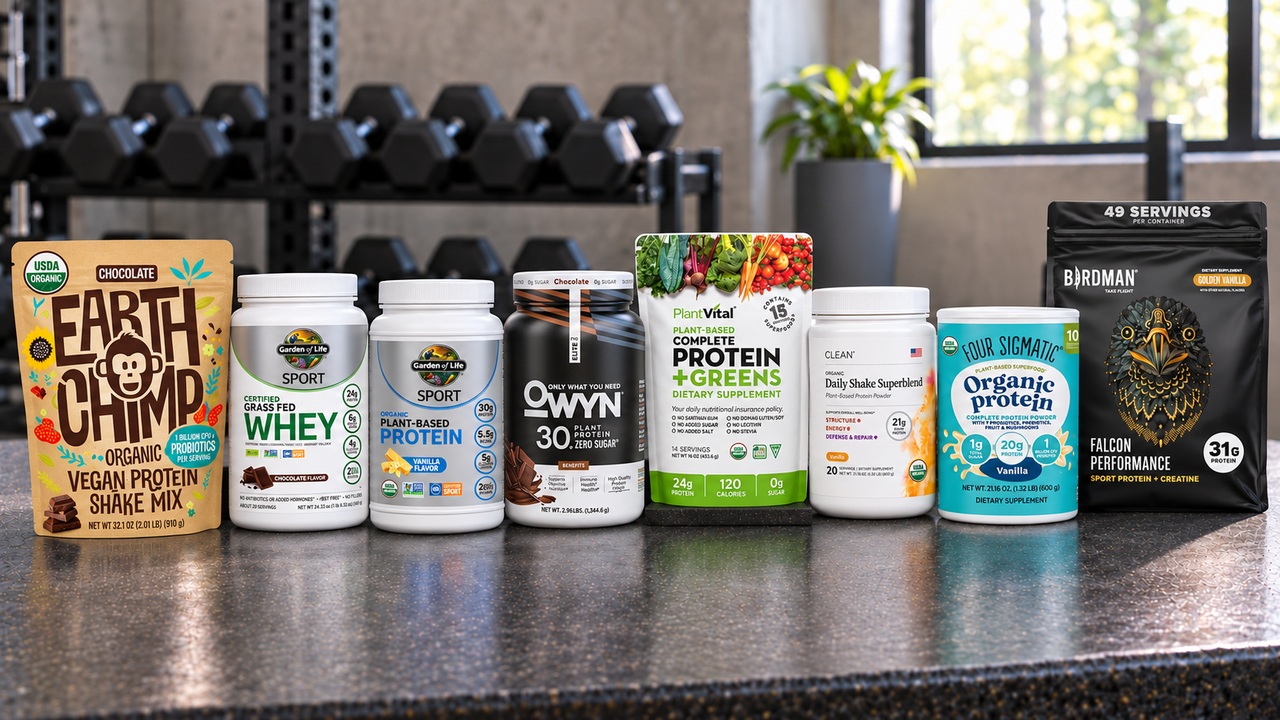
Two protein powders can both say “with probiotics” and tell you very different things about what’s in a scoop. EarthChimp Chocolate lists 20 grams of plant protein and one billion colony-forming units (CFU). Garden of Life SPORT Whey goes a step further: it names the strain and puts its two-billion count at expiration. Start with the protein you want to drink, then use the probiotic label to break the tie.
By Tom Miller, CSCS. Updated November 2026.
Short on time? Pick EarthChimp Chocolate for a plant-based shake with 20 grams of protein and four grams of fiber. Pick Garden of Life SPORT Whey for a one-scoop dairy option, or Garden of Life SPORT Plant-Based for 30 grams of plant protein and a named strain counted at expiration.
How We Chose
Each powder provides at least 15 grams of protein per labeled serving and identifies added probiotics with a CFU count. We compared serving sizes, protein sources, added sweeteners and whether the label specifies that the bacteria were counted at manufacture or at expiration. A product didn’t qualify just because it included prebiotic fiber, fermented protein or digestive enzymes.
The picks cover different reasons to buy, from an unflavored smoothie base to a whey blend or a powder that already includes creatine. We gave more weight to a clear strain and expiration claim than a larger count with no timing. A higher CFU number didn’t earn a higher ranking on its own. We compared tubs by full labeled servings rather than scoops, since a scoop can mean half a serving on one label and a full serving on another.
Our Verdict
EarthChimp Organic Vegan Protein, Chocolate
A chocolate plant protein with 20g protein, 4g fiber and 1 billion CFU per two-scoop serving. The label names the species but not the strain or count timing.
Best for: A dairy-free chocolate powder with both protein and fiber
Check Price on AmazonOur Top Picks
Best Overall: EarthChimp Organic Vegan Protein

EarthChimp Organic Vegan Protein, Chocolate, 2 lb
Best OverallTwo scoops supply 20 grams of pea, pumpkin and coconut protein, with four grams of fiber and one billion CFU of Bacillus coagulans.
Pros
- 20g plant protein
- 4g fiber per serving
- 1 billion CFU declared
Cons
- Requires two scoops
- No strain code or CFU timing listed
EarthChimp is the easiest place to start if you want a dairy-free chocolate shake without a long list of sports add-ons. The 35-gram serving has 20 grams of protein from peas, pumpkin and coconut, plus four grams of fiber. The powder uses monk fruit and has three grams of total sugar, none of it added.
What the label tells you: The chocolate bag’s ingredients name Bacillus coagulans, and the listing gives a count of one billion CFU. It doesn’t identify the strain or say when that count applies. The fiber is a separate selling point, not part of the probiotic count.
Skip it if you want a culture count tied to expiration. The Garden of Life plant formula gives you a dated count and 10 grams more protein per full serving. EarthChimp has one gram more fiber and uses monk fruit instead of stevia.
Best Whey: Garden of Life SPORT Certified Grass Fed Whey
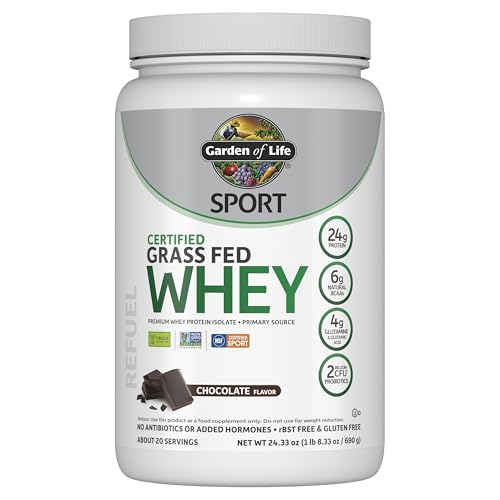
Garden of Life SPORT Certified Grass Fed Whey, Chocolate, 24.33 oz
Best WheyA single scoop delivers 24 grams of protein from whey isolate and milk protein, with two billion CFU of Bifidobacterium lactis BL818 at expiration.
Pros
- 24g protein in one scoop
- Named strain and count at expiration
- NSF Certified for Sport listing
Cons
- Contains milk
- Blend is not pure whey isolate
This is mostly whey isolate, but it isn’t an isolate-only powder. The chocolate tub’s protein blend is 85% whey isolate and 15% milk protein. One scoop gives you 24 grams of protein, and the label lists two billion CFU of Bifidobacterium lactis BL818 at expiration.
Who should pick it: Someone who already likes whey and wants a culture count tied to the use-by date. NSF’s Certified for Sport directory also lists this chocolate formula. If you have a milk allergy, choose a different product; the whey and added milk protein both come from milk.
CLEAN also takes one scoop and has about 20 servings, but it trades the whey for plant protein and lists a combined, undated count. Choose the Garden of Life whey if the named strain and expiration date are what brought you here.
Best Sport-Certified Plant Protein: Garden of Life SPORT Organic Plant-Based Protein
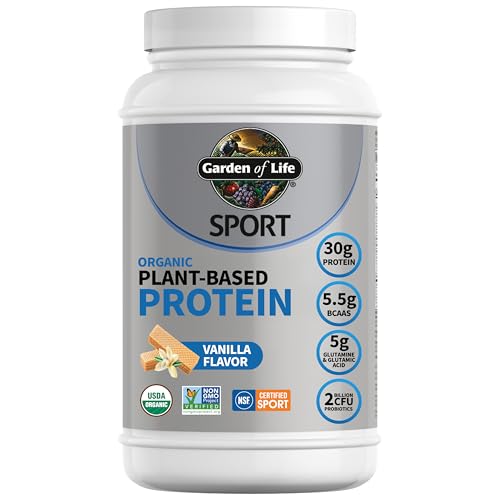
Garden of Life SPORT Organic Plant-Based Protein, Vanilla, 19 servings
Best Sport-Certified Plant ProteinTwo scoops of this vanilla plant blend deliver 30 grams of protein and two billion CFU of Bacillus subtilis DE111 at expiration.
Pros
- 30g protein per full serving
- Named strain and count at expiration
- NSF Certified for Sport listing
Cons
- Full serving takes two scoops
- Contains stevia
The vanilla plant formula starts with pea protein, followed by navy beans, lentils, chickpeas and cranberry seed protein. You get 30 grams of protein in two scoops, and the label gives two billion CFU of Bacillus subtilis DE111 at expiration.
Check how you portion it: One scoop is 15 grams of protein, not 30. The label’s two-billion CFU figure goes with the full serving. If you compete in a tested sport, check your lot against NSF’s directory before buying.
Skip this vanilla if you avoid stevia. OWYN Pro Elite matches the 30 grams of protein and uses monk fruit, but it doesn’t name a strain code or say when its two-billion count applies.
Best High-Protein Pick With Zero Sugar: OWYN Pro Elite

OWYN Pro Elite Protein Powder, Chocolate, 2.96 lb
Best High-Protein Pick With Zero SugarThis two-scoop chocolate formula lists 30 grams of pea and pumpkin protein and zero grams of sugar, with two billion CFU of Bacillus coagulans.
Pros
- 30g protein per serving
- 0g total sugar on the label
- 27 servings per tub
Cons
- Nearly 50g of powder per serving
- No strain code or CFU timing listed
OWYN Pro Elite is the chocolate alternative if you want to get 30 grams of protein in one shake and prefer a label with zero grams of sugar. Two scoops weigh almost 50 grams, and the ingredient list includes monk fruit, guar gum, a vitamin and mineral blend, and greens.
Buy the right tub: This is the 27-serving, 30-gram Pro Elite formula. Its listing declares two billion CFU, and the ingredient panel identifies Bacillus coagulans. OWYN also sells a 20-gram chocolate powder with a different probiotic count, so the Pro Elite wording matters.
Skip Pro Elite if you want a powder without added vitamins and minerals. EarthChimp has less protein per serving, but it leaves out the added vitamin and mineral blend and uses 35 grams of powder instead of nearly 50.
Best Unflavored: PlantVital Complete Protein + Greens

PlantVital Complete Protein + Greens, Unflavored, 16 oz
Best UnflavoredTwo scoops combine 24 grams of protein with a fruit and vegetable blend and one billion CFU across seven listed bacterial species.
Pros
- 24g plant protein
- No sweetener listed
- Seven bacterial species named
Cons
- About 14 servings
- No CFU breakdown by species
This unflavored pouch makes sense if you don’t want to add vanilla, chocolate or a sweetener to your smoothie. A full serving is two scoops and 24 grams of protein. Pea, brown rice, pumpkin seed and chia seed are the main protein ingredients. The formula adds greens, fruit and spirulina, so unflavored doesn’t mean it contains only protein.
Use the serving count: The panel gives one billion CFU total across seven bacterial species, with no individual counts or timing. The pouch has about 14 servings, so divide the price by 14 when comparing it with a larger tub.
Skip it if you want vanilla flavor without adding it yourself. Four Sigmatic uses vanilla powder and lists its DE111 strain, but it also contains added coconut palm sugar. PlantVital is the easier choice for a smoothie you plan to flavor yourself.
Best Fermented Plant Blend: CLEAN Daily Shake Superblend
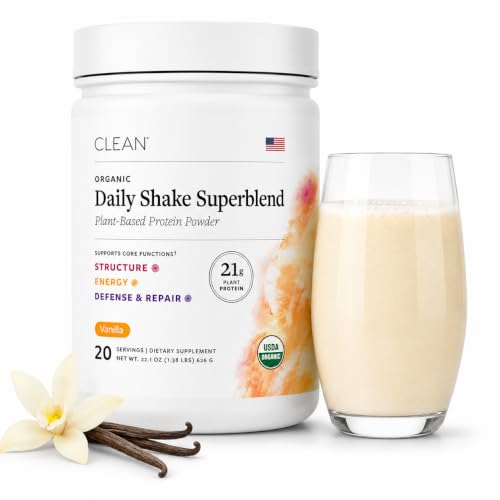
CLEAN Daily Shake Superblend, Vanilla, 20 servings
Best Fermented Plant BlendA 31.3-gram scoop has 21 grams of protein and a separate 10-billion-CFU blend of four bacterial species, sweetened with monk fruit.
Pros
- 21g plant protein in one scoop
- 10 billion total CFU declared
- No stevia in the vanilla formula
Cons
- Individual culture counts not disclosed
- No CFU timing listed
The vanilla Superblend is a one-scoop option with seven plant protein sources. The label lists fermented pea and brown rice proteins, plus hemp, pumpkin, flaxseed, mung bean and green bean. It uses monk fruit rather than stevia.
Read the separate probiotic line: CLEAN lists 10 billion CFU in a blend separate from the fermented proteins. The panel names four species, including Bifidobacterium bifidum and Lactobacillus acidophilus, but doesn’t split the count by species or state when it applies.
Skip it if you’re shopping for a particular strain code. Four Sigmatic names DE111 and dates its count at manufacture; CLEAN gives you one gram more protein per scoop but leaves its individual strain codes and counts unspecified.
Best With Added Mushroom Extracts: Four Sigmatic Organic Protein
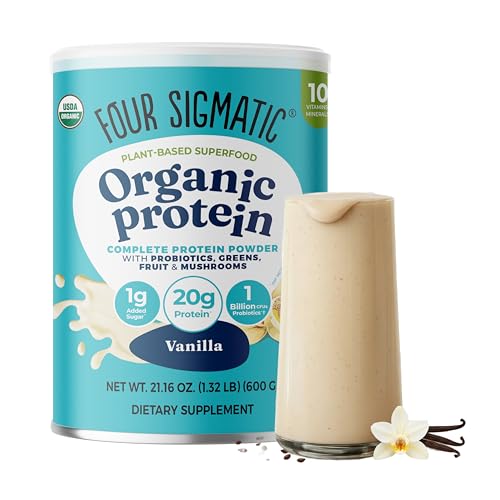
Four Sigmatic Plant-Based Superfood Organic Protein, Vanilla, 1.32 lb
Best With Added Mushroom ExtractsOne 40-gram scoop supplies 20 grams of plant protein and one billion CFU of Bacillus subtilis DE111 at manufacture, alongside a mushroom blend.
Pros
- 20g plant protein
- DE111 strain identified
- Includes mushroom and greens blends
Cons
- 1 billion CFU counted at manufacture
- 7g saturated fat per scoop
The current vanilla version gets its 20 grams of protein from brown rice, peas and hemp. It also contains coconut milk powder, a greens and fruit blend, and lion’s mane, reishi and turkey tail extracts. Those are extras, not the reason it qualifies here: the culture is Bacillus subtilis DE111, with one billion CFU specified at manufacture.
Check the differences: This 15-serving tub lists seven grams of saturated fat and one gram of added sugar per scoop. If you don’t want coconut or the mushroom blend, a more basic plant powder is a better match.
Garden of Life SPORT Plant-Based uses the same named DE111 strain, with a count at expiration instead of manufacture. Choose that formula if the timing matters more to you than the mushrooms, and compare full servings rather than the front-of-pack scoop counts.
Best With Creatine: Birdman Falcon Performance

Birdman Falcon Performance, Golden Vanilla, 49 servings
Best With CreatineOne scoop pairs 31 grams of pea protein with five grams of creatine monohydrate and two billion CFU of Bacillus subtilis.
Pros
- 31g protein per scoop
- 5g creatine monohydrate declared
- 2 billion CFU listed separately from enzymes
Cons
- Can't adjust creatine independently
- 460mg sodium per serving
Birdman is the pick if you already want protein and creatine in the same shake. The 49-serving Golden Vanilla pouch lists 31 grams of protein, five grams of creatine monohydrate and two billion CFU of Bacillus subtilis per scoop. The probiotics are listed separately from the digestive enzymes in the blend.
When to skip it: If you already take creatine or want to control how much you get separately, buy a protein-only formula instead. Every full scoop here includes five grams of creatine and 460 milligrams of sodium. The other Falcon line is not the same as Falcon Performance.
OWYN gets you almost the same protein, 30 grams, without added creatine. Birdman makes more sense if you want the creatine built in and you’re comfortable buying a 49-serving bag.
Alternatives Worth Considering
OWYN’s 20-gram Dark Chocolate powder is a separate option if the 30-gram Pro Elite serving is larger than you need. That panel lists 10 million CFU of Bacillus coagulans MTCC 5856 rather than the two-billion count for Pro Elite. The plain protein powder you already like is another sensible alternative if you don’t care about adding a live culture.
Comparison Table
| Product | Key Spec | Best For | Price |
|---|---|---|---|
| EarthChimp Organic Vegan Protein, Chocolate, 2 lb | 2 scoops (35g); 20g plant protein; 1 billion CFU B. coagulans; timing not stated; 26 servings | Best Overall | Check Price |
| Garden of Life SPORT Certified Grass Fed Whey, Chocolate, 24.33 oz | 1 scoop (about 34.5g); 24g dairy protein; 2 billion CFU B. lactis BL818 at expiration; about 20 servings | Best Whey | Check Price |
| Garden of Life SPORT Organic Plant-Based Protein, Vanilla, 19 servings | 2 scoops (about 45g); 30g plant protein; 2 billion CFU B. subtilis DE111 at expiration; 19 servings | Best Sport-Certified Plant Protein | Check Price |
| OWYN Pro Elite Protein Powder, Chocolate, 2.96 lb | 2 scoops (49.8g); 30g plant protein; 2 billion CFU B. coagulans; timing not stated; 27 servings | Best High-Protein Pick With Zero Sugar | Check Price |
| PlantVital Complete Protein + Greens, Unflavored, 16 oz | 2 scoops (32.43g); 24g plant protein; 1 billion CFU across seven species; timing not stated; about 14 servings | Best Unflavored | Check Price |
| CLEAN Daily Shake Superblend, Vanilla, 20 servings | 1 scoop (31.3g); 21g plant protein; 10 billion CFU across four species; timing not stated; 20 servings | Best Fermented Plant Blend | Check Price |
| Four Sigmatic Plant-Based Superfood Organic Protein, Vanilla, 1.32 lb | 1 scoop (40g); 20g plant protein; 1 billion CFU B. subtilis DE111 at manufacture; about 15 servings | Best With Added Mushroom Extracts | Check Price |
| Birdman Falcon Performance, Golden Vanilla, 49 servings | 1 scoop (45.3g); 31g plant protein; 2 billion CFU B. subtilis; timing not stated; 5g creatine; 49 servings | Best With Creatine | Check Price |
How to Choose a Protein Powder With Probiotics
Start With the Protein
Pick the source and serving size first. A one-scoop whey blend makes sense if it fits your diet; a pea or mixed plant powder avoids milk ingredients when the label confirms it. If you’re unsure how much protein you need, use our protein calculator to put a 20- or 30-gram shake in context. Check the actual package for allergens, including any cross-contact statement.
Put Garden of Life SPORT Whey and SPORT Plant-Based side by side: 24 grams of dairy protein in a 34.5-gram scoop versus 30 grams of plant protein in two scoops totaling about 45 grams. Both give the count at expiration. Start with the one whose source and portion suit you, rather than picking the label with the higher protein number and changing your breakfast to fit it. The FDA’s allergen guide explains how to read the ingredient and allergen statements together.
Look for a Strain and a Date, Not Just a Big Number
CFU stands for colony-forming units and describes viable microbes that can grow into colonies. The NIH Office of Dietary Supplements points out that counts can decline after manufacturing. An expiration claim tells you what the maker is specifying through the labeled date when stored as directed. If the label leaves out the date, you can’t tell when that number applies.
Four Sigmatic and Garden of Life SPORT Plant-Based both name Bacillus subtilis DE111, but Four Sigmatic gives its one-billion count at manufacture and Garden of Life lists two billion at expiration. That’s a difference in what the labels tell you, not proof that one will do more for you. CLEAN lists several species and one combined count, so you can’t use that total to find the amount of any one species.
Buy the Extras You Actually Want
Read past the front claim if you avoid an ingredient such as stevia or a certain gum. PlantVital leaves out sweeteners but has a fruit and vegetable blend. EarthChimp Chocolate has four grams of fiber; the Clean vanilla label lists less than one gram. Birdman adds five grams of creatine per scoop, so take your separate creatine into account before going with a two-in-one formula.
Price per serving is a better comparison than price per tub. PlantVital has about 14 servings; OWYN has 27. For example, a hypothetical $28 PlantVital pouch and $54 OWYN tub would both cost $2 per full serving. Use the current prices for the exact products rather than the cheapest flavor or pack the listing shows.
What the Research Can Tell You
The NIH Office of Dietary Supplements notes that probiotic effects can depend on the specific strain and the amount used. Findings from a study of one strain don’t carry over to a different strain or blend. The National Center for Complementary and Integrative Health also notes that the risks can be greater for people with a weakened immune system or severe illness. Ask your health care provider before taking a probiotic supplement in those circumstances. Buy a protein powder to fill a protein gap, not to treat a digestive problem.
Frequently Asked Questions
Is prebiotic fiber the same thing as a probiotic?
No. Prebiotics are substances that certain microbes can use; probiotics are live microorganisms. A powder can have either one or both. EarthChimp, for example, lists fiber separately from Bacillus coagulans. Look for the organism name and a CFU declaration instead of counting the grams of fiber as a probiotic dose.
Are more CFU better?
A larger number isn’t enough to tell you which product to buy. Ten billion CFU of a blend and two billion CFU of one named strain describe different things. Also check whether the count is at manufacture or expiration. If two labels use different dates, their numbers don’t tell you how much live culture each will have when you open it.
Can I stir probiotic protein powder into hot coffee?
Don’t assume the labeled live-culture count applies after heating or baking. Garden of Life SPORT Plant-Based directs you to mix the powder in cold water or a cold dairy-free drink. If you want specifically to preserve the live cultures, use the preparation and storage directions on your exact package rather than assuming all products handle heat the same way.
Should I use one in place of a probiotic my clinician recommended?
No. A protein powder with a different strain, dose or formulation isn’t a substitute for a specific product your clinician recommended. Even if a powder lists the same species, it may not contain the same strain. Ask before swapping them. If the add-on doesn’t matter to you, a plain protein powder keeps the two decisions separate.
Does a probiotic powder make whey safe if I have a milk allergy?
No. Garden of Life SPORT Whey contains milk protein, and adding a probiotic doesn’t change the allergen statement. If you need to avoid milk, check the ingredient and allergen statements on the exact plant powder you buy. The same brand may make both plant and dairy products, so don’t rely on brand name or package color alone.
Is a protein powder with probiotics better for a sensitive stomach?
That label doesn’t tell you how a shake will sit with you. Start by looking at the protein source, serving size and anything you already know you don’t tolerate. Our protein guide for sensitive stomachs compares options by ingredients and serving size, without requiring probiotics. Talk with a clinician if symptoms persist.
Bottom Line
EarthChimp Chocolate is the pick for a 20-gram plant shake with four grams of fiber and a declared probiotic count. Choose Garden of Life SPORT Whey if you want 24 grams of dairy protein in one scoop, or SPORT Plant-Based if you want 30 grams of plant protein. Both tie their live-culture count to the expiration date. Check which one fits your usual serving before you compare the price per shake. If you’d rather have a juice-style drink and don’t need added cultures, try the options in our clear plant protein guide.
Sources
- EarthChimp: Chocolate Organic Vegan Protein
- Garden of Life: SPORT Certified Grass Fed Whey Chocolate
- Garden of Life: SPORT Organic Plant-Based Protein Vanilla
- NSF Certified for Sport: Garden of Life SPORT Whey Chocolate
- NSF Certified for Sport: Garden of Life Plant-Based Performance Protein Vanilla
- OWYN: Chocolate Pro Elite Protein Powder
- PlantVital: Complete Protein + Greens Supplement Facts and ingredients
- CLEAN: Daily Shake Superblend
- Four Sigmatic: Plant-Based Protein Vanilla
- Four Sigmatic Vanilla label and CFU timing
- Birdman: Falcon Performance Golden Vanilla formula
- NIH Office of Dietary Supplements: Probiotics
- National Center for Complementary and Integrative Health: Probiotics Usefulness and Safety
- FDA: Food Allergen Labels