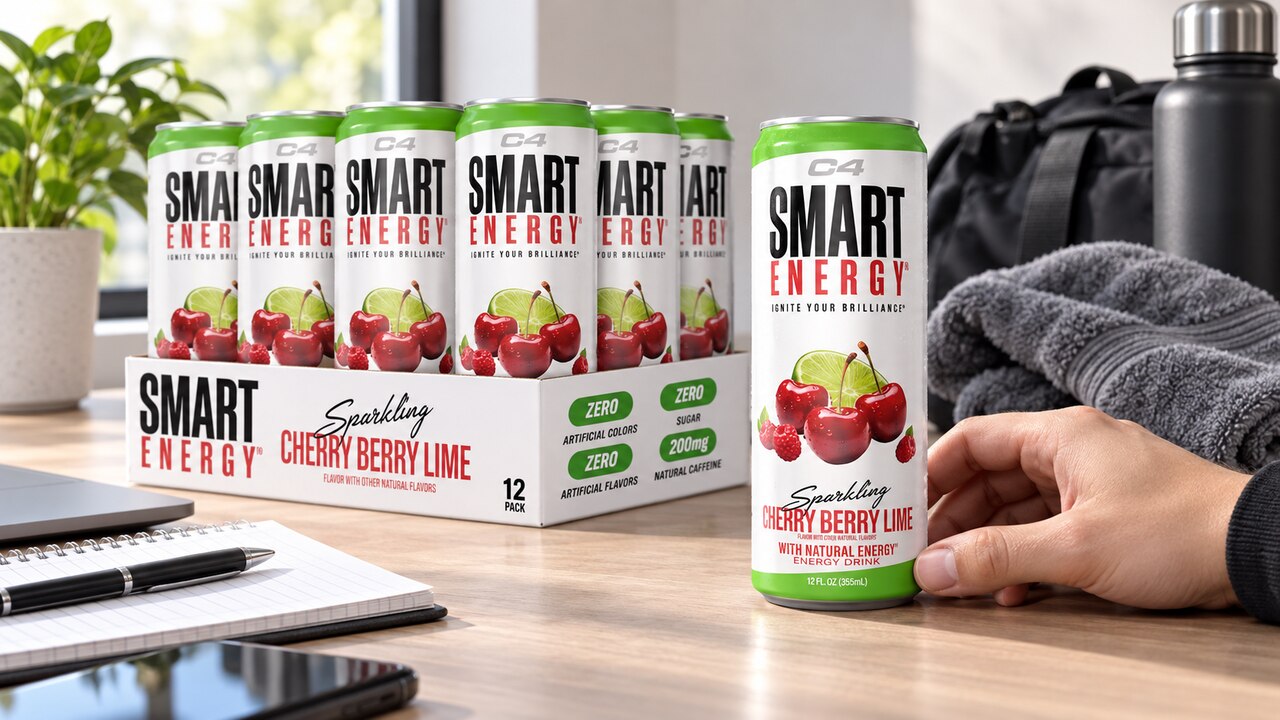
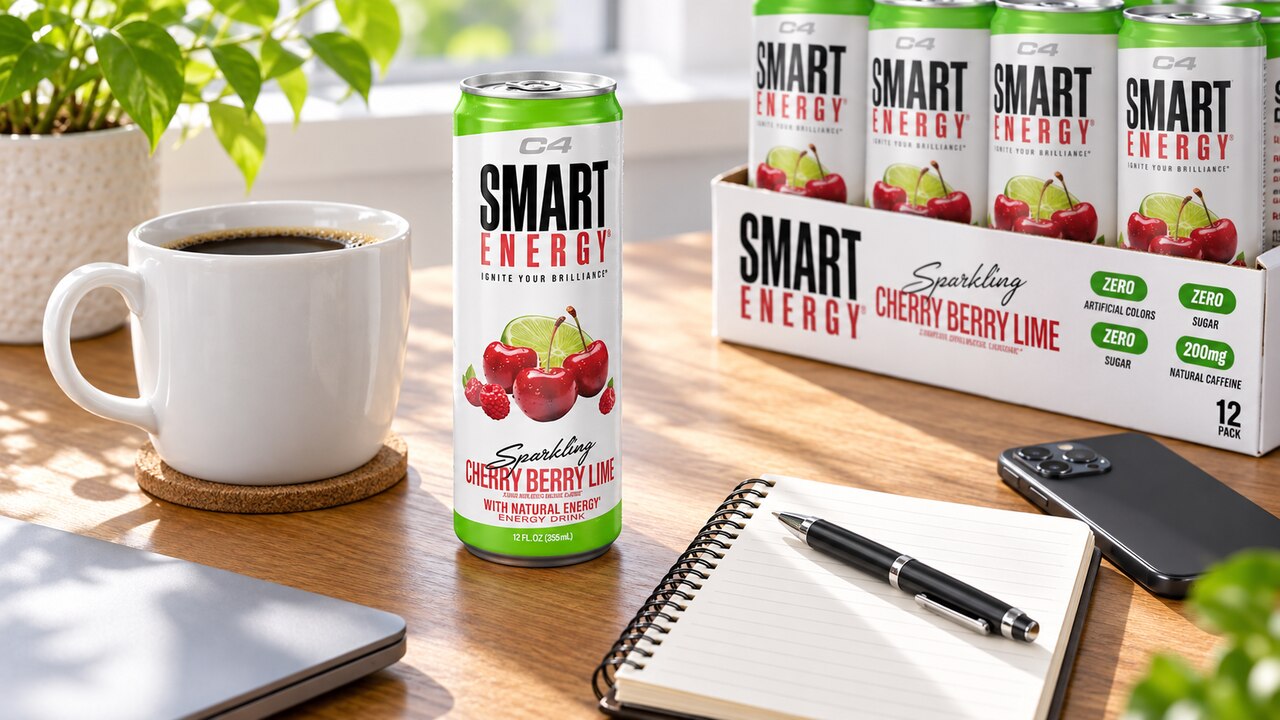
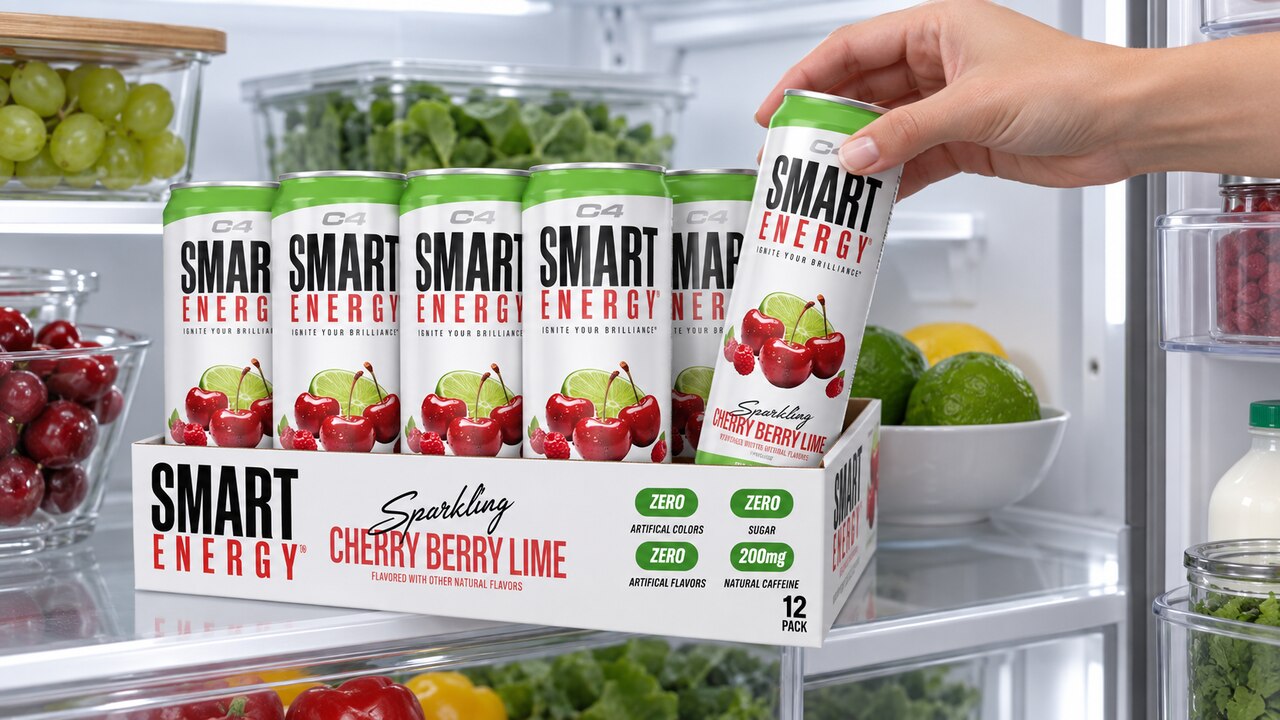
C4 Smart Energy in Cherry Berry Lime puts 200 mg of caffeine into each zero-calorie, sugar-free 12 oz can. The 12-pack is simple to evaluate as a caffeinated drink, but the nootropic story is harder to judge because the label names Cognizin citicoline and N-acetyl-L-tyrosine without disclosing their individual amounts.
I see it as an occasional, high-caffeine convenience drink for a healthy adult who already knows how 200 mg affects them. It is a poor first caffeine experiment, a poor late-day choice for a sensitive sleeper, and a weak value if the main goal is simply obtaining caffeine.
FitnessVolt may earn a commission from purchases through our links. Tom Miller drank and evaluated the Cherry Berry Lime 12-can pack, ASIN B09CRR9XT1, checking flavor, carbonation, can size, stimulant feel, and everyday convenience. He also confirmed the current label, price, FDA guidance, and a product-specific human study.

C4 Smart Energy, Cherry Berry Lime, 12-Pack
200 mg Caffeine Per CanA zero-calorie 200 mg caffeine drink with convenient cans and a product-specific trial, limited by undisclosed individual nootropic doses.
Pros
- 200 mg caffeine is stated clearly
- Zero calories, carbohydrate, and sugar
- One sealed can fixes the serving size
- Product-specific human research is available
Cons
- Individual citicoline and tyrosine amounts are not disclosed
- One can is a large starting dose for caffeine-sensitive users
- Costs about $1.82 per can
- Not appropriate for children or anyone advised to limit caffeine
The 200 mg Caffeine Dose Is the Main Decision
One 12 oz can is one serving. It contains 200 mg caffeine with zero calories, zero carbohydrate, and zero sugar. That makes C4 Smart Energy easy to track, but “zero sugar” does not make the stimulant dose trivial.
The FDA says up to 400 mg of caffeine per day is an amount not generally associated with negative effects for most adults, while emphasizing that sensitivity varies. One C4 can equals half of that general daily figure. Coffee, pre-workout, tea, chocolate, medication, and another energy drink still count toward the same day.
| Current can | Amount | Buyer implication |
|---|---|---|
| Caffeine | 200 mg | A substantial single serving, not a beginner micro-dose |
| Calories | 0 | No meaningful energy intake |
| Carbohydrate and sugar | 0 g and 0 g | Not a workout fuel |
| Can size | 12 fl oz | The entire can is the labeled serving |
Caffeine can remain disruptive long after the alert feeling fades. Anyone protecting sleep should count backward from bedtime and use their own response, not a marketing category, to set the cutoff. The safest answer for a sensitive user may be a lower-dose product or none at all.
The Nootropic Ingredients Need Dose Transparency
The formula names Cognizin citicoline and N-acetyl-L-tyrosine. Those are recognizable ingredients, yet the current consumer-facing label does not give their individual amounts. That prevents a clean comparison with research doses or with another drink.
This is the central formula limitation. A branded ingredient name can support identity and sourcing, but it does not answer how much is in a can. Buyers can confidently evaluate the 200 mg caffeine dose; they cannot independently determine whether the citicoline or tyrosine amount matches a particular study.
The same issue affects product comparison. A competing drink with fewer named ingredients but fully disclosed amounts may be easier to assess than a longer label built around a blend. Conversely, someone choosing C4 mainly for caffeine may decide that the hidden secondary amounts do not change the purchase. The honest interpretation depends on what job the buyer expects the drink to do.
What the Product-Specific Trial Shows
A randomized crossover study in 45 healthy young adult gamers tested one serving of C4 Smart Energy against placebo. The researchers reported improvements in several attention, processing, and mood measures. They also reported a slight blood-pressure increase. Nutrabolt funded the study and supplied the beverages, which readers should weigh alongside the product-specific design. A single-dose laboratory study cannot establish long-term benefit, real-world training performance, or the effect in people with cardiovascular conditions.
The study is more relevant than borrowing evidence from a completely different energy drink, but it should still be read narrowly. Caffeine likely contributes substantially, the individual active doses are not public on the label, and an acute cognitive result is not proof of better workouts or better health.
Stacking Is Where a Clear Label Can Still Go Wrong
A single can is easy to count. The day around it may not be. A morning coffee, caffeinated pre-workout, afternoon C4, and evening tea can quietly push total intake far beyond what the user intended. Checking every label is more reliable than categorizing one drink as “focus” and another as “pre-workout.”
Using half a can does not create a stable storage or dosing solution unless the remainder is handled appropriately, and carbonation makes a resealed drink less appealing. Buyers who routinely want less than 200 mg are better served by a smaller fixed dose rather than improvising around a full-strength can.
Tolerance also complicates the value calculation. Needing more caffeine to notice the same subjective effect is not a reason to keep increasing the dose. A lower-caffeine day or a break may be more useful than adding another can, particularly when sleep quality is already slipping.
Price and Pack Math
The Amazon listing showed $21.82 and in-stock availability on September 11, 2026. Across 12 cans, that is about $1.82 per drink before tax, shipping, coupon, or subscription changes. Drinking one can every weekday would cost about $36.37 over four weeks at this snapshot.
The value is convenience, flavor variety within the category, and a ready-to-drink format. Caffeine tablets or home-brewed coffee may cost less per 200 mg, while a canned drink avoids preparation and makes the dose obvious. FitnessVolt’s energy drink guide is the right place to compare other formulas; this page evaluates this exact flavor and pack.
The reviewed listing is specifically the Cherry Berry Lime 12-pack. A 24-pack or another flavor can have a different price, image, and ASIN. Buyers should confirm the pack count at checkout because a lower total price is not necessarily a lower price per can.
Who Should Buy It, and Who Should Skip It?
Buy it if you are a healthy adult who already tolerates 200 mg caffeine, wants a sugar-free ready-to-drink option, and values a fixed dose more than the lowest possible stimulant cost.
Skip it if you are caffeine-sensitive, pregnant, under 18, protecting sleep, or trying to judge citicoline and tyrosine against specific research doses. It is also a poor fit when you need carbohydrate during a long training session.
People with heart rhythm concerns, high blood pressure, anxiety aggravated by stimulants, or interacting medication should use clinical guidance. The product-specific study’s blood-pressure finding is a reason to take the stimulant seriously, not a reason to panic about every can.
Bottom Line
C4 Smart Energy earns a 4.6 out of 5 editorial rating for a clear 200 mg caffeine dose, zero-calorie format, portable cans, and unusually relevant product-specific research. At $21.82, it costs about $1.82 per can. The missing individual nootropic doses and substantial single-can caffeine load keep it from being an automatic recommendation. It fits experienced caffeine users who want convenience, not buyers looking for a transparent, low-dose focus formula.
Sources
- Cellucor. (Accessed September 11, 2026). C4 Smart Energy product page and current label.
- US Food and Drug Administration. (Accessed September 11, 2026). Spilling the Beans: How Much Caffeine is Too Much?
- Schwager LE, et al. (2024). Novel energy drink improves cognitive function and mood, without influencing myocardial oxygen demand or ventricular repolarization in adult gamers. Journal of the American Nutrition Association.