
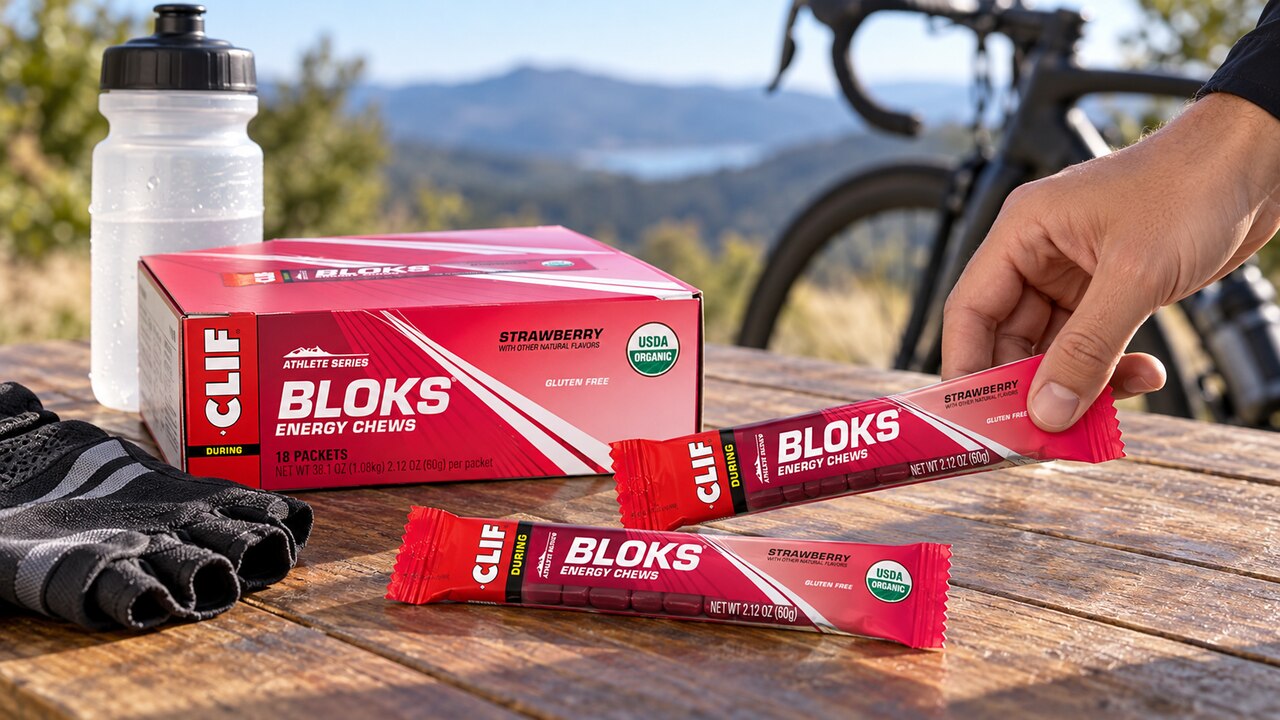
CLIF BLOKS Strawberry turns 48 g of carbohydrate into a six-chew packet. The label splits that packet into two servings of three chews, but endurance athletes are more likely to care about the full-packet math: 190 calories, 48 g carbohydrate, 23 g added sugar, and 100 mg sodium.
This uncaffeinated flavor is useful when you want measured carbohydrate without adding another stimulant. It is expensive as ordinary candy and unnecessary for a short gym session. Its best case is portable fueling during a longer session where 24 g half-packet increments fit an established plan.
FitnessVolt may earn a commission from purchases through our links. Tom Miller tasted and used the Strawberry chews from ASIN B00CQRWSKK during endurance training, checking flavor, chew, packet access, portioning, and storage. He also confirmed the exact package, manufacturer label, current price, and sports-nutrition guidance.

CLIF BLOKS Energy Chews, Strawberry, 18 Packs
48 g Carbs Per PacketAn uncaffeinated six-chew packet that divides 48 g of carbohydrate into two trackable servings, with a high convenience price.
Pros
- 48 g carbohydrate in a full packet
- Two 24 g carbohydrate servings are easy to count
- Strawberry has no caffeine listed
- Portable package needs no mixing
Cons
- Costs about $2.62 per packet at the reviewed price
- 23 g added sugar per packet
- Chewing may be less practical at high intensity
- Not useful for most short workouts
Read the Whole Packet, Not Only One Serving
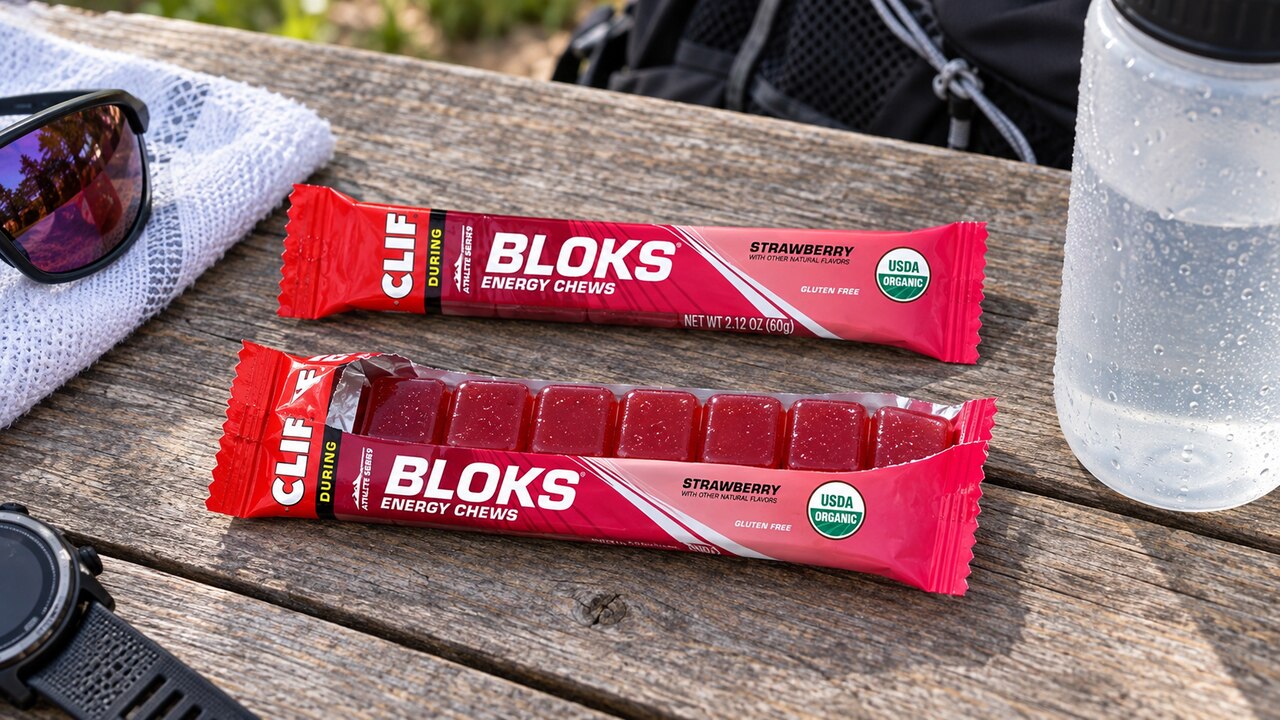
The serving size is three pieces, or 30 g, and each packet contains two servings. Three chews provide 100 calories, 24 g carbohydrate, 12 g added sugar, and 50 mg sodium. The full six-chew packet provides 190 calories, 48 g carbohydrate, 23 g added sugar, and 100 mg sodium. The small calorie mismatch is normal label rounding.
| Amount eaten | Carbohydrate | Calories |
|---|---|---|
| 3 chews | 24 g | 100 |
| 6 chews (whole packet) | 48 g | 190 |
| 18-packet box | 864 g total | 36 label servings |
Strawberry does not list caffeine. That distinguishes it from caffeinated BLOKS flavors and makes stacking easier to control. It does not mean every flavor in the product family is stimulant-free, so repeat buyers should check the exact flavor panel rather than assuming all colorful packets share one formula.
Where 24 g and 48 g Fit During Exercise
Sports-nutrition guidance commonly scales carbohydrate intake with session duration and intensity. Published position statements discuss roughly 30 to 60 g per hour for many longer endurance efforts, with higher intakes sometimes used during very prolonged events by trained athletes. Those are planning ranges, not a command to eat one packet every hour.
A three-chew serving contributes 24 g, while the full packet contributes 48 g. That makes the product easy to combine with sports drink, gels, or normal food, but everything counts toward the same total. Someone consuming a carbohydrate drink alongside BLOKS can overshoot a plan by counting the chews in isolation.
Short strength sessions generally do not require mid-workout sugar when a person arrives fed. The product’s value rises with duration, pace, heat, limited appetite, and the need to carry compact fuel. The athlete still needs to practice the plan before race day.
Build the Packet Into a Complete Fueling Plan
A useful plan specifies time, carbohydrate, fluid, and caffeine rather than naming a pile of products. For example, three chews contribute 24 g carbohydrate. A sports drink or gel consumed in the same hour must be added to that number. The uncaffeinated Strawberry flavor makes one variable simpler, but it does not simplify the rest of the plan automatically.
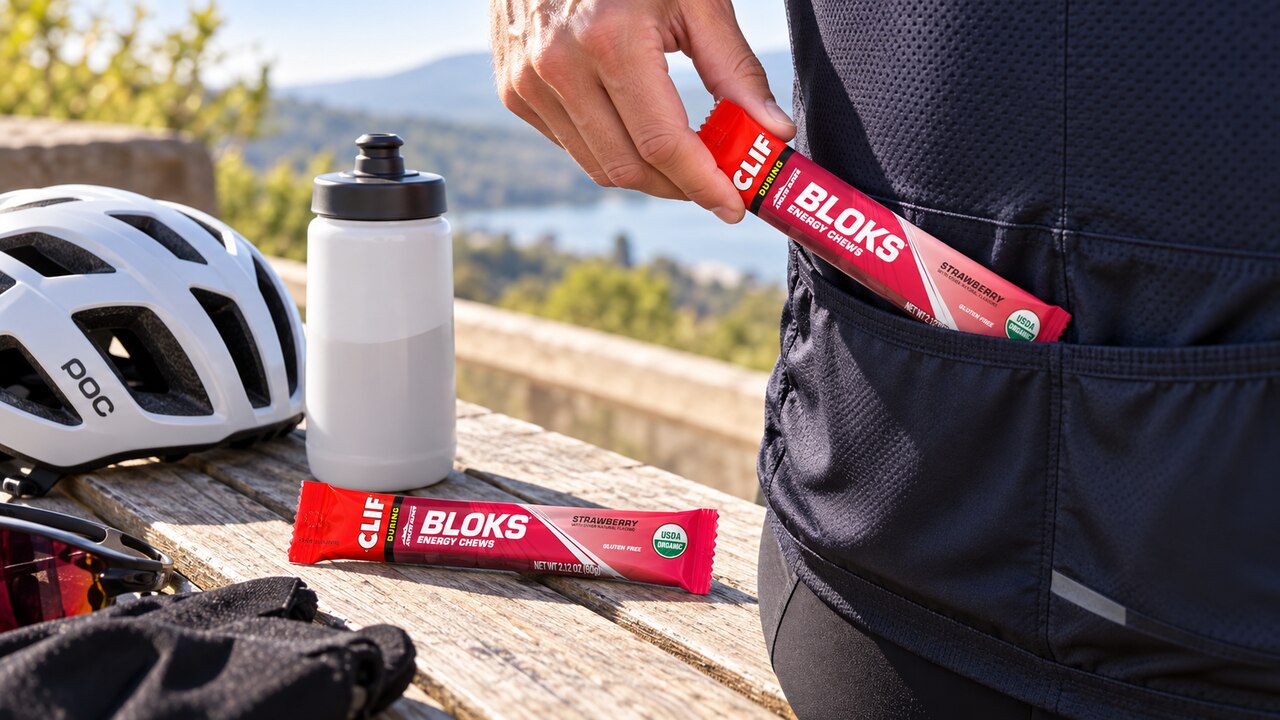
Package handling matters during movement. Decide where the open packet will live, whether three chews can be accessed at the intended interval, and how litter will be carried. These details sound minor at a desk and become annoying on a bike, trail, or crowded course.
Practice also exposes individual tolerance. The fact that 48 g of carbohydrate fits published ranges does not predict comfort while running hard. Test the exact amount, timing, and water intake in lower-stakes training before building a race plan around the box.
Chews Have a Different Practical Cost
The Amazon listing showed $47.24 and in-stock availability on September 11, 2026. That equals $2.62 per packet or $1.31 per three-chew serving before tax, shipping, coupon, or subscription changes. The 18-pack supplies 36 label servings.
You are paying for measured portions and portability, not cheap carbohydrate. Grocery-store candy or homemade food can cost less, but may be harder to count, open, store, or tolerate while moving. A gel is easier to swallow quickly; a chew lets you spread the intake over several bites. Neither format wins for everyone.
The box price also changes the commitment. Eighteen packets are useful for a training block, yet they are a costly way to discover that the flavor or chew format is not suitable. A single packet from a local shop can be a smarter first purchase even when its unit price is higher.
FitnessVolt’s energy gels and chews guide compares the wider category. Our caffeine chews guide covers stimulant options, while this Strawberry BLOKS review remains specifically uncaffeinated.
Fuel Still Needs Fluid and Practice
A chew is concentrated carbohydrate. The package is not a hydration plan, and 100 mg sodium per full packet is modest beside the variability in sweat losses. Athletes should account for water, weather, duration, and their other food and drink rather than assigning every job to one packet.
Chewing while breathing hard is also a format consideration. Try a small amount in training, at the pace and with the fluid strategy you expect to use, before depending on it in an event.
Temperature changed the firmness during our test, with the chews becoming softer in warm conditions. Store and use the product within the package directions, and practice opening and eating it in the weather you expect on event day.
Who Should Buy It, and Who Should Skip It?
Buy it if you need compact carbohydrate for longer training or racing, prefer chewable fuel, and want an uncaffeinated flavor that can be split into 24 g portions.
Skip it if most of your workouts are short, you want the cheapest carbohydrate source, or chewing at intensity does not suit you. It is also the wrong product if your plan requires a specific caffeine dose.
People with diabetes or another condition requiring carbohydrate management should use individualized clinical advice. For everyone else, the central question is not whether sugar is inherently good or bad; it is whether concentrated carbohydrate serves the demands of the session.
Bottom Line
CLIF BLOKS Strawberry earns a 4.7 out of 5 editorial rating for transparent packet math, portable 24 g carbohydrate portions, and an uncaffeinated formula that is easy to combine with a broader fueling plan. At $47.24, the cost is about $2.62 per packet. It is a credible endurance tool for athletes who practice with chews, but an expensive and unnecessary snack for most short workouts.
Sources
- CLIF BAR. (Accessed September 11, 2026). CLIF BLOKS Strawberry product page and nutrition panel.
- Burke LM, Hawley JA, Wong SHS, Jeukendrup AE. (2011). Carbohydrates for training and competition. Journal of Sports Sciences.
- Jeukendrup A. (2013). The new carbohydrate intake recommendations. Nestle Nutrition Institute Workshop Series.