

Alternate Lateral Pulldown vs Cable Pulldown: Complete Comparison Guide
Alternate Lateral Pulldown vs Cable Pulldown — you’re comparing two solid cable-back moves that both target the lats but load and recruit muscles differently. I’ll walk you through muscle activation, equipment needs, technique cues, and which exercise fits specific goals like hypertrophy, strength, or correcting imbalances. Expect clear reps/sets ranges, joint angles, and cues to get the most from each pull. By the end you’ll know when to favor a unilateral lat focus versus a stable bilateral setup and how to apply progressive overload safely in your program.
Exercise Comparison
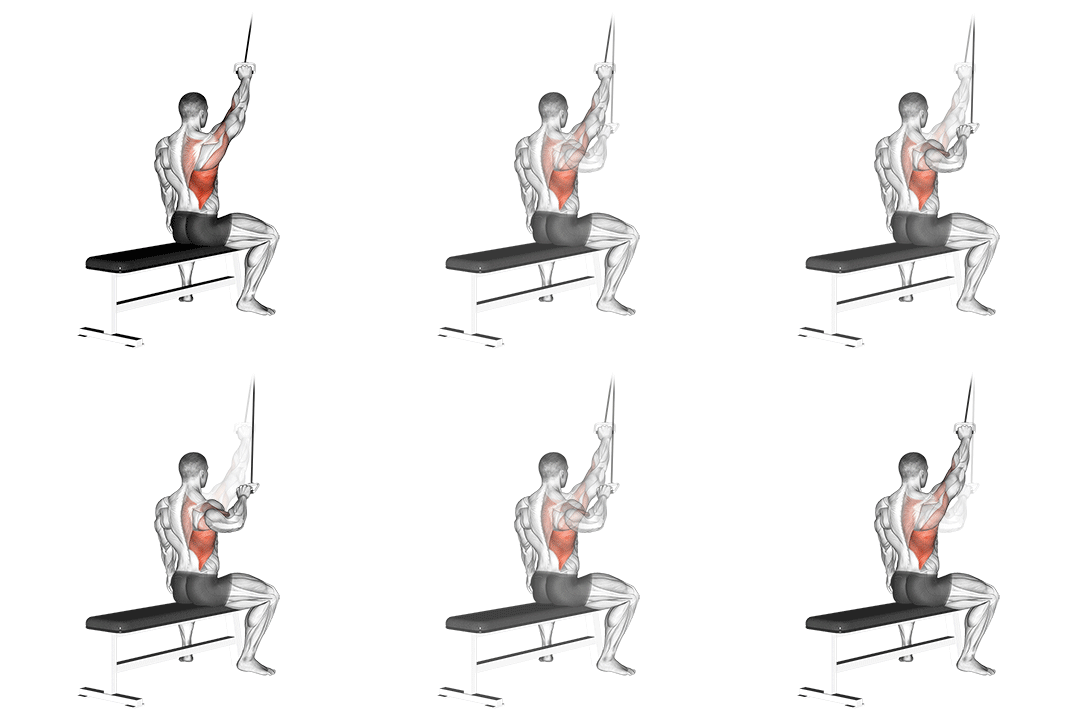
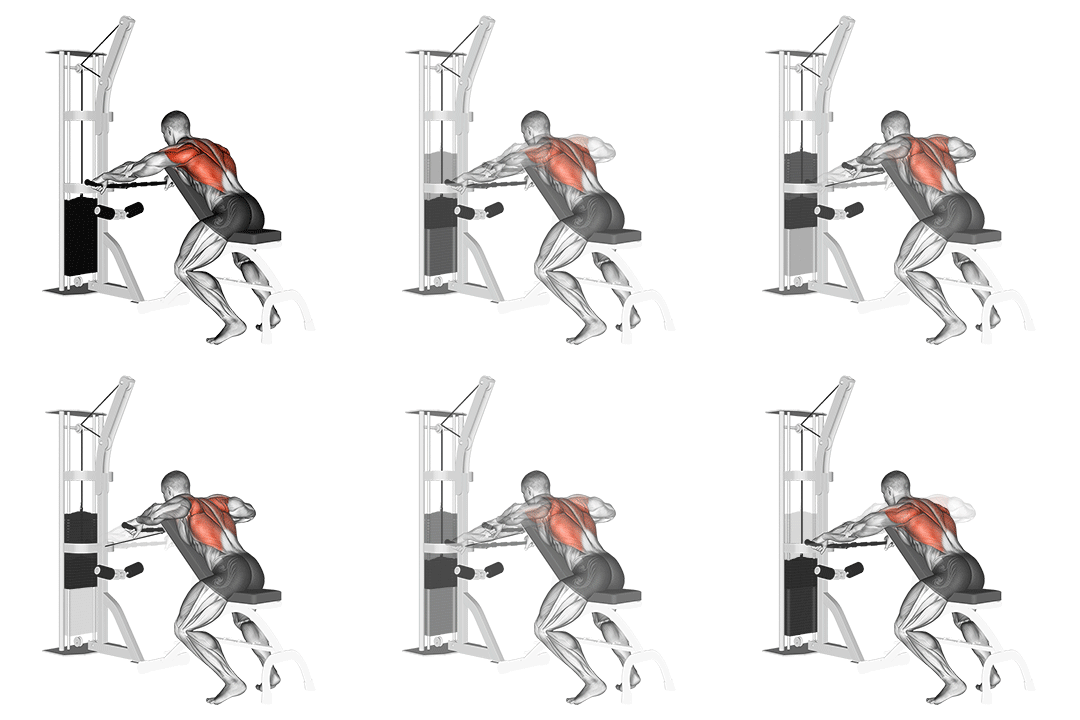
Alternate Lateral Pulldown
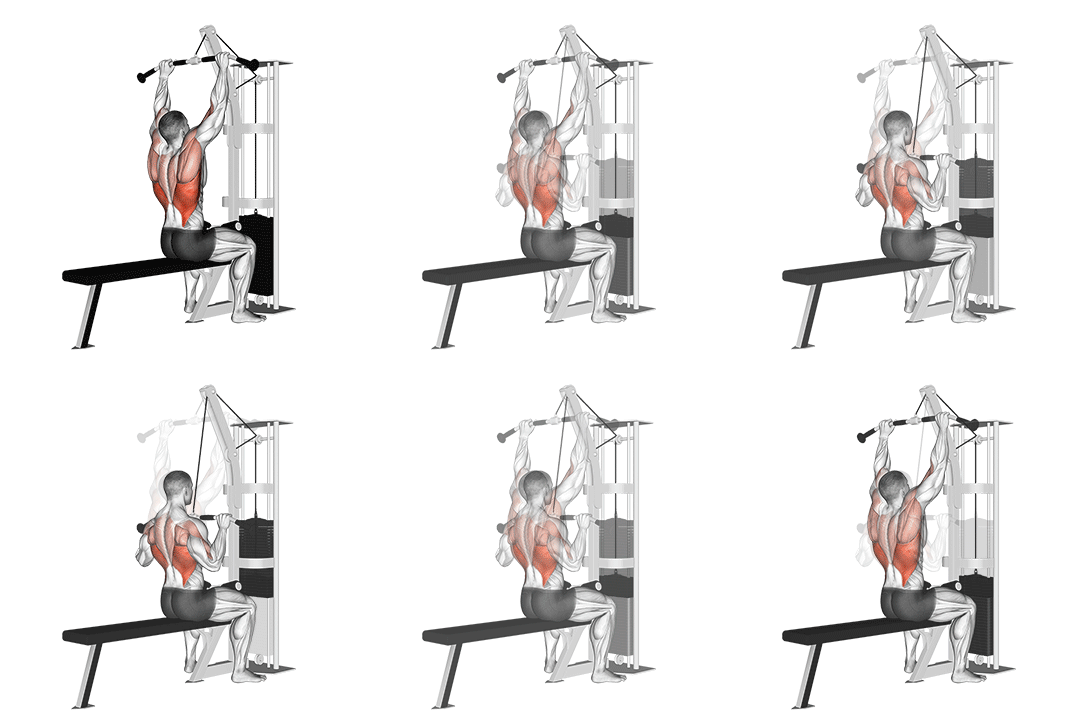
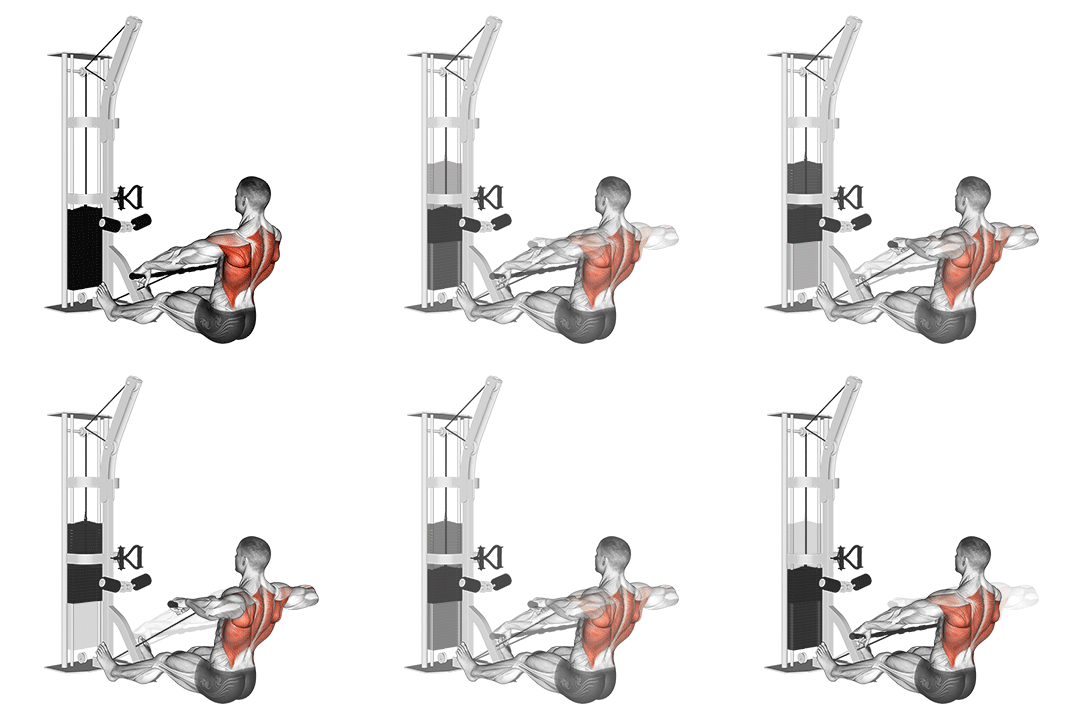
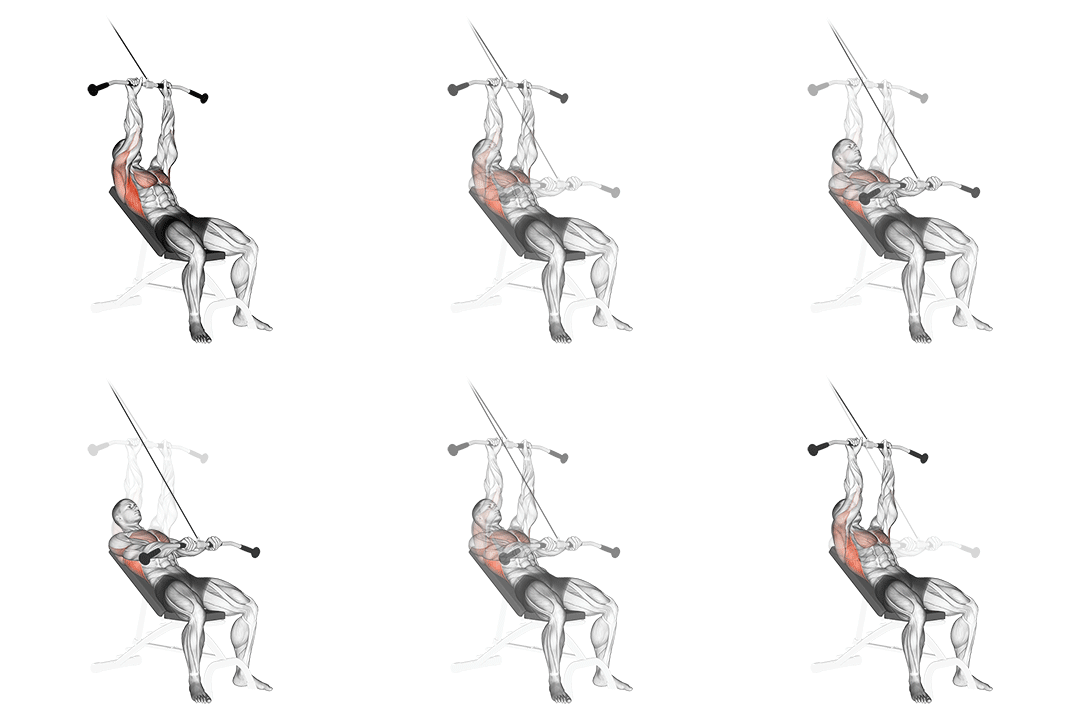
Cable Pulldown
Head-to-Head Comparison
| Attribute | Alternate Lateral Pulldown | Cable Pulldown |
|---|---|---|
| Target Muscle |
Lats
|
Lats
|
| Body Part |
Back
|
Back
|
| Equipment |
Cable
|
Cable
|
| Difficulty |
Intermediate
|
Intermediate
|
| Movement Type |
Compound
|
Compound
|
| Secondary Muscles |
2
|
2
|
Secondary Muscles Activated
Alternate Lateral Pulldown
Cable Pulldown
Visual Comparison
Overview
Alternate Lateral Pulldown vs Cable Pulldown — you’re comparing two solid cable-back moves that both target the lats but load and recruit muscles differently. I’ll walk you through muscle activation, equipment needs, technique cues, and which exercise fits specific goals like hypertrophy, strength, or correcting imbalances. Expect clear reps/sets ranges, joint angles, and cues to get the most from each pull. By the end you’ll know when to favor a unilateral lat focus versus a stable bilateral setup and how to apply progressive overload safely in your program.
Key Differences
- Both exercises target the Lats using Cable. The main differences are in their movement patterns and muscle activation angles.
Pros & Cons
Alternate Lateral Pulldown
+ Pros
- Unilateral focus corrects left-right strength imbalances and improves mind-muscle connection
- Greater peak contraction and longer ROM on each lat for targeted muscle growth
- Increases anti-rotation core and scapular stabilizer recruitment
- Easy to vary grip and angle to emphasize different lat fibers
− Cons
- Harder to progressively load with heavy bilateral weights
- Requires more coordination and core control; steeper learning curve
- Can introduce trunk rotation if technique breaks down
Cable Pulldown
+ Pros
- Stable bilateral setup lets you lift heavier loads for progressive overload
- Simpler setup and easier to teach to beginners
- Consistent vertical force vector produces reliable lat stimulus across reps
- Multiple attachments let you target lats with different grips and widths
− Cons
- Can rely on biceps and forearms under heavy loads, reducing lat isolation
- Less effective at exposing and fixing left-right imbalances
- Wide-bar variants may limit full contraction if elbows flare too much
When Each Exercise Wins
Cable Pulldown allows heavier bilateral loading and higher total volume (8–12 reps, 3–6 sets), making it easier to drive muscle growth while controlling tempo and progressive overload.
The bilateral setup supports heavier absolute loads (3–6 reps) and stable force application, so you can overload the lats and pulling pathway more effectively for strength.
Cable Pulldown is simpler to set up and cues are straightforward: sit tall, depress scapula, pull to upper chest. Reduced balance demand helps beginners learn the pulling pattern safely.
Most home cable stations include a lat bar and seated station, and the exercise scales from bodyweight-like resistance to heavy stacks, making it the more practical pick for limited equipment.
Frequently Asked Questions
Can I do both Alternate Lateral Pulldown and Cable Pulldown in the same workout?
Yes. Start with Cable Pulldown to handle heavier bilateral loads for your main sets, then add Alternate Lateral Pulldown as an accessory for 2–3 sets of 8–12 reps to address imbalances and refine mind-muscle connection.
Which exercise is better for beginners?
Cable Pulldown is better for beginners because it has a fixed path, requires less core anti-rotation control, and makes it easier to learn scapular depression and elbow-driving mechanics before moving to unilateral variations.
How do the muscle activation patterns differ?
Alternate Lateral Pulldown creates unilateral peak contraction and increases stabilizer activation on the torso and scapula, while Cable Pulldown produces a symmetrical vertical load that emphasizes bilateral lat force production and allows heavier absolute loading.
Can Cable Pulldown replace Alternate Lateral Pulldown?
Cable Pulldown can replace Alternate Lateral Pulldown for most hypertrophy and strength goals, but it won’t correct unilateral weaknesses as efficiently. Keep alternate unilateral pulls in your program when asymmetry or targeted contraction is a priority.
Expert Verdict
Use Cable Pulldown as your default lat-builder when you want stable loading, straightforward progression, and higher training volume for hypertrophy or strength. Its vertical force vector and bilateral setup let you add weight in small, measurable steps and keep technique consistent. Use Alternate Lateral Pulldown when you need to fix left-right asymmetries, boost mind-muscle connection on a weak side, or increase scapular and core stabilization. Cycle both: prioritize Cable Pulldown for heavy phases (3–6 or 8–12 reps) and insert alternate unilateral work for accessory sessions to balance development and improve muscle recruitment.
Also Compare
More comparisons with Alternate Lateral Pulldown
More comparisons with Cable Pulldown
Compare More Exercises
Use our free comparison tool to analyze any two exercises head-to-head.
Compare Exercises