

Alternate Lateral Pulldown vs Dumbbell Bent Over Row: Complete Comparison Guide
Alternate Lateral Pulldown vs Dumbbell Bent Over Row — if you want a stronger, thicker back you need to know when to use each. I’ll walk you through mechanics, muscle activation, equipment needs, technique cues, and programming so you can pick the best move for your goals. You’ll learn which exercise gives a cleaner lat stretch, which one lets you overload with heavier weight, and how to cue each lift for safer, more effective reps.
Exercise Comparison
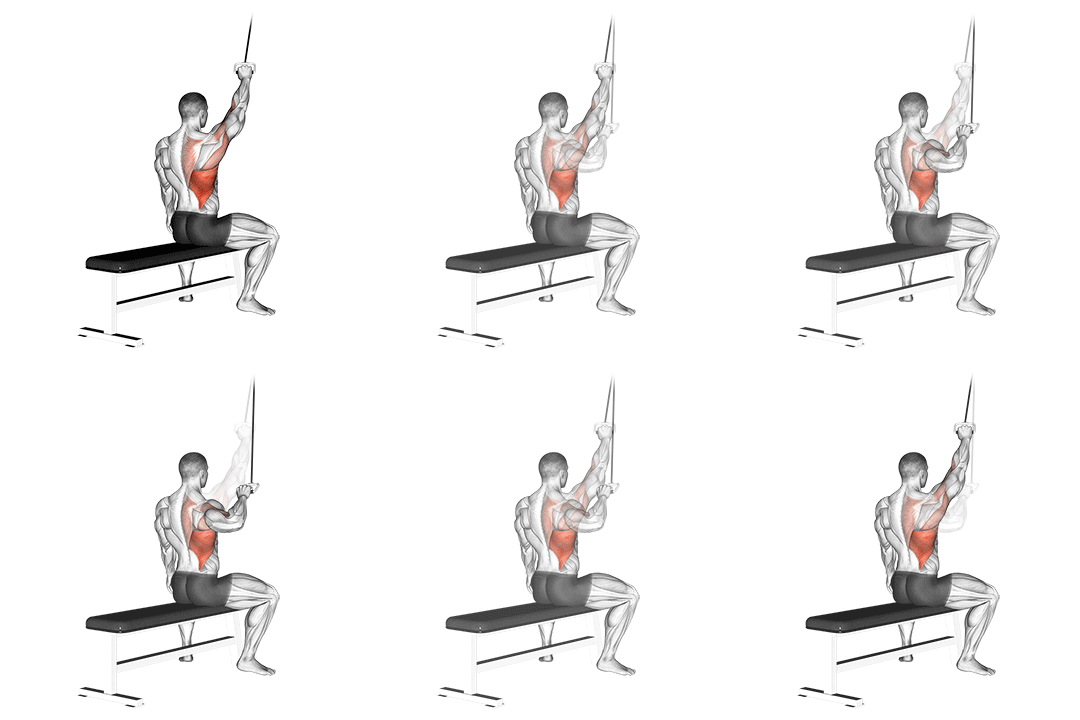
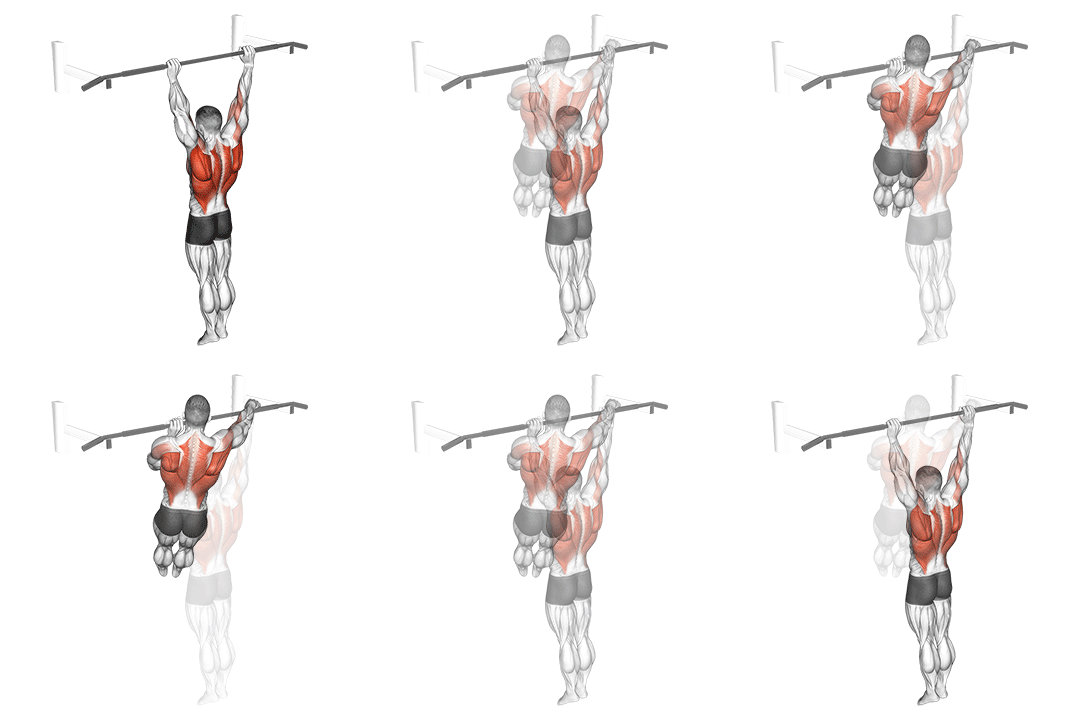
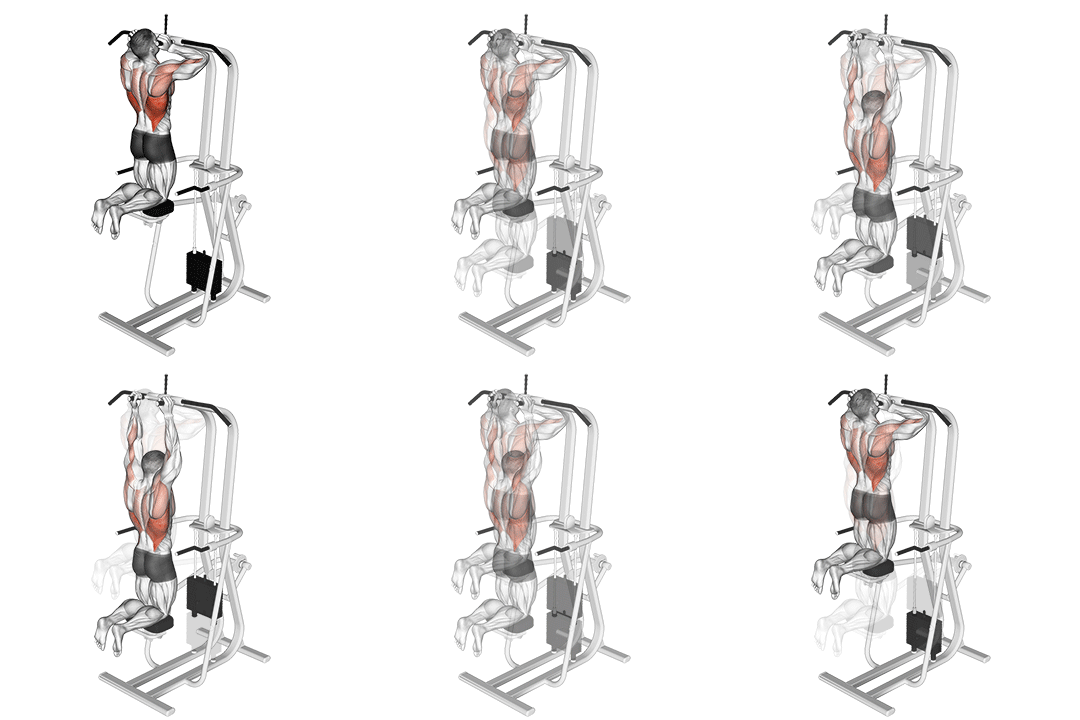
Alternate Lateral Pulldown
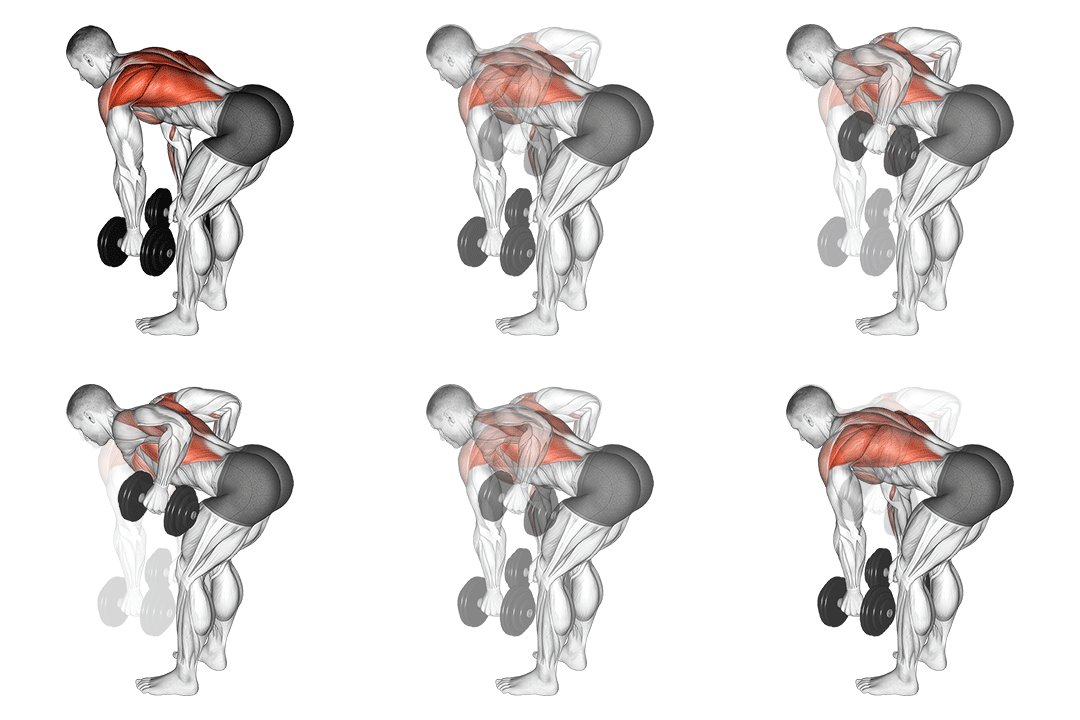
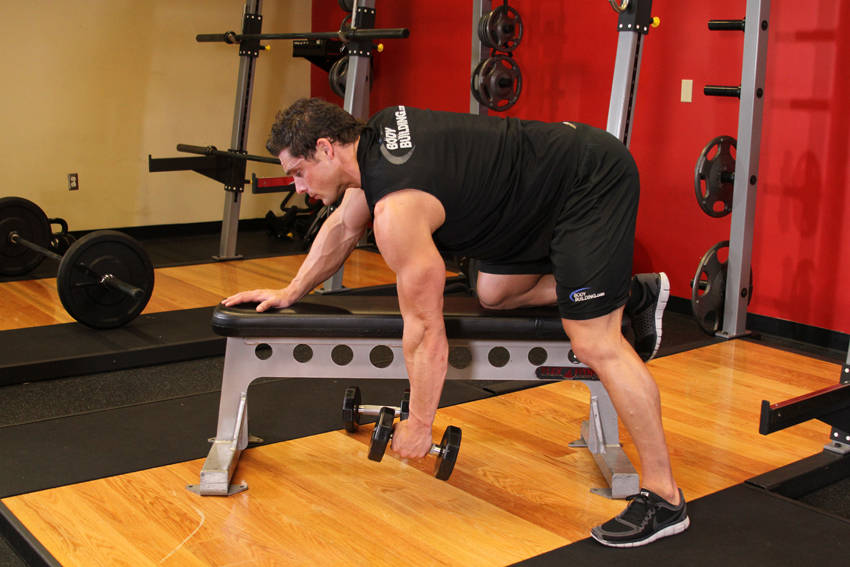
Dumbbell Bent Over Row
Head-to-Head Comparison
| Attribute | Alternate Lateral Pulldown | Dumbbell Bent Over Row |
|---|---|---|
| Target Muscle |
Lats
|
Lats
|
| Body Part |
Back
|
Back
|
| Equipment |
Cable
|
Dumbbell
|
| Difficulty |
Intermediate
|
Intermediate
|
| Movement Type |
Compound
|
Compound
|
| Secondary Muscles |
2
|
2
|
Secondary Muscles Activated
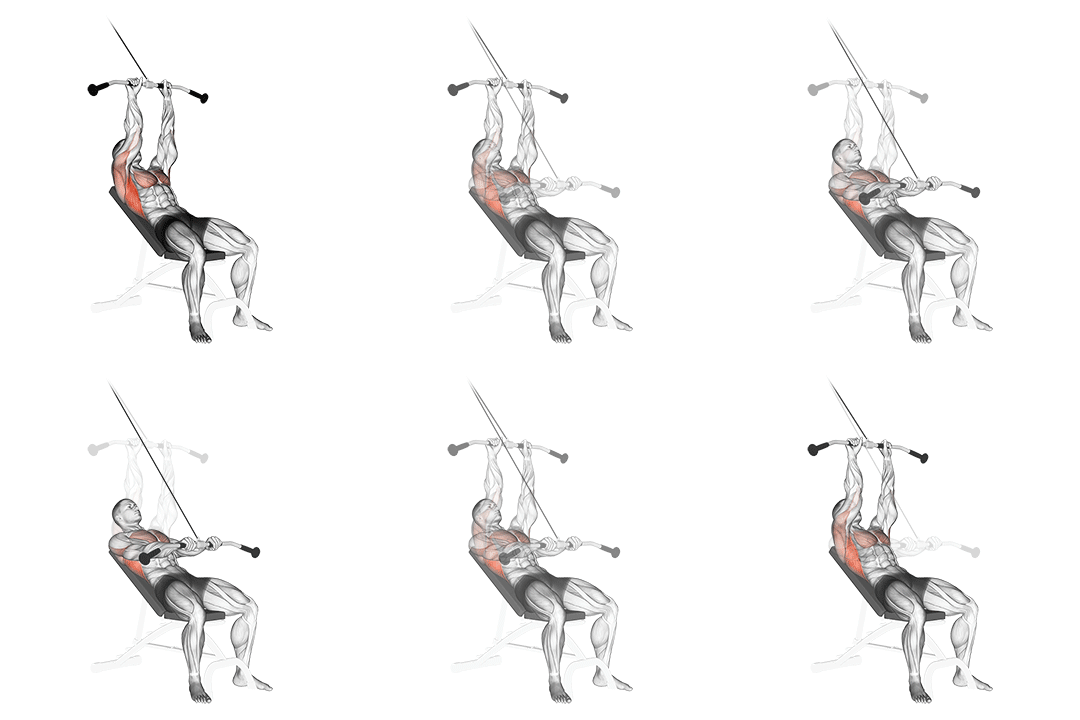
Alternate Lateral Pulldown
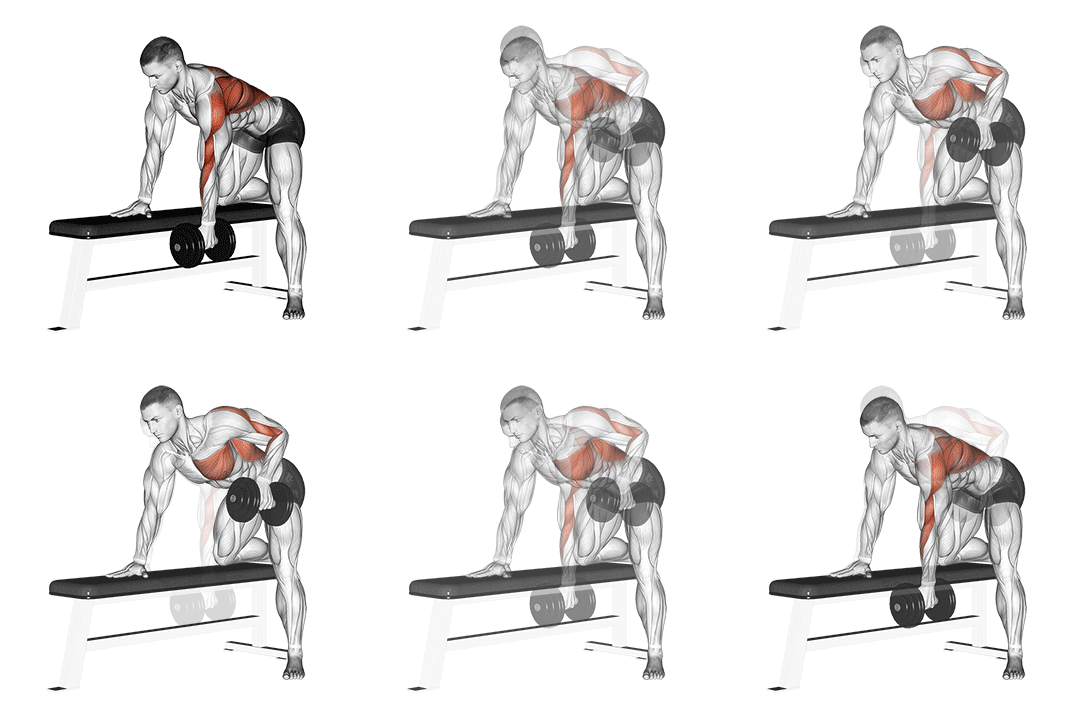
Dumbbell Bent Over Row
Visual Comparison
Overview
Alternate Lateral Pulldown vs Dumbbell Bent Over Row — if you want a stronger, thicker back you need to know when to use each. I’ll walk you through mechanics, muscle activation, equipment needs, technique cues, and programming so you can pick the best move for your goals. You’ll learn which exercise gives a cleaner lat stretch, which one lets you overload with heavier weight, and how to cue each lift for safer, more effective reps.
Key Differences
- Equipment differs: Alternate Lateral Pulldown uses Cable, while Dumbbell Bent Over Row requires Dumbbell.
Pros & Cons
Alternate Lateral Pulldown
+ Pros
- Cleaner lat isolation with a vertical force vector and greater top-to-bottom stretch
- Seated, machine-stabilized position reduces lower-back demand
- Easier to control tempo and perform strict unilateral repetitions
- Lower systemic fatigue so it pairs well after heavy compound lifts
− Cons
- Requires cable/pulldown station — less accessible at home
- Limited absolute loading compared with heavy free-weight rows
- If you pull too far behind the head you risk shoulder impingement
Dumbbell Bent Over Row
+ Pros
- Greater potential for heavy mechanical tension and progressive overload
- Improves mid-back thickness by loading scapular retractors and erectors
- Works grip and forearm strength more directly
- Can be done with minimal equipment in home gyms
− Cons
- Higher lower-back demand; requires strict hip-hinge and bracing
- Harder to keep perfect unilateral isolation without rotating the torso
- Technique breakdown (rounded back) increases injury risk
When Each Exercise Wins
Rows let you progressively overload with heavier absolute loads and longer time under tension, producing greater mechanical tension across the lats and scapular retractors. Use 6–12 reps, controlled tempo (2–3 sec eccentric), and pauses at full contraction for size.
The horizontal pull pattern allows heavier loading and builds transfer to deadlifts and heavy pulling variations. Train in 3–6 rep ranges with heavier dumbbells and short rests to prioritize strength.
Seated stability reduces lower-back demands and makes it easier to target the lats with simple cues (drive elbow to hip, avoid shrugging). Start with 8–15 reps focusing on form and full range.
Dumbbells are the most common home gym tool and the row requires minimal space. A 3–4 set plan with 8–12 reps provides solid stimulus without specialized machines.
Frequently Asked Questions
Can I do both Alternate Lateral Pulldown and Dumbbell Bent Over Row in the same workout?
Yes — pair them by priority: do heavy rows earlier when your legs and back are fresh, then use pulldowns as an accessory for higher-rep volume or unilateral correction. Keep total sets per week in the 8–16 range per muscle for hypertrophy.
Which exercise is better for beginners?
Alternate Lateral Pulldown is generally better for beginners because the seated machine reduces lower-back loading and allows easier focus on lat contraction. Start with 8–15 reps and practice scapular control and elbow tracking.
How do the muscle activation patterns differ?
Pulldowns use a vertical force vector favoring shoulder extension and a long lat stretch, with peak tension near the bottom of the pull. Bent-over rows use a horizontal vector and a hinged trunk, shifting peak tension into scapular retraction and mid-back contraction while also involving the erectors.
Can Dumbbell Bent Over Row replace Alternate Lateral Pulldown?
It can replace pulldowns for strength and thickness if you can safely hinge and load progressively, but you’ll lose some isolated top-to-bottom lat stretch and machine stability. If your goal is strict isolation or you have lower-back limitations, keep pulldowns in the plan.
Expert Verdict
Use the Alternate Lateral Pulldown when you want lat isolation, a strong top-to-bottom stretch, and minimal lower-back stress — this is ideal for technique work, unilateral corrective training, and higher-rep volume (8–15 reps). Choose the Dumbbell Bent Over Row when you need to apply heavier mechanical tension for thickness and strength; hinge at 30–45°, brace the core, and chase progressive overload in the 4–12 rep ranges. For balanced development, rotate both into your program: pulldowns to polish form and spacing, rows to build size and raw pulling strength.
Also Compare
More comparisons with Alternate Lateral Pulldown
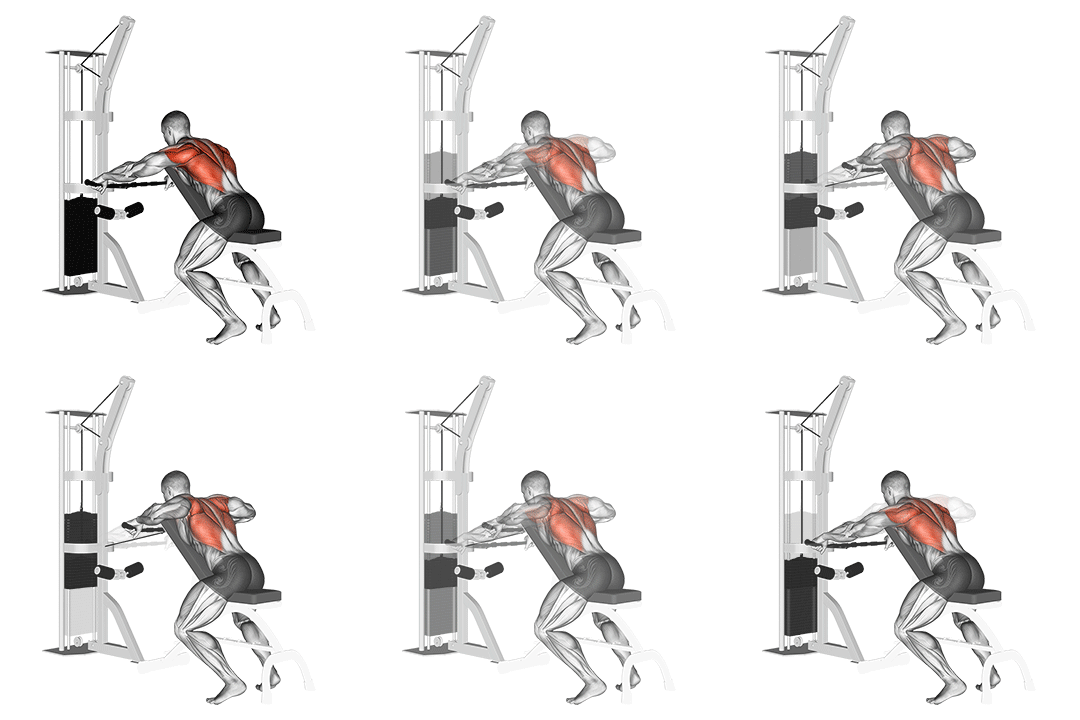
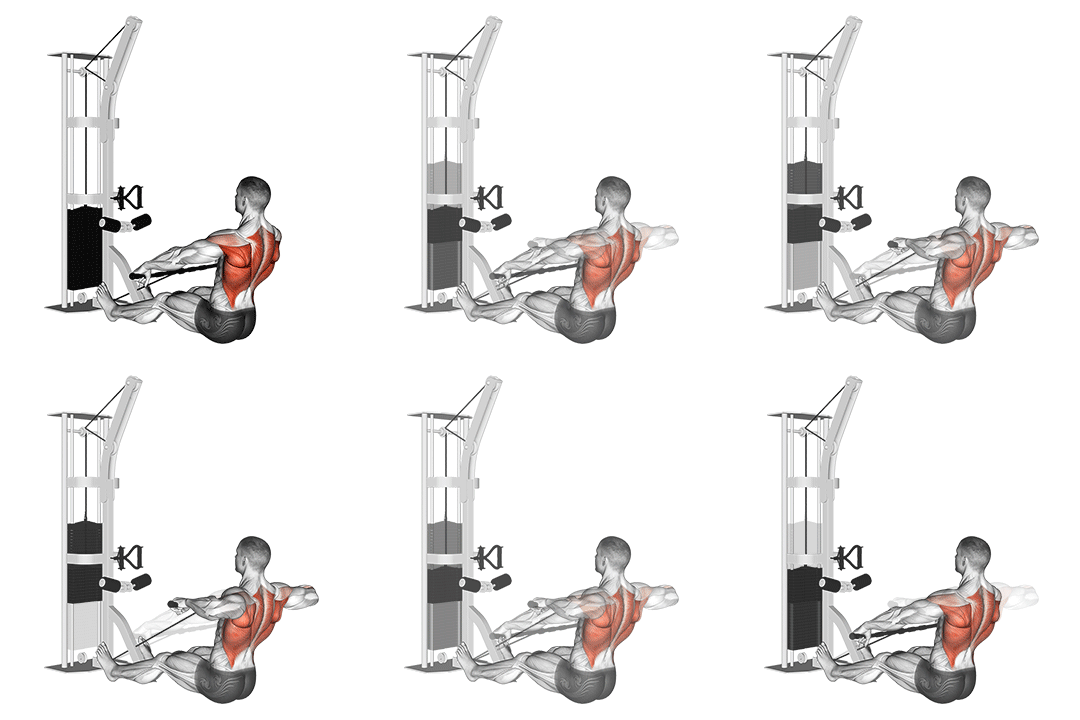
More comparisons with Dumbbell Bent Over Row
Compare More Exercises
Use our free comparison tool to analyze any two exercises head-to-head.
Compare Exercises