

Alternating Kettlebell Row vs Alternating Renegade Row: Complete Comparison Guide
Alternating Kettlebell Row vs Alternating Renegade Row — two kettlebell staples that both load the middle-back but ask very different things of your body. If you want clear guidance on which to program, you’re in the right place. I’ll break down primary and secondary muscle activation, biomechanics (force vectors, length-tension and anti-rotation demands), equipment needs, learning curves, and practical progressions with rep ranges. Use this guide to pick the exercise that matches your goals—hypertrophy, raw pulling strength, core stability, or efficient home training.
Exercise Comparison
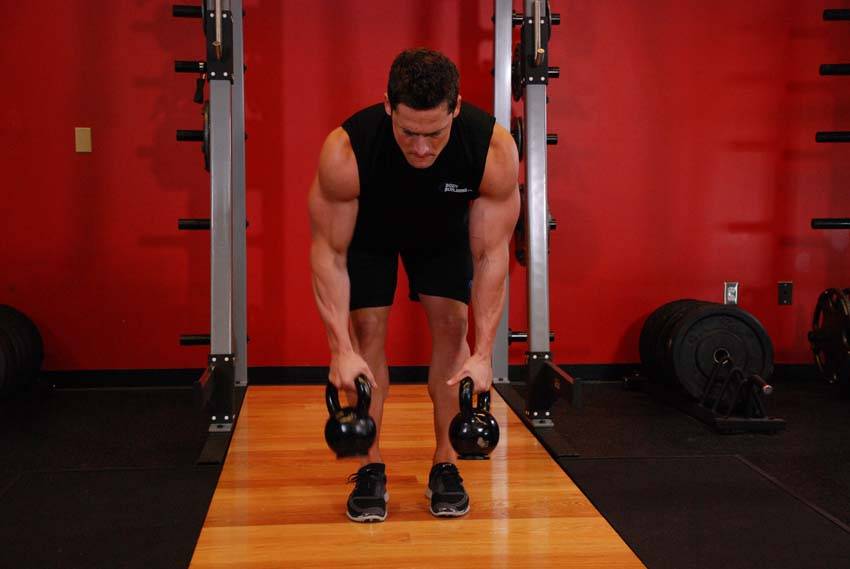
Alternating Kettlebell Row
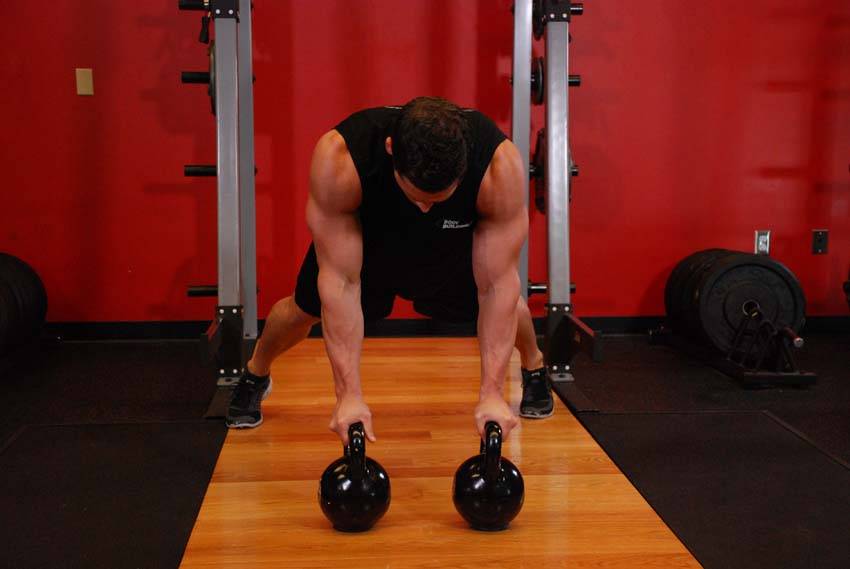
Alternating Renegade Row
Head-to-Head Comparison
| Attribute | Alternating Kettlebell Row | Alternating Renegade Row |
|---|---|---|
| Target Muscle |
Middle-back
|
Middle-back
|
| Body Part |
Back
|
Back
|
| Equipment |
Kettlebell
|
Kettlebell
|
| Difficulty |
Intermediate
|
Advanced
|
| Movement Type |
Compound
|
Compound
|
| Secondary Muscles |
2
|
5
|
Secondary Muscles Activated
Alternating Kettlebell Row
Alternating Renegade Row
Visual Comparison
Overview
Alternating Kettlebell Row vs Alternating Renegade Row — two kettlebell staples that both load the middle-back but ask very different things of your body. If you want clear guidance on which to program, you’re in the right place. I’ll break down primary and secondary muscle activation, biomechanics (force vectors, length-tension and anti-rotation demands), equipment needs, learning curves, and practical progressions with rep ranges. Use this guide to pick the exercise that matches your goals—hypertrophy, raw pulling strength, core stability, or efficient home training.
Key Differences
- Difficulty levels differ: Alternating Kettlebell Row is intermediate, while Alternating Renegade Row is advanced.
- Both exercises target the Middle-back using Kettlebell. The main differences are in their movement patterns and muscle activation angles.
Pros & Cons
Alternating Kettlebell Row
+ Pros
- Allows heavier loading for progressive overload and hypertrophy
- Simpler technique — easier learning curve and coaching cues
- Targets middle-back with strong scapular retraction and loading vector
- Requires only one kettlebell and minimal space
− Cons
- Less core and anti-rotation challenge compared to renegade row
- May place shear on lower back if hinge and brace are poor
- Fewer multi-planar stability benefits
Alternating Renegade Row
+ Pros
- Builds mid-back while simultaneously training core anti-rotation and anti-extension
- Improves shoulder stability and integrated torso-bracing under load
- Transfers well to athletic movements that require core stiffness
- Can be varied via base width and tempo for stability progression
− Cons
- Requires higher baseline core and shoulder stability — advanced difficulty
- Often needs two kettlebells and more space
- Harder to load heavily for maximal back hypertrophy
When Each Exercise Wins
The kettlebell row allows heavier, more consistent loading and a stronger horizontal pull vector that places higher peak tension on middle-back fibers. Use 6–12 reps and 3–5 sets with controlled eccentrics and full scapular retraction for best muscle growth.
For pure pulling strength the ability to progressively add load makes the kettlebell row superior. Perform lower-rep blocks (3–6 reps) with heavier bells while keeping a 30–45° hip hinge to train force production in the sagittal plane.
Beginners can learn hip hinge mechanics, scapular control, and safe loading more quickly with the kettlebell row. It requires less core and shoulder stability, so you can focus on technique and progressive overload without excessive failure risk.
Needing only one kettlebell and minimal floor space makes the kettlebell row the more practical home option. If you have two bells and good core control, renegade rows add value, but most home setups favor the single-bell row.
Frequently Asked Questions
Can I do both Alternating Kettlebell Row and Alternating Renegade Row in the same workout?
Yes. Use the kettlebell row early as a heavy primary pull (3–5 sets of 4–8) and add 2–3 sets of renegade rows later for stability and conditioning. Keep total volume in check to avoid fatigue-driven technique breakdown.
Which exercise is better for beginners?
Alternating Kettlebell Row is better for beginners because it teaches the hip hinge and scapular retraction with lower core demands. Start with light-to-moderate load and focus on a neutral spine and driving the elbow to the hip.
How do the muscle activation patterns differ?
Kettlebell rows produce high, focused mid-back activation through a horizontal pull and concentric elbow flexion, with lats and biceps assisting. Renegade rows distribute load across the trunk — mid-back activation per arm is slightly reduced while abdominals, obliques, chest, and triceps show increased stabilizer activity due to anti-rotation and plank mechanics.
Can Alternating Renegade Row replace Alternating Kettlebell Row?
Not completely. Renegade rows are a strong supplement for core and shoulder stability but don’t easily match the heavy loading potential of kettlebell rows for middle-back hypertrophy and maximal pulling strength. Use renegade rows alongside rows rather than as a full substitute when your goal is back size or maximal pulling force.
Expert Verdict
If your goal is middle-back hypertrophy or increasing raw pulling strength, program the Alternating Kettlebell Row as a primary row: load it heavier, use tight hip-hinge mechanics, and train 6–12 reps for size or 3–6 reps for strength. Use Alternating Renegade Row when you need integrated core stability, anti-rotation capacity, or want a conditioning-strength crossover — it’s an advanced choice that emphasizes torso stiffness and shoulder stability over heavy back loading. Pair them strategically: prioritize kettlebell rows for volume/strength blocks and insert renegade rows as a supplemental anti-rotation and stability tool during core or conditioning sessions.
Also Compare
More comparisons with Alternating Kettlebell Row
More comparisons with Alternating Renegade Row
Compare More Exercises
Use our free comparison tool to analyze any two exercises head-to-head.
Compare Exercises