

Alternating Kettlebell Row vs Bent Over Two-Dumbbell Row: Complete Comparison Guide
Alternating Kettlebell Row vs Bent Over Two-Dumbbell Row — two solid compound back moves that look similar but load your middle-back and core very differently. If you want clear choices for muscle growth, strength, and ease of use, this comparison walks you through technique cues, biomechanics, muscle activation, equipment needs, and sensible progressions. You’ll get specific rep ranges, torso angles, and coaching tips so you can pick the one that fits your program and reduce risk of lower-back strain.
Exercise Comparison
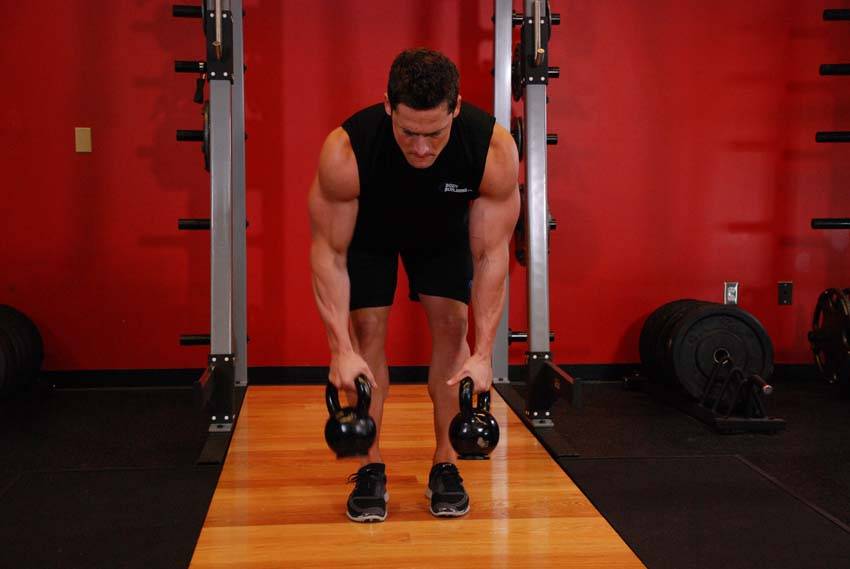
Alternating Kettlebell Row
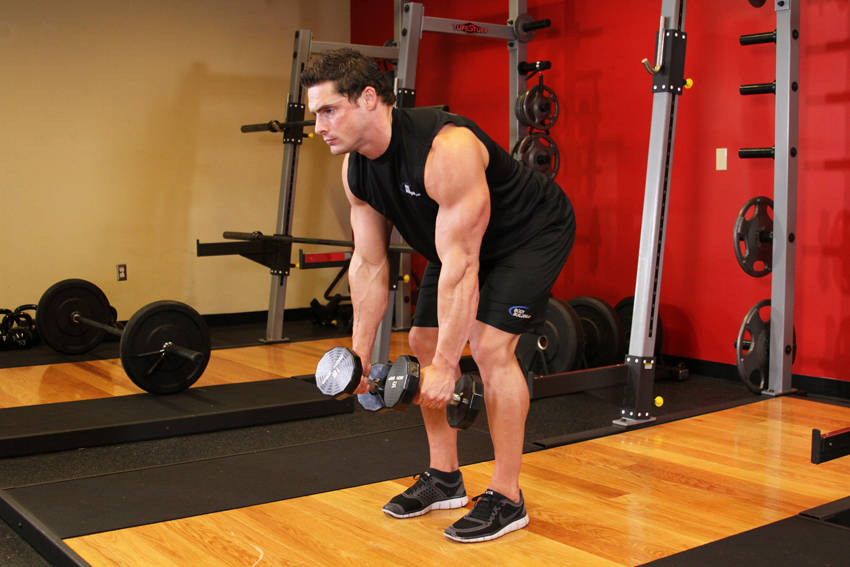
Bent Over Two-dumbbell Row
Head-to-Head Comparison
| Attribute | Alternating Kettlebell Row | Bent Over Two-dumbbell Row |
|---|---|---|
| Target Muscle |
Middle-back
|
Middle-back
|
| Body Part |
Back
|
Back
|
| Equipment |
Kettlebell
|
Dumbbell
|
| Difficulty |
Intermediate
|
Intermediate
|
| Movement Type |
Compound
|
Compound
|
| Secondary Muscles |
2
|
3
|
Secondary Muscles Activated
Alternating Kettlebell Row
Bent Over Two-dumbbell Row
Visual Comparison
Overview
Alternating Kettlebell Row vs Bent Over Two-Dumbbell Row — two solid compound back moves that look similar but load your middle-back and core very differently. If you want clear choices for muscle growth, strength, and ease of use, this comparison walks you through technique cues, biomechanics, muscle activation, equipment needs, and sensible progressions. You’ll get specific rep ranges, torso angles, and coaching tips so you can pick the one that fits your program and reduce risk of lower-back strain.
Key Differences
- Equipment differs: Alternating Kettlebell Row uses Kettlebell, while Bent Over Two-dumbbell Row requires Dumbbell.
Pros & Cons
Alternating Kettlebell Row
+ Pros
- Great anti-rotation challenge that builds core stability and unilateral control
- Compact equipment needs: effective with a single kettlebell
- Allows a longer horizontal pull path for increased ROM on each side
- Reduced peak bilateral spinal loading compared to heavy two-handed rows
− Cons
- Limited microloading increments unless you own many kettlebell sizes
- Higher technical demand for torso control and timing
- Can induce asymmetries if rep counts or loads aren’t balanced
Bent Over Two-dumbbell Row
+ Pros
- Easier to load progressively and train heavy for strength (3–6 reps)
- Symmetrical pattern reduces rotational stress and simplifies coaching cues
- Strong time-under-tension options for hypertrophy (6–12 reps)
- Consistent bilateral activation of spinal erectors and scapular retractors
− Cons
- Higher compressive load on the lumbar spine if form breaks down
- Requires a matched pair of dumbbells for best balance
- Less anti-rotational/core challenge compared to unilateral variations
When Each Exercise Wins
The two-dumbbell row lets you sustain heavier bilateral loads and longer time under tension (6–12 reps), creating more mechanical tension across the middle-back. Its stable posture lets you push progressive overload in small increments for consistent muscle growth.
Symmetrical loading supports maximal force production and heavier sets (3–6 reps) with less rotational limitation, making it better for building raw pulling strength and transferring to heavier compound lifts.
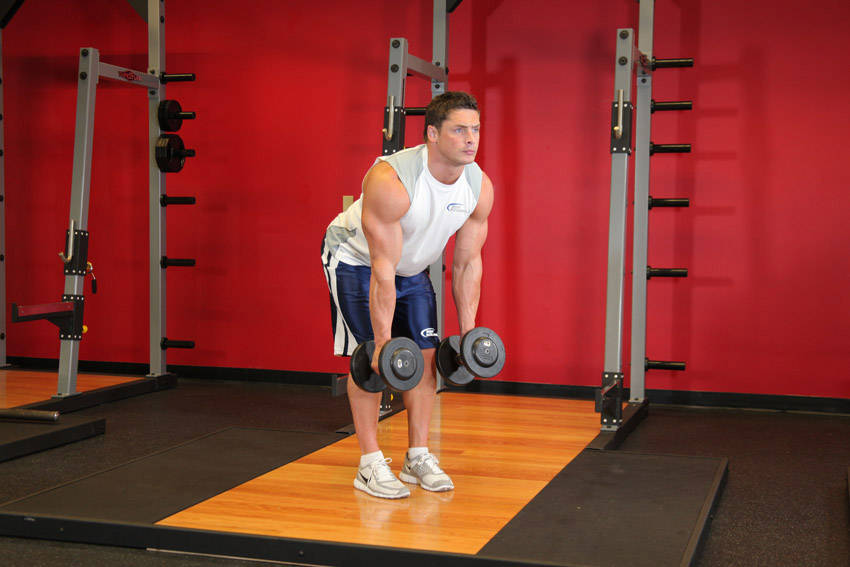
A bilateral dumbbell row is easier to teach: maintain a 30–45° torso, neutral spine, and drive elbows to the ribs. It removes anti-rotation complexity so beginners can learn scapular retraction and bracing before progressing to unilateral patterns.
If you have limited equipment or only one implement, a single kettlebell provides unilateral variety and core challenge. The kettlebell’s handle also enables different grips and loading options when dumbbell pairs aren’t available.
Frequently Asked Questions
Can I do both Alternating Kettlebell Row and Bent Over Two-Dumbbell Row in the same workout?
Yes. Pair them strategically: use the two-dumbbell row as a primary heavy set (3–6 or 6–10 reps) and the alternating kettlebell row as an accessory for unilateral volume (8–12 reps per side). That combination builds both bilateral strength and unilateral stability without excessive overlap.
Which exercise is better for beginners?
Bent Over Two-Dumbbell Row is generally better for beginners because it reduces rotational demand and simplifies technical coaching. Start with moderate weight, focus on a hip hinge and neutral spine (torso ~30–45° to the floor), and learn scapular retraction before adding unilateral complexity.
How do the muscle activation patterns differ?
The kettlebell alternate increases anti-rotation core and unilateral shoulder stabilizer activation while producing repeated unilateral concentric contractions. The two-dumbbell row synchronizes both sides, raising bilateral mechanical tension on the scapular retractors and spinal erectors with less rotational torque.
Can Bent Over Two-Dumbbell Row replace Alternating Kettlebell Row?
If your goal is pure strength or hypertrophy and you have access to dumbbells, the two-dumbbell row can replace the kettlebell variation. However, you’ll miss the anti-rotation and unilateral core benefits the alternating kettlebell row provides, so include unilateral work elsewhere if you omit it.
Expert Verdict
Both moves deserve a place in your program depending on the goal. Use the Bent Over Two-Dumbbell Row when you want straightforward progression, heavier bilateral loading, and maximized time under tension for hypertrophy and strength — hinge at the hips so your torso sits roughly 30–45° above horizontal and pull the elbows back while keeping the spine neutral. Choose the Alternating Kettlebell Row when you need unilateral development, anti-rotation core work, or limited equipment: brace the core, prevent torso twist, and emphasize a full scapular retraction each rep. Rotate both into your blocks to balance force production and core control.
Also Compare
More comparisons with Alternating Kettlebell Row
More comparisons with Bent Over Two-dumbbell Row
Compare More Exercises
Use our free comparison tool to analyze any two exercises head-to-head.
Compare Exercises