

Alternating Renegade Row vs Two-Arm Kettlebell Row: Complete Comparison Guide
Alternating Renegade Row vs Two-Arm Kettlebell Row are two kettlebell-driven back builders that load your middle-back differently. You’ll get clear comparisons of muscle activation, biomechanics, required equipment, learning curve, and practical technique cues (hip hinge, 45° torso angles, elbow path). I’ll show rep ranges and progression options, point out which lifts increase core stability versus pure load capacity, and give specific programming recommendations so you can pick the exercise that best matches your goals, current strength, and available gear.
Exercise Comparison
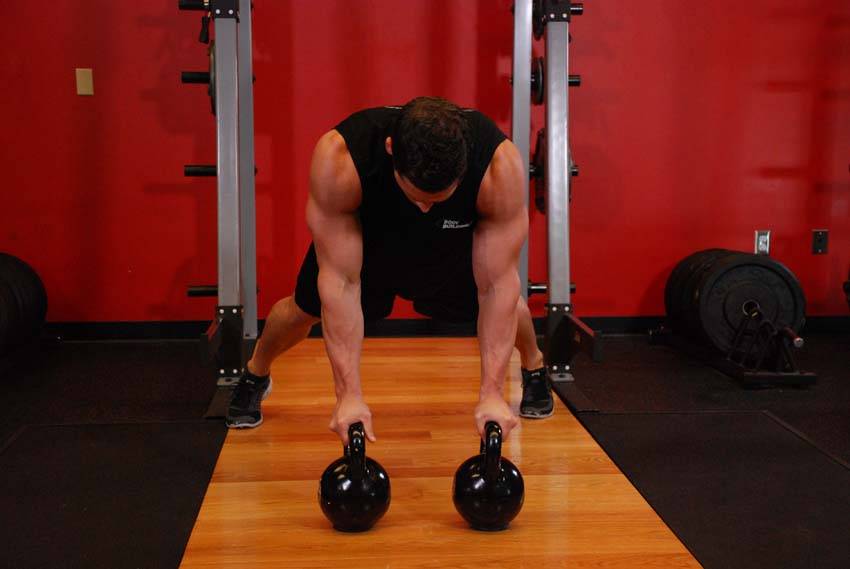
Alternating Renegade Row
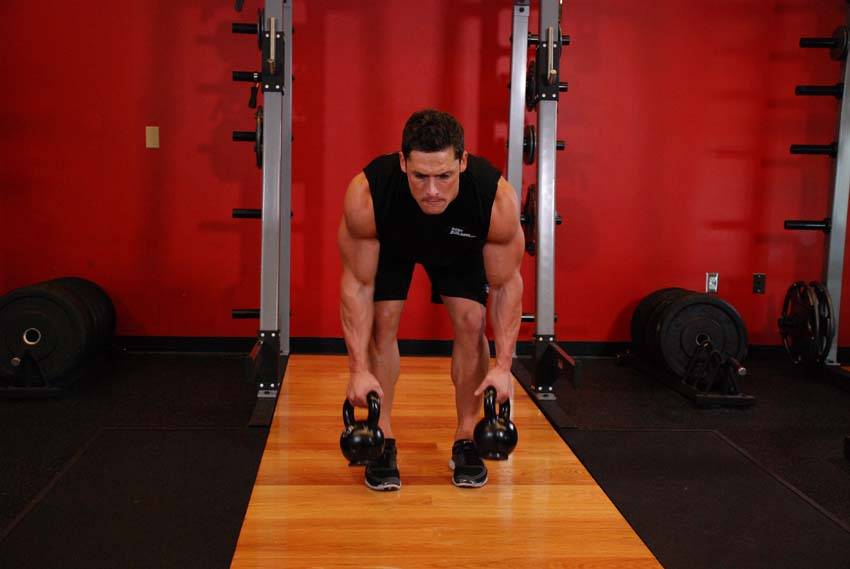
Two-arm Kettlebell Row
Head-to-Head Comparison
| Attribute | Alternating Renegade Row | Two-arm Kettlebell Row |
|---|---|---|
| Target Muscle |
Middle-back
|
Middle-back
|
| Body Part |
Back
|
Back
|
| Equipment |
Kettlebell
|
Kettlebell
|
| Difficulty |
Advanced
|
Intermediate
|
| Movement Type |
Compound
|
Compound
|
| Secondary Muscles |
5
|
2
|
Secondary Muscles Activated
Alternating Renegade Row
Two-arm Kettlebell Row
Visual Comparison
Overview
Alternating Renegade Row vs Two-Arm Kettlebell Row are two kettlebell-driven back builders that load your middle-back differently. You’ll get clear comparisons of muscle activation, biomechanics, required equipment, learning curve, and practical technique cues (hip hinge, 45° torso angles, elbow path). I’ll show rep ranges and progression options, point out which lifts increase core stability versus pure load capacity, and give specific programming recommendations so you can pick the exercise that best matches your goals, current strength, and available gear.
Key Differences
- Difficulty levels differ: Alternating Renegade Row is advanced, while Two-arm Kettlebell Row is intermediate.
- Both exercises target the Middle-back using Kettlebell. The main differences are in their movement patterns and muscle activation angles.
Pros & Cons
Alternating Renegade Row
+ Pros
- Exceptional anti-rotation core activation and anterior chain integration
- Unilateral rowing pattern reduces left-right imbalances
- Simultaneously trains plank stability and middle-back activation
- Improves shoulder stability and scapular control under load
− Cons
- Hard to load heavily—external weight is limited by stability
- High technical demand: plank position, hip alignment, and wrist stress
- Core fatigue can limit back stimulus and reduce rowing quality
Two-arm Kettlebell Row
+ Pros
- Easier to load and progress for muscle hypertrophy and strength
- Simpler technique—focus on hinge, scapular retraction, and elbow drive
- Requires less motor control and usually only one kettlebell
- More direct middle-back and lat stimulation per rep
− Cons
- Lower core and anti-rotation demand compared with renegade rows
- Less carryover to plank-based stability and anti-rotation strength
- If done with poor hinge, can strain the lower back
When Each Exercise Wins
Two-Arm Kettlebell Row wins because you can apply heavier loads and control time under tension (6–12 reps) with a stable torso angle of ~30–45°, optimizing length-tension in the middle-back. That direct loading produces more mechanical tension and sets up progressive overload for muscle growth.
Two-Arm Row allows heavier, lower-rep work (3–6 reps) and clearer load progression, making it better for building raw pulling strength. The bilateral force vector reduces nuisance stability limits so you can target force production.
Two-Arm Row has a gentler learning curve—teach hip hinge, neutral spine, and a straight elbow path—so beginners can safely load and progress. Renegade Row requires established core control and wrist tolerance before attempting.
Two-Arm Row is the home-friendly pick because it works well with a single kettlebell, needs less coordination, and scales by increasing reps or weight. Unless you specifically want anti-rotation core work and have two kettlebells, Two-Arm covers more goals with less gear.
Frequently Asked Questions
Can I do both Alternating Renegade Row and Two-Arm Kettlebell Row in the same workout?
Yes. Start with Two-Arm Kettlebell Rows as your primary heavy set (3–12 reps depending on goal), then use Alternating Renegade Rows as a finisher (6–10 reps each side) to tax anti-rotation and shoulder stability without chasing top-end load.
Which exercise is better for beginners?
Two-Arm Kettlebell Row is better for beginners because it requires fewer coordination demands and scales easily with one kettlebell. Teach the hip hinge, neutral spine, and scapular retraction before introducing renegade rows.
How do the muscle activation patterns differ?
Renegade Row blends a horizontal pull with high anti-rotation torque, increasing abdominal and oblique activation while still hitting the middle-back. Two-Arm Row produces a more symmetrical pull with greater absolute load on the rhomboids, middle traps, and lats, favoring direct posterior chain tension.
Can Two-Arm Kettlebell Row replace Alternating Renegade Row?
If your goal is middle-back size or strength, Two-Arm Row can replace Renegade Row because it allows progressive overload. Keep Renegade Rows in your program when you need core anti-rotation capacity and shoulder stability—two different training outcomes.
Expert Verdict
Use the Two-Arm Kettlebell Row when your priority is middle-back muscle growth or strength because it lets you load heavier, maintain a controlled 30–45° torso hinge, and hit 3–6 reps for strength or 6–12 for hypertrophy. Choose the Alternating Renegade Row when you need integrated anti-rotation core strength, shoulder stability, and unilateral control; perform it for 6–10 quality reps with strict plank bracing. Program both: prioritize Two-Arm rows for progressive overload and slot Renegade rows as accessory work for core resilience and scapular control.
Also Compare
More comparisons with Alternating Renegade Row
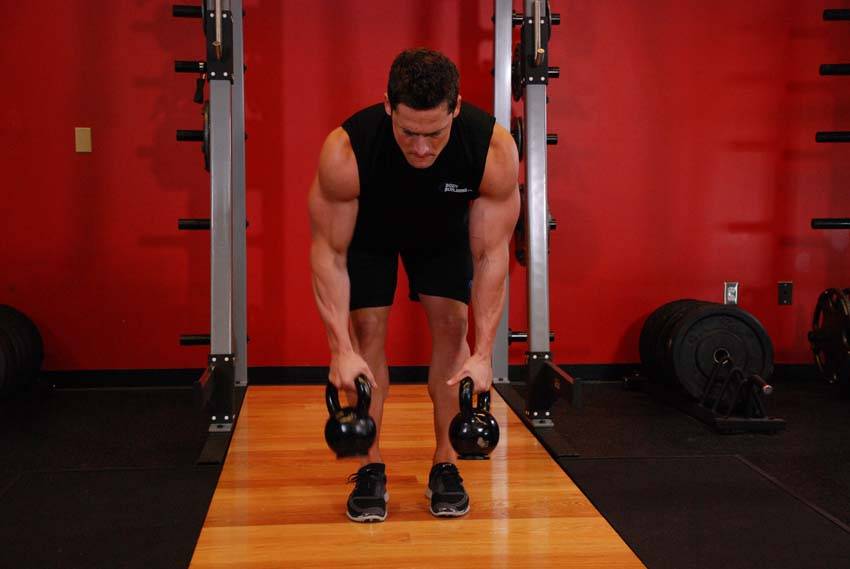
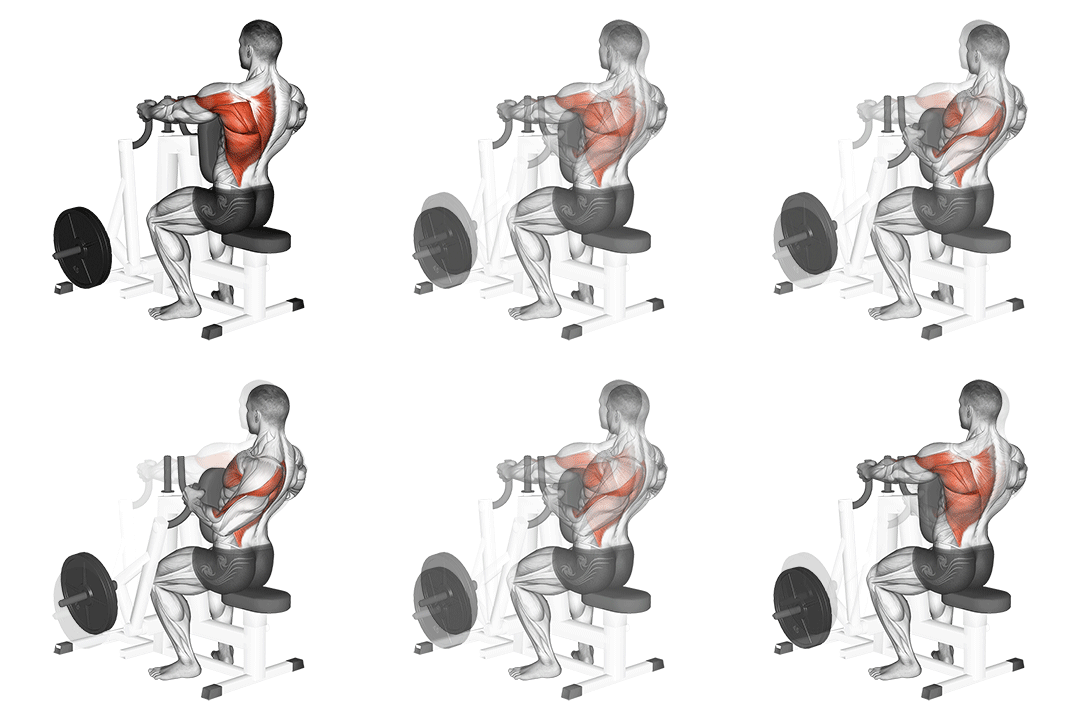
More comparisons with Two-arm Kettlebell Row
Compare More Exercises
Use our free comparison tool to analyze any two exercises head-to-head.
Compare Exercises