

Ankle Circles vs Band Single Leg Reverse Calf Raise: Complete Comparison Guide
Ankle Circles vs Band Single Leg Reverse Calf Raise — two calf-focused moves that serve very different purposes. You’ll get a clear comparison of muscle activation, equipment needs, difficulty, and when to program each exercise. I’ll walk you through biomechanics (how the gastrocnemius, soleus, and ankle stabilizers respond), give technique cues for safer reps, and recommend rep ranges and progressions so you can pick the right move for mobility, hypertrophy, or strength work.
Exercise Comparison
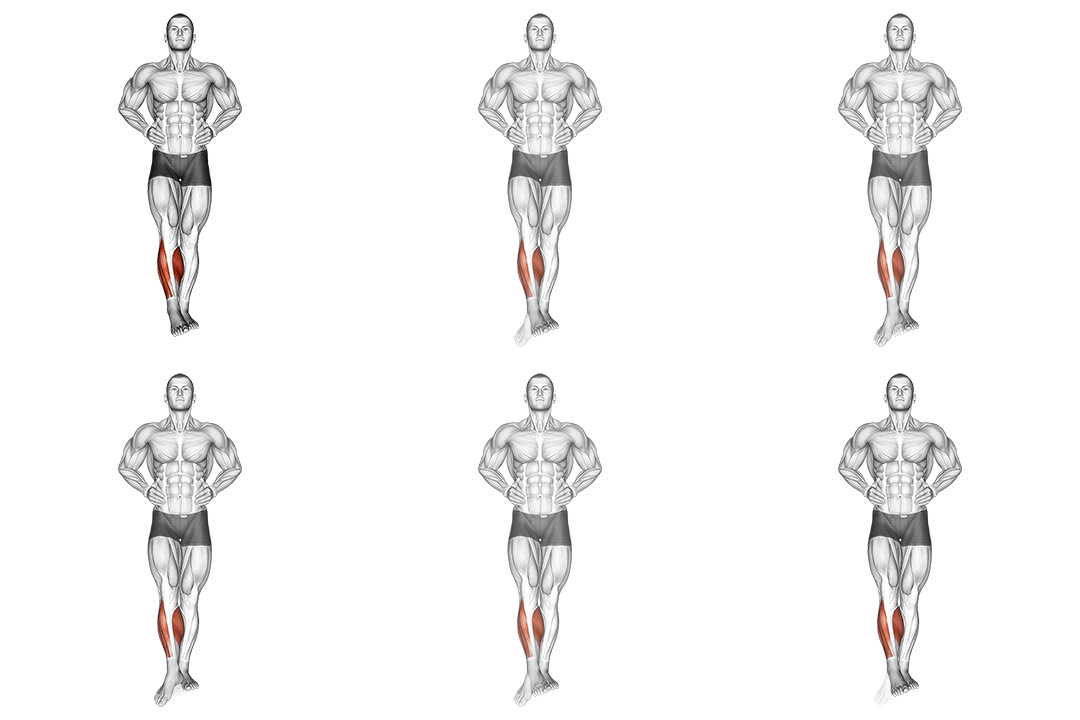
Ankle Circles
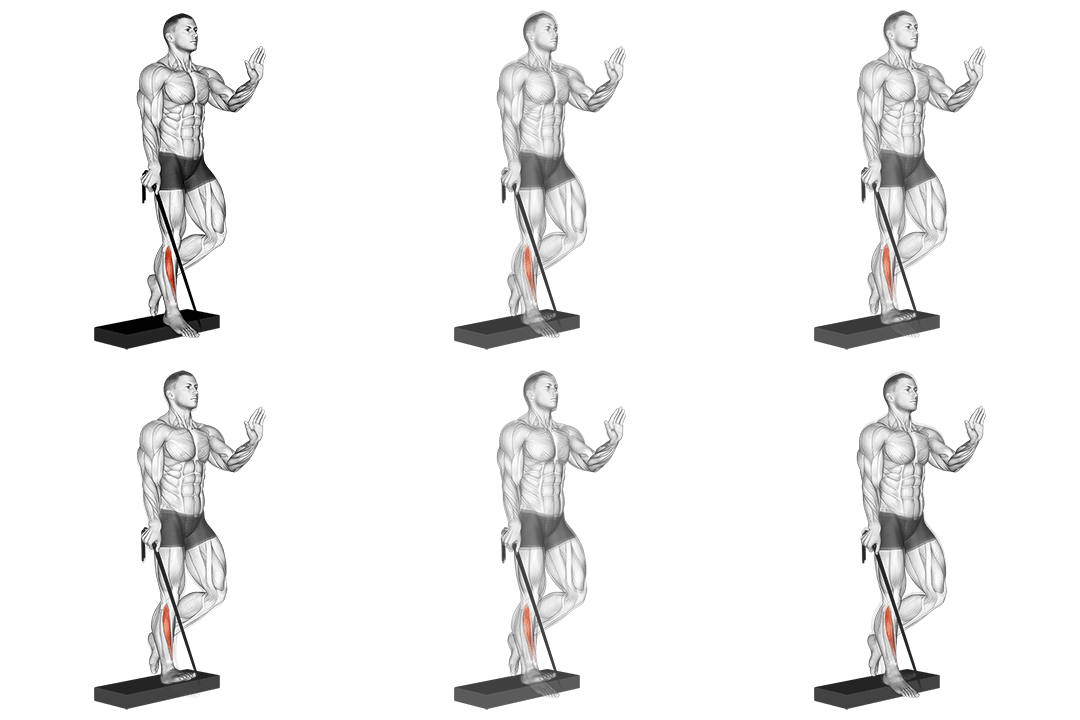
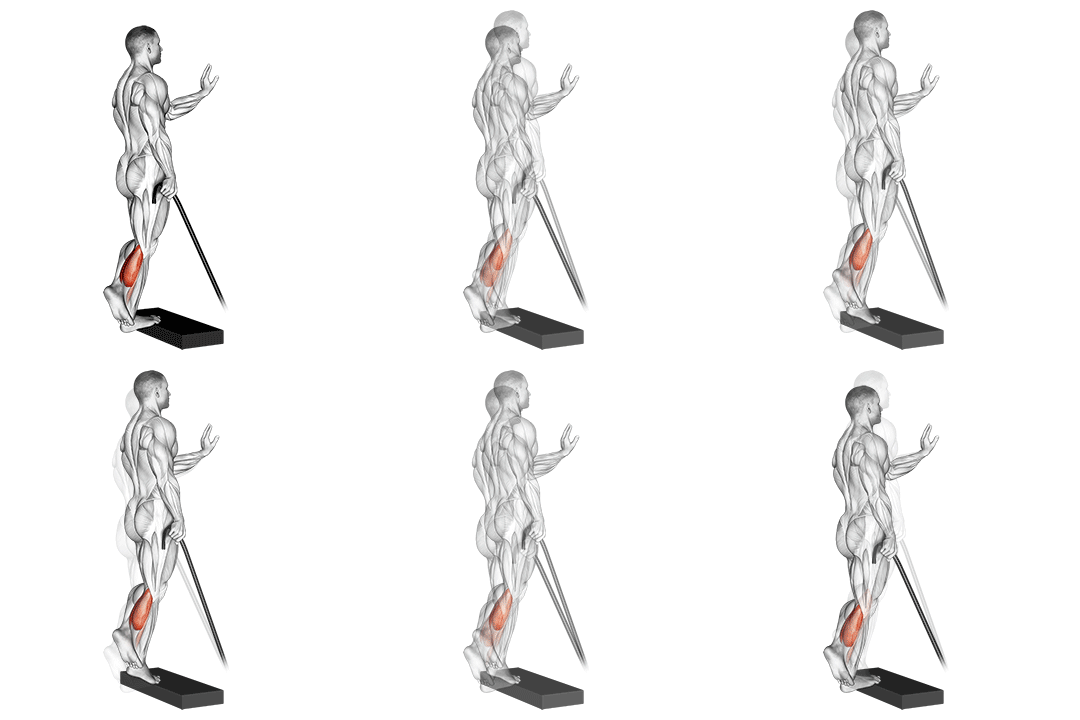
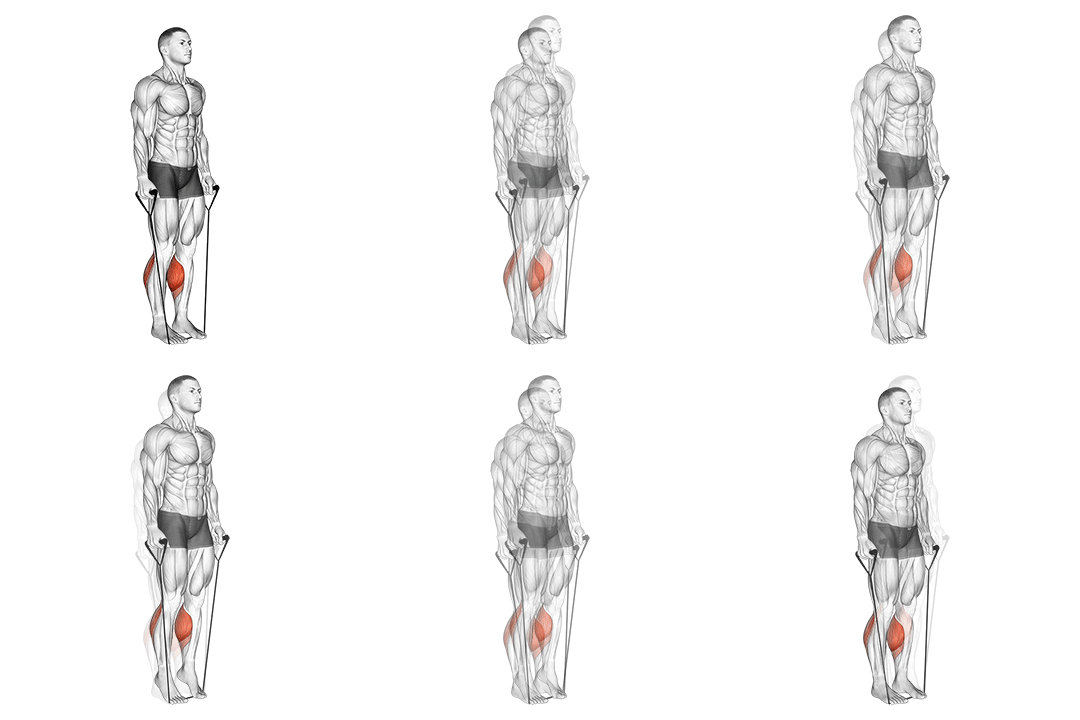
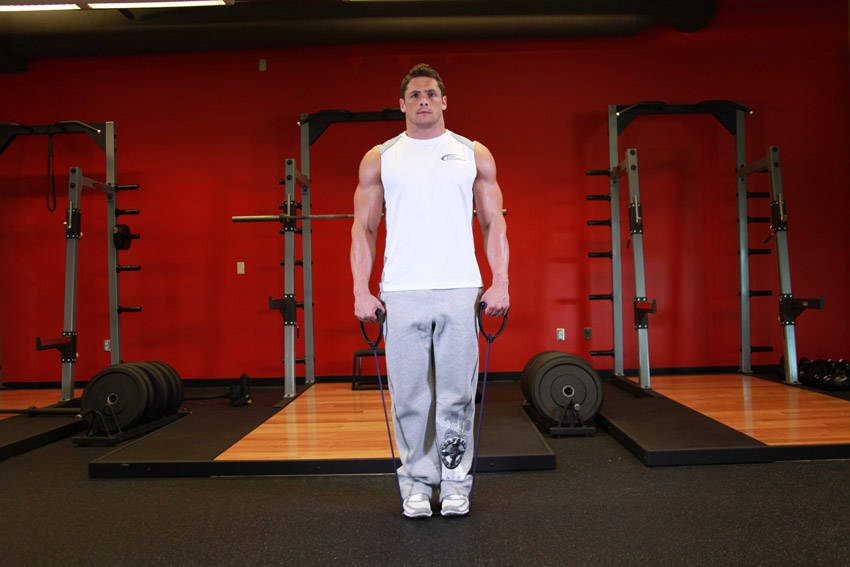
Band Single Leg Reverse Calf Raise
Head-to-Head Comparison
| Attribute | Ankle Circles | Band Single Leg Reverse Calf Raise |
|---|---|---|
| Target Muscle |
Calves
|
Calves
|
| Body Part |
Lower-legs
|
Lower-legs
|
| Equipment |
Body-weight
|
Band
|
| Difficulty |
Beginner
|
Beginner
|
| Movement Type |
Isolation
|
Isolation
|
| Secondary Muscles |
1
|
2
|
Secondary Muscles Activated
Ankle Circles
Band Single Leg Reverse Calf Raise
Visual Comparison
Overview
Ankle Circles vs Band Single Leg Reverse Calf Raise — two calf-focused moves that serve very different purposes. You’ll get a clear comparison of muscle activation, equipment needs, difficulty, and when to program each exercise. I’ll walk you through biomechanics (how the gastrocnemius, soleus, and ankle stabilizers respond), give technique cues for safer reps, and recommend rep ranges and progressions so you can pick the right move for mobility, hypertrophy, or strength work.
Key Differences
- Equipment differs: Ankle Circles uses Body-weight, while Band Single Leg Reverse Calf Raise requires Band.
Pros & Cons
Ankle Circles
+ Pros
- Improves ankle mobility and dorsiflexion/plantarflexion control
- Boosts ankle stabilizer activation for balance and injury prevention
- No equipment or setup required — great for warm-ups and rehab
- Very low impact and safe for most populations
− Cons
- Minimal mechanical overload — not ideal alone for muscle growth
- Limited capacity to progress strength beyond motor control work
- Doesn’t significantly engage hamstrings or glutes
Band Single Leg Reverse Calf Raise
+ Pros
- Provides measurable resistance for hypertrophy and strength
- Single-leg stance increases calf and stabilizer activation (~10–20% higher than bilateral)
- Engages posterior chain (hamstrings and glutes) for fuller lower-leg integration
- Easy to scale by changing band tension, tempo, and reps
− Cons
- Requires a band and proper setup
- Higher demand on balance and coordination
- Greater potential for Achilles or calf strain if overloaded or rushed
When Each Exercise Wins
The band provides progressive resistance and allows meaningful eccentric loading — both key for muscle growth. Use 8–20 reps, 3–4 sets, and increase band tension over time to drive hypertrophy.
Single-leg loading increases force per limb and the band lets you manipulate load and tempo (slow eccentrics). Perform lower-rep sets with slower eccentrics (6–8 reps, 3–5 sets) to emphasize strength.
They teach ankle control and recruit stabilizers with minimal load, lowering injury risk. Start with 1–3 sets of 10–20 circles per direction to build motor control before adding resistance.
No equipment and zero setup make them ideal for quick home sessions or travel. If you own a band, add the Band Single Leg Reverse Calf Raise to progress, but Ankle Circles are universally accessible.
Frequently Asked Questions
Can I do both Ankle Circles and Band Single Leg Reverse Calf Raise in the same workout?
Yes — start with Ankle Circles as a warm-up and neuromuscular primer (1–2 sets) to improve ankle ROM, then perform banded single-leg raises for the main calf work. Sequencing mobility before loading improves force production and reduces compensations.
Which exercise is better for beginners?
Ankle Circles are better for absolute beginners because they teach ankle control without loading. Once control is established, introduce banded single-leg raises progressively to build strength and muscle.
How do the muscle activation patterns differ?
Ankle Circles create continuous, low-amplitude activation across the ankle stabilizers and calf muscles in multiple planes. Band Single Leg Reverse Calf Raises produce larger concentric and eccentric forces in the plantarflexors, with peak activation near plantarflexion and additional posterior chain recruitment during single-leg stabilization.
Can Band Single Leg Reverse Calf Raise replace Ankle Circles?
Not entirely — the banded reverse raise can replace some strengthening and mobility needs, but it doesn’t replicate the multi-directional stabilizer activation of ankle circles. For best results, pair both: circles for mobility/activation and banded raises for load and progression.
Expert Verdict
Use Ankle Circles when your priority is ankle mobility, motor control, or low-load rehab. They strengthen ankle stabilizers, improve dorsiflexion/plantarflexion coordination, and are perfect for warm-ups (1–3 sets of 10–20 reps per direction). Choose Band Single Leg Reverse Calf Raises when you want measurable load for muscle growth or strength — perform 3–4 sets of 8–20 reps per leg, emphasize a 2–4 s eccentric, and increase band tension progressively. For balanced programming, start with Ankle Circles for activation, then add banded single-leg raises to drive progressive overload and integrate the posterior chain.
Also Compare
More comparisons with Ankle Circles
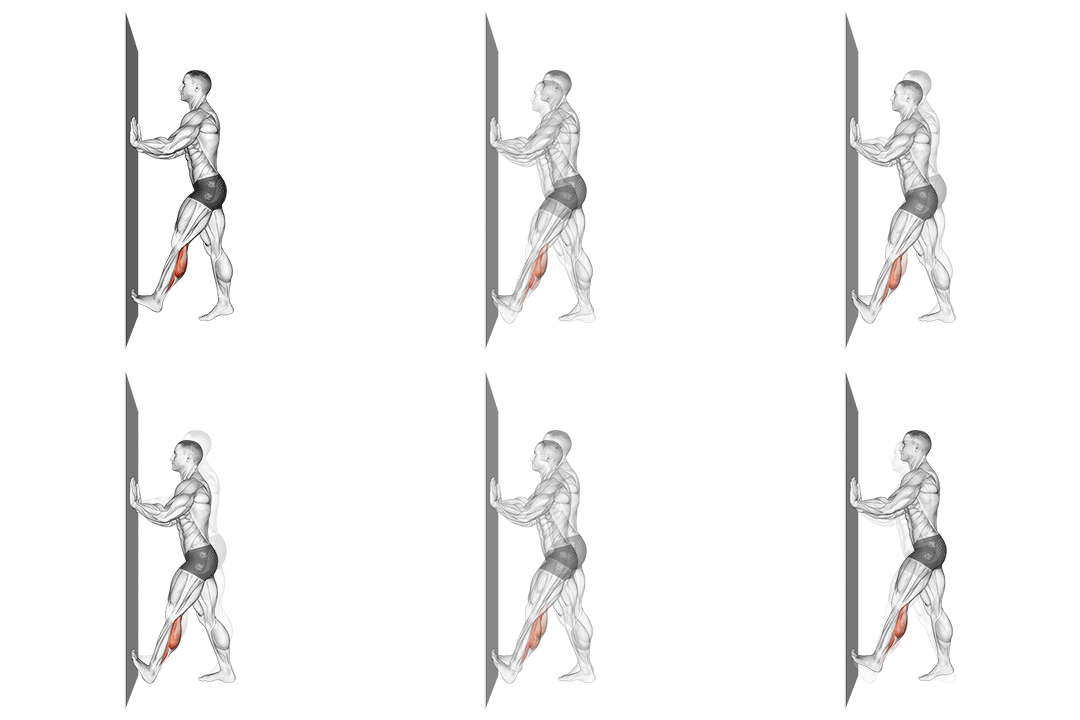
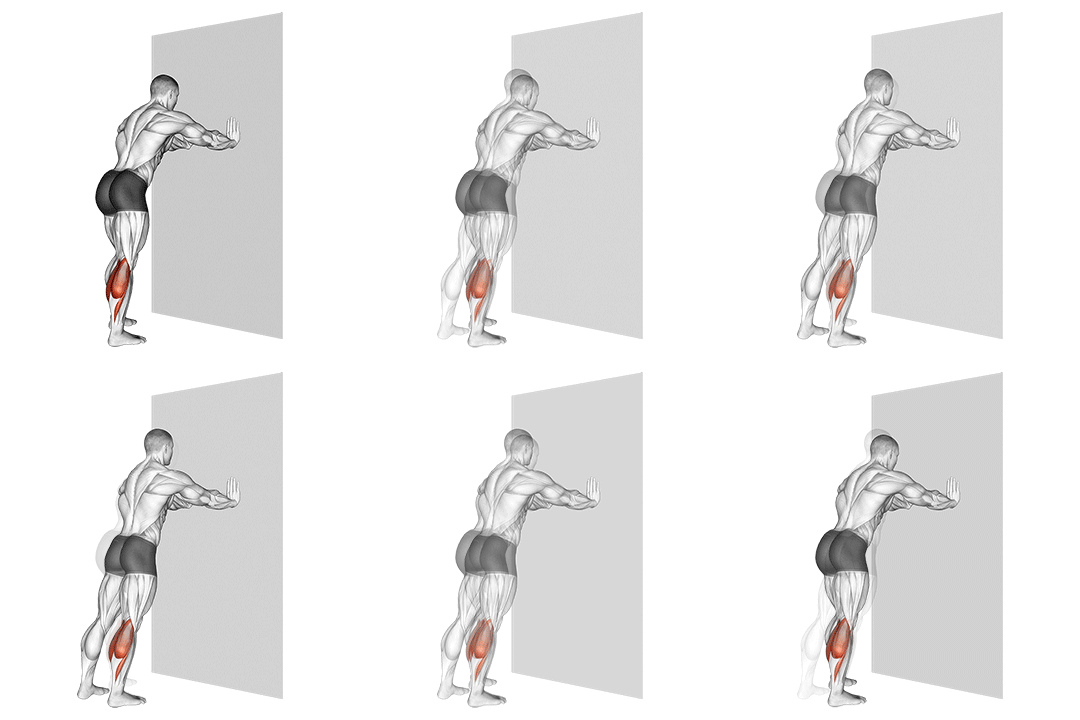
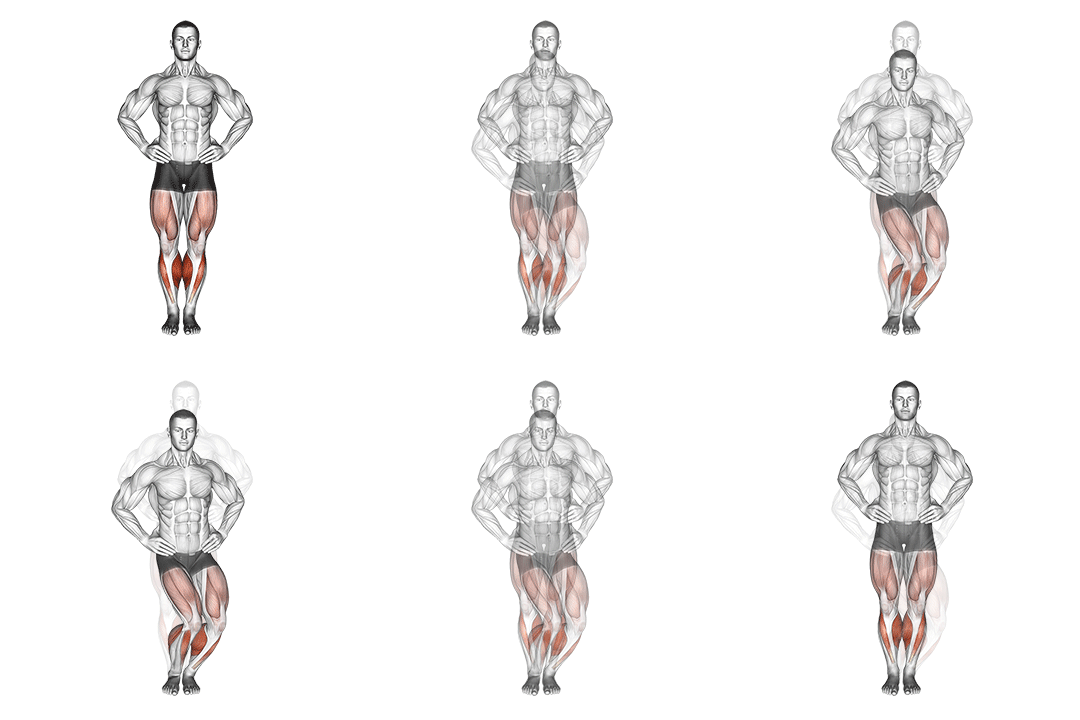
More comparisons with Band Single Leg Reverse Calf Raise
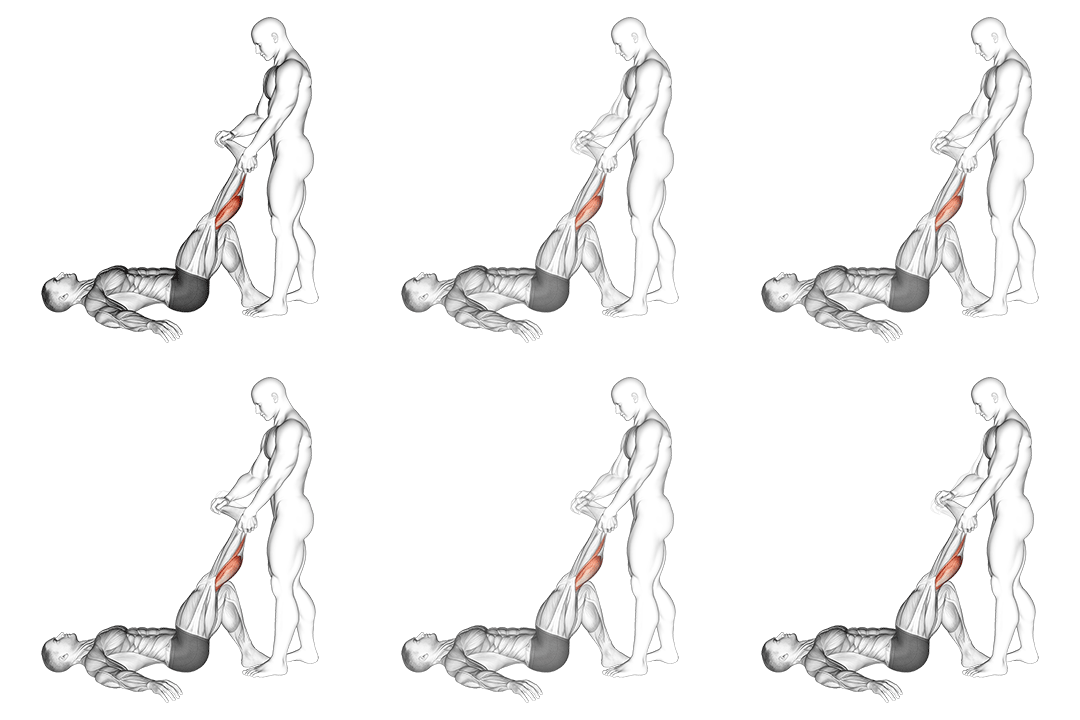
Compare More Exercises
Use our free comparison tool to analyze any two exercises head-to-head.
Compare Exercises