

Ankle Circles vs Calf Push Stretch With Hands Against Wall: Complete Comparison Guide
Ankle Circles vs Calf Push Stretch With Hands Against Wall is a practical pairing when you want better calf function and ankle mobility. You’ll get a clear breakdown of which exercise activates the calf more, how each affects ankle stabilizers and hamstrings, and exactly how to perform them with technique cues (angles, rep ranges, and tempo). Read this if you want actionable guidance for mobility, warm-ups, or low-load rehab so you can pick the right move for your goal and avoid common mistakes.
Exercise Comparison
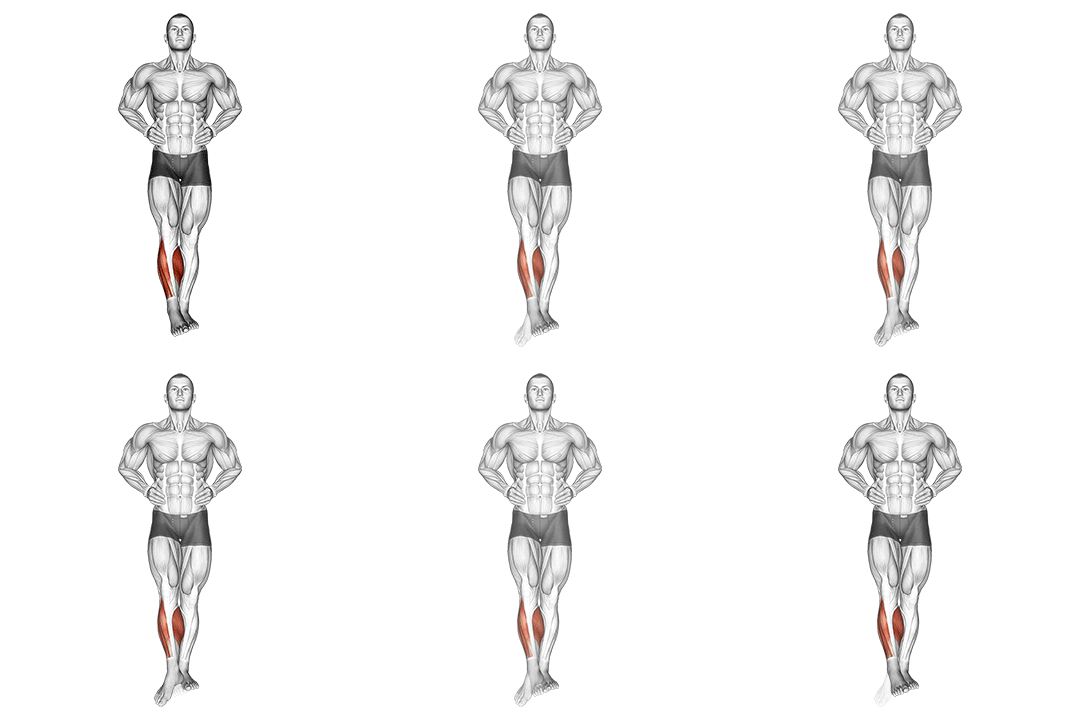
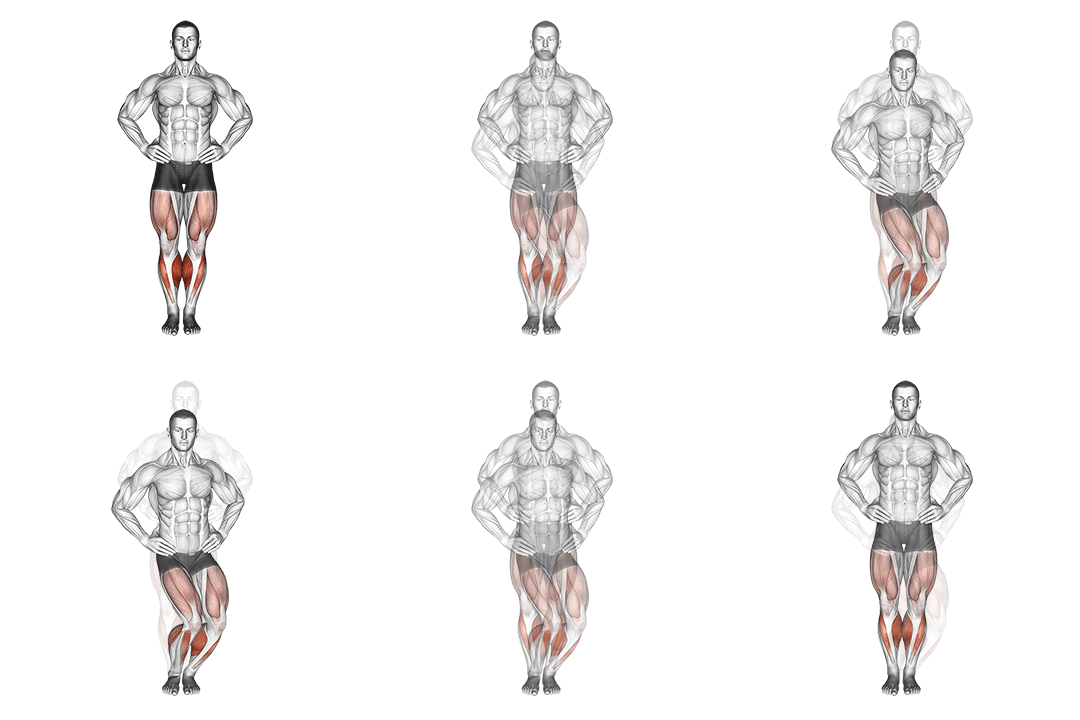
Ankle Circles
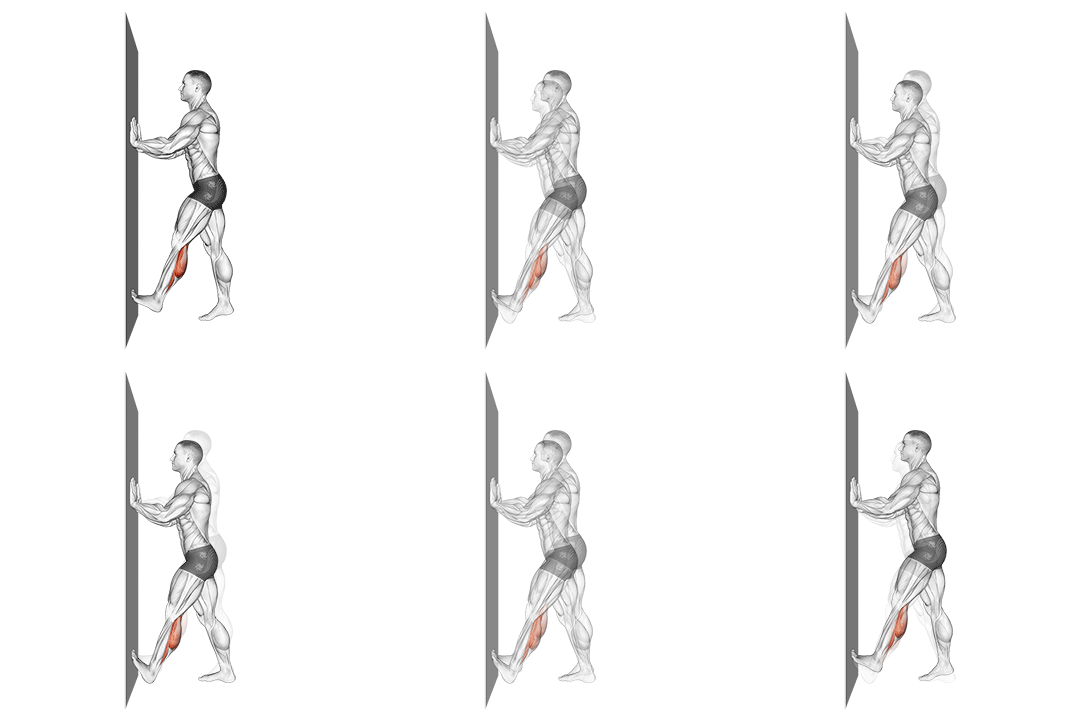
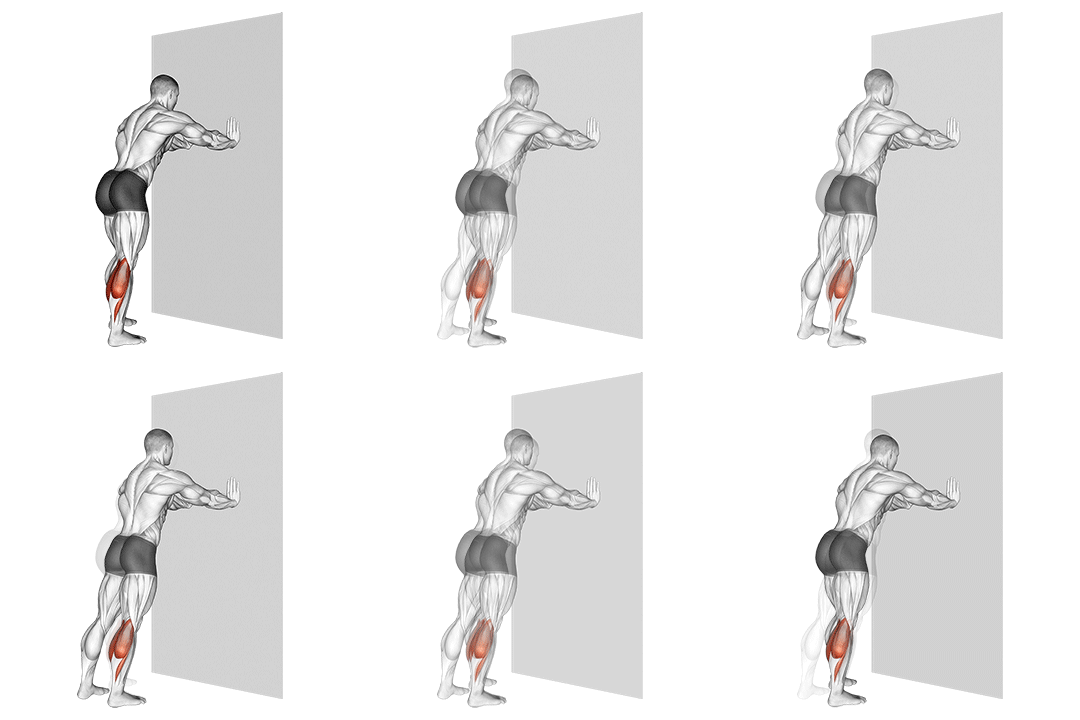
Calf Push Stretch With Hands Against Wall
Head-to-Head Comparison
| Attribute | Ankle Circles | Calf Push Stretch With Hands Against Wall |
|---|---|---|
| Target Muscle |
Calves
|
Calves
|
| Body Part |
Lower-legs
|
Lower-legs
|
| Equipment |
Body-weight
|
Body-weight
|
| Difficulty |
Beginner
|
Beginner
|
| Movement Type |
Isolation
|
Isolation
|
| Secondary Muscles |
1
|
1
|
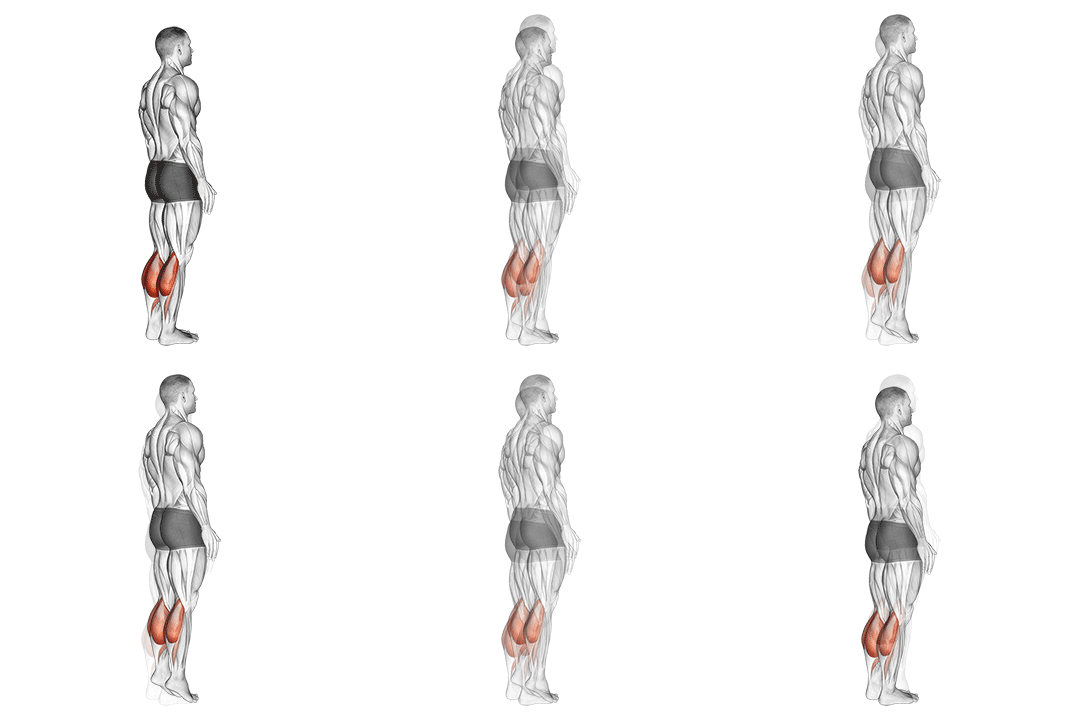
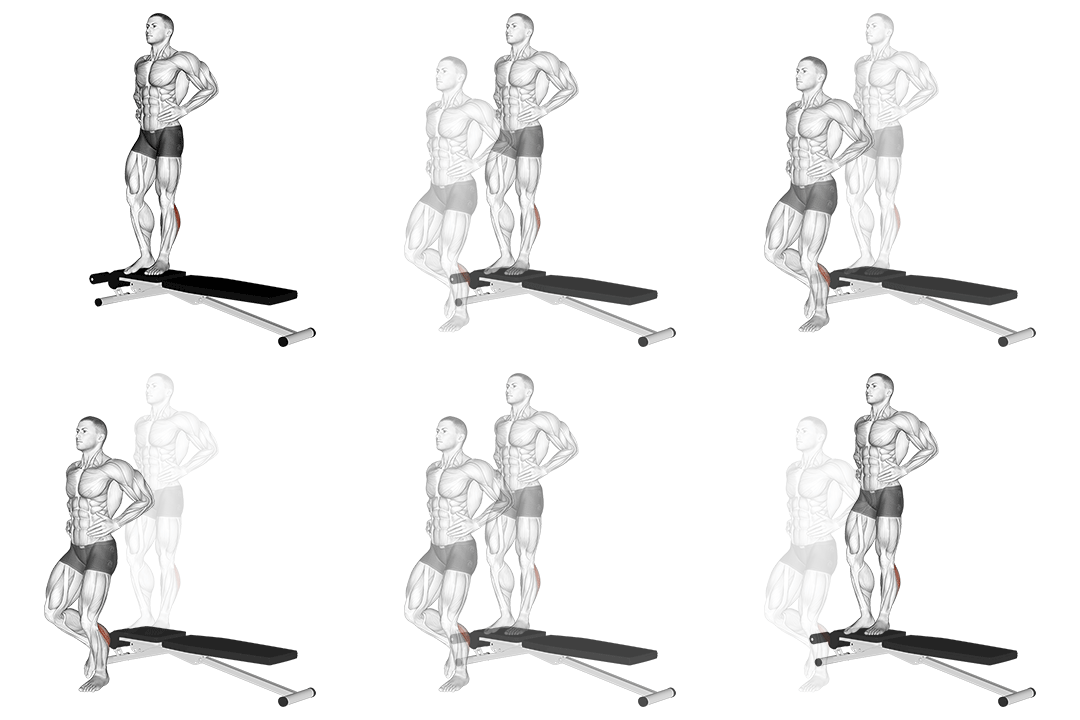
Secondary Muscles Activated
Ankle Circles
Calf Push Stretch With Hands Against Wall
Visual Comparison
Overview
Ankle Circles vs Calf Push Stretch With Hands Against Wall is a practical pairing when you want better calf function and ankle mobility. You’ll get a clear breakdown of which exercise activates the calf more, how each affects ankle stabilizers and hamstrings, and exactly how to perform them with technique cues (angles, rep ranges, and tempo). Read this if you want actionable guidance for mobility, warm-ups, or low-load rehab so you can pick the right move for your goal and avoid common mistakes.
Key Differences
- Both exercises target the Calves using Body-weight. The main differences are in their movement patterns and muscle activation angles.
Pros & Cons
Ankle Circles
+ Pros
- Low equipment and can be done seated or standing
- Develops ankle stabilizers and proprioception through rotational control
- Very low injury risk when performed gently
- Easy to integrate into warm-ups and rehabs (10–20 circles per direction)
− Cons
- Limited ability to create progressive overload for muscle growth
- Produces low absolute calf activation (mostly mobility-level)
- Less effective at targeting gastrocnemius length-tension for end-range strength
Calf Push Stretch With Hands Against Wall
+ Pros
- Places calf at a longer muscle length, increasing passive tension and time under tension
- Easily modified to unilateral or eccentric-loaded variations for progression
- Also gently stretches hamstrings in a closed-chain position
- Good for improving dorsiflexion range of motion (aim for 10–20+° dorsiflexion)
− Cons
- Higher risk of overstretching the Achilles if range or tempo is uncontrolled
- Requires standing balance and a stable wall surface
- Less emphasis on ankle stabilizers and rotational control
When Each Exercise Wins
While neither equals weighted calf raises, the wall push stretch allows longer time-under-tension at an elongated muscle length and can be progressed to slow eccentric reps (6–12 reps, 3–4 sets), which better stimulates muscle growth mechanisms than low-load ankle circles.
The stretch-plus-push position supports heavier loading patterns and eccentric emphasis that transfer to force production. Use unilateral eccentric heel drops from the stretched position to overload the gastrocnemius-specified strength adaptations.
Ankle Circles are easier to learn, require no balance or a wall, and build foundational ankle stabilizer recruitment with minimal injury risk. Start with 10–15 circles per direction for 2–3 sets.
Because they need zero equipment and can be done seated or standing in tight spaces, ankle circles fit better into casual home routines and travel. They’re quick, safe, and effective for mobility between sessions.
Frequently Asked Questions
Can I do both Ankle Circles and Calf Push Stretch With Hands Against Wall in the same workout?
Yes. Use ankle circles as an active warm-up (10–20 circles per direction) to prime stabilizers, then perform the wall calf stretch or stretched-position eccentrics as the main stimulus (2–3 sets of 30–60s holds or 6–12 slow reps). This sequence improves both mobility and tissue loading.
Which exercise is better for beginners?
Ankle Circles are better for beginners because they’re simple, can be done seated, and emphasize ankle stabilizers with minimal load. Start there before adding standing wall stretches once you have basic control.
How do the muscle activation patterns differ?
Ankle Circles create cyclic, low-amplitude concentric/eccentric activation focused on ankle movers and stabilizers. The wall push stretch produces greater passive and isometric tension at longer muscle lengths and can be converted to loaded eccentric actions, increasing gastrocnemius and soleus time under tension.
Can Calf Push Stretch With Hands Against Wall replace Ankle Circles?
Not entirely. The wall stretch can improve range and apply more load, but it doesn’t train rotational control and fine stabilizer recruitment as effectively as ankle circles. Use the wall stretch for range and loading, and ankle circles for proprioception and mobility work.
Expert Verdict
Use Ankle Circles when your goal is mobility, proprioception, or low-load rehab—they deliver targeted ankle stabilizer activation and are safe for beginners or people with balance limits. Choose Calf Push Stretch With Hands Against Wall when you need greater calf length-tension, improved dorsiflexion, or want to progress toward strength or hypertrophy work through unilateral or eccentric variations. Practically, pair them: start with ankle circles as a warm-up (10–20 circles each direction), then use wall calf stretches or stretched-position eccentrics (3 × 30–60s holds or 3–4 sets of 6–12 slow eccentrics) to build strength and range.
Also Compare
More comparisons with Ankle Circles
More comparisons with Calf Push Stretch With Hands Against Wall
Compare More Exercises
Use our free comparison tool to analyze any two exercises head-to-head.
Compare Exercises