

Ankle Circles vs Donkey Calf Raise: Complete Comparison Guide
Ankle Circles vs Donkey Calf Raise — two simple, body-weight calf movers that serve very different purposes. If you want clear guidance on which to use for mobility, muscle growth, or accessible home training, you’re in the right place. I’ll show you how each exercise loads the gastrocnemius and soleus, how they recruit stabilizers and posterior chain, and give specific technique cues, rep ranges, and progression options so you can pick the one that matches your goals.
Exercise Comparison
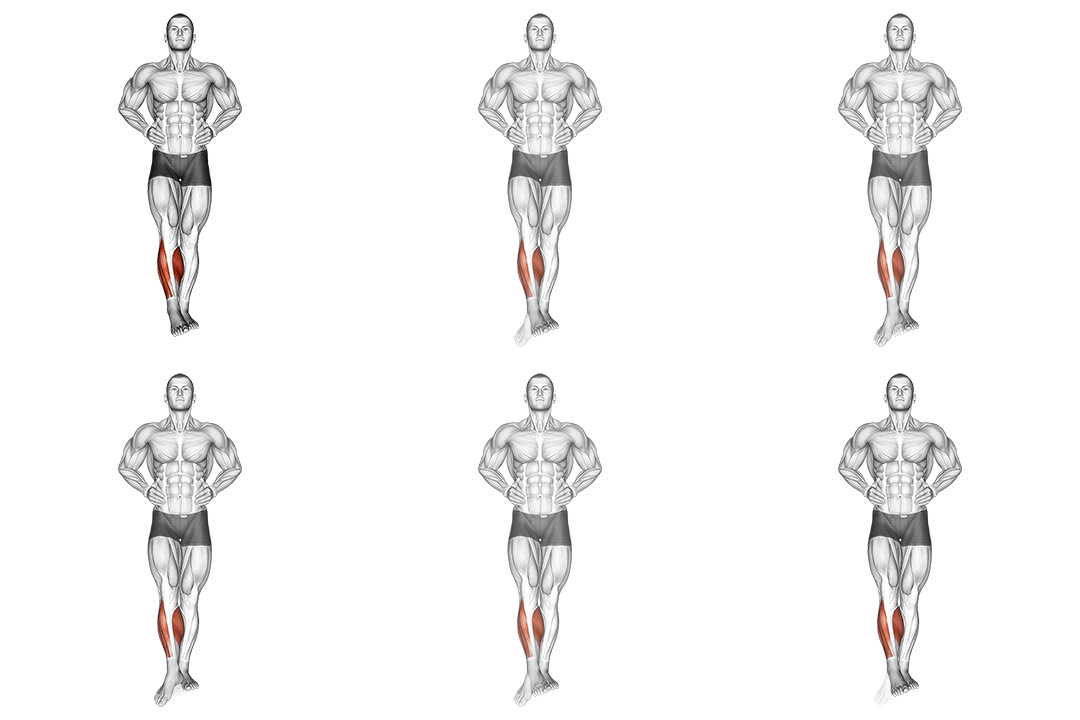
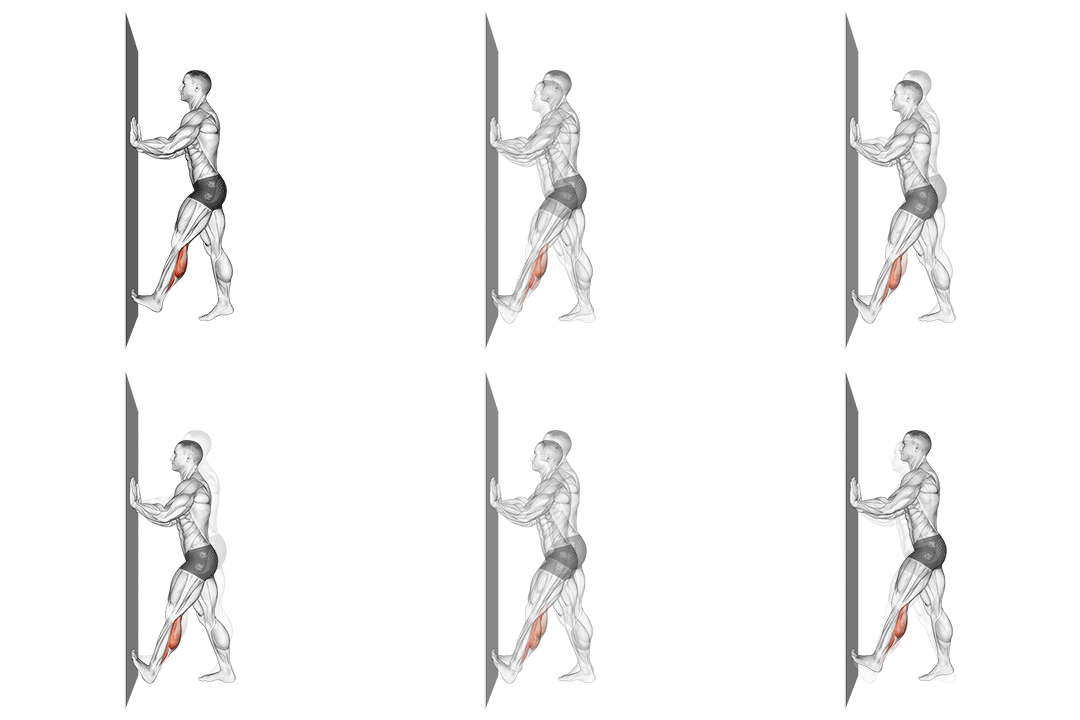
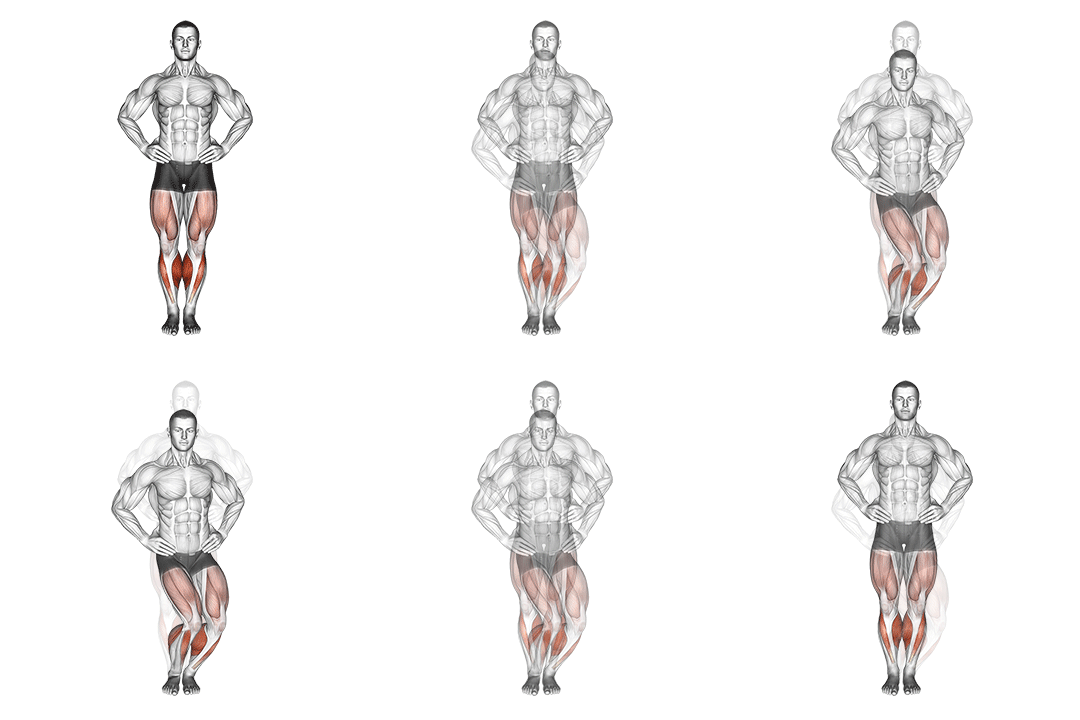
Ankle Circles
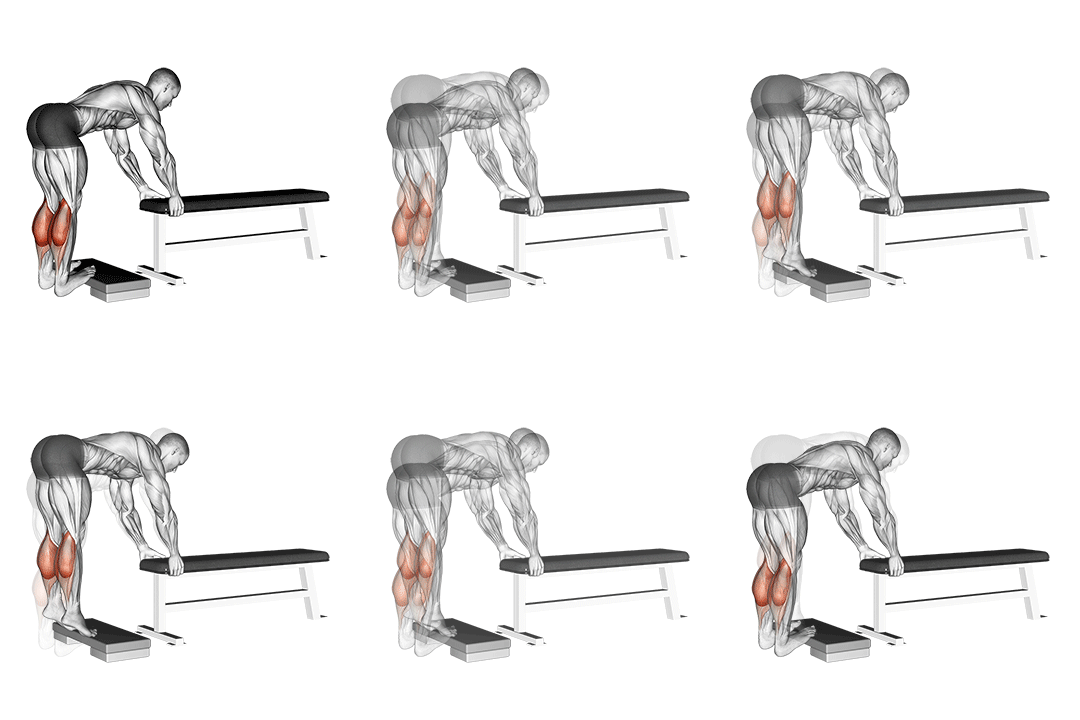
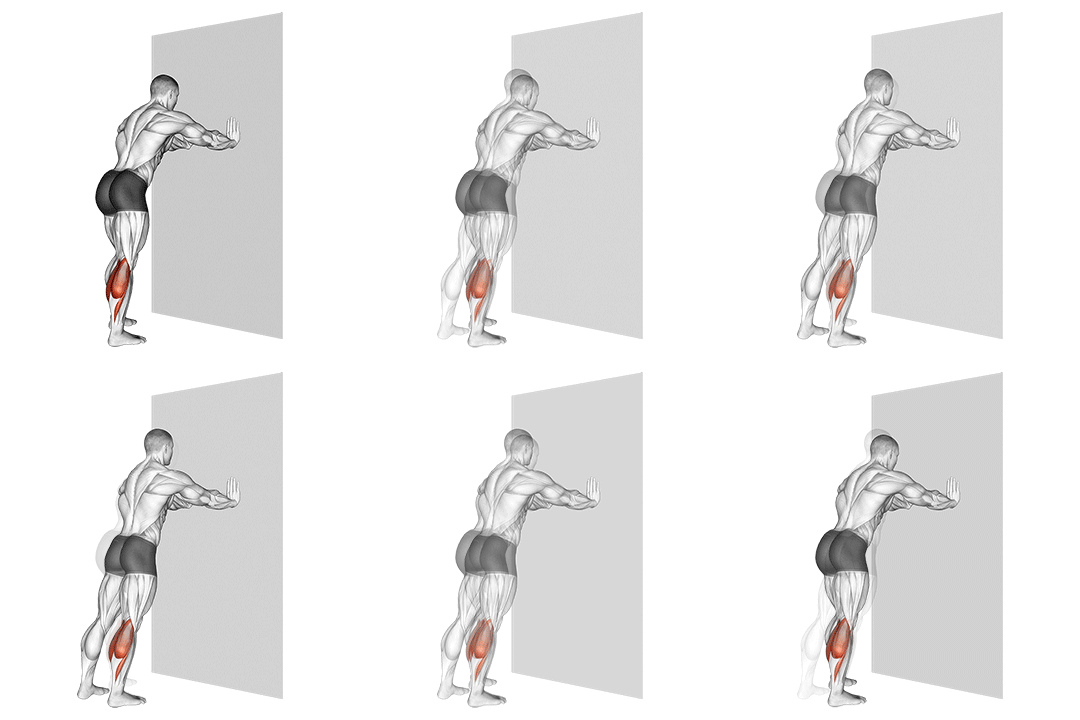
Donkey Calf Raise
Head-to-Head Comparison
| Attribute | Ankle Circles | Donkey Calf Raise |
|---|---|---|
| Target Muscle |
Calves
|
Calves
|
| Body Part |
Lower-legs
|
Lower-legs
|
| Equipment |
Body-weight
|
Body-weight
|
| Difficulty |
Beginner
|
Beginner
|
| Movement Type |
Isolation
|
Isolation
|
| Secondary Muscles |
1
|
2
|
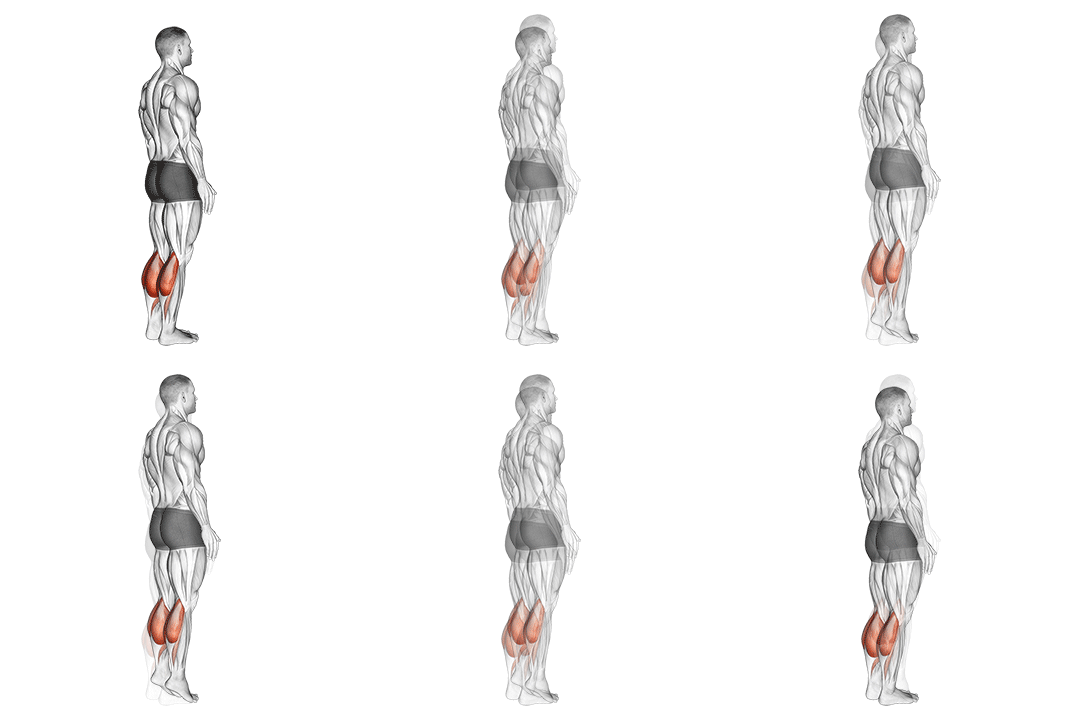
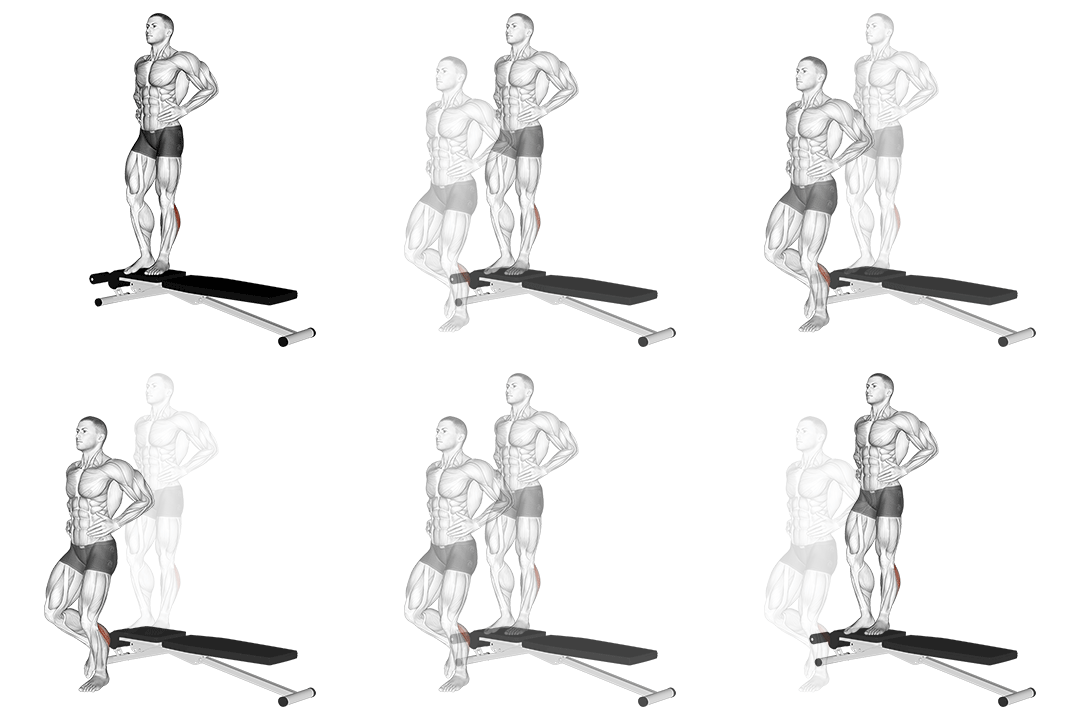
Secondary Muscles Activated
Ankle Circles
Donkey Calf Raise
Visual Comparison
Overview
Ankle Circles vs Donkey Calf Raise — two simple, body-weight calf movers that serve very different purposes. If you want clear guidance on which to use for mobility, muscle growth, or accessible home training, you’re in the right place. I’ll show you how each exercise loads the gastrocnemius and soleus, how they recruit stabilizers and posterior chain, and give specific technique cues, rep ranges, and progression options so you can pick the one that matches your goals.
Key Differences
- Both exercises target the Calves using Body-weight. The main differences are in their movement patterns and muscle activation angles.
Pros & Cons
Ankle Circles
+ Pros
- No equipment and can be done anywhere — travel-friendly
- Trains ankle stabilizers and multi-planar control for injury prevention
- Very low joint load; safe for rehabilitation and mobility work
- Easy to scale by tempo, range, or single-leg balance variations
− Cons
- Low mechanical tension, so poor for muscle hypertrophy by itself
- Limited ability to progressively overload for strength
- Less posterior-chain recruitment compared with loaded calf raises
Donkey Calf Raise
+ Pros
- Generates higher mechanical tension on the gastrocnemius for muscle growth
- Easy to progress with added load and single-leg variations
- Engages hamstrings and glutes as secondary stabilizers
- Simple movement pattern once setup is correct, effective for high-rep work (12–25 reps)
− Cons
- Requires a bench, partner, or creative setup for maximal effect
- Slightly higher risk of lumbar or Achilles strain if technique breaks down
- Less effective at training ankle inversion/eversion stabilizers
When Each Exercise Wins
Donkey Calf Raise creates greater mechanical tension across the gastrocnemius and allows clear progressive overload (add 3–10 kg or use single-leg sets). Aim for 8–20 reps and 3–5 sets focusing on full ROM and a 1–2 second top contraction to maximize time under tension.
You can systematically increase load and adjust leverages in the Donkey Calf Raise, producing higher force output and neural adaptation. Use lower rep ranges (6–10) with heavier loading or slow negatives to build tendon and muscle force capacity.
Ankle Circles teach joint awareness and build stabilizer endurance with minimal risk; 10–20 controlled circles per direction improve proprioception and help correct faulty movement patterns before loading the calf complex.
Ankle Circles require zero equipment and fit into short sessions or warm-ups. They’re ideal for people with no bench or partner and for those focusing on mobility and injury prevention.
Frequently Asked Questions
Can I do both Ankle Circles and Donkey Calf Raise in the same workout?
Yes — pair them strategically: start with Ankle Circles (10–15 reps per direction) as a mobility and activation drill, then perform Donkey Calf Raises for your main calf work. This sequence primes stabilizers and improves movement quality before loading for strength or hypertrophy.
Which exercise is better for beginners?
Ankle Circles are better for absolute beginners because they train control and ankle stability with minimal load. Once you can control 10–20 reps each way and have no pain, progress to Donkey Calf Raises to add mechanical tension.
How do the muscle activation patterns differ?
Donkey Calf Raise produces high sagittal-plane plantarflexion torque, driving concentric-eccentric contractions of the gastrocnemius and soleus under load. Ankle Circles produce low-intensity, multi-planar contractions emphasizing ankle stabilizers and neural control rather than peak force.
Can Donkey Calf Raise replace Ankle Circles?
Not entirely — Donkey Calf Raises can replace the high-tension component for hypertrophy but won’t train inversion/eversion control or proprioception as effectively. Keep Ankle Circles in the warm-up or rehab toolbox while using donkey raises for overload.
Expert Verdict
Use Ankle Circles when your priority is ankle mobility, proprioception, or low-load rehab work — they’re unbeatable for travel, acute recovery, and teaching control through 30–60 degrees of ankle motion. Use Donkey Calf Raise when you want to drive calf muscle growth or increase plantarflexion strength: set up a stable platform, keep the knee position consistent, perform 3–5 sets of 8–20 reps, and progressively add load. For most trainees, pair both: start sessions with ankle circles to warm and stabilize the joint, then finish with donkey raises to apply overload and stimulate hypertrophy.
Also Compare
More comparisons with Ankle Circles
More comparisons with Donkey Calf Raise
Compare More Exercises
Use our free comparison tool to analyze any two exercises head-to-head.
Compare Exercises