

Ankle Circles vs Rope Jumping: Complete Comparison Guide
Ankle Circles vs Rope Jumping — you’re comparing a low-load isolation move to a high-cadence plyometric. {Exercise1} vs {Exercise2} appears in the first line so you can see how mobility-focused ankle rotations stack up against rope jumping’s cardio and calf-loading. I’ll cover muscle activation, biomechanics (ankle dorsiflexion/plantarflexion, stretch-shortening cycle), equipment needs, difficulty, and when to choose each for rehab, muscle growth, or conditioning. You’ll get technique cues, rep ranges, and clear progressions to use right away.
Exercise Comparison
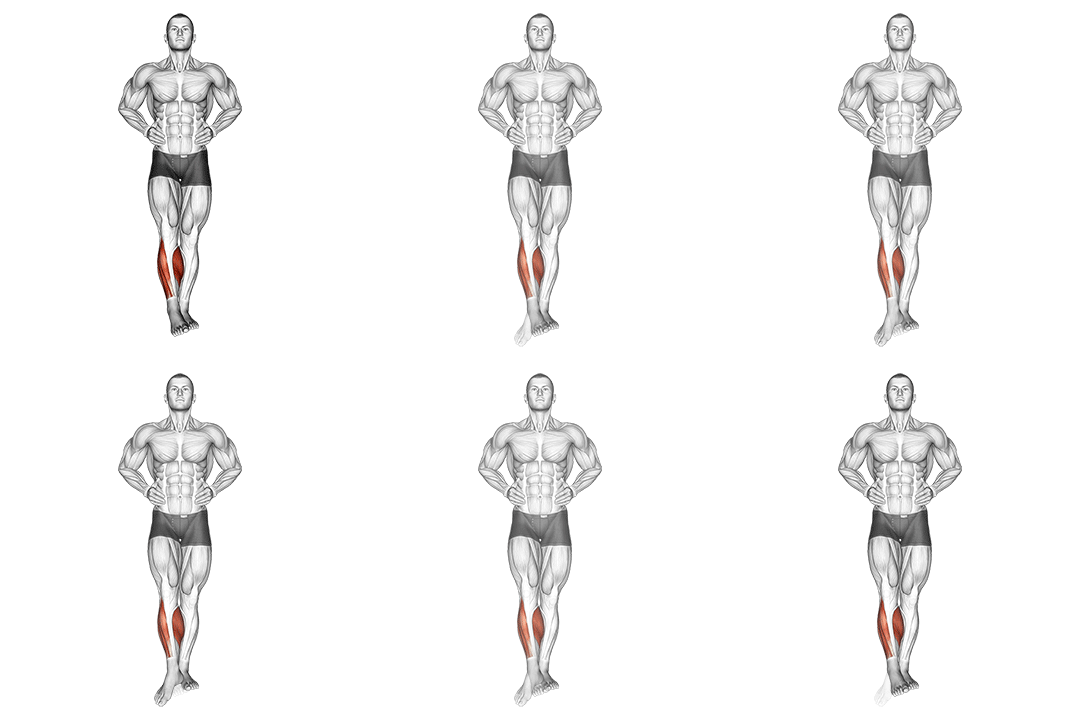
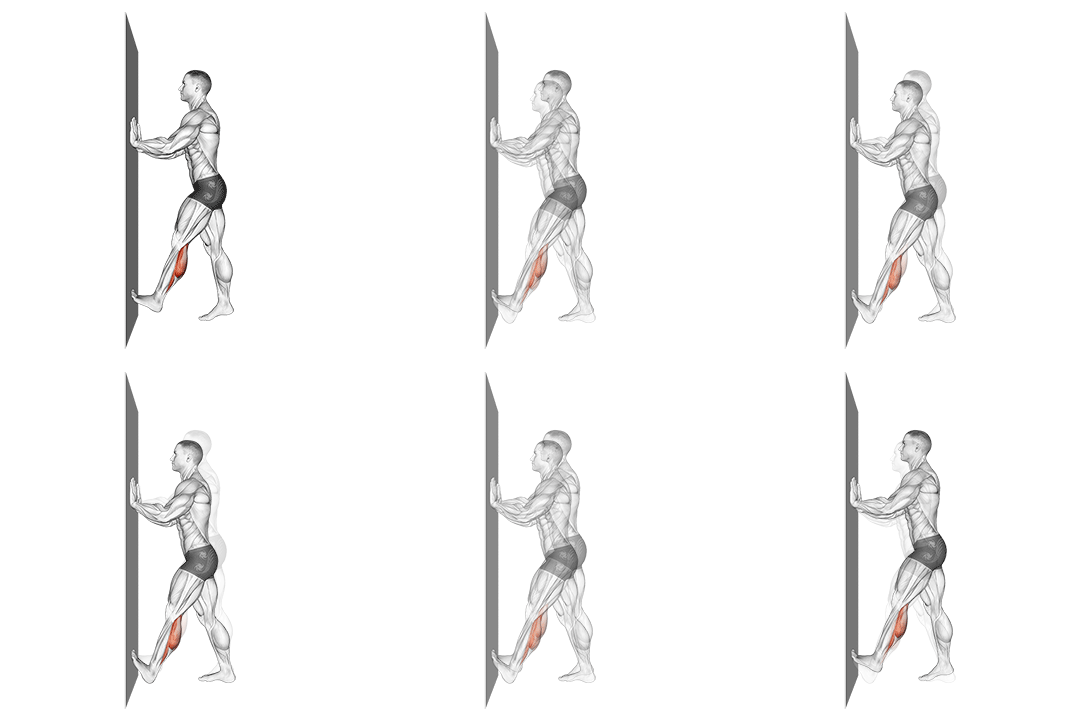
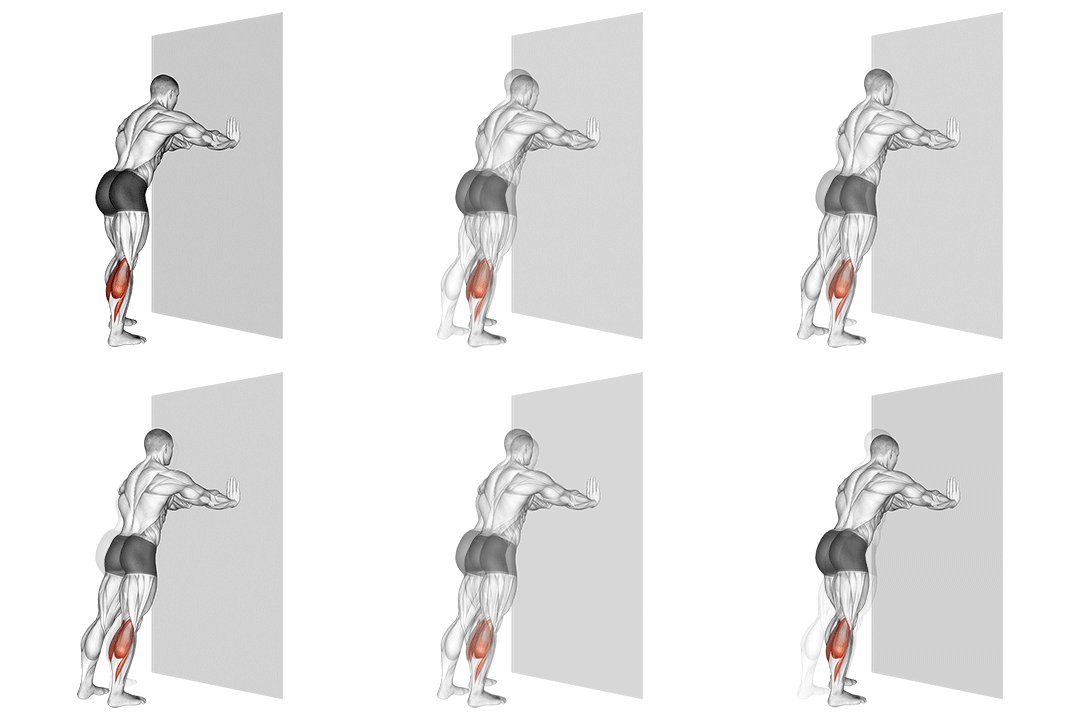
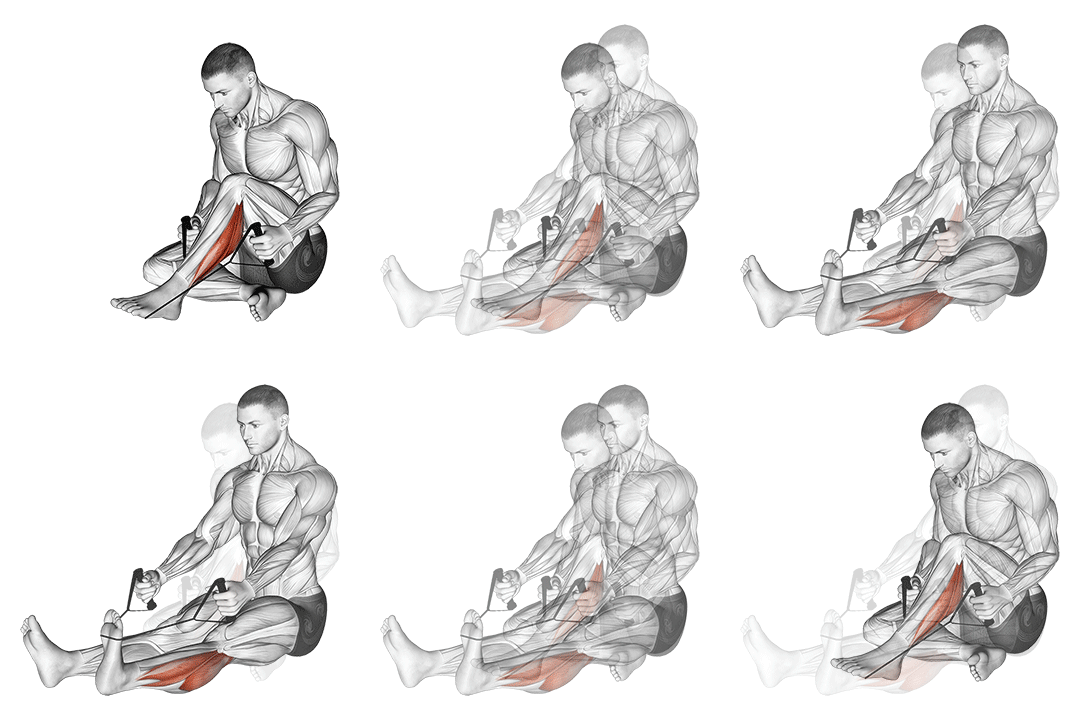
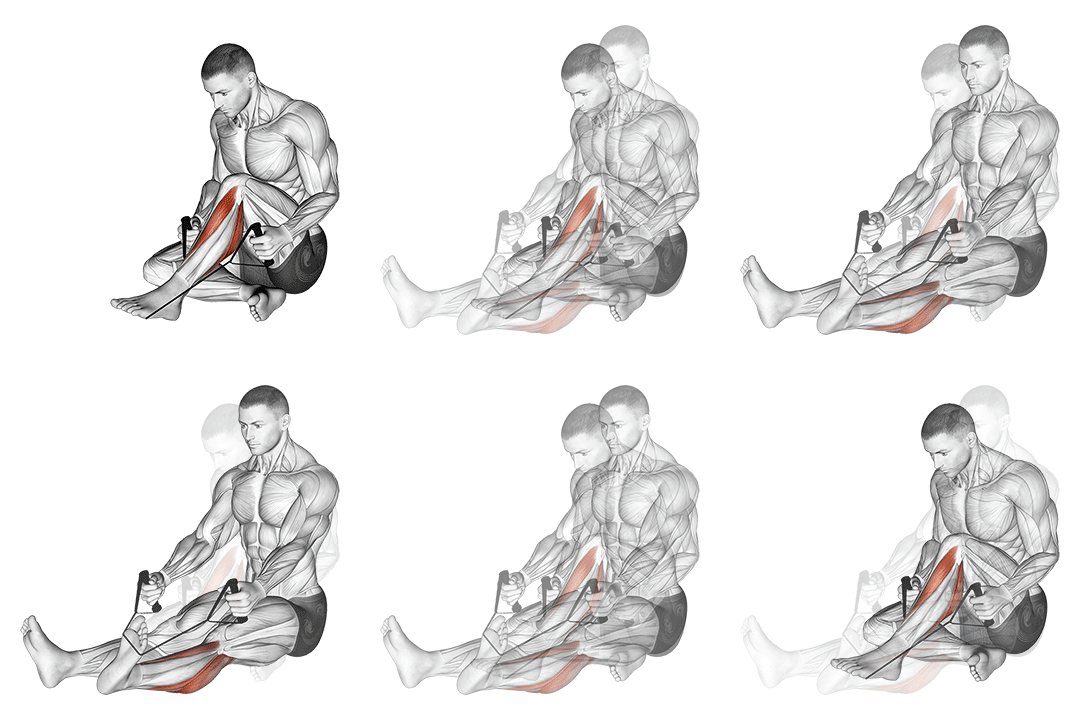
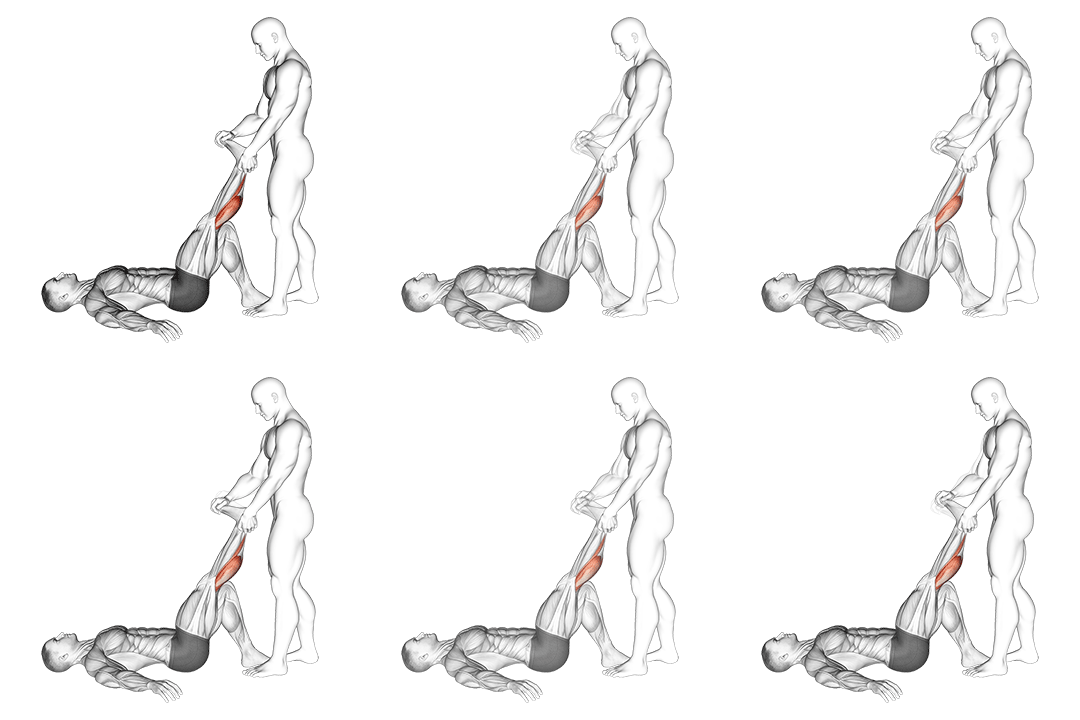
Ankle Circles
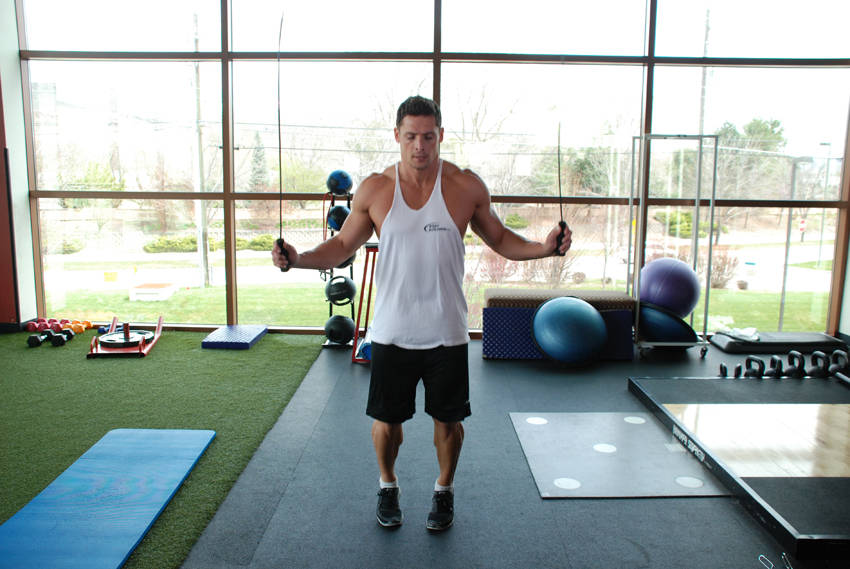
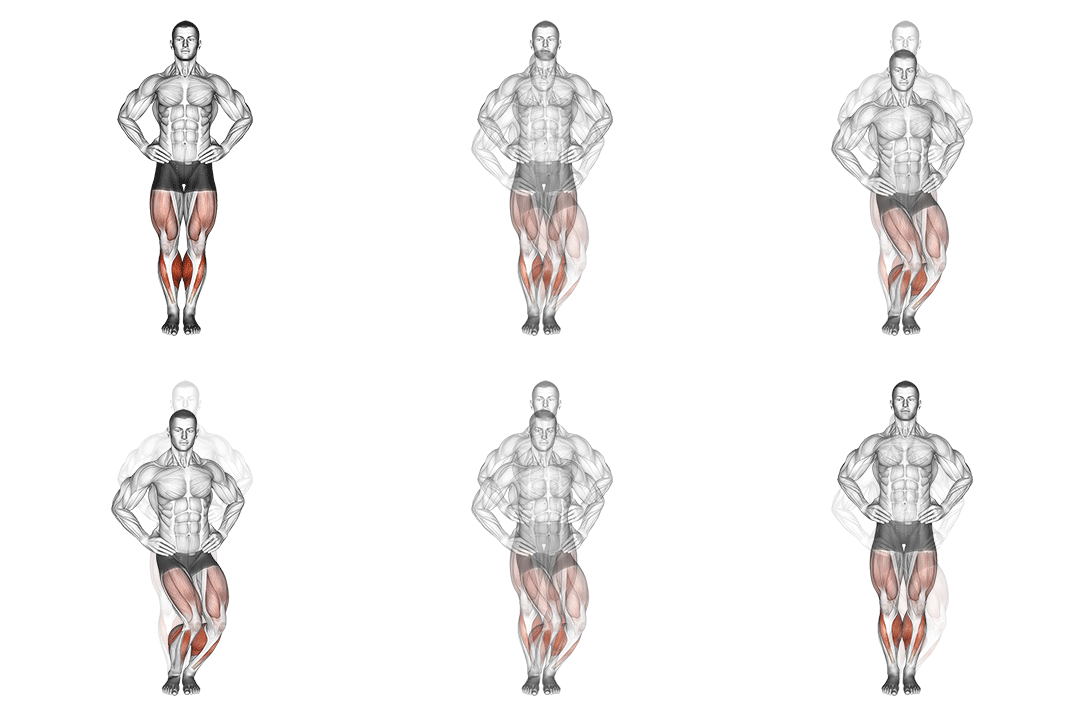
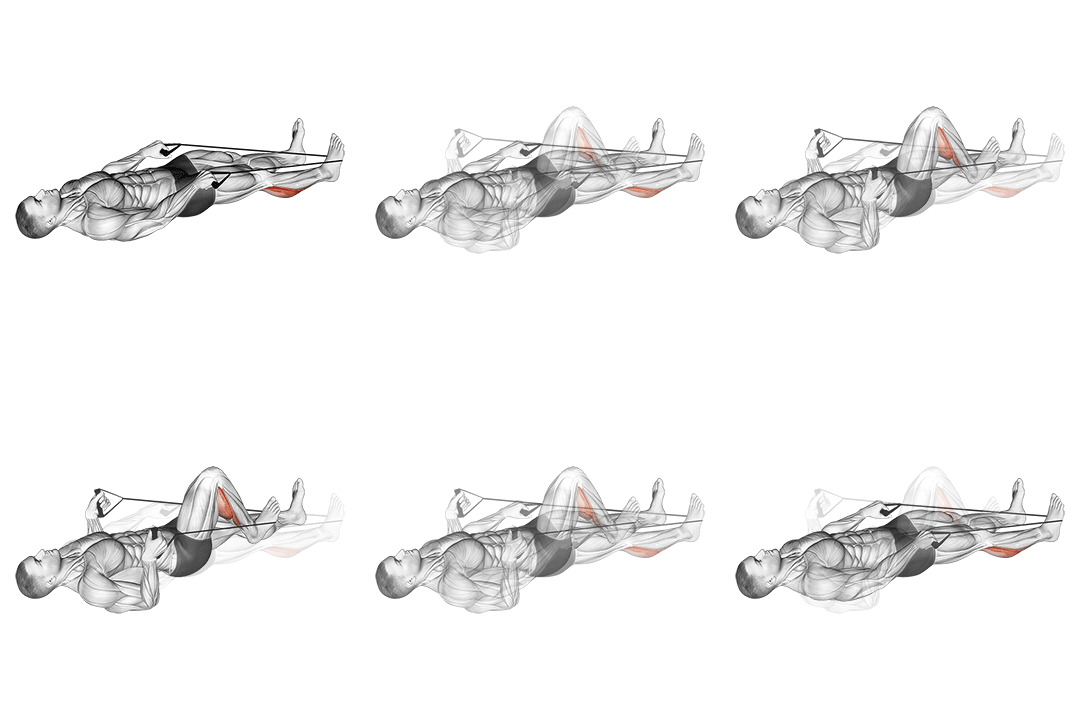
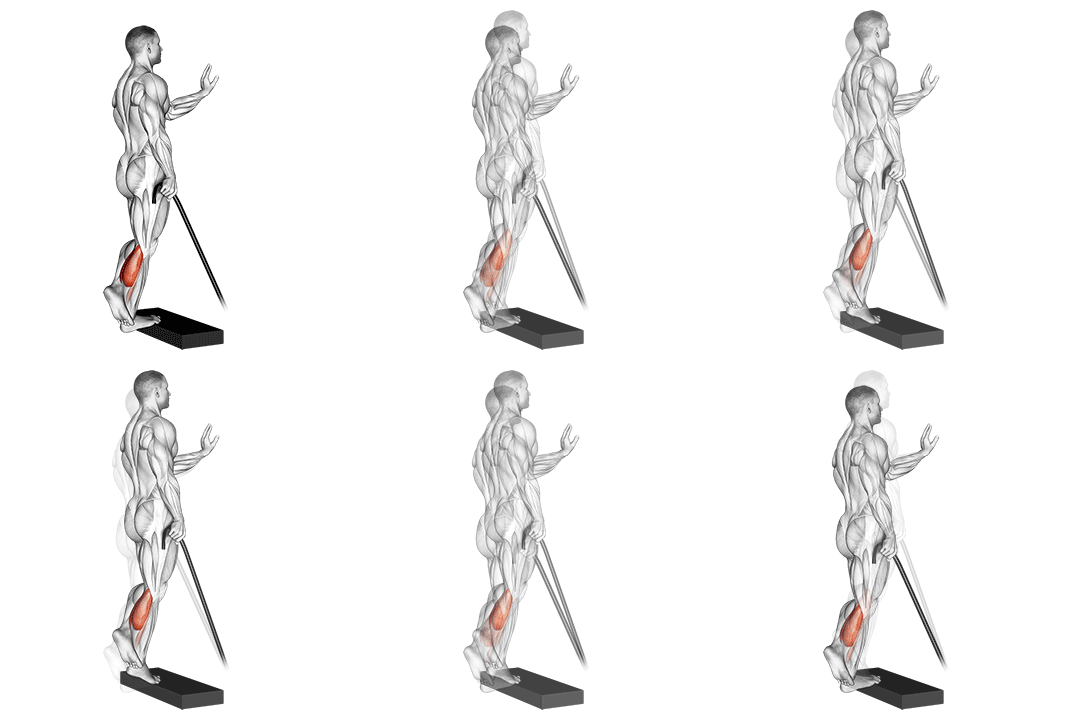
Rope Jumping
Head-to-Head Comparison
| Attribute | Ankle Circles | Rope Jumping |
|---|---|---|
| Target Muscle |
Calves
|
Calves
|
| Body Part |
Lower-legs
|
Cardio
|
| Equipment |
Body-weight
|
Rope
|
| Difficulty |
Beginner
|
Beginner
|
| Movement Type |
Isolation
|
Compound
|
| Secondary Muscles |
1
|
2
|
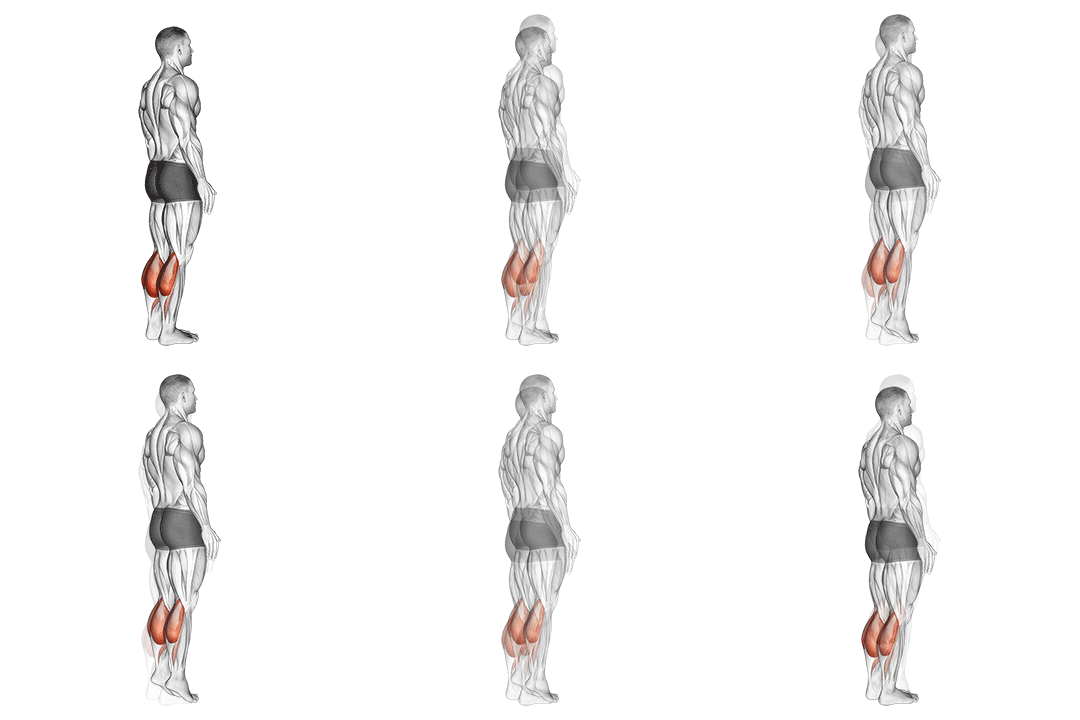
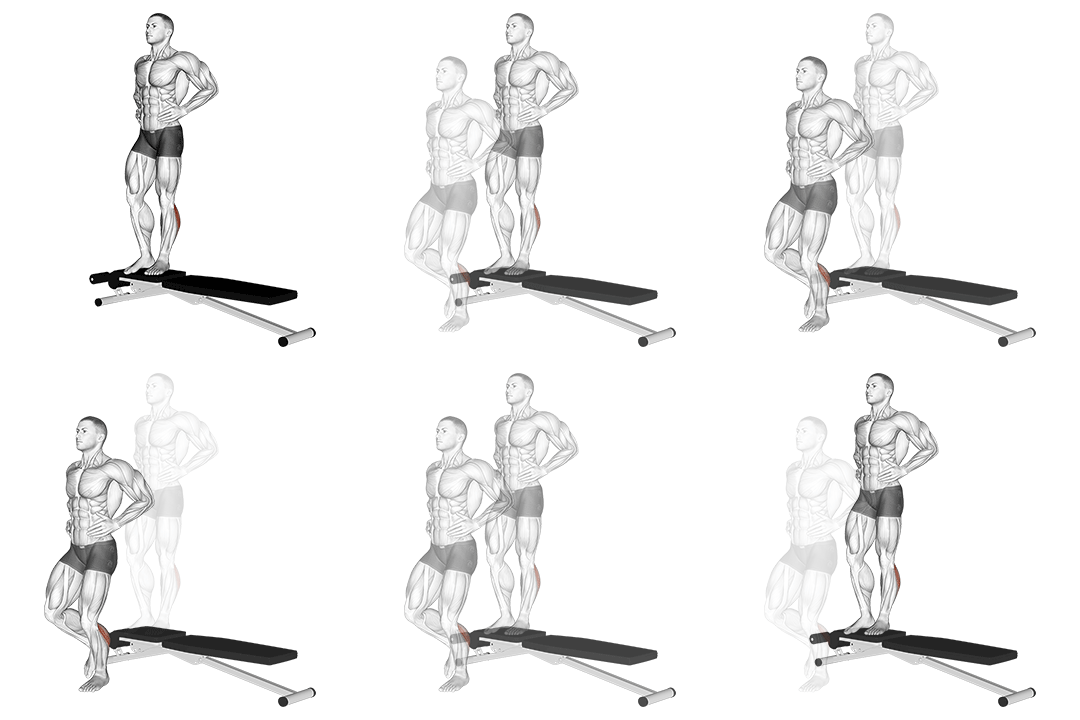
Secondary Muscles Activated
Ankle Circles
Rope Jumping
Visual Comparison
Overview
Ankle Circles vs Rope Jumping — you’re comparing a low-load isolation move to a high-cadence plyometric. {Exercise1} vs {Exercise2} appears in the first line so you can see how mobility-focused ankle rotations stack up against rope jumping’s cardio and calf-loading. I’ll cover muscle activation, biomechanics (ankle dorsiflexion/plantarflexion, stretch-shortening cycle), equipment needs, difficulty, and when to choose each for rehab, muscle growth, or conditioning. You’ll get technique cues, rep ranges, and clear progressions to use right away.
Key Differences
- Equipment differs: Ankle Circles uses Body-weight, while Rope Jumping requires Rope.
- Ankle Circles is an isolation exercise, while Rope Jumping is a compound movement.
Pros & Cons
Ankle Circles
+ Pros
- Zero equipment and minimal space required
- Improves ankle mobility, proprioception, and control
- Low impact — safe for rehab and return-to-run work
- Easy to cue: slow 10–20 reps per direction, keep tibia stable
− Cons
- Low overall loading — limited hypertrophy stimulus
- Limited progression for power or cardio capacity
- Does not train multi-joint coordination or posterior chain power
Rope Jumping
+ Pros
- High calf activation via stretch-shortening cycle for muscle growth
- Builds cardiovascular fitness and explosive lower-leg power
- Progressive: tempo, duration, single-leg, and double-unders
- Portable and time-efficient cardio (e.g., 3 × 60s intervals)
− Cons
- Higher impact — more joint and tendon stress
- Requires coordination and proper surface/space
- Less focused on ankle proprioception and isolated control
When Each Exercise Wins
Rope jumping produces repeated high-rate plantarflexion with a stretch-shortening cycle and higher peak forces, stimulating gastrocnemius hypertrophy more effectively than slow isolation circles. You can further overload with longer intervals, higher cadence, or weighted vests to increase metabolic and mechanical stimulus.
Rope jumping develops rate of force development and reactive plantarflexor strength via quick eccentric-to-concentric transitions. For absolute maximal calf strength a loaded plantarflexion would beat both, but between these two, rope jumping better increases functional strength and power.
Ankle circles are simpler, lower impact, and build joint control and range before adding load. Start with 2–3 sets of 10–20 reps per direction to prime the ankle stabilizers and reduce injury risk when you later progress to rope work.
Ankle circles need no gear and very little space, making them ideal for tight living areas or rehab contexts. Rope jumping works at home only if you have ceiling clearance, a proper floor, and footwear.
Frequently Asked Questions
Can I do both Ankle Circles and Rope Jumping in the same workout?
Yes. Use ankle circles as an activation and mobility primer (2–3 sets of 10–20 reps per direction), then follow with rope jumping intervals (e.g., 3–6 rounds of 30–90 seconds). This sequence reduces injury risk and improves ankle mechanics during high-speed jumping.
Which exercise is better for beginners?
Ankle Circles are better for absolute beginners because they require minimal coordination and load while improving joint control. Once you can perform controlled circles and have no pain, introduce short rope-jump sessions (30–60s) and build duration gradually.
How do the muscle activation patterns differ?
Ankle Circles emphasize slow concentric/eccentric control of plantarflexors and ankle stabilizers with long time under tension at low force. Rope Jumping triggers rapid stretch-shortening cycles that spike gastrocnemius activation and recruit fast-twitch motor units for brief, high-force contractions.
Can Rope Jumping replace Ankle Circles?
Not entirely. Rope jumping covers cardio, power, and calf overload, but it won’t develop the same isolated proprioception and slow control of ankle stabilizers that ankle circles provide. Use ankle circles for rehab or pre-activity priming and rope jumping for dynamic conditioning.
Expert Verdict
Use ankle circles when your priority is ankle mobility, proprioception, rehabilitation, or a zero-equipment warm-up. Do 10–20 slow rotations per direction, focus on controlled dorsiflexion to ~20° and plantarflexion toward ~40–50°, and aim for 2–3 sets. Choose rope jumping when you want calf hypertrophy, conditioning, and power: perform interval sets (e.g., 6 × 60s with 60–90s rest) or accumulate 300–1,000 skips per session as you progress. If you can, pair them: start with ankle circles to prime stabilizers, then add rope intervals to maximize force production and metabolic stimulus.
Also Compare
More comparisons with Ankle Circles
Compare More Exercises
Use our free comparison tool to analyze any two exercises head-to-head.
Compare Exercises