

Archer Pull Up vs Pull-up: Complete Comparison Guide
Archer Pull Up vs Pull-up — if you're choosing which back pull to prioritize, you want clear differences, not fluff. I'll walk you through how each move loads the lats, how the force vectors and joint angles change activation, and which one fits your goals: hypertrophy, unilateral strength, or general conditioning. You'll get technique cues (hand width, scapular set, elbow path), rep ranges for progress (3–6 for strength, 6–12 for size), and practical progressions so you can pick the right exercise for your training plan.
Exercise Comparison
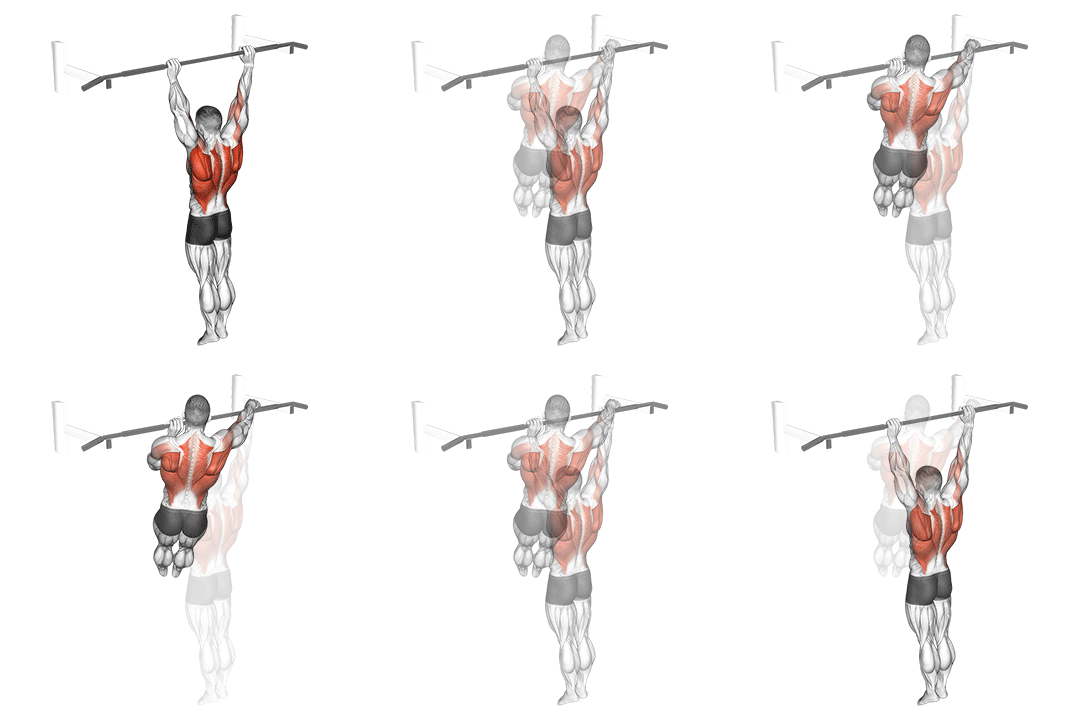
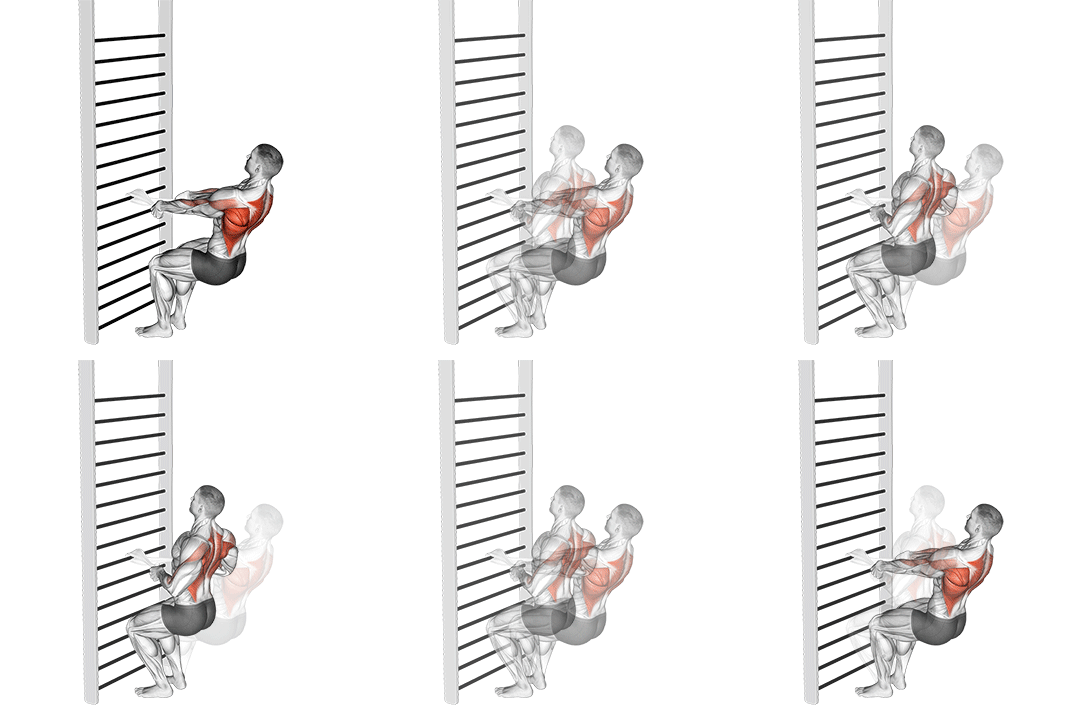
Archer Pull Up
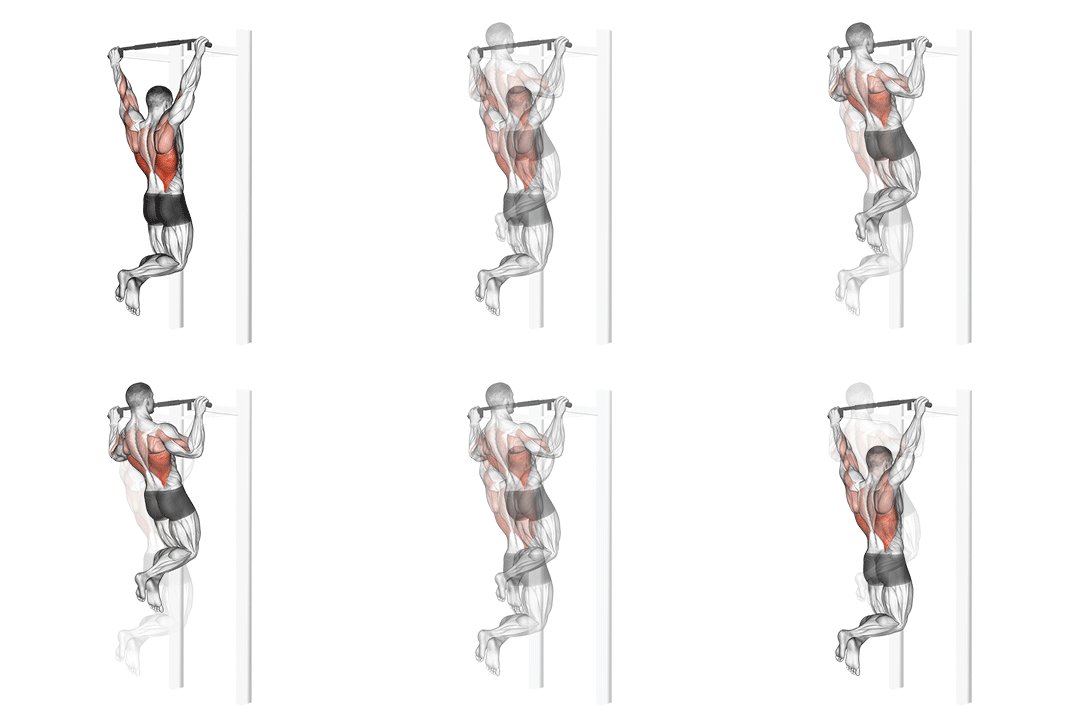
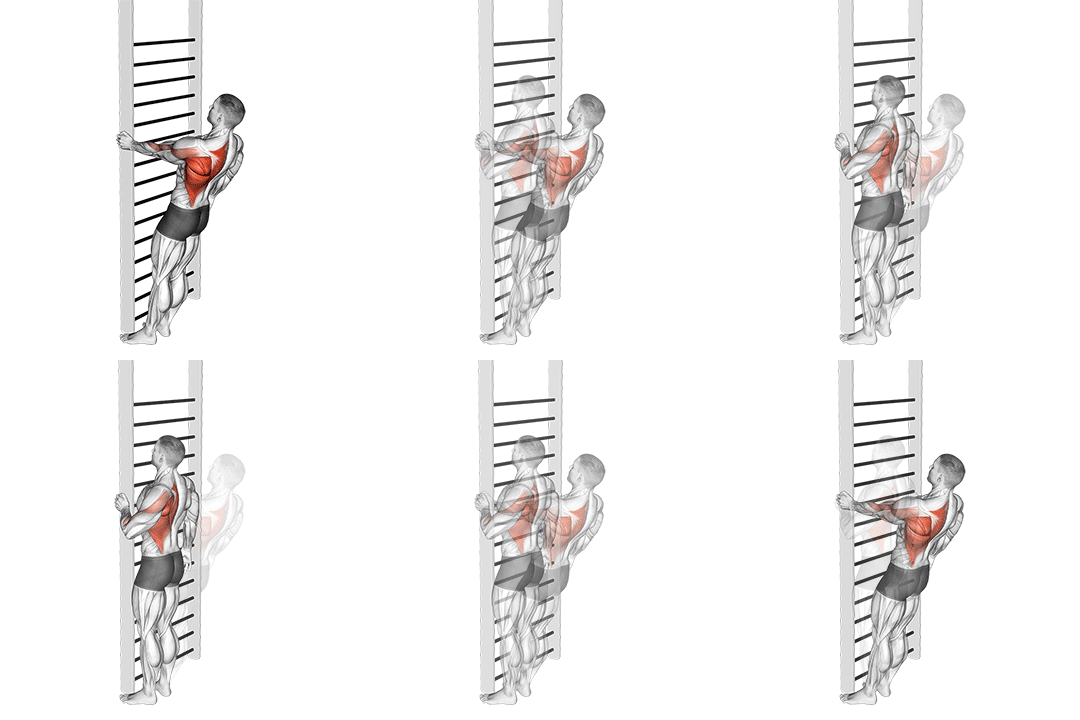
Pull-up
Head-to-Head Comparison
| Attribute | Archer Pull Up | Pull-up |
|---|---|---|
| Target Muscle |
Lats
|
Lats
|
| Body Part |
Back
|
Back
|
| Equipment |
Body-weight
|
Body-weight
|
| Difficulty |
Advanced
|
Advanced
|
| Movement Type |
Compound
|
Compound
|
| Secondary Muscles |
2
|
2
|
Secondary Muscles Activated
Archer Pull Up
Pull-up
Visual Comparison
Overview
Archer Pull Up vs Pull-up — if you're choosing which back pull to prioritize, you want clear differences, not fluff. I'll walk you through how each move loads the lats, how the force vectors and joint angles change activation, and which one fits your goals: hypertrophy, unilateral strength, or general conditioning. You'll get technique cues (hand width, scapular set, elbow path), rep ranges for progress (3–6 for strength, 6–12 for size), and practical progressions so you can pick the right exercise for your training plan.
Key Differences
- Both exercises target the Lats using Body-weight. The main differences are in their movement patterns and muscle activation angles.
Pros & Cons
Archer Pull Up
+ Pros
- High unilateral overload for single-arm strength
- Greater eccentric tension on the working lat (longer length-tension window)
- Improves scapular and core stabilization asymmetrically
- Useful bridge toward the one-arm pull-up
− Cons
- Requires high baseline strength and stability
- Harder to scale precisely with incremental loading
- Higher shoulder and elbow stress if performed with poor technique
Pull-up
+ Pros
- Easily scalable with bands or added weight
- Efficient for building balanced lat mass and vertical pulling strength
- Simple setup and reproducible technique
- Better for accumulating volume (sets/reps) for hypertrophy
− Cons
- Can mask left-right imbalances since load is shared bilaterally
- Less unilateral overload compared to archer or one-arm progressions
- Kipping variations reduce strict lat activation if used excessively
When Each Exercise Wins
Pull-ups let you add weight and accumulate higher, symmetric volume (8–12 reps, 3–6 sets or higher weekly frequency) which favors hypertrophy. The vertical force vector produces consistent lat tension and makes progressive overload simple and measurable.
Archer pull-ups increase unilateral loading and overload the working lat and biceps more intensely, improving maximal pulling strength and transfer to one-arm work. Use low-rep sets (3–6) and controlled eccentrics to translate to raw strength.
Pull-ups have clear regressions (band-assist, negatives, Australian rows) allowing progressive strengthening of scapular control and elbow flexors. This systematic ramp makes them the safer, faster learning path.
Most home setups support standard pull-ups but not the lateral clearance or strength needed for safe archer pulls. Bands, a doorway bar, or a simple suspension trainer let you scale standard pull-ups effectively.
Frequently Asked Questions
Can I do both Archer Pull Up and Pull-up in the same workout?
Yes. Start with pull-ups as your primary lift for sets that target strength or hypertrophy, then use archer pull-ups as an accessory to overload one side (2–4 sets of 3–6 controlled reps per side). Keep total volume in check to avoid shoulder fatigue.
Which exercise is better for beginners?
Pull-ups are better for beginners because they scale easily with band assistance, negatives, and rows to build scapular control and elbow flexor strength. Archer pull-ups demand too much unilateral control early on.
How do the muscle activation patterns differ?
Pull-ups produce symmetric lat activation via a vertical force vector and balanced elbow flexion. Archer pull-ups shift the force laterally, increasing unilateral lat and biceps activation and recruiting obliques and scapular stabilizers more due to torso rotation and lever mechanics.
Can Pull-up replace Archer Pull Up?
Pull-ups can replace archer pull-ups if your goal is general size and balanced strength, because they allow more volume and easier loading. If your goal is unilateral strength or one-arm progressions, archer pull-ups are a necessary, non-redundant accessory.
Expert Verdict
Use pull-ups as your foundational vertical pulling exercise: they’re scalable, easy to program, and efficient for balanced lat hypertrophy and general strength. Aim for progressive overload (6–12 reps for size, 3–6 for strength cycles) with deliberate scapular retraction and a 90°+ elbow flexion range. Incorporate archer pull-ups once you have consistent strict pull-ups (10–12 reps unweighted or weighted 3–6 rep capacity) to target unilateral strength, correct sided imbalances, and increase eccentric stress on the working lat. For most trainees, prioritize pull-ups for volume and add archer variations as a specialized strength accessory twice a week, focusing on tempo (2–4 second eccentrics) and braced core to protect the shoulder.
Also Compare
More comparisons with Archer Pull Up

Compare More Exercises
Use our free comparison tool to analyze any two exercises head-to-head.
Compare Exercises