

Arms Apart Circular Toe Touch (male) vs Bent Knee Lying Twist (male): Complete Comparison Guide
Arms Apart Circular Toe Touch (male) vs Bent Knee Lying Twist (male) is a useful head-to-head if you want clearer choices for glute work. You’ll get a side-by-side look at how each move loads the glutes, which secondary muscles kick in, and practical technique cues so you can use them safely. Read on for rep ranges, biomechanics (hip extension angles, rotation degrees, length-tension considerations), accessibility, and which to pick for hypertrophy, strength, or simple at-home training.
Exercise Comparison
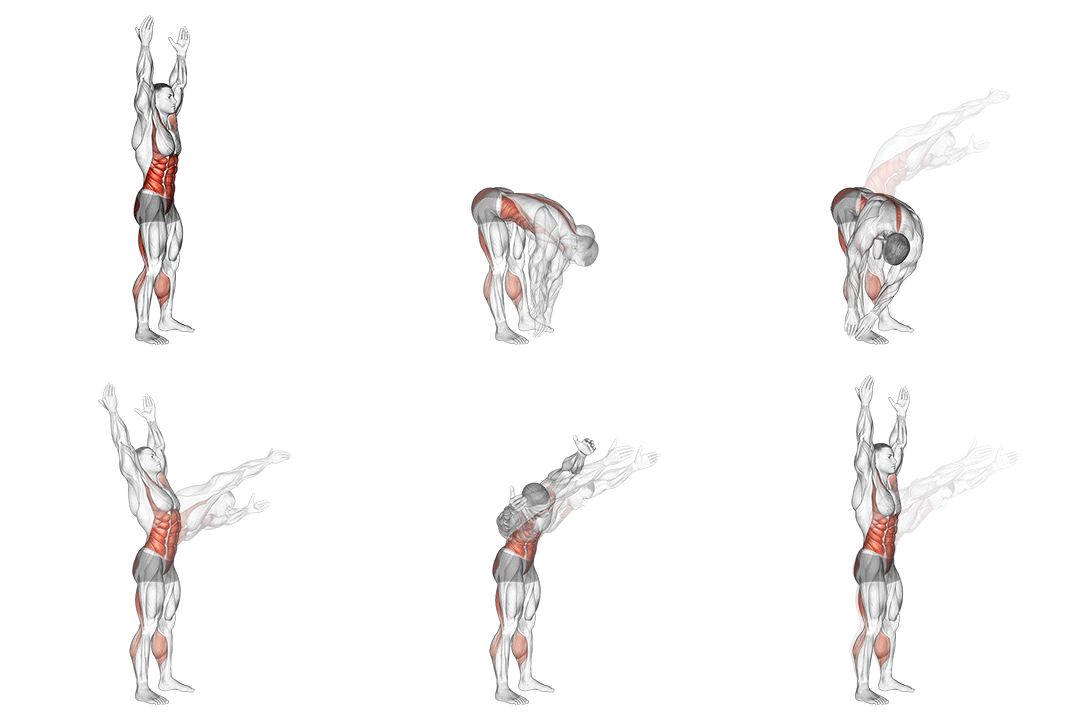
Arms Apart Circular Toe Touch (male)
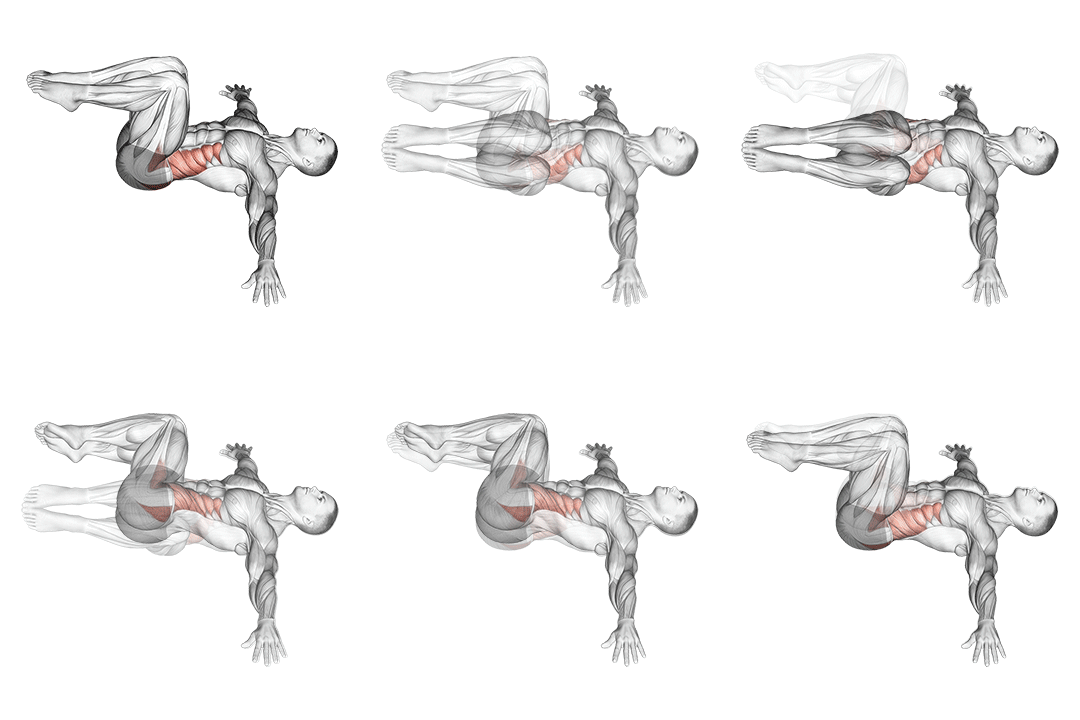
Bent Knee Lying Twist (male)
Head-to-Head Comparison
| Attribute | Arms Apart Circular Toe Touch (male) | Bent Knee Lying Twist (male) |
|---|---|---|
| Target Muscle |
Glutes
|
Glutes
|
| Body Part |
Upper-legs
|
Upper-legs
|
| Equipment |
Body-weight
|
Body-weight
|
| Difficulty |
Intermediate
|
Beginner
|
| Movement Type |
Compound
|
Isolation
|
| Secondary Muscles |
3
|
2
|
Secondary Muscles Activated
Arms Apart Circular Toe Touch (male)
Bent Knee Lying Twist (male)
Visual Comparison
Overview
Arms Apart Circular Toe Touch (male) vs Bent Knee Lying Twist (male) is a useful head-to-head if you want clearer choices for glute work. You’ll get a side-by-side look at how each move loads the glutes, which secondary muscles kick in, and practical technique cues so you can use them safely. Read on for rep ranges, biomechanics (hip extension angles, rotation degrees, length-tension considerations), accessibility, and which to pick for hypertrophy, strength, or simple at-home training.
Key Differences
- Arms Apart Circular Toe Touch (male) is a compound movement, while Bent Knee Lying Twist (male) is an isolation exercise.
- Difficulty levels differ: Arms Apart Circular Toe Touch (male) is intermediate, while Bent Knee Lying Twist (male) is beginner.
- Both exercises target the Glutes using Body-weight. The main differences are in their movement patterns and muscle activation angles.
Pros & Cons
Arms Apart Circular Toe Touch (male)
+ Pros
- High glute peak activation through dynamic hip extension
- Engages posterior chain (hamstrings, calves) for transferable strength
- Multiple progression and loading options (tempo, single-leg, added weight)
- Improves coordinated hip hinge and rotational control
− Cons
- Requires good hip mobility and coordination
- Higher risk of hamstring strain if performed with poor technique
- Less purely isolated glute focus—other muscles can dominate
Bent Knee Lying Twist (male)
+ Pros
- Beginner-friendly and low-load—easy to teach and measure
- Strong oblique activation for trunk control during hip work
- Low balance demand; suitable for rehab or mobility-focused sessions
- Minimal space and equipment needed
− Cons
- Limited progression for maximal strength or hypertrophy
- Lower hamstring and posterior chain involvement
- Less peak glute force output compared to compound movements
When Each Exercise Wins
Its compound hip-extension pattern produces higher peak glute tension and allows progressive overload (3–12 reps with added load or tempo), which promotes greater muscle growth than an isolation rotation.
The multi-joint force vector and posterior chain recruitment enable higher absolute force production and carryover to heavier hip extension work; manipulate load/tempo to build strength (3–6 heavy sets).
It’s supine, low-load, and focuses on isolated glute and oblique control with minimal coordination demands, making it ideal for teaching motor patterns and early-stage rehab.
Requires only a mat and small space, is easy to scale by reps, and poses lower injury risk in confined home settings compared with the more dynamic circular toe touch.
Frequently Asked Questions
Can I do both Arms Apart Circular Toe Touch (male) and Bent Knee Lying Twist (male) in the same workout?
Yes. Start with Bent Knee Lying Twist (male) as an activation set (2–3 sets of 12–15 reps) to prime the glutes and obliques, then move to Arms Apart Circular Toe Touch (male) for heavier, compound loading or higher-intensity work (3–5 sets of 6–12 reps).
Which exercise is better for beginners?
Bent Knee Lying Twist (male) is better for most beginners because it’s supine, low-load, and teaches pelvic control and glute activation without complex hip-hinge mechanics.
How do the muscle activation patterns differ?
Arms Apart Circular Toe Touch (male) produces phasic hip-extension activation—hamstrings and glutes fire concentrically during extension and eccentrically on the descent—whereas Bent Knee Lying Twist (male) creates more isometric glute stabilization with concentric oblique activity during rotation.
Can Bent Knee Lying Twist (male) replace Arms Apart Circular Toe Touch (male)?
Not fully. Bent Knee Lying Twist (male) is useful for activation and mobility, but it lacks the high-force hip-extension stimulus of the Arms Apart Circular Toe Touch (male) needed for larger strength or hypertrophy adaptations.
Expert Verdict
Use Arms Apart Circular Toe Touch (male) when you want high-intensity, posterior-chain-focused glute work that you can progress toward heavier or single-leg variations. Aim for 6–12 reps with controlled tempo, emphasizing a strong hip hinge and limiting lumbar flexion. Choose Bent Knee Lying Twist (male) when you need a low-impact, beginner-friendly option for glute activation and trunk rotation; it’s ideal for warm-ups, rehab, or high-rep metabolic circuits (12–20 reps). Prioritize form: maintain neutral spine, control rotation to ~30–45°, and progress from the lying twist toward compound patterns as your mobility and strength improve.
Also Compare
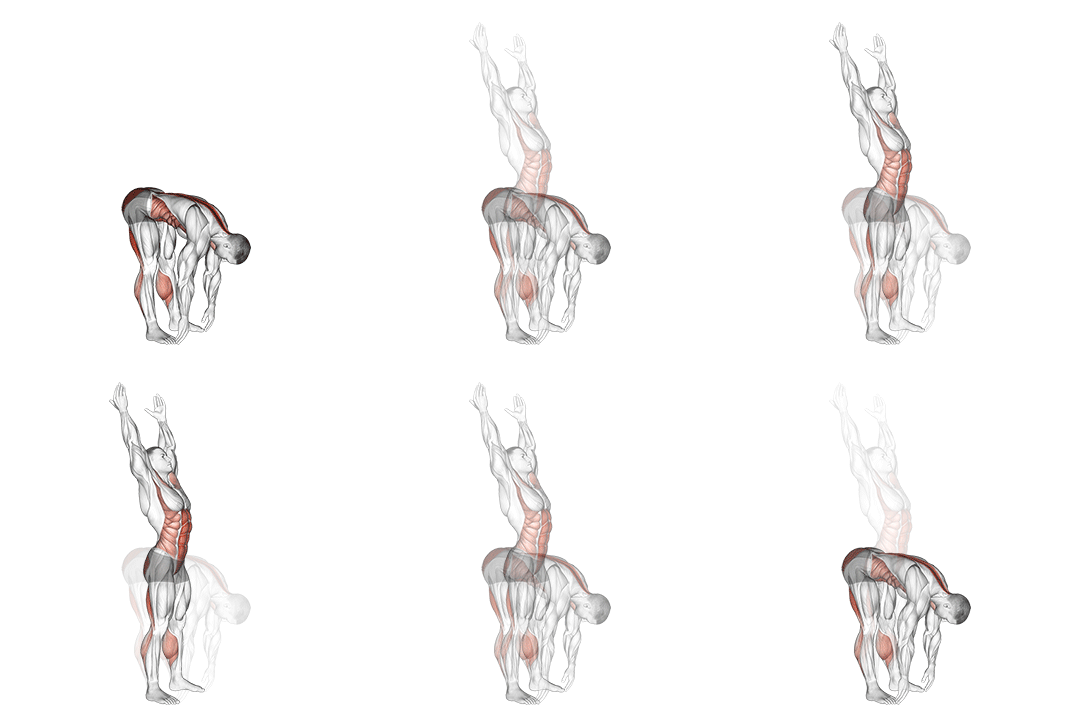
More comparisons with Arms Apart Circular Toe Touch (male)
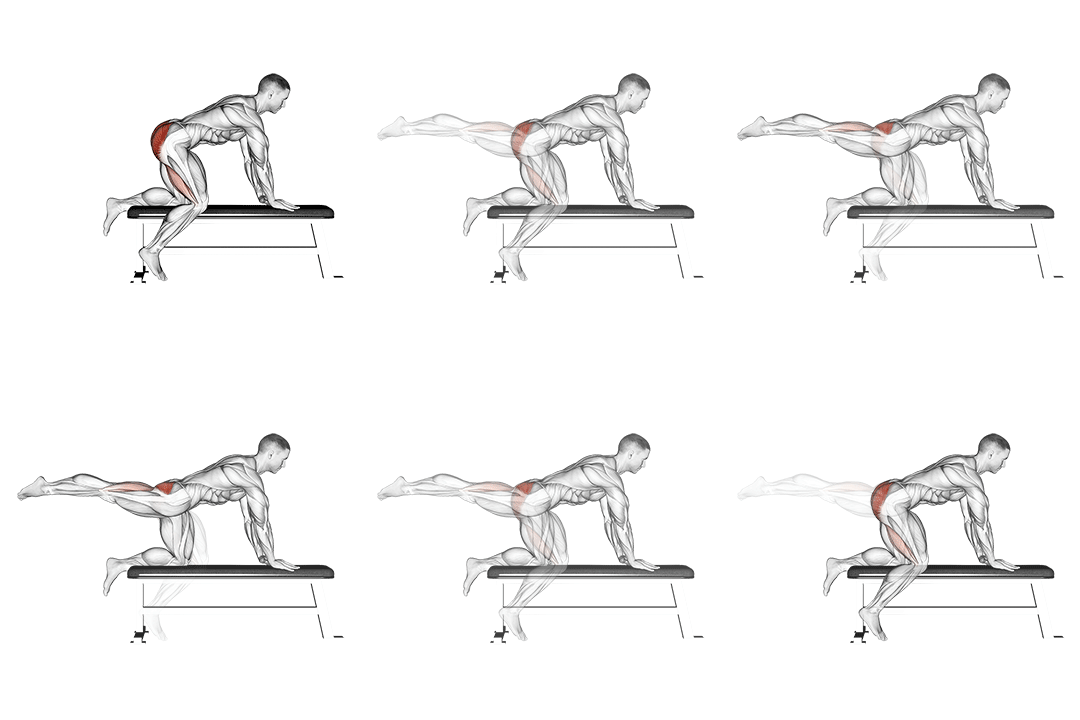
More comparisons with Bent Knee Lying Twist (male)
Compare More Exercises
Use our free comparison tool to analyze any two exercises head-to-head.
Compare Exercises