

Bent Knee Lying Twist (male) vs Forward Lunge (male): Complete Comparison Guide
Bent Knee Lying Twist (male) vs Forward Lunge (male) — if you want stronger glutes, which one should you pick? You’ll get clear, actionable guidance on how each movement loads the glutes, which secondary muscles they recruit, and which matches your goals and equipment. I’ll cover biomechanics (force vectors, length-tension relationships), technique cues you can use right away, rep ranges and progressions, plus simple programming advice so you can pick the right move for muscle growth, strength, balance, or rehab.
Exercise Comparison
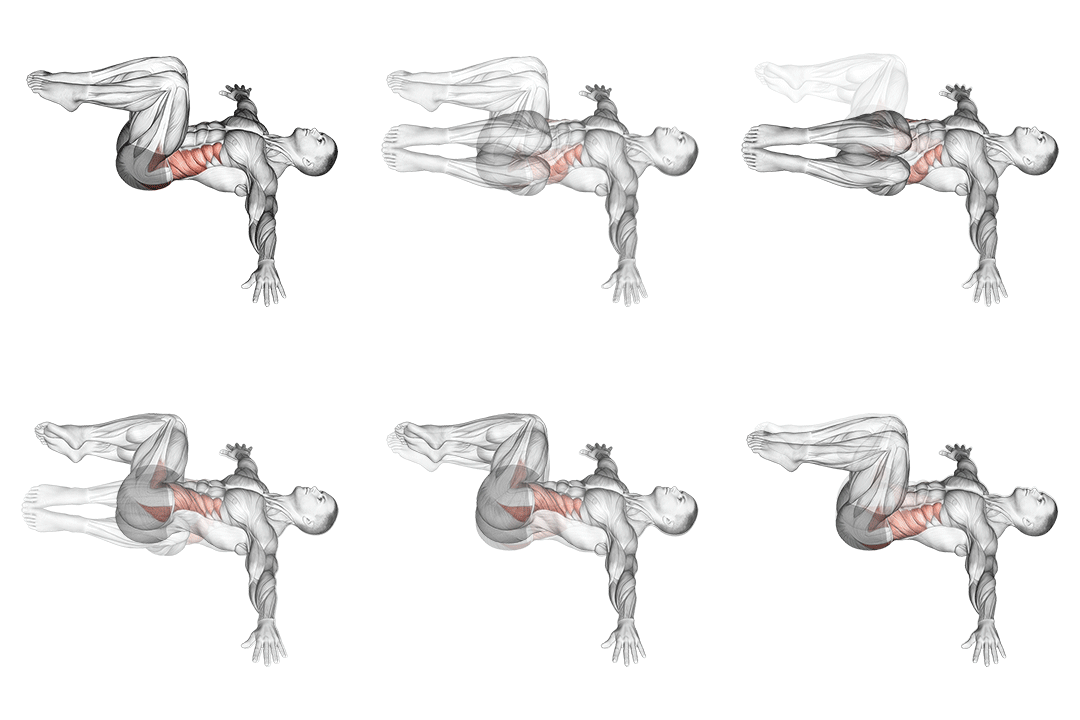
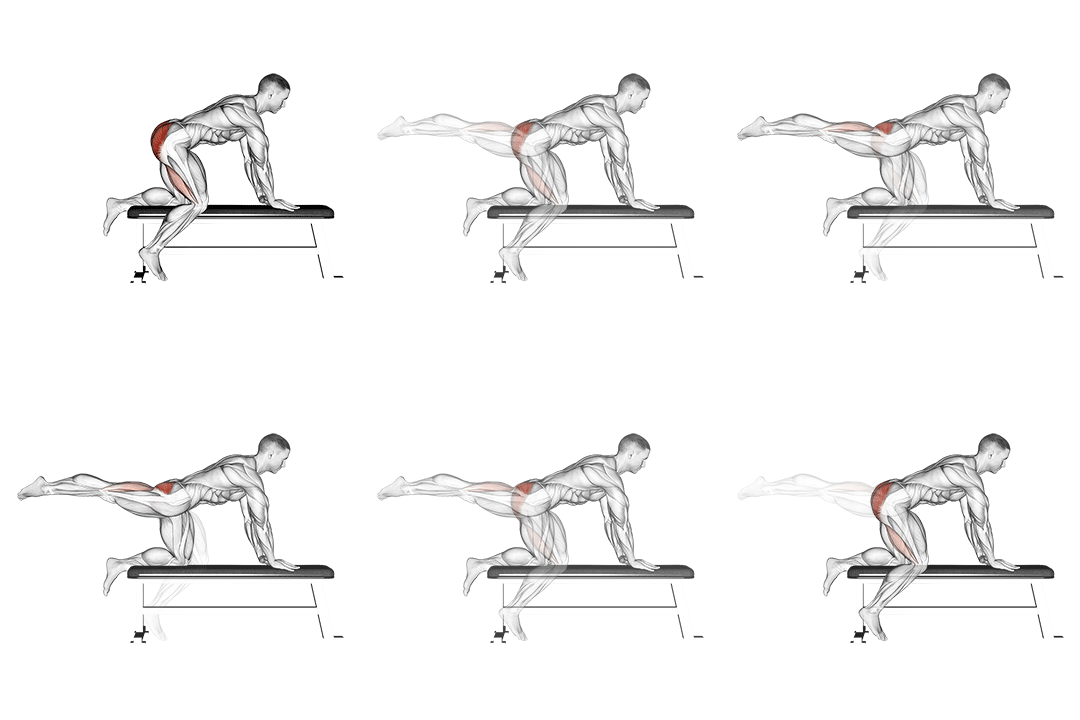
Bent Knee Lying Twist (male)
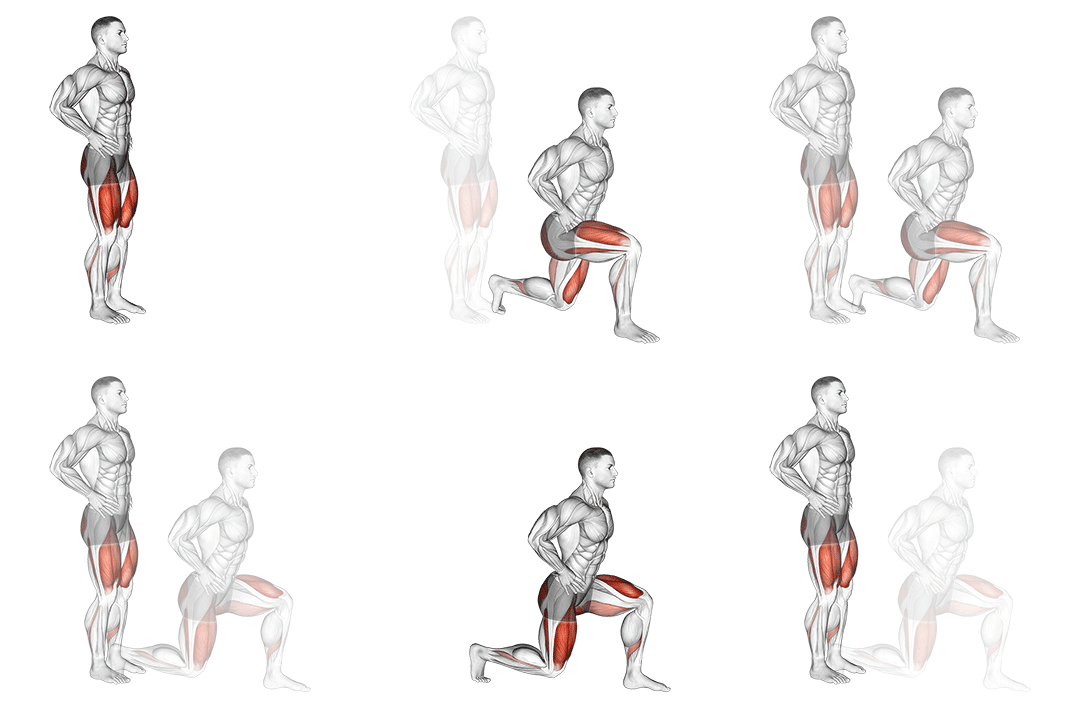
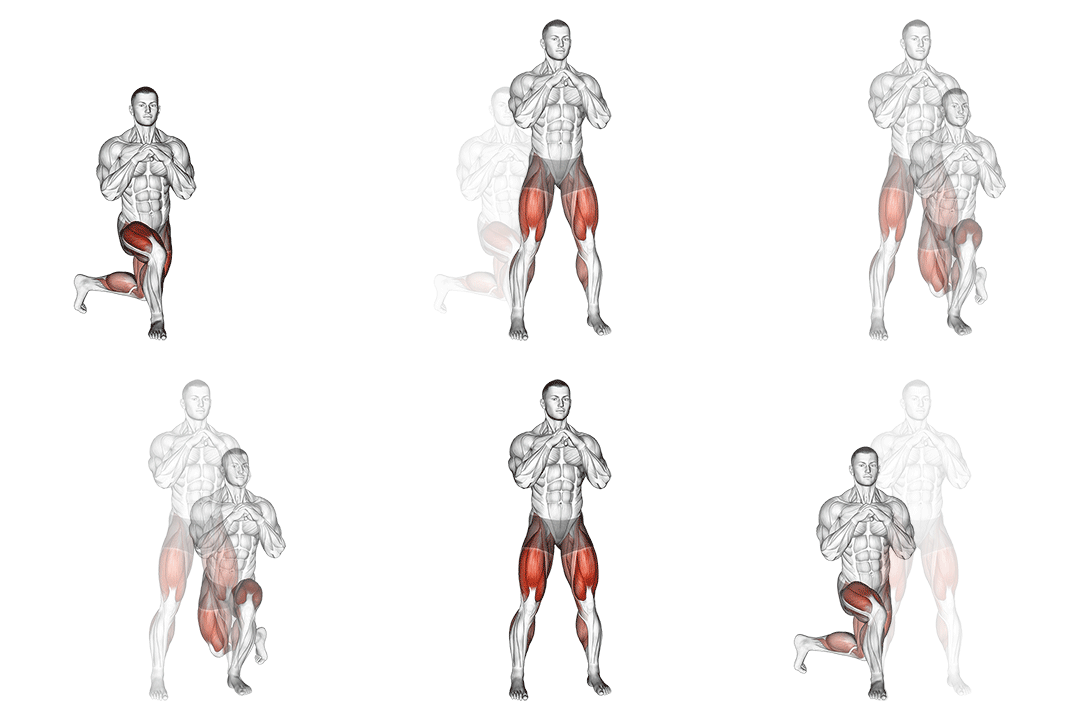
Forward Lunge (male)
Head-to-Head Comparison
| Attribute | Bent Knee Lying Twist (male) | Forward Lunge (male) |
|---|---|---|
| Target Muscle |
Glutes
|
Glutes
|
| Body Part |
Upper-legs
|
Upper-legs
|
| Equipment |
Body-weight
|
Body-weight
|
| Difficulty |
Beginner
|
Beginner
|
| Movement Type |
Isolation
|
Compound
|
| Secondary Muscles |
2
|
3
|
Secondary Muscles Activated
Bent Knee Lying Twist (male)
Forward Lunge (male)
Visual Comparison
Overview
Bent Knee Lying Twist (male) vs Forward Lunge (male) — if you want stronger glutes, which one should you pick? You’ll get clear, actionable guidance on how each movement loads the glutes, which secondary muscles they recruit, and which matches your goals and equipment. I’ll cover biomechanics (force vectors, length-tension relationships), technique cues you can use right away, rep ranges and progressions, plus simple programming advice so you can pick the right move for muscle growth, strength, balance, or rehab.
Key Differences
- Bent Knee Lying Twist (male) is an isolation exercise, while Forward Lunge (male) is a compound movement.
- Both exercises target the Glutes using Body-weight. The main differences are in their movement patterns and muscle activation angles.
Pros & Cons
Bent Knee Lying Twist (male)
+ Pros
- Very low equipment — can be done anywhere on a mat
- Excellent for glute activation and motor control before heavier work
- Low balance demand, suitable for beginners and rehab
- Targets obliques and pelvic rotators for core stability
− Cons
- Limited capacity for progressive overload and mechanical tension
- Lower overall glute activation compared with loaded compound moves
- Provides minimal stimulus for quadriceps, hamstrings, and calves
Forward Lunge (male)
+ Pros
- High mechanical tension across hip and knee — strong hypertrophy stimulus
- Engages multiple muscle groups (quads, hamstrings, calves) for efficient training
- Easy to progress with added load, step length, or tempo
- Improves unilateral strength and functional movement patterns
− Cons
- Higher technical demand — needs good balance and knee tracking
- Greater joint loading can aggravate knees or hips if form is poor
- Requires space and — for advanced progressions — weights
When Each Exercise Wins
Forward Lunge (male) creates higher mechanical tension and larger hip ROM, and you can progressively load it (8–12 reps, 3–5 sets) to drive muscle growth. The compound nature recruits more fibers and allows heavier external loading than the lying twist.
Forward Lunge (male) transfers better to maximal and submaximal strength because it produces greater hip extension torque and can be overloaded (6–8 reps with added weight) while training single-leg stability and force production.
Bent Knee Lying Twist (male) is safer and easier to perform while teaching pelvic control and glute activation without the balance and joint-loading demands of lunges. Use it to build motor patterns before progressing.
Bent Knee Lying Twist (male) requires no equipment and minimal space, making it ideal for short workouts, warm-ups, or activation circuits at home.
Frequently Asked Questions
Can I do both Bent Knee Lying Twist (male) and Forward Lunge (male) in the same workout?
Yes. Do Bent Knee Lying Twist (male) early as an activation drill (1–2 sets of 10–20 slow reps) to prime the glutes and obliques, then perform Forward Lunge (male) as the working exercise for strength or hypertrophy (3–5 sets of 6–15 reps). This order uses the twist to improve motor control and the lunge to provide mechanical overload.
Which exercise is better for beginners?
Bent Knee Lying Twist (male) is better for absolute beginners because it minimizes balance and joint load while teaching pelvic control and glute engagement. Once you demonstrate consistent activation and knee tracking, progress to Forward Lunge (male) to build unilateral strength.
How do the muscle activation patterns differ?
Forward Lunge (male) produces phasic, high-amplitude glute contractions during eccentric descent and concentric drive and recruits quads and hamstrings due to sagittal-plane force vectors. Bent Knee Lying Twist (male) yields lower-magnitude, tonic glute activity combined with transverse-plane oblique activation and pelvic stabilization.
Can Forward Lunge (male) replace Bent Knee Lying Twist (male)?
Not entirely. Forward Lunge (male) can replace the strength and hypertrophy role of the lying twist, but it won’t provide the same low-load pelvic control and focused oblique activation. Keep the lying twist as a primer or rehab tool even if lunges are your main strength exercise.
Expert Verdict
Use the Bent Knee Lying Twist (male) when you need reliable glute activation, pelvic control, and a low-risk movement for warm-ups, rehab, or when training space is limited. It’s a motor-control tool, not a primary hypertrophy mover. Choose the Forward Lunge (male) when your goal is to build muscle and single-leg strength — it provides greater mechanical tension, larger hip ROM (30°–100°), and clear progression options with external load. For balanced programming, start sessions with the lying twist for activation, then load the lunge for working sets focused on strength or muscle growth.
Also Compare
More comparisons with Bent Knee Lying Twist (male)
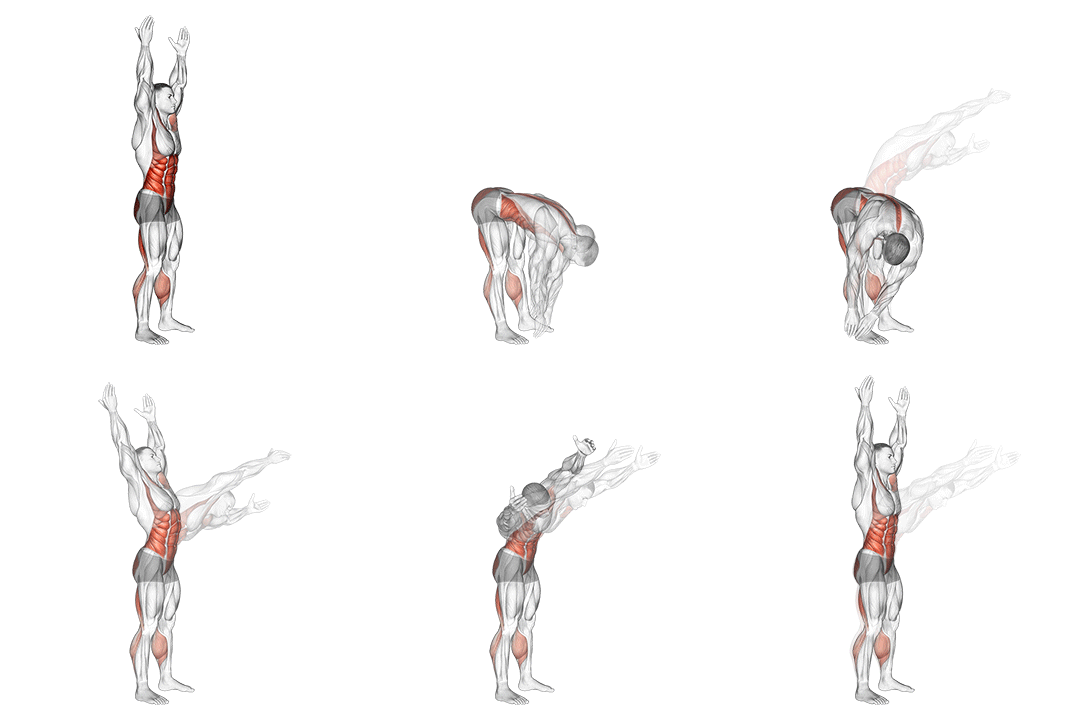
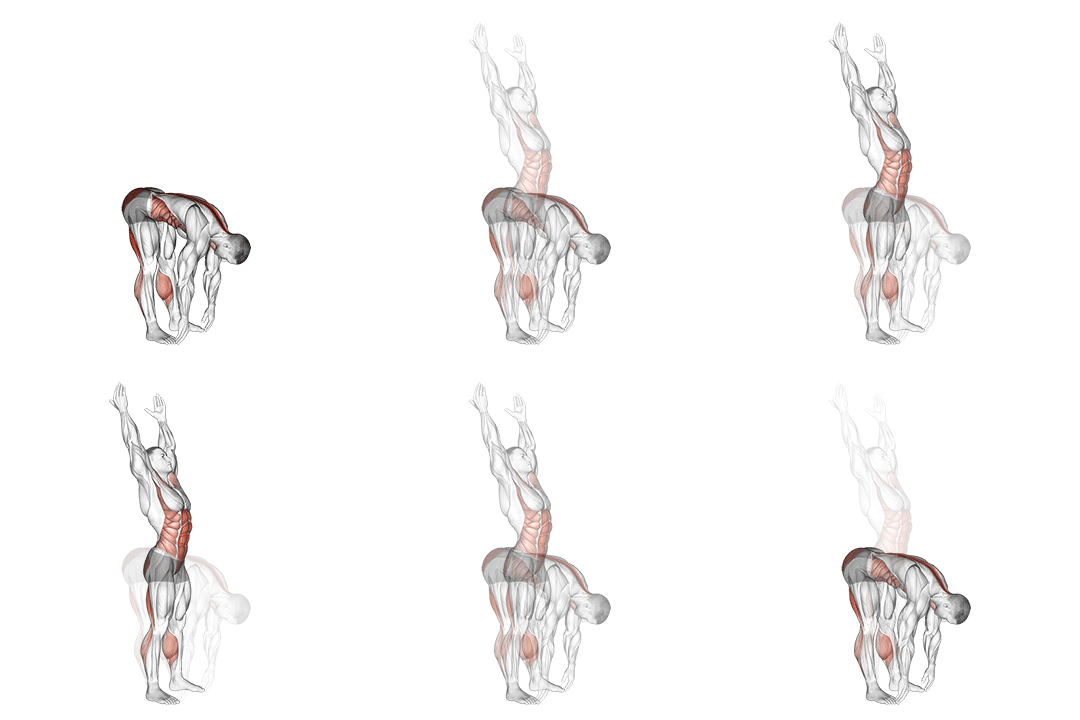
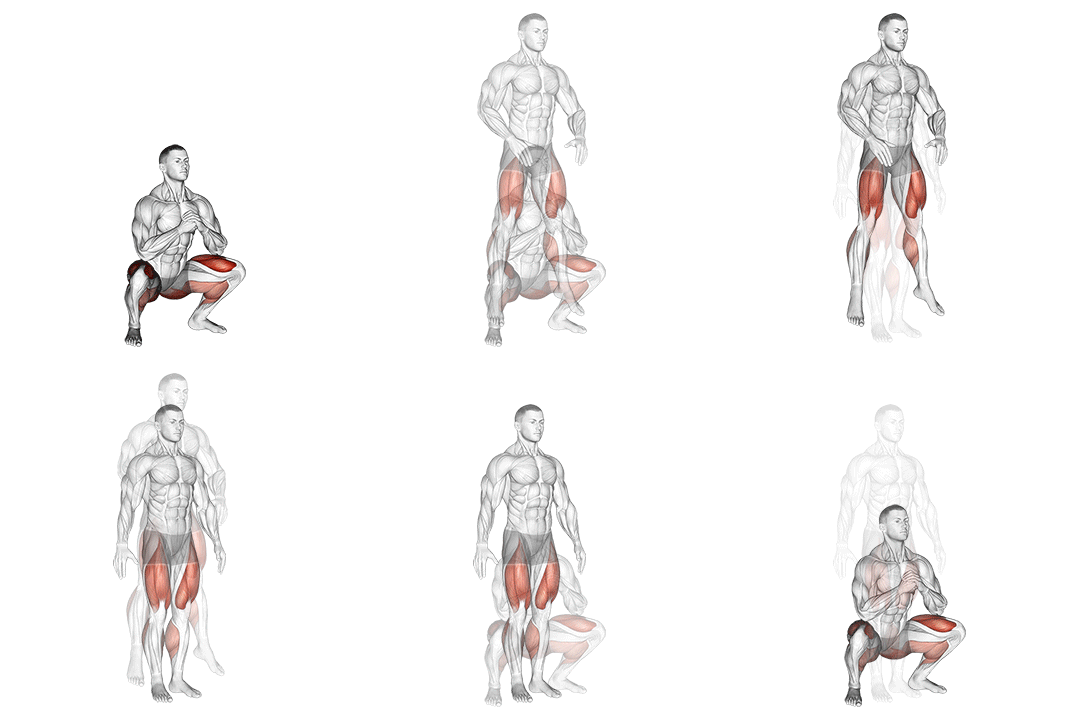
More comparisons with Forward Lunge (male)
Compare More Exercises
Use our free comparison tool to analyze any two exercises head-to-head.
Compare Exercises