

Arms Apart Circular Toe Touch (male) vs Box Jump (Multiple Response): Complete Comparison Guide
Arms Apart Circular Toe Touch (male) vs Box Jump (Multiple Response) — you’re comparing two intermediate compound moves that both prioritize the glutes and upper-legs. You’ll get a clear breakdown of primary and secondary muscle activation, key biomechanics (hip hinge angles, force vectors, stretch-shortening cycle), equipment needs, and which exercise fits specific goals. I’ll give technique cues you can use immediately, rep and set ranges (8–12 for hypertrophy, 3–6 for power), and progression strategies so you can program either move safely and effectively.
Exercise Comparison
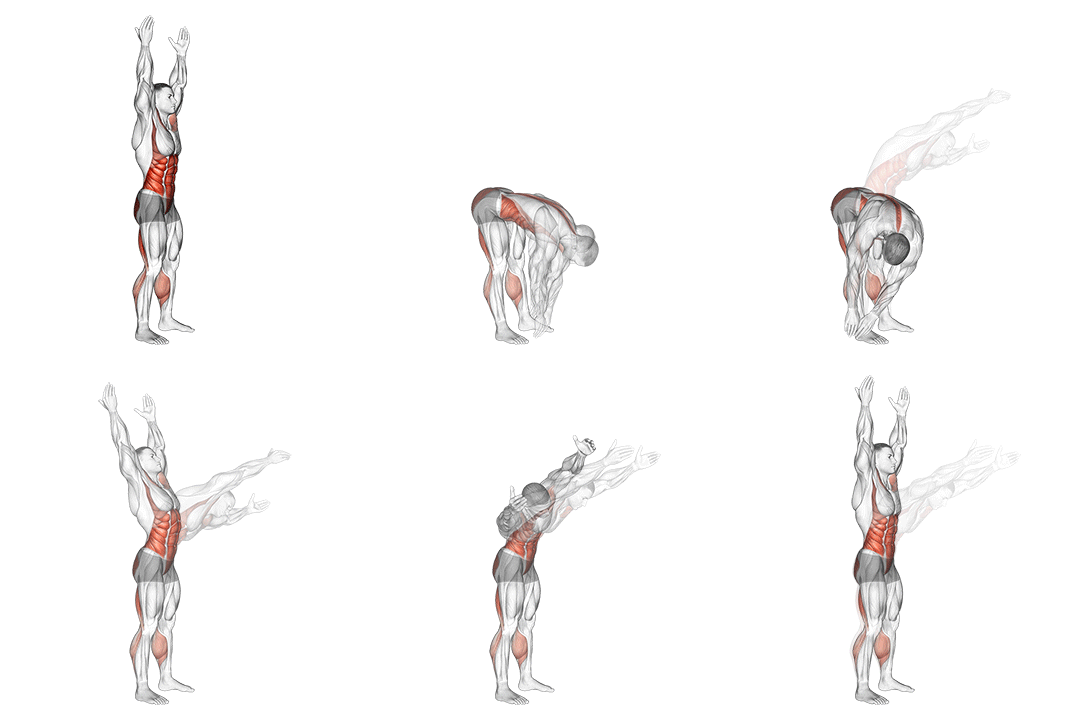
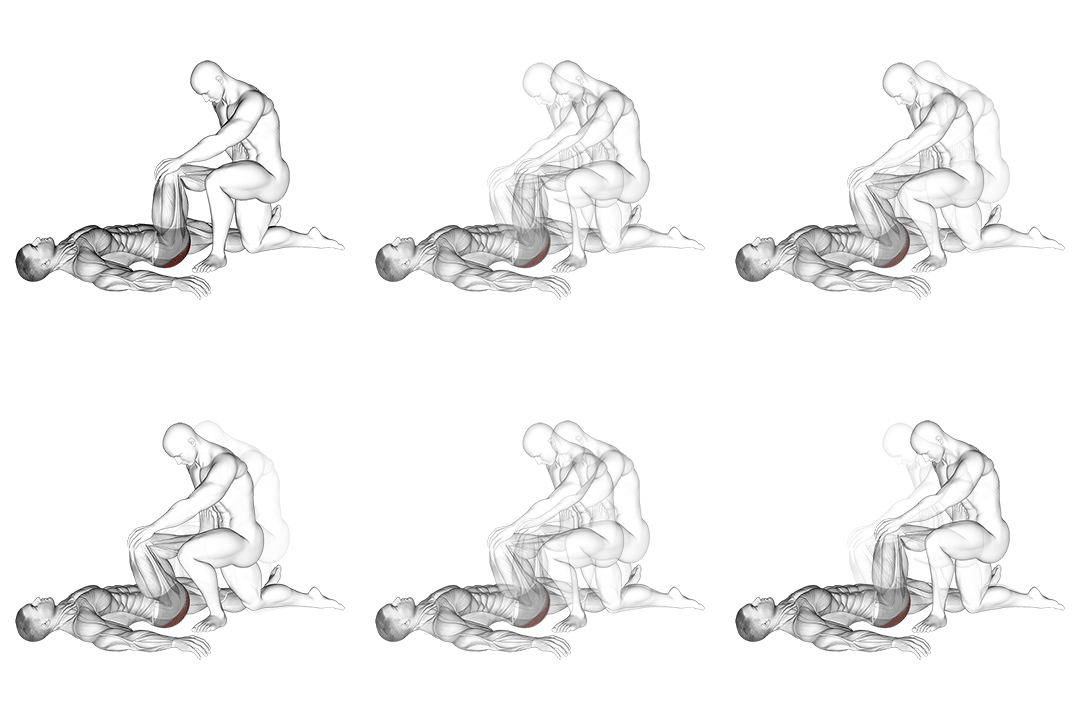
Arms Apart Circular Toe Touch (male)
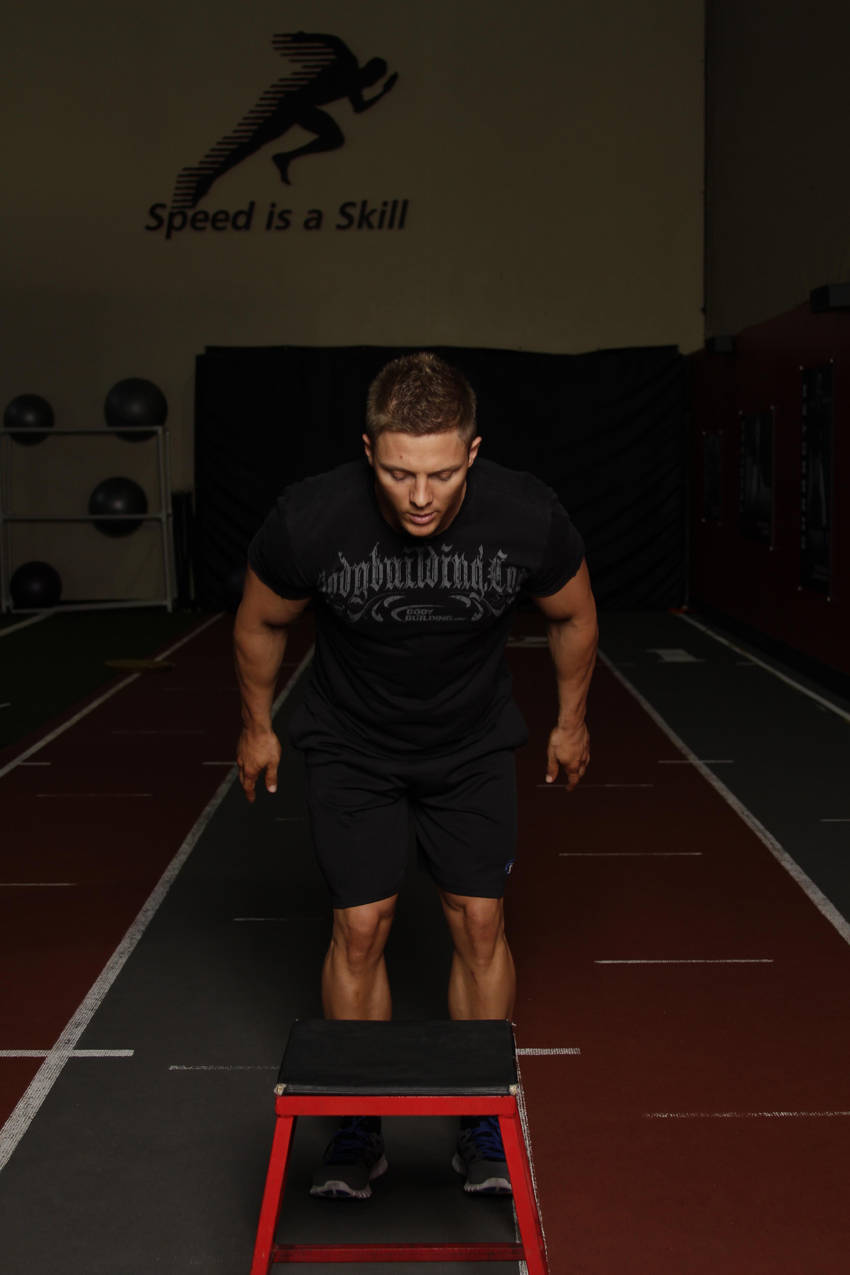
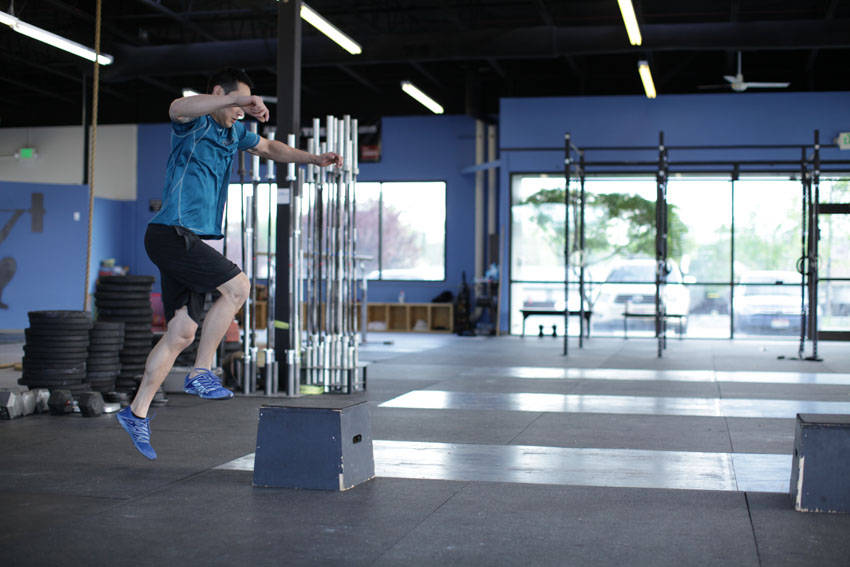
Box Jump (multiple Response)
Head-to-Head Comparison
| Attribute | Arms Apart Circular Toe Touch (male) | Box Jump (multiple Response) |
|---|---|---|
| Target Muscle |
Glutes
|
Glutes
|
| Body Part |
Upper-legs
|
Upper-legs
|
| Equipment |
Body-weight
|
Other
|
| Difficulty |
Intermediate
|
Intermediate
|
| Movement Type |
Compound
|
Compound
|
| Secondary Muscles |
3
|
5
|
Secondary Muscles Activated
Arms Apart Circular Toe Touch (male)
Box Jump (multiple Response)
Visual Comparison
Overview
Arms Apart Circular Toe Touch (male) vs Box Jump (Multiple Response) — you’re comparing two intermediate compound moves that both prioritize the glutes and upper-legs. You’ll get a clear breakdown of primary and secondary muscle activation, key biomechanics (hip hinge angles, force vectors, stretch-shortening cycle), equipment needs, and which exercise fits specific goals. I’ll give technique cues you can use immediately, rep and set ranges (8–12 for hypertrophy, 3–6 for power), and progression strategies so you can program either move safely and effectively.
Key Differences
- Equipment differs: Arms Apart Circular Toe Touch (male) uses Body-weight, while Box Jump (multiple Response) requires Other.
Pros & Cons
Arms Apart Circular Toe Touch (male)
+ Pros
- Requires no equipment — perform anywhere
- Strong eccentric loading for hypertrophy and time under tension
- Teaches a robust hip hinge pattern and posterior chain control
- Lower impact — reduced landing stress on knees and ankles
− Cons
- Less effective for high-rate power development
- Limited ankle/calf stimulus compared with plyometrics
- Progressions for maximal explosiveness are limited without added load
Box Jump (multiple Response)
+ Pros
- High rate-of-force development — excellent for power and athletic transfer
- Strong calf and reactive component via the stretch-shortening cycle
- Easy to scale intensity by box height and reps (3–10 per set)
- Engages frontal-plane stabilizers (abductors/adductors) during landing
− Cons
- Requires sturdy equipment and safe landing surface
- Higher impact and injury risk if technique or box choice is poor
- Spatial judgement and plyometric skill needed for safe progression
When Each Exercise Wins
The toe touch puts the glutes under longer eccentric tension and allows controlled 2–4 second eccentrics and 8–12 rep ranges that maximize mechanical tension. Its ability to maintain high time under tension and controlled loading better stimulates muscle growth in the posterior chain.
Box jumps produce high-rate force development and recruit the neuromuscular system for powerful hip extension; using progressive height and loaded variations transfers to increased maximal strength when paired with heavy compound lifts. The explosive intent and short amortization phase improve motor unit recruitment for forceful contractions.
Toe touches teach the hip hinge and posterior chain control with lower impact and simpler movement cues, making them safer for novices. You can scale range of motion and tempo to match mobility and strength before adding complexity.
No equipment, minimal space, and adaptable loading make the toe touch ideal for home sessions. Box jumps require a safe box and floor and are less practical without proper equipment and space.
Frequently Asked Questions
Can I do both Arms Apart Circular Toe Touch (male) and Box Jump (Multiple Response) in the same workout?
Yes — sequence them strategically. Do box jumps early when your nervous system is fresh for maximal power (3–6 reps), and program toe touches later for controlled hypertrophy work (8–12 reps). Keep total volume manageable to avoid fatigue-related technique breakdown.
Which exercise is better for beginners?
Arms Apart Circular Toe Touch (male) is better for beginners because it teaches the hip hinge and posterior chain activation with lower impact. Start with tempo-controlled reps and short ranges of motion before progressing to full ROM or added load.
How do the muscle activation patterns differ?
Toe touches emphasize slow eccentric loading and sustained concentric work, increasing time under tension for glutes and hamstrings. Box jumps rely on a rapid eccentric–concentric cycle with a short amortization phase, producing brief, high-amplitude glute and calf activation for power.
Can Box Jump (Multiple Response) replace Arms Apart Circular Toe Touch (male)?
Not completely — box jumps can replace some explosive training and add calf and frontal-plane work, but they don’t provide the same eccentric control and hypertrophy stimulus for the posterior chain. Use box jumps for power and keep toe touches for targeted muscle growth and hip-hinge mechanics.
Expert Verdict
Use Arms Apart Circular Toe Touch (male) when your priority is hypertrophy, posterior chain control, mobility and accessibility — it gives controlled eccentric overload and teaches a clean hip hinge. Choose Box Jump (Multiple Response) when you want to develop explosive power, reactive strength, and athletic transfer; start with 12–20 in (30–50 cm) and focus on soft yet stable landings. For balanced programming, pair them: 3–4 sets of toe touches (8–12 reps) on strength or hypertrophy days and 3–6 sets of box jumps (3–6 explosive reps) on power days, ensuring proper recovery and technique coaching.
Also Compare
More comparisons with Arms Apart Circular Toe Touch (male)
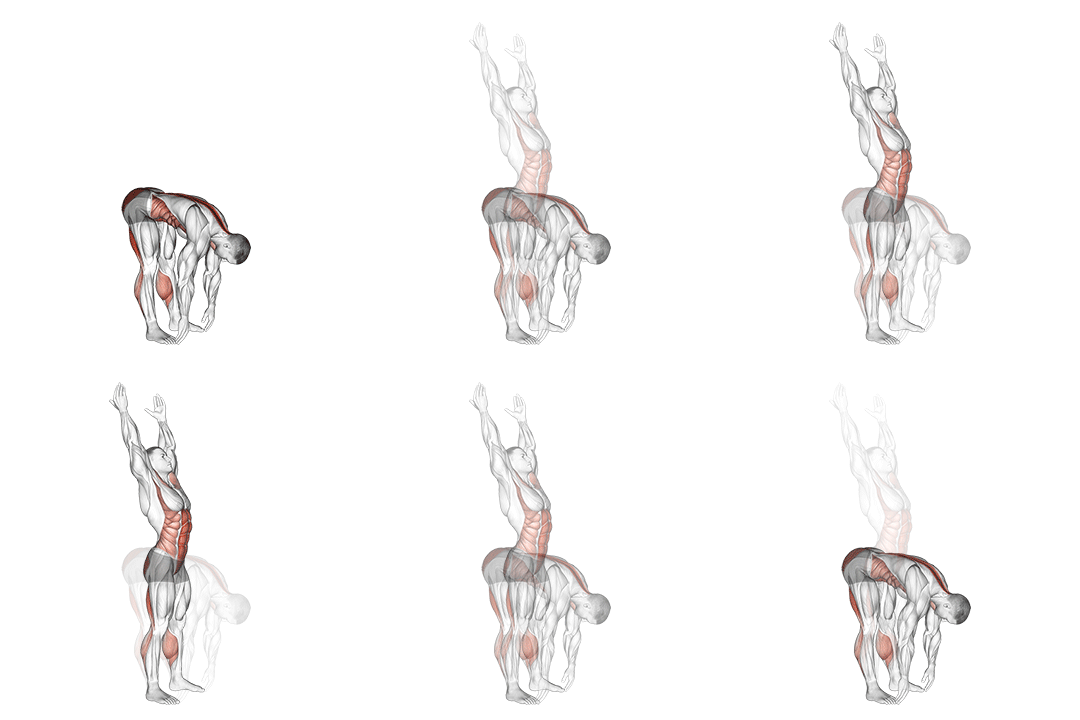
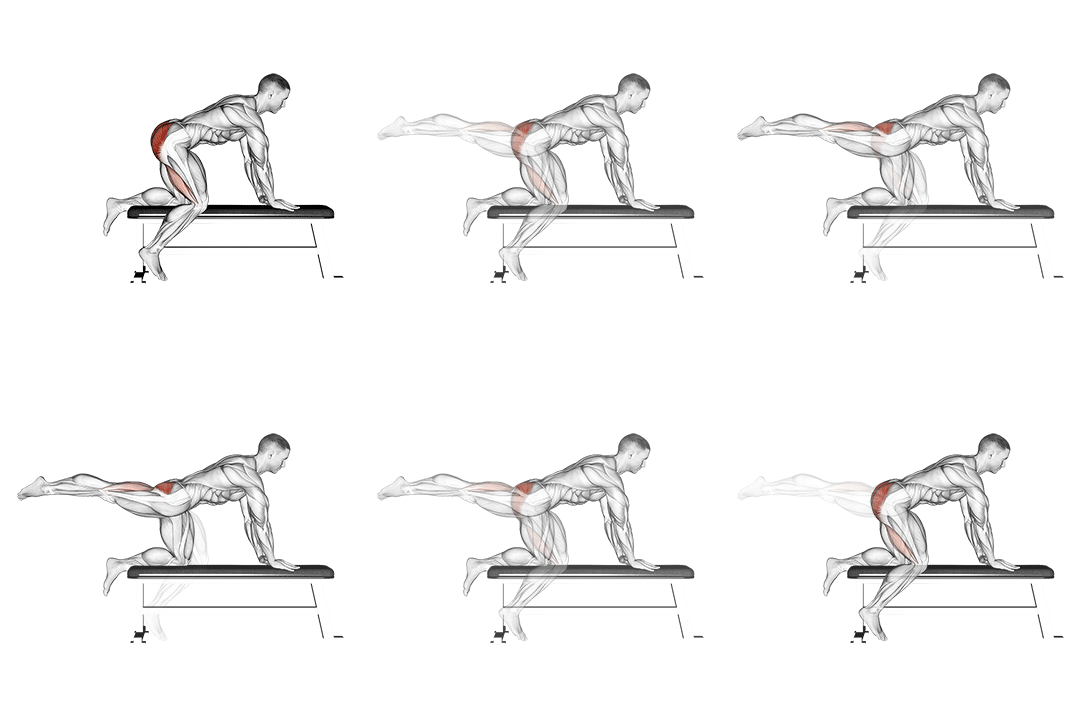
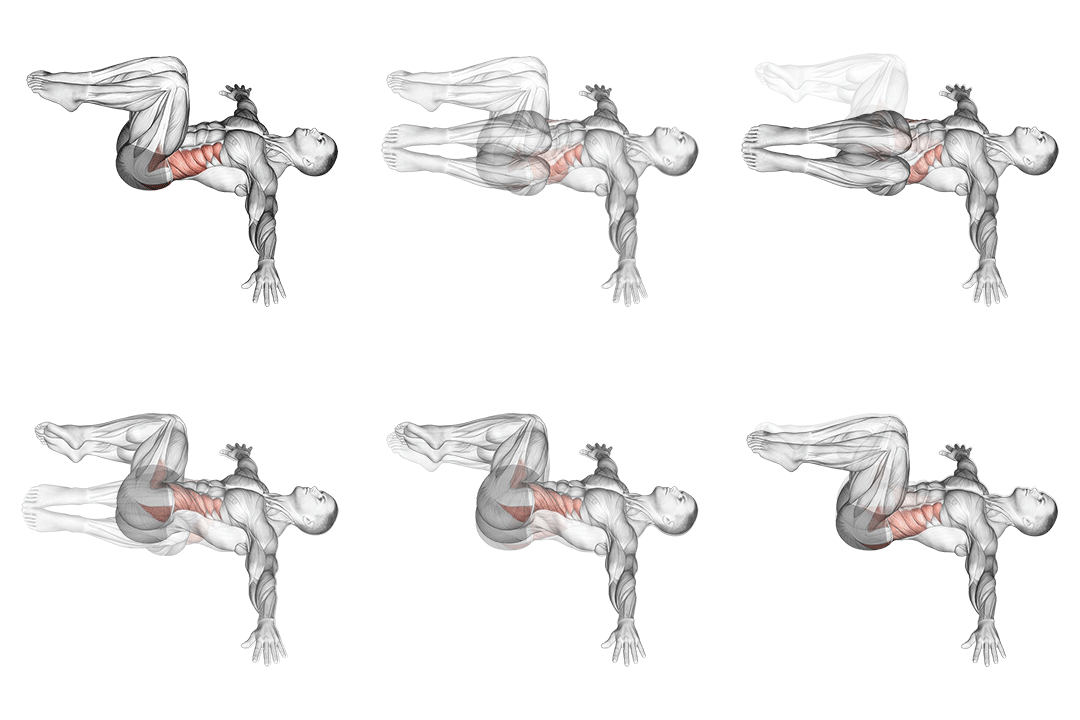
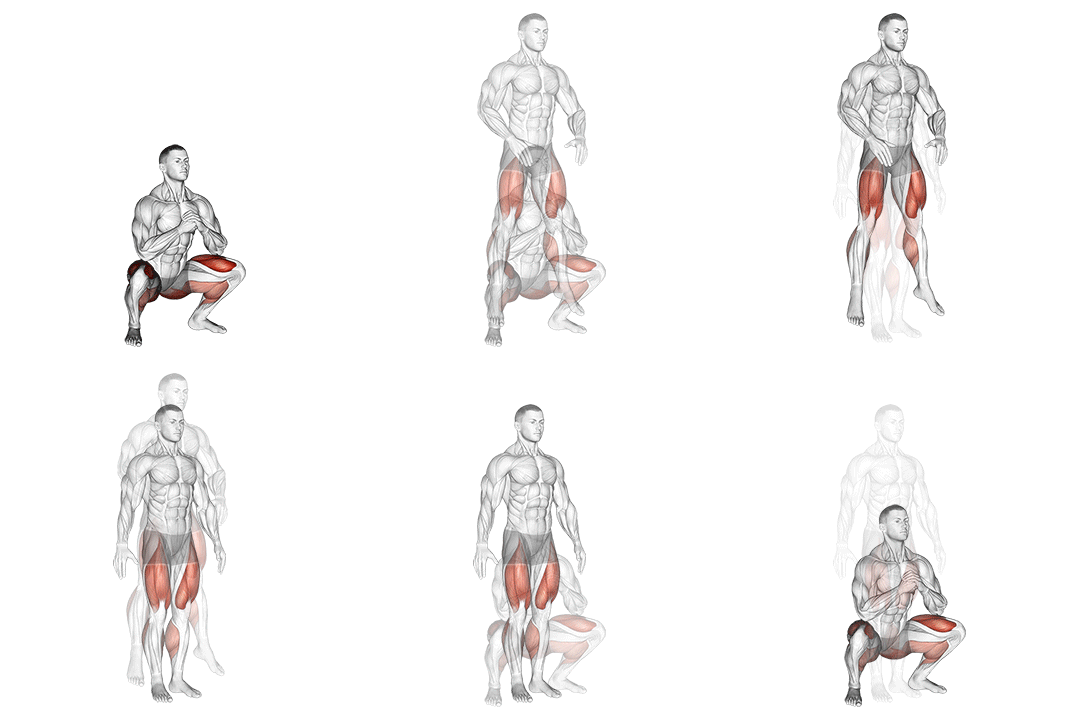
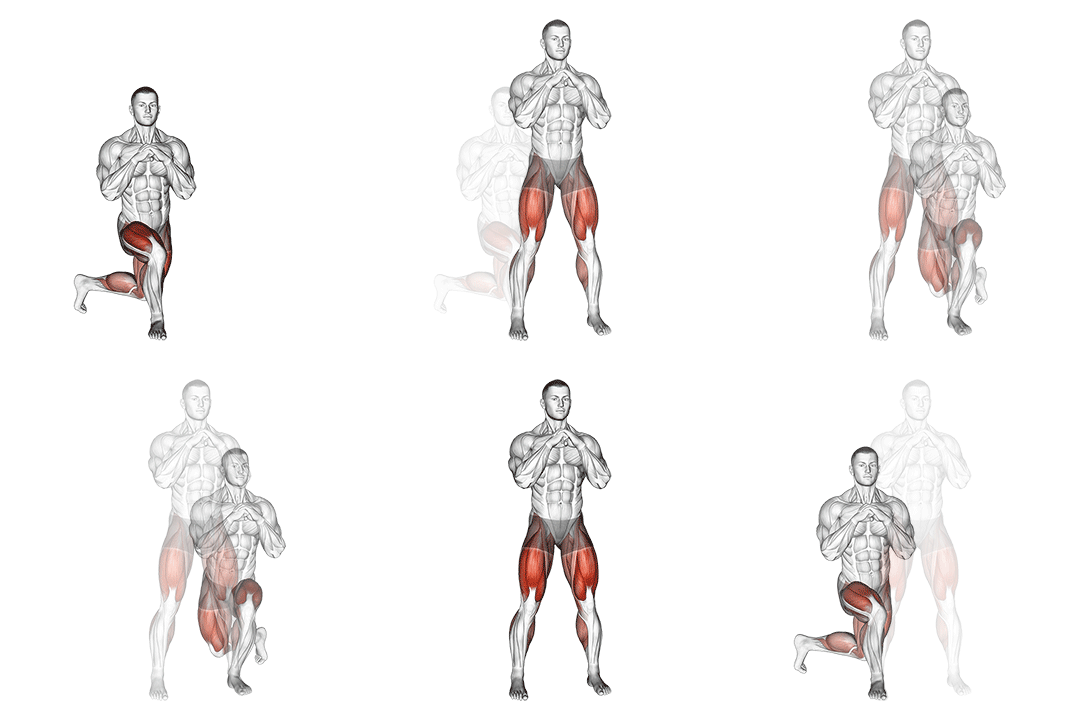
More comparisons with Box Jump (multiple Response)
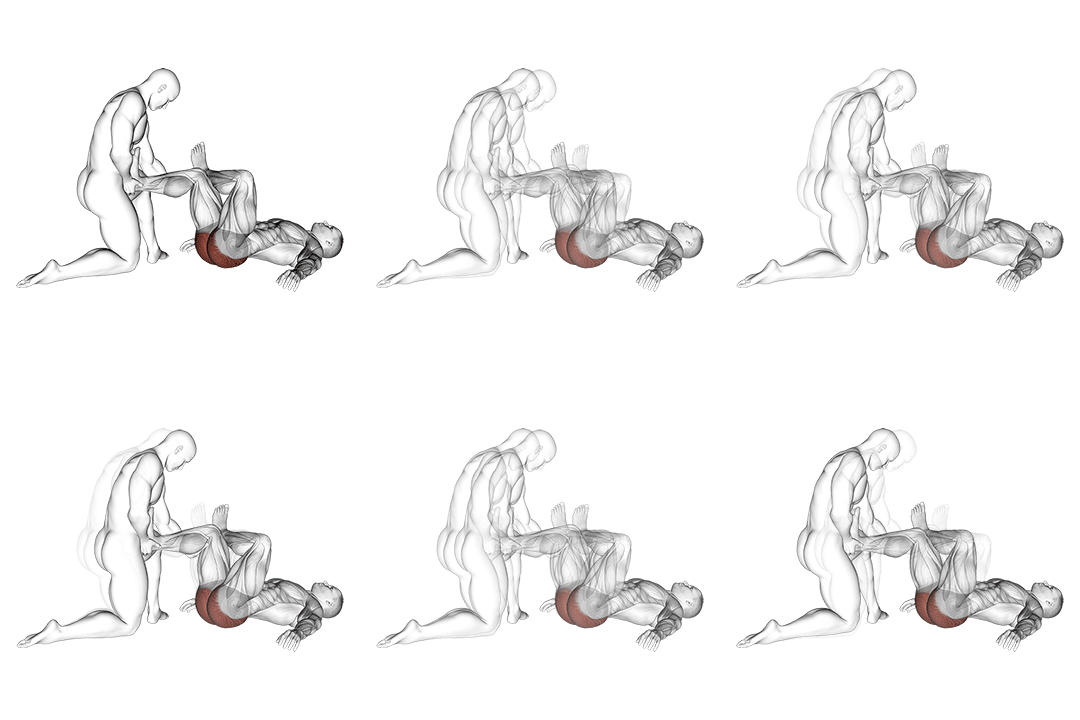
Compare More Exercises
Use our free comparison tool to analyze any two exercises head-to-head.
Compare Exercises