

Arms Apart Circular Toe Touch (male) vs Curtsey Squat: Complete Comparison Guide
Arms Apart Circular Toe Touch (male) vs Curtsey Squat puts two glute-focused, body-weight compounds head-to-head. You’ll get clear technique cues, the biomechanics behind why each hits the glutes differently, rep ranges and progressions, plus who should prioritize which move. Read on to learn how hip joint angles, force vectors, and muscle length-tension affect activation, how to cue each move for safer loading, and practical sets and rep ranges so you can choose the exercise that matches your strength, mobility, and training goals.
Exercise Comparison
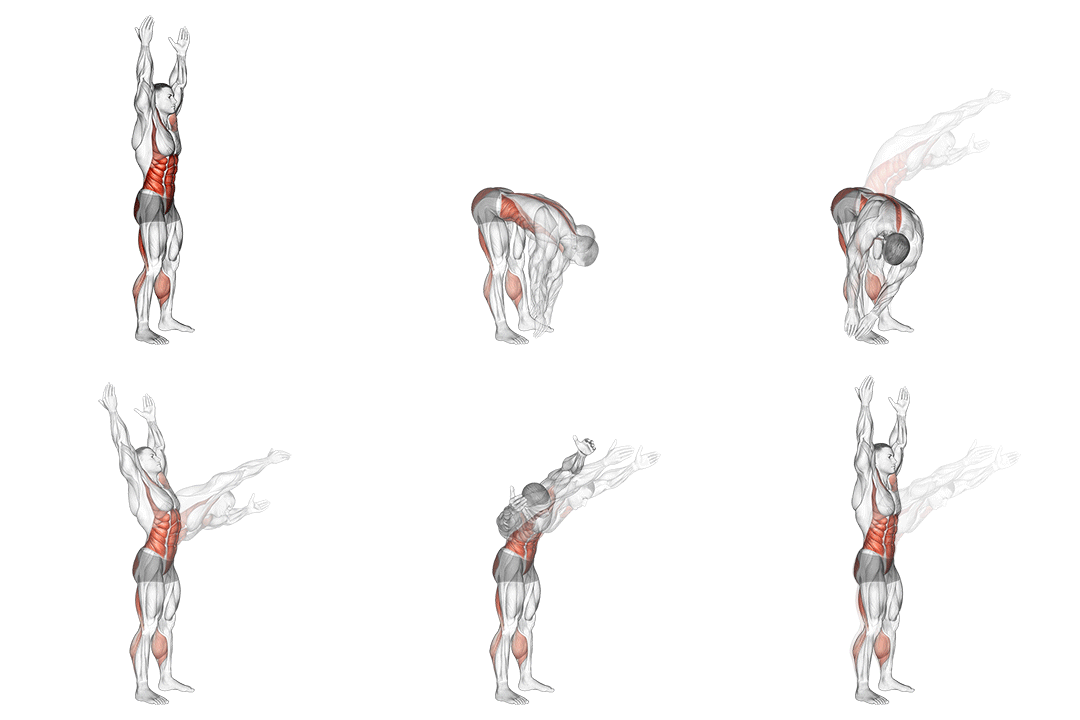
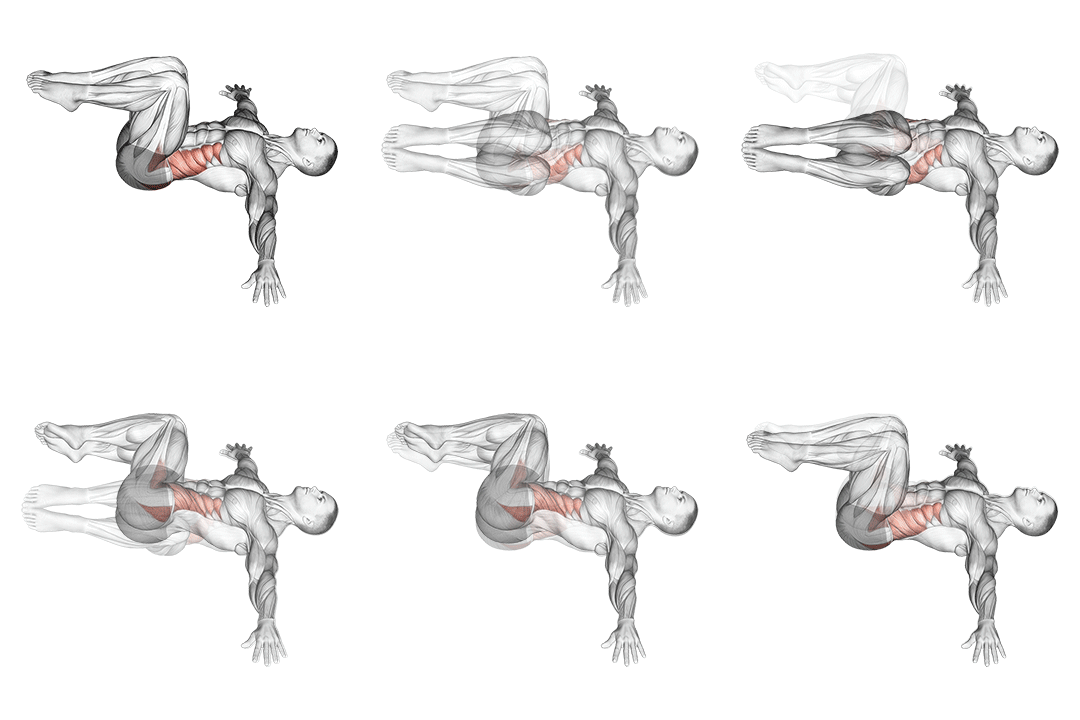
Arms Apart Circular Toe Touch (male)
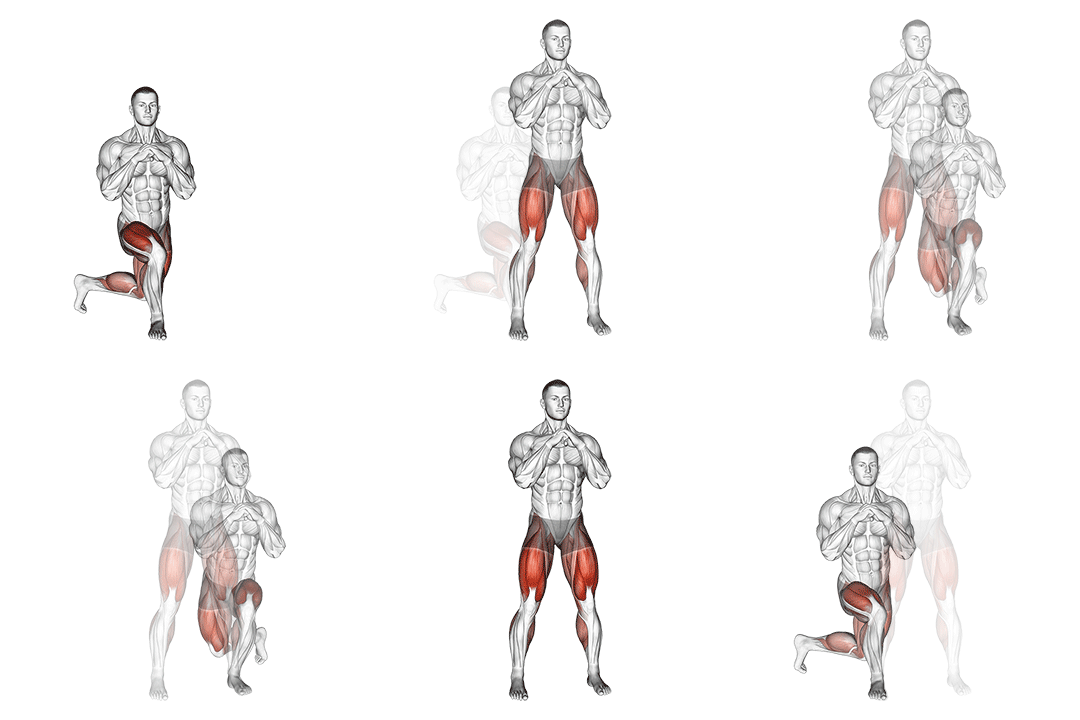
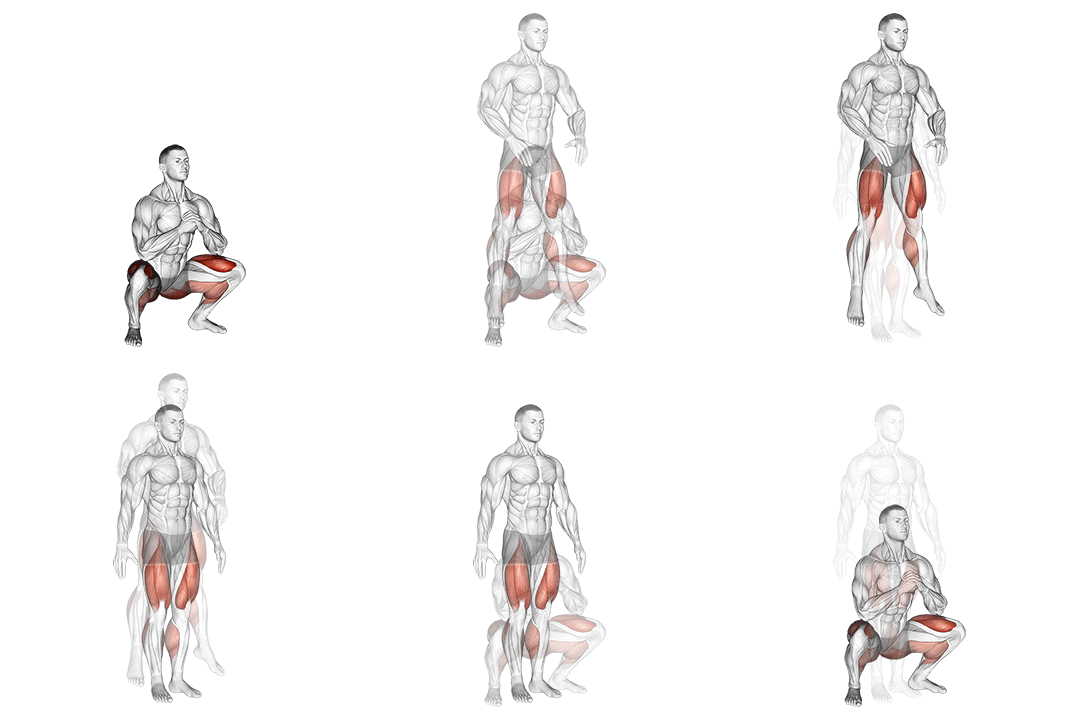
Curtsey Squat
Head-to-Head Comparison
| Attribute | Arms Apart Circular Toe Touch (male) | Curtsey Squat |
|---|---|---|
| Target Muscle |
Glutes
|
Glutes
|
| Body Part |
Upper-legs
|
Upper-legs
|
| Equipment |
Body-weight
|
Body-weight
|
| Difficulty |
Intermediate
|
Beginner
|
| Movement Type |
Compound
|
Compound
|
| Secondary Muscles |
3
|
3
|
Secondary Muscles Activated
Arms Apart Circular Toe Touch (male)
Curtsey Squat
Visual Comparison
Overview
Arms Apart Circular Toe Touch (male) vs Curtsey Squat puts two glute-focused, body-weight compounds head-to-head. You’ll get clear technique cues, the biomechanics behind why each hits the glutes differently, rep ranges and progressions, plus who should prioritize which move. Read on to learn how hip joint angles, force vectors, and muscle length-tension affect activation, how to cue each move for safer loading, and practical sets and rep ranges so you can choose the exercise that matches your strength, mobility, and training goals.
Key Differences
- Difficulty levels differ: Arms Apart Circular Toe Touch (male) is intermediate, while Curtsey Squat is beginner.
- Both exercises target the Glutes using Body-weight. The main differences are in their movement patterns and muscle activation angles.
Pros & Cons
Arms Apart Circular Toe Touch (male)
+ Pros
- Strong posterior chain and hamstring emphasis through a longer stretch–shortening cycle
- Improves hip hinge control and rotational mobility
- Great for building eccentric tolerance in glute max
- No equipment and dynamic enough for conditioning
− Cons
- Higher coordination and mobility demands for safe execution
- Greater lumbar flexion risk if performed with poor technique
- Harder to progressively overload with heavy external load
Curtsey Squat
+ Pros
- Beginner-friendly pattern with clear step-back path (~45°)
- Easily loaded with dumbbells or kettlebell for progressive overload
- Strong glute medius activation for hip stability
- Lower technical barrier—quick to teach and cue
− Cons
- Less posterior chain eccentric stretch compared to hinge-based moves
- Can drive knee valgus if hip control is weak
- Single-direction movement; less rotational/core challenge
When Each Exercise Wins
Curtsey Squats allow consistent time-under-tension in an 8–15 rep range and are easy to load progressively with dumbbells or a kettlebell. The controlled eccentric-to-concentric squat vector targets both gluteus maximus and quads, making it efficient for muscle growth.
Curtsey Squats scale simply with external load, making them ideal for progressive overload and unilateral strength balance. Adding 3–5% bodyweight increments or holding a 10–30 lb weight increases force demands without changing technique.
Curtsey Squats have a lower coordination requirement and clearer alignment cues (knee over mid-foot, 45° step), so novices can adopt safe mechanics and build hip stability fast with less mobility needed.
Both are body-weight, but Curtsey Squats are simpler to perform in small spaces and can be made more challenging with household weights. Their lower mobility demand and easier progressions make them the pragmatic home choice.
Frequently Asked Questions
Can I do both Arms Apart Circular Toe Touch (male) and Curtsey Squat in the same workout?
Yes—you can pair them. Use Curtsey Squats early in the session for heavier sets (3–4 sets of 8–12) and add Arms Apart as a posterior-chain finisher (2–3 sets of 10–15, slower eccentrics) to target different length-tension profiles and mobility.
Which exercise is better for beginners?
Curtsey Squat is better for beginners because it has a simpler movement pattern and lower mobility demand. Start with body-weight reps focused on hip alignment and progress to loaded variations once you can maintain knee tracking.
How do the muscle activation patterns differ?
Curtsey Squat emphasizes gluteus medius and quadriceps via a frontal-plane, adduction-biased vector with steady concentric drive. Arms Apart Circular Toe Touch increases gluteus maximus and hamstring eccentric loading through greater hip flexion angles and hinge mechanics, raising posterior chain recruitment at longer muscle lengths.
Can Curtsey Squat replace Arms Apart Circular Toe Touch (male)?
Curtsey Squat can replace Arms Apart for general glute development and progressive overload, but it won’t fully replicate the hinge-driven eccentric stress and rotational/core demand of Arms Apart. If you want both posterior chain lengthening and hip stability, include both in rotation.
Expert Verdict
Choose Curtsey Squats when you want a reliable, scalable glute-building exercise that’s easy to teach, load, and use in 8–15 rep hypertrophy blocks or heavier strength sets. Prioritize strict knee tracking and a 45° back-step to protect the joint. Use Arms Apart Circular Toe Touch (male) when your goal is posterior chain conditioning, eccentric strength, and improved hinge mechanics—include it for dynamic warm-ups or as a supplemental posterior-chain finisher (8–12 controlled reps, 2–3 second eccentrics). If you must pick one for most trainees, Curtsey Squat wins for accessibility and progressive overload.
Also Compare
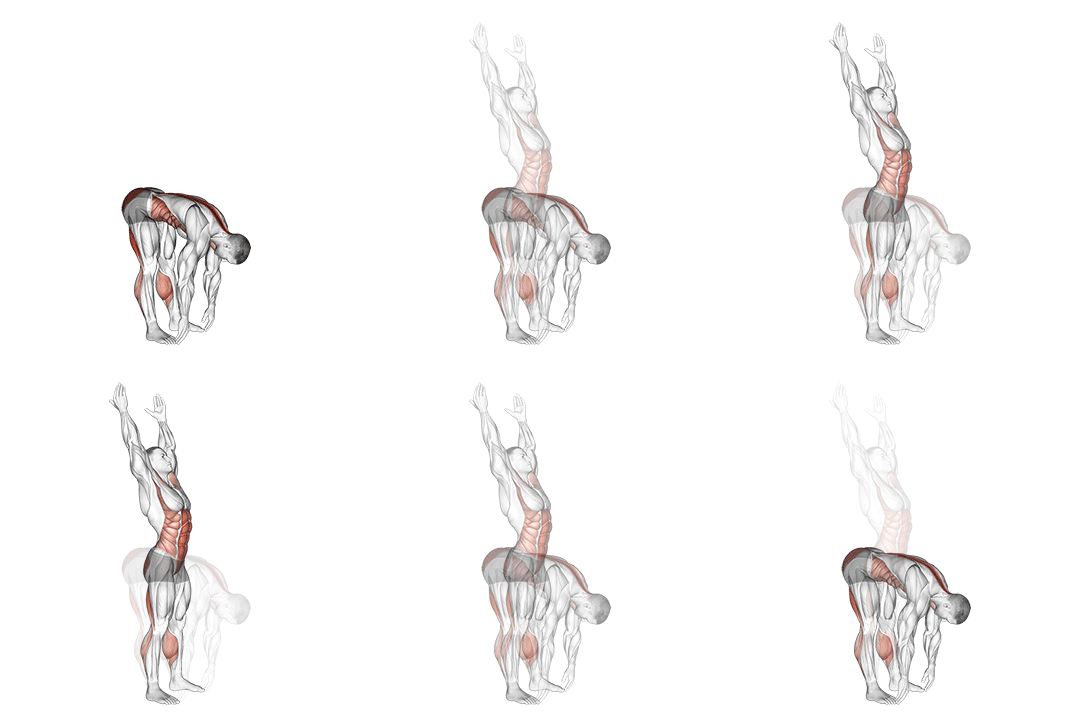
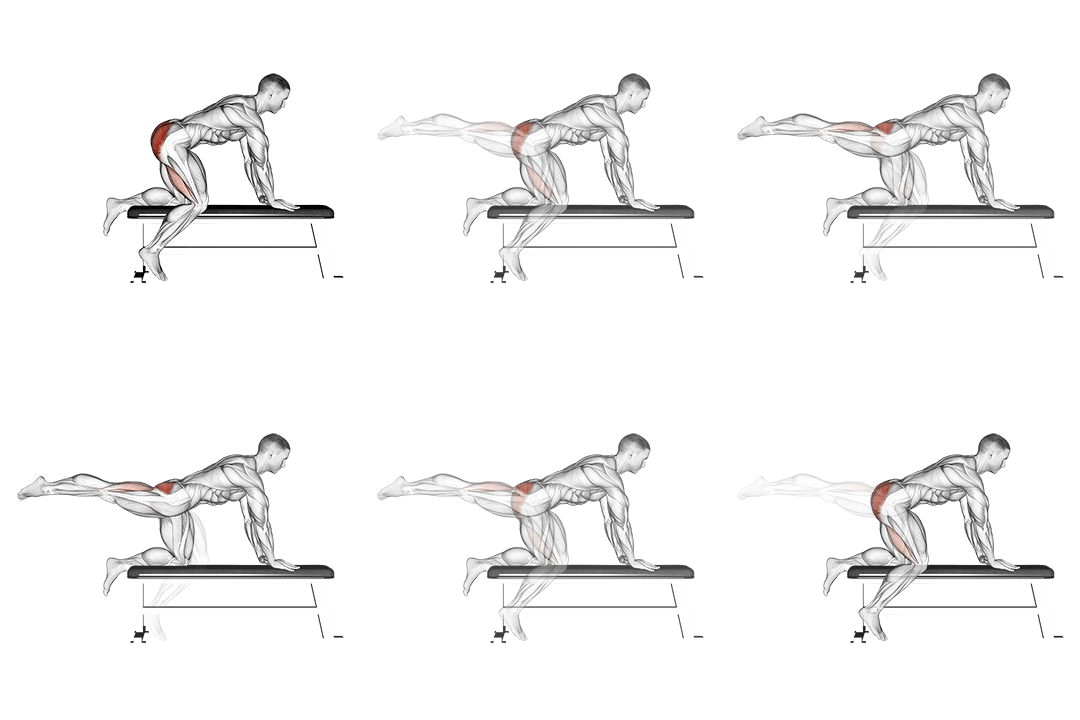
More comparisons with Arms Apart Circular Toe Touch (male)
Compare More Exercises
Use our free comparison tool to analyze any two exercises head-to-head.
Compare Exercises