

Basic Toe Touch (male) vs Curtsey Squat: Complete Comparison Guide
Basic Toe Touch (male) vs Curtsey Squat sets up a clear choice when you want to target your glutes. You’ll get a direct look at which exercise stresses the glute max versus the glute med, how each loads the hip and knee joints, and simple cues so you can perform each move safely. I’ll cover muscle activation, biomechanics (moment arms, length‑tension), equipment needs, progression options, and quick programming tips so you can pick the movement that matches your goals and training environment.
Exercise Comparison
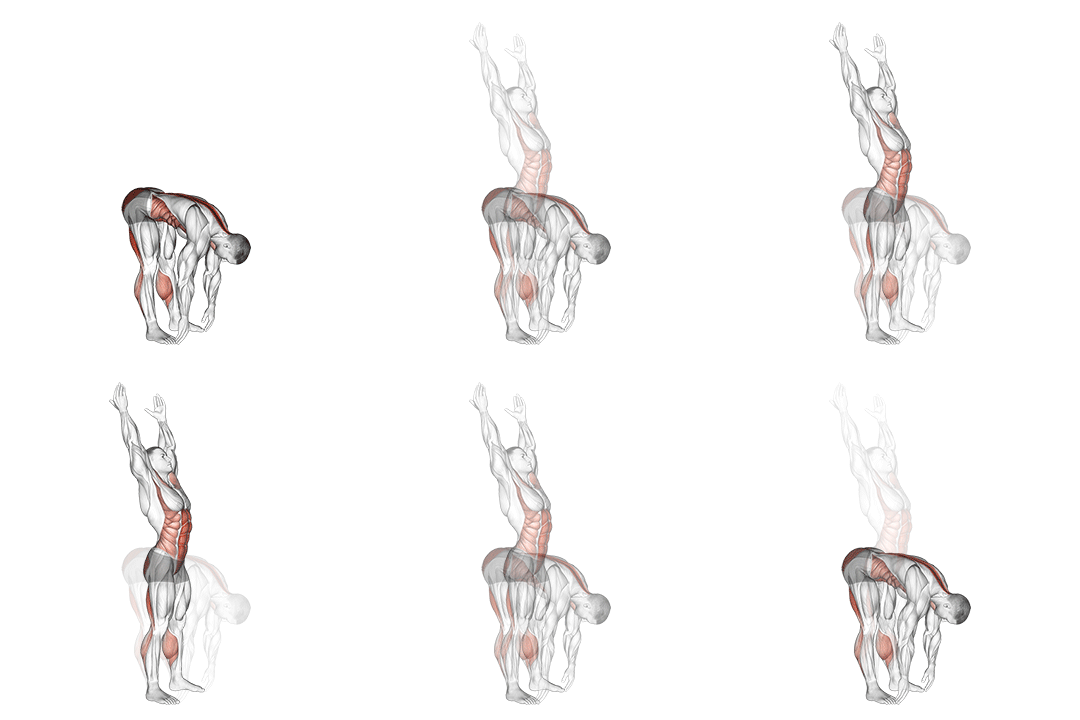
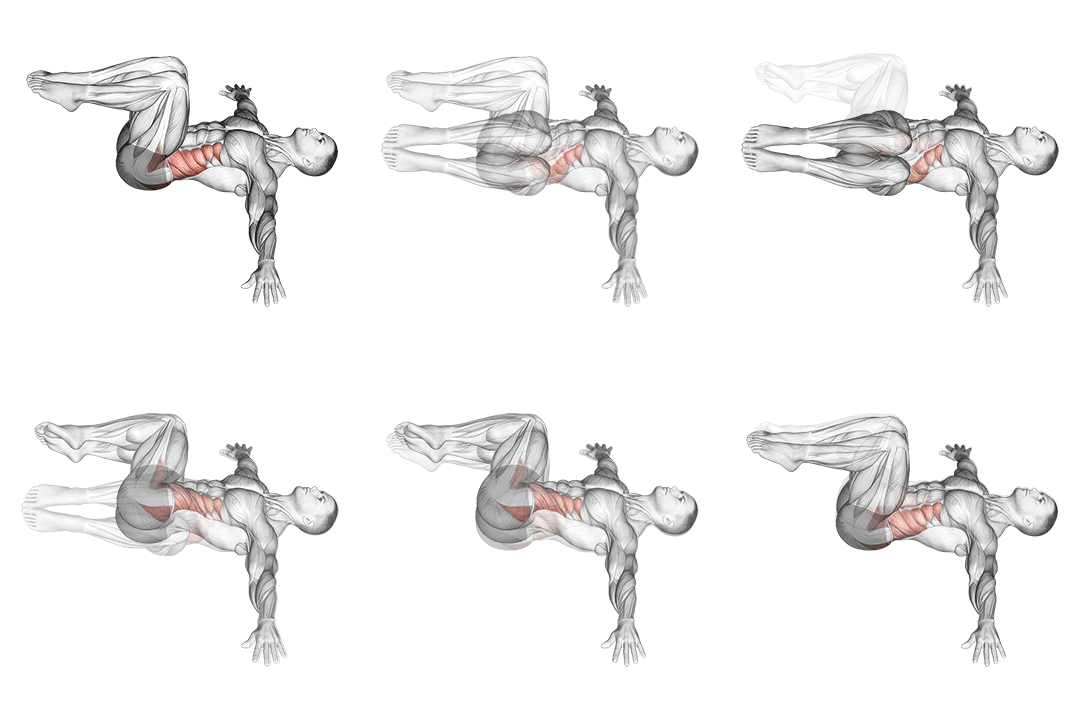
Basic Toe Touch (male)
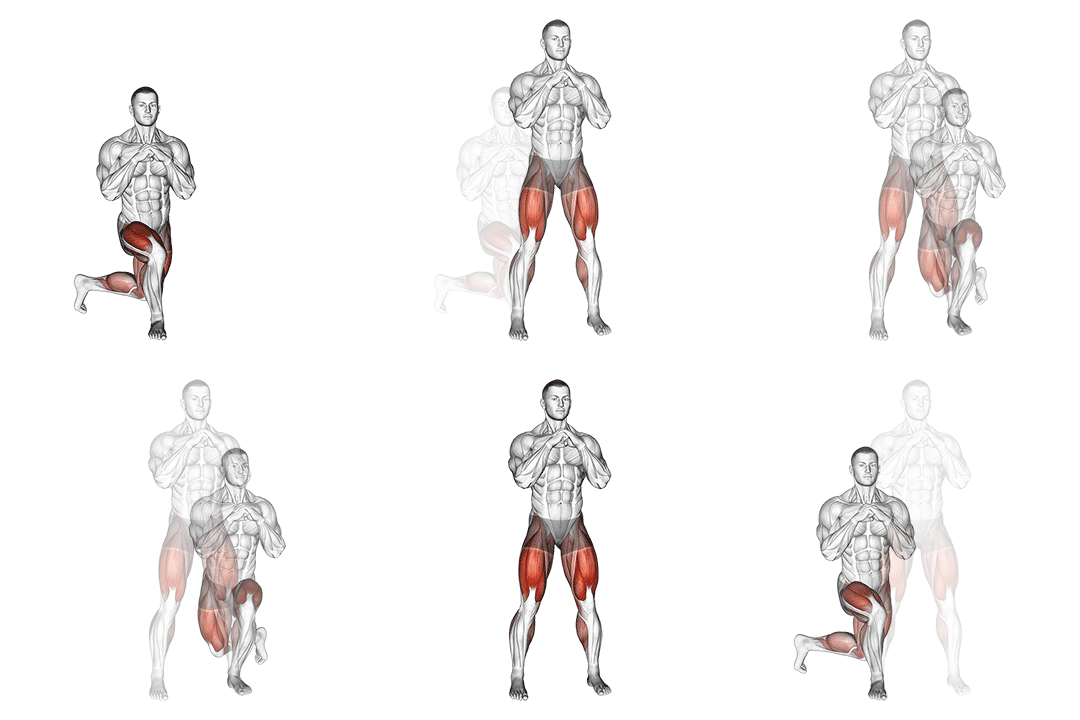
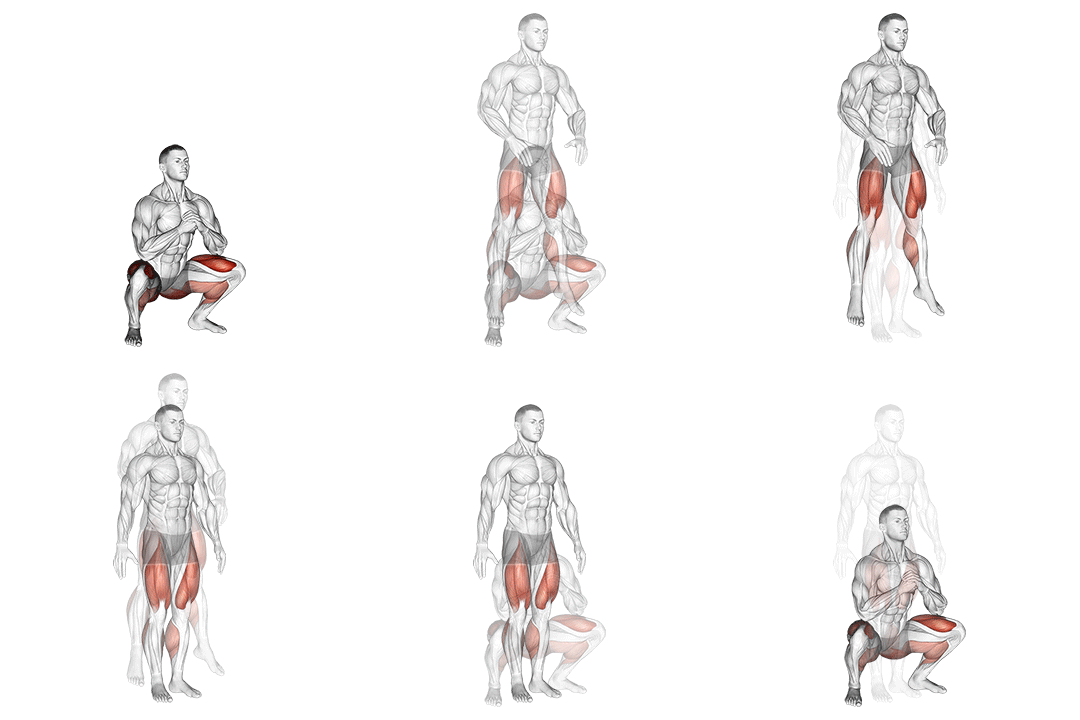
Curtsey Squat
Head-to-Head Comparison
| Attribute | Basic Toe Touch (male) | Curtsey Squat |
|---|---|---|
| Target Muscle |
Glutes
|
Glutes
|
| Body Part |
Upper-legs
|
Upper-legs
|
| Equipment |
Body-weight
|
Body-weight
|
| Difficulty |
Beginner
|
Beginner
|
| Movement Type |
Isolation
|
Compound
|
| Secondary Muscles |
2
|
3
|
Secondary Muscles Activated
Basic Toe Touch (male)
Curtsey Squat
Visual Comparison
Overview
Basic Toe Touch (male) vs Curtsey Squat sets up a clear choice when you want to target your glutes. You’ll get a direct look at which exercise stresses the glute max versus the glute med, how each loads the hip and knee joints, and simple cues so you can perform each move safely. I’ll cover muscle activation, biomechanics (moment arms, length‑tension), equipment needs, progression options, and quick programming tips so you can pick the movement that matches your goals and training environment.
Key Differences
- Basic Toe Touch (male) is an isolation exercise, while Curtsey Squat is a compound movement.
- Both exercises target the Glutes using Body-weight. The main differences are in their movement patterns and muscle activation angles.
Pros & Cons
Basic Toe Touch (male)
+ Pros
- Simple, single‑plane movement ideal for learning hip extension
- Highly accessible—no equipment or large space required
- Strong emphasis on glute‑hamstring connection for mind‑muscle control
- Low impact on the knees due to limited knee flexion
− Cons
- Limited overall muscle recruitment versus compound lifts
- Harder to progressively overload without adding load or single‑leg variations
- Can encourage lumbar rounding if mobility or cueing is poor
Curtsey Squat
+ Pros
- Compound pattern recruits glutes, quads, and stabilizers for more total work
- Adds frontal and transverse plane stress to train hip stability (glute med)
- Easier to overload with added weight or unilateral variations
- Improves balance and functional movement control across planes
− Cons
- Requires better balance and coordination—harder for absolute beginners
- Higher knee torque increases risk if form breaks down
- Needs more space and sometimes mirrors or coaching to maintain alignment
When Each Exercise Wins
Curtsey Squat wins because it recruits more muscle groups and creates larger internal moments at both the hip and knee, allowing heavier loading and more mechanical tension. Use 8–12 reps for 3–5 sets or add weight to push progressive overload.
Curtsey Squat produces greater overall force production and transfer across joints, so it better builds strength when you add external load. Its compound nature increases neural drive and improves intermuscular coordination under heavier sets.
Basic Toe Touch is simpler to teach and perform with safe joint positions and clear hip hinge mechanics. It lets you dial in glute activation and maintain a neutral spine before progressing to more complex, multi‑plane movements.
Basic Toe Touch needs minimal space and no props, so you can do high‑rep sets (12–20) or circuits at home. Its lower coordination demand makes it ideal for quick sessions without equipment.
Frequently Asked Questions
Can I do both Basic Toe Touch (male) and Curtsey Squat in the same workout?
Yes. Start the session with Basic Toe Touch as an activation drill (2–3 sets of 12–15 slow reps) to prime the glutes, then add Curtsey Squats for heavier compound work (3–4 sets of 8–12). This order improves motor control and reduces form breakdown during loaded sets.
Which exercise is better for beginners?
Basic Toe Touch (male) is better for beginners because it isolates hip extension and requires less balance and knee control. It teaches you to load the hip correctly before introducing the multi‑joint coordination needed for Curtsey Squats.
How do the muscle activation patterns differ?
Basic Toe Touch emphasizes posterior chain activation with peak glute and hamstring activity near full hip extension due to a longer hip moment arm. Curtsey Squat splits activation: glute med increases during hip adduction, while quads and hamstrings peak at different knee angles because of combined hip and knee moments.
Can Curtsey Squat replace Basic Toe Touch (male)?
Curtsey Squat can replace it for general strength and hypertrophy goals, but it won’t give the same isolated glute‑hamstring neuromuscular focus. If you need improved mind‑muscle connection or have limited space, keep the Basic Toe Touch as a complementary drill.
Expert Verdict
Pick the Basic Toe Touch (male) when your priority is teaching clean hip extension, building a strong glute‑hamstring connection, or training at home with minimal space. Aim for 12–20 reps, focus on controlled tempo and neutral spine, and progress to single‑leg versions when ready. Choose the Curtsey Squat when you want multi‑plane strength and hypertrophy—its combined hip and knee torque better overloads the glutes and quads; program 3–5 sets of 8–12 reps and add weight once form is solid. Use the Toe Touch to establish activation, then layer Curtsey Squats for volume and progressive overload.
Also Compare
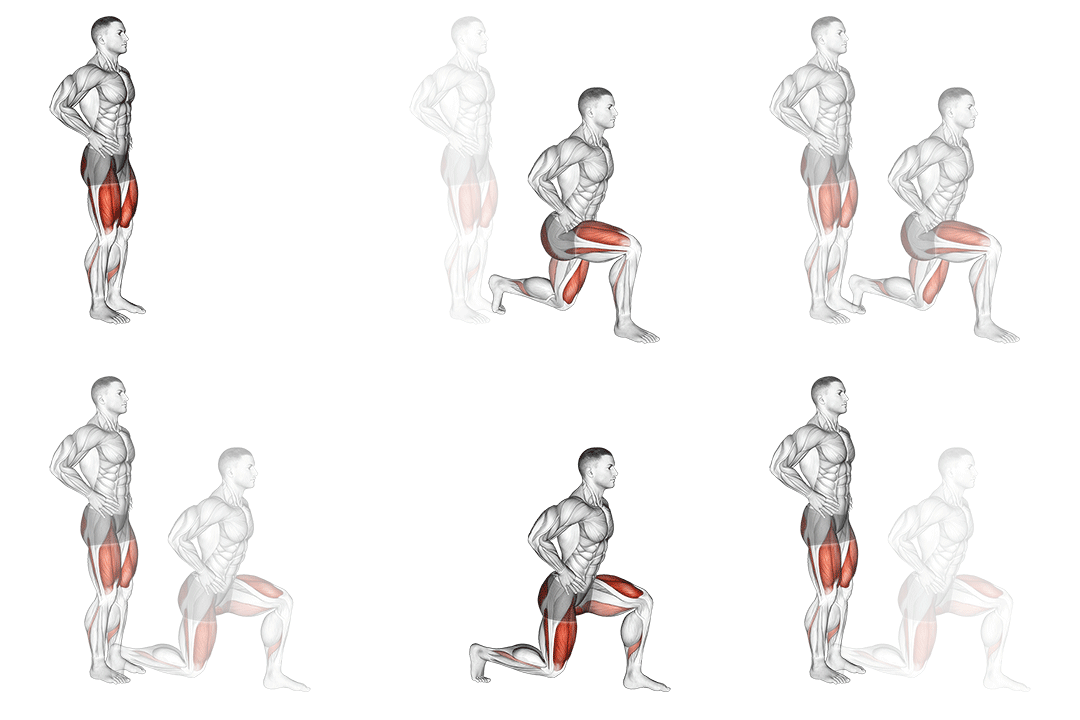
More comparisons with Basic Toe Touch (male)
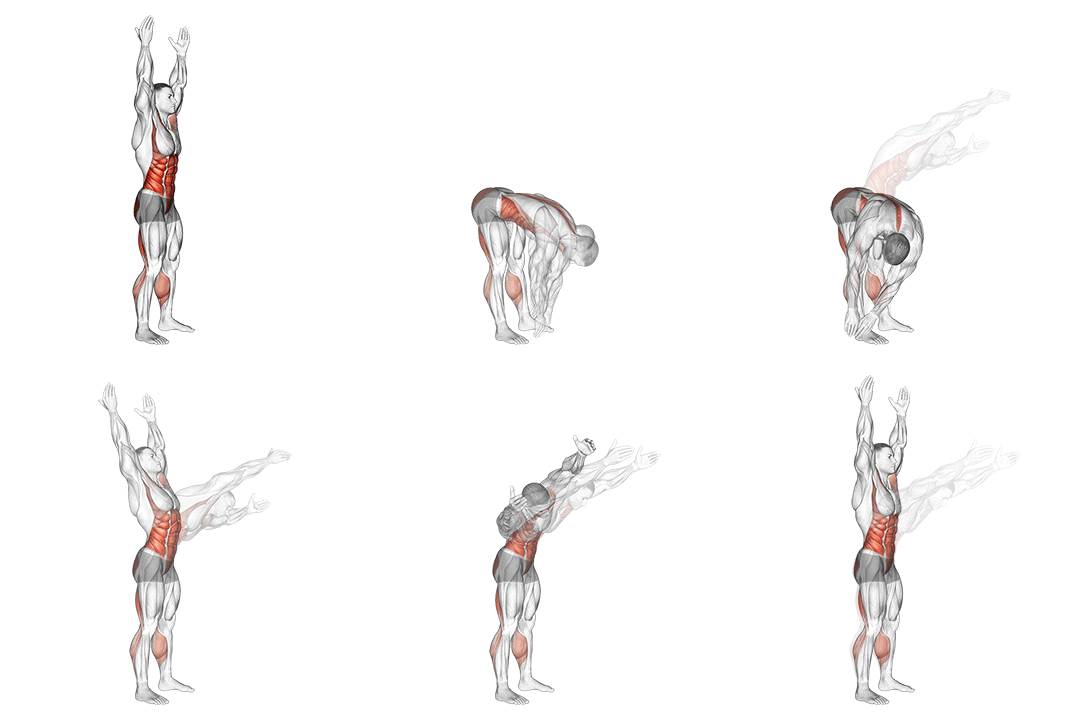
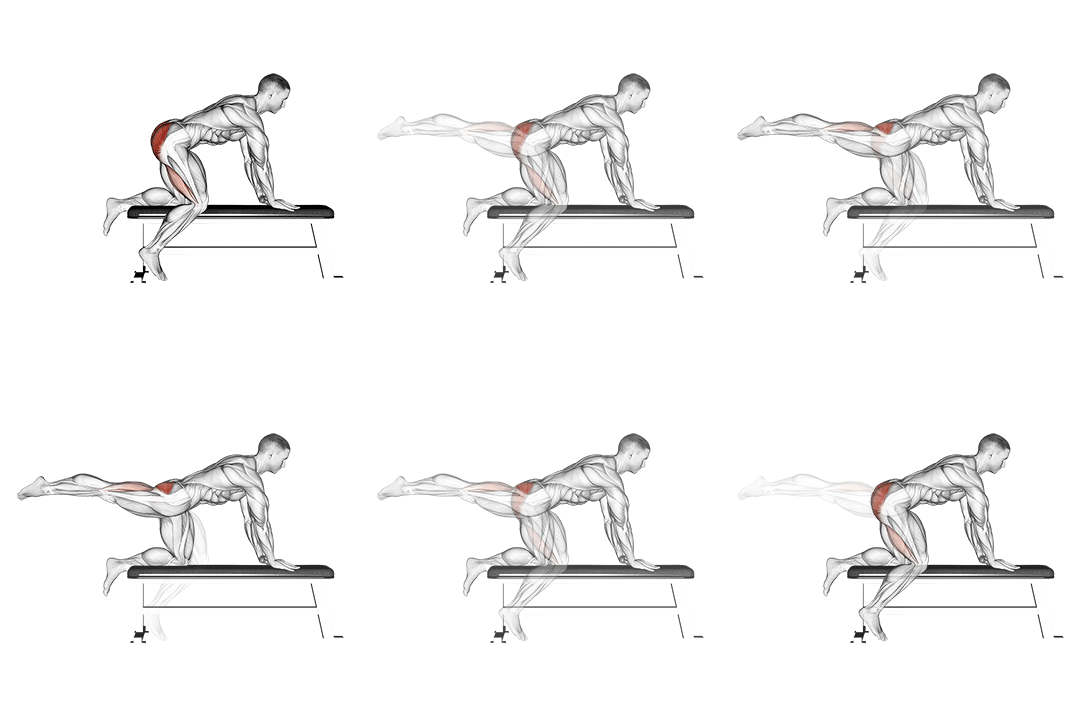
Compare More Exercises
Use our free comparison tool to analyze any two exercises head-to-head.
Compare Exercises