

Arms Apart Circular Toe Touch (male) vs Forward Lunge (male): Complete Comparison Guide
Arms Apart Circular Toe Touch (male) vs Forward Lunge (male) — both hit the glutes but in different ways. If you want practical guidance you can use today, this comparison breaks down muscle activation, joint angles, technique cues, biomechanics (force vectors, length-tension), progression options, and injury risk. I’ll give clear reps/ranges and show when to choose each exercise for hypertrophy, strength, mobility, or a simple home routine. Read on and pick the movement that fits your current ability and goals.
Exercise Comparison
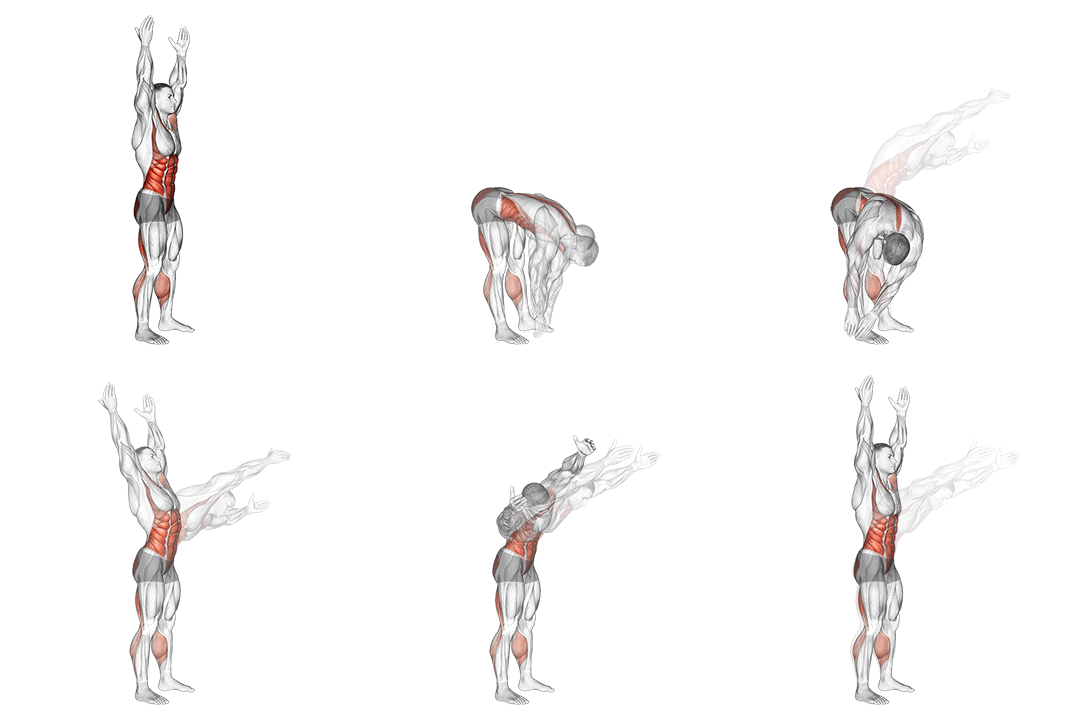
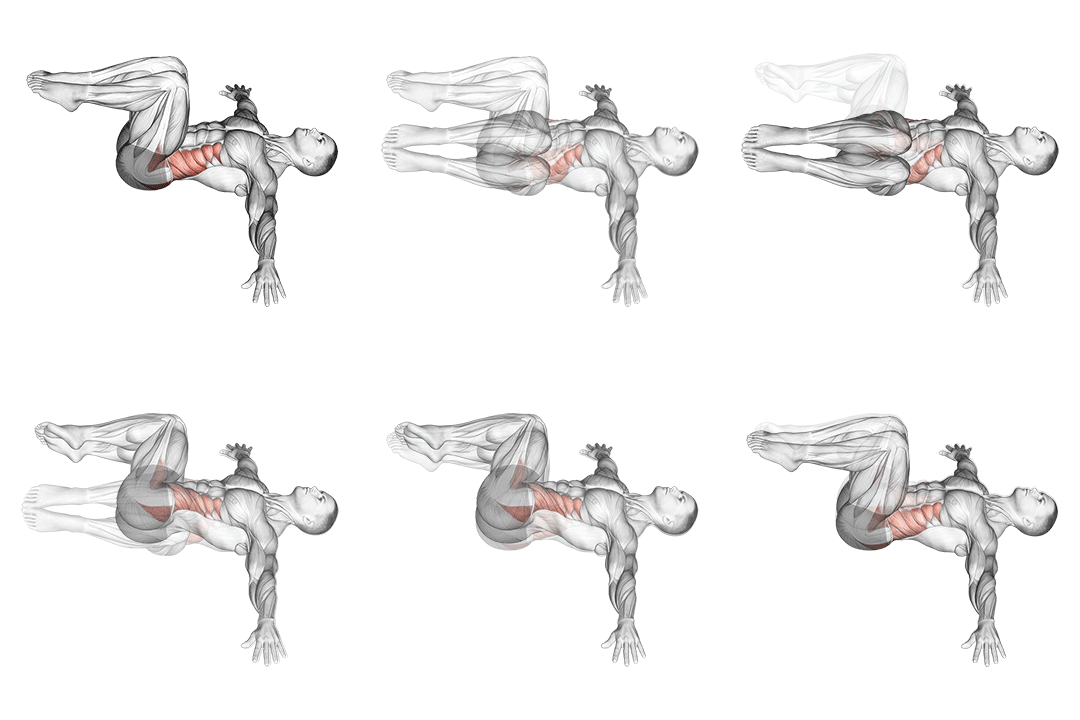
Arms Apart Circular Toe Touch (male)
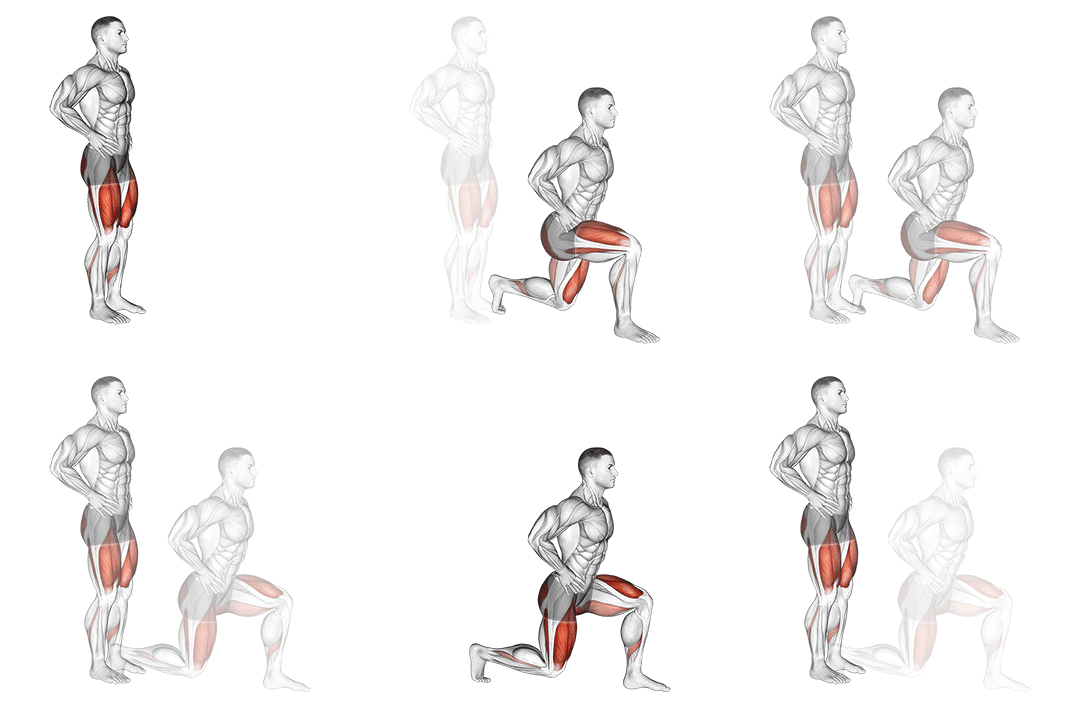
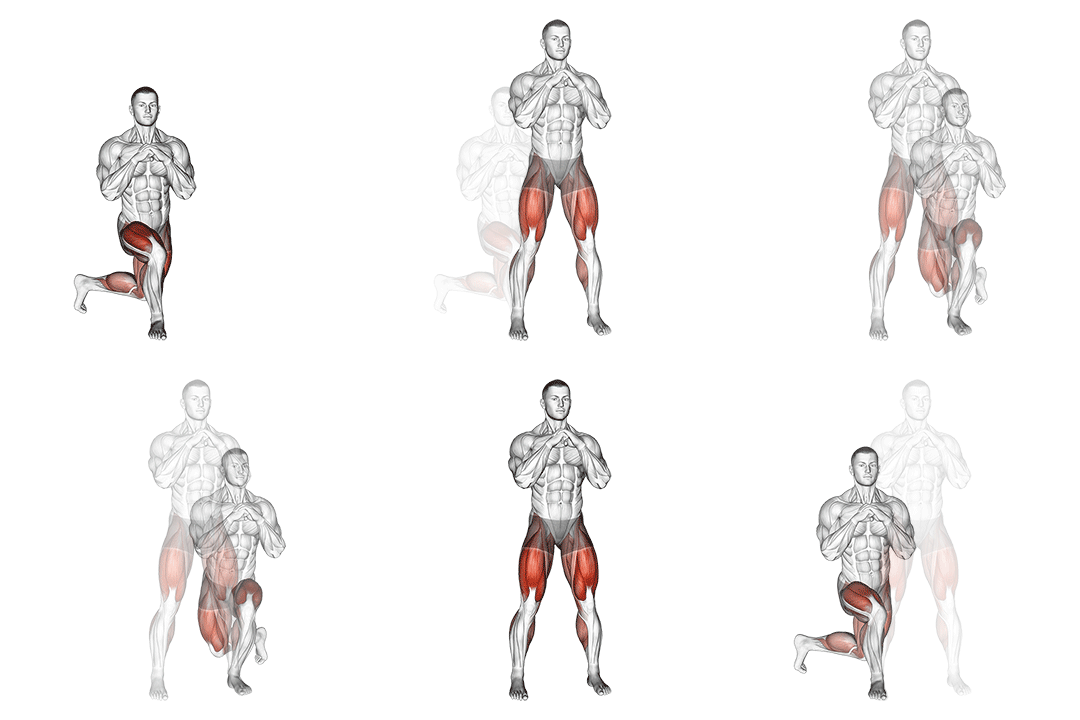
Forward Lunge (male)
Head-to-Head Comparison
| Attribute | Arms Apart Circular Toe Touch (male) | Forward Lunge (male) |
|---|---|---|
| Target Muscle |
Glutes
|
Glutes
|
| Body Part |
Upper-legs
|
Upper-legs
|
| Equipment |
Body-weight
|
Body-weight
|
| Difficulty |
Intermediate
|
Beginner
|
| Movement Type |
Compound
|
Compound
|
| Secondary Muscles |
3
|
3
|
Secondary Muscles Activated
Arms Apart Circular Toe Touch (male)
Forward Lunge (male)
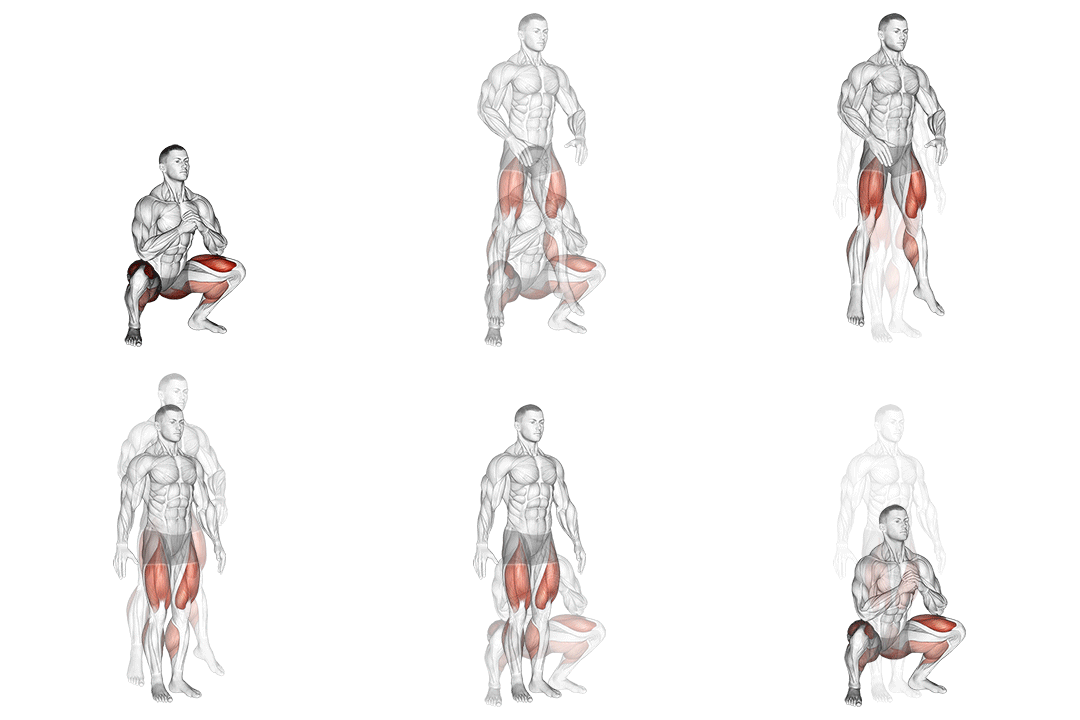
Visual Comparison
Overview
Arms Apart Circular Toe Touch (male) vs Forward Lunge (male) — both hit the glutes but in different ways. If you want practical guidance you can use today, this comparison breaks down muscle activation, joint angles, technique cues, biomechanics (force vectors, length-tension), progression options, and injury risk. I’ll give clear reps/ranges and show when to choose each exercise for hypertrophy, strength, mobility, or a simple home routine. Read on and pick the movement that fits your current ability and goals.
Key Differences
- Difficulty levels differ: Arms Apart Circular Toe Touch (male) is intermediate, while Forward Lunge (male) is beginner.
- Both exercises target the Glutes using Body-weight. The main differences are in their movement patterns and muscle activation angles.
Pros & Cons
Arms Apart Circular Toe Touch (male)
+ Pros
- Strong posterior-chain emphasis — greater hamstring stretch and glute length-tension
- Improves hip-hinge mechanics and trunk control
- Minimal equipment and low-impact on joints when performed with control
- Good for mobility and coordination training alongside strength
− Cons
- Requires solid hamstring and hip mobility (limited if <80° hip flexion)
- Harder to progressively overload with external weight
- Higher technical demand — coordination and balance challenge
Forward Lunge (male)
+ Pros
- Easy to learn and regress for beginners
- Simple to load progressively with dumbbells or barbells
- Excellent quad and glute balance for hypertrophy and strength
- Versatile: step length, tempo, and elevation changes modify stimulus
− Cons
- Places more stress on the knee if form breaks down
- Can under-emphasize hamstrings unless tempo or variations are used
- Requires space for safe stepping (about 60–80% of leg length)
When Each Exercise Wins
Forward Lunge lets you progressively overload easily with added weight and has predictable mechanical tension on both quads and glutes. Use 8–12 reps per leg with 2–4 sets, or tempo 3-1-1 to maximize time under tension.
Forward Lunge can be loaded heavily (2–6 rep range) and transfers to single-leg strength and bilateral lifts through improved force transfer. Bracing and short step variations increase force production for low-rep strength work.
Forward Lunge has a simpler motor pattern and easier regressions (assisted, partial range) so beginners can build confidence and progressive overload without high technical demand or mobility prerequisites.
Arms Apart Circular Toe Touch delivers posterior-chain emphasis without needing weights and fits in small spaces; use higher reps (12–20) and tempo control to get hypertrophy-like stimulus when you lack load.
Frequently Asked Questions
Can I do both Arms Apart Circular Toe Touch (male) and Forward Lunge (male) in the same workout?
Yes. Use Forward Lunges early for heavier sets (3–4 sets of 6–12 reps per leg) and add Arms Apart Circular Toe Touches later as an accessory (2–3 sets of 10–20 reps) to emphasize hamstrings, control the hinge, and boost posterior-chain fatigue.
Which exercise is better for beginners?
Forward Lunge (male) is better for beginners because the step-and-drive pattern is easier to learn and regress. Start with body-weight sets of 8–12 reps per leg and focus on knee alignment and upright torso.
How do the muscle activation patterns differ?
Arms Apart Circular Toe Touch (male) is hip-dominant: greater hamstring lengthening and posterior-chain tension during the eccentric-to-concentric phase. Forward Lunge (male) combines hip and knee extension, increasing quadriceps recruitment while still loading the glute maximus.
Can Forward Lunge (male) replace Arms Apart Circular Toe Touch (male)?
Forward Lunge (male) can replace it for progressive overload and general lower-body strength, but it won’t replicate the same hamstring stretch and hinge-specific control. If you want direct posterior-chain emphasis and mobility benefits, keep the toe-touch variation as an accessory.
Expert Verdict
Choose Forward Lunge (male) when you need scalable strength and hypertrophy: it’s easier to load, simpler to coach, and safer for most trainees when knee alignment and trunk stability are maintained. Aim for 6–12 reps per leg for progressive overload, and use variations (rear-foot-elevated, weighted) to progress. Pick Arms Apart Circular Toe Touch (male) when you want to prioritize the posterior chain, hinge mechanics, and mobility—use it as an accessory at 10–20 reps, focusing on a deep hip hinge (80–100°) and controlled eccentrics. Both belong in a balanced program: lunges for heavy work, toe touches for posterior-chain carryover and control.
Also Compare
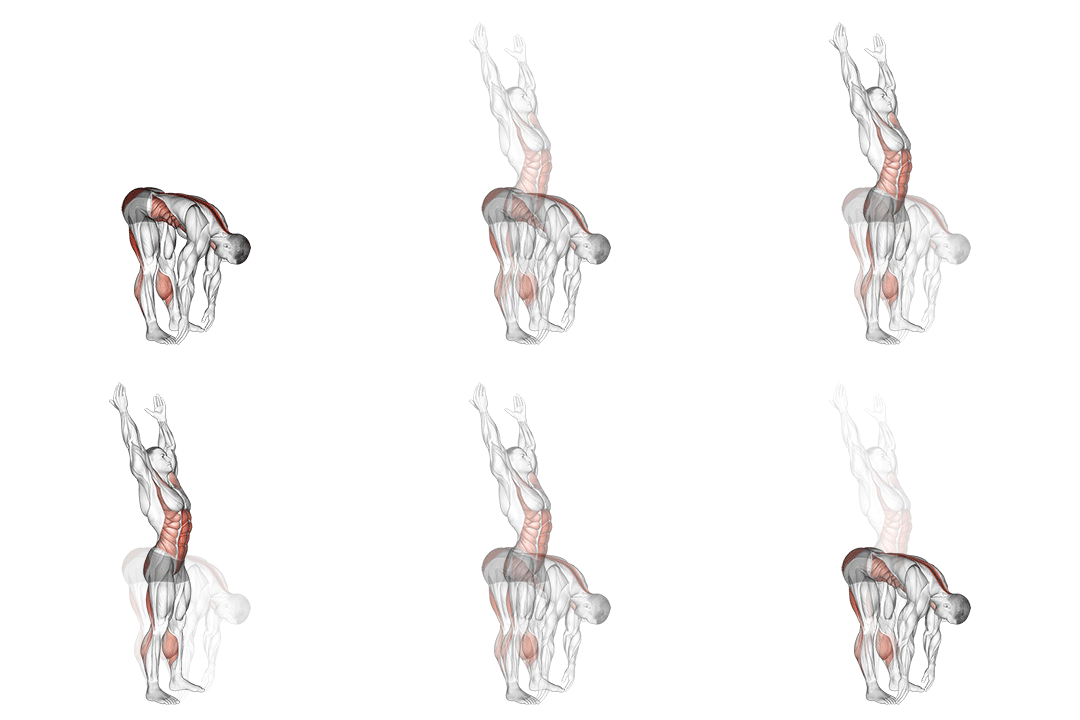
More comparisons with Arms Apart Circular Toe Touch (male)
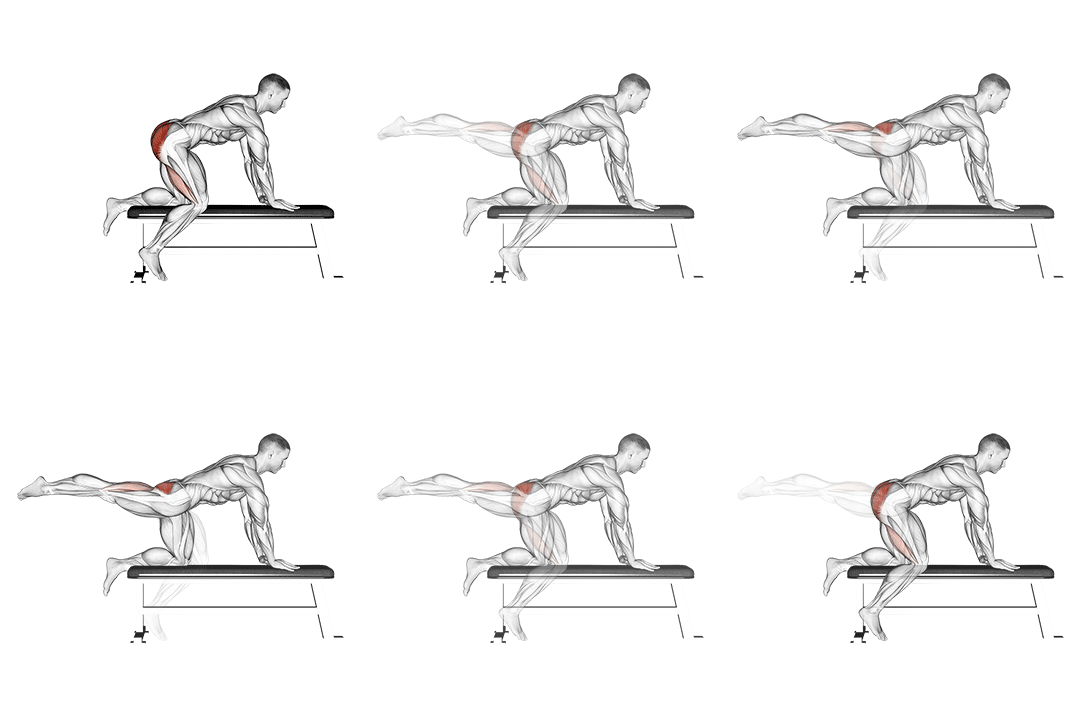
More comparisons with Forward Lunge (male)
Compare More Exercises
Use our free comparison tool to analyze any two exercises head-to-head.
Compare Exercises