

Assisted Lying Calves Stretch vs Band Single Leg Reverse Calf Raise: Complete Comparison Guide
Assisted Lying Calves Stretch vs Band Single Leg Reverse Calf Raise — two beginner-friendly, band-based isolation moves for the calves. You’ll get clear technique cues, biomechanical reasons one targets the soleus versus gastrocnemius more, equipment needs, rep ranges (8–20), and when to pick each for muscle growth or mobility. Read on to learn step-by-step form tips (ankle dorsiflexion to ~20–30°, knee angle cues), how secondary hamstring and glute involvement changes load transfer, and practical progressions you can use at home or the gym.
Exercise Comparison
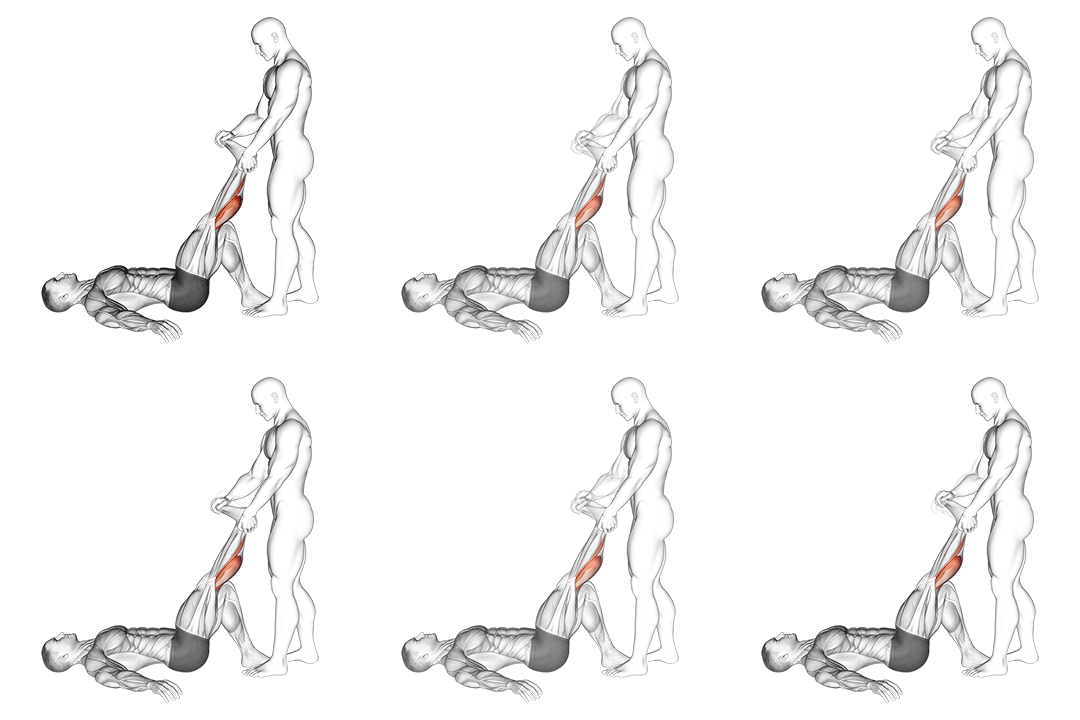
Assisted Lying Calves Stretch
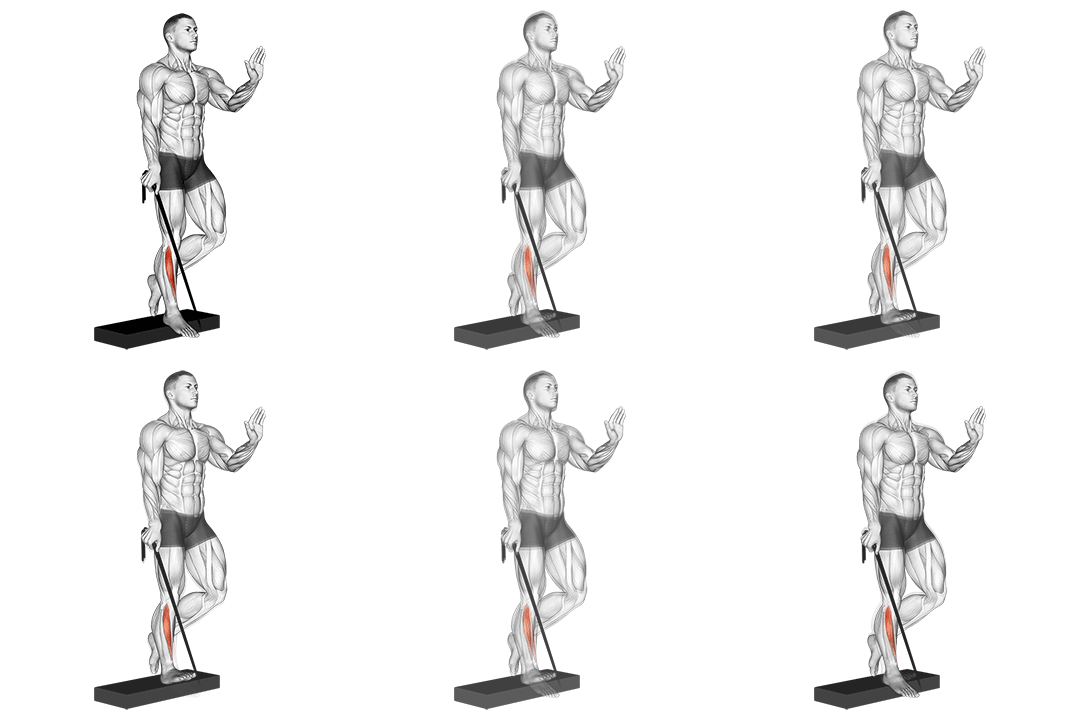
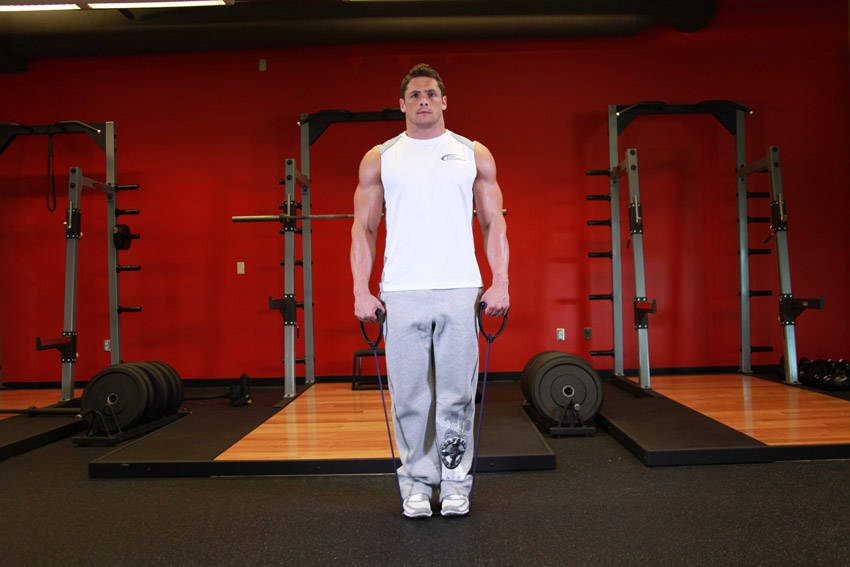
Band Single Leg Reverse Calf Raise
Head-to-Head Comparison
| Attribute | Assisted Lying Calves Stretch | Band Single Leg Reverse Calf Raise |
|---|---|---|
| Target Muscle |
Calves
|
Calves
|
| Body Part |
Lower-legs
|
Lower-legs
|
| Equipment |
Band
|
Band
|
| Difficulty |
Beginner
|
Beginner
|
| Movement Type |
Isolation
|
Isolation
|
| Secondary Muscles |
1
|
2
|
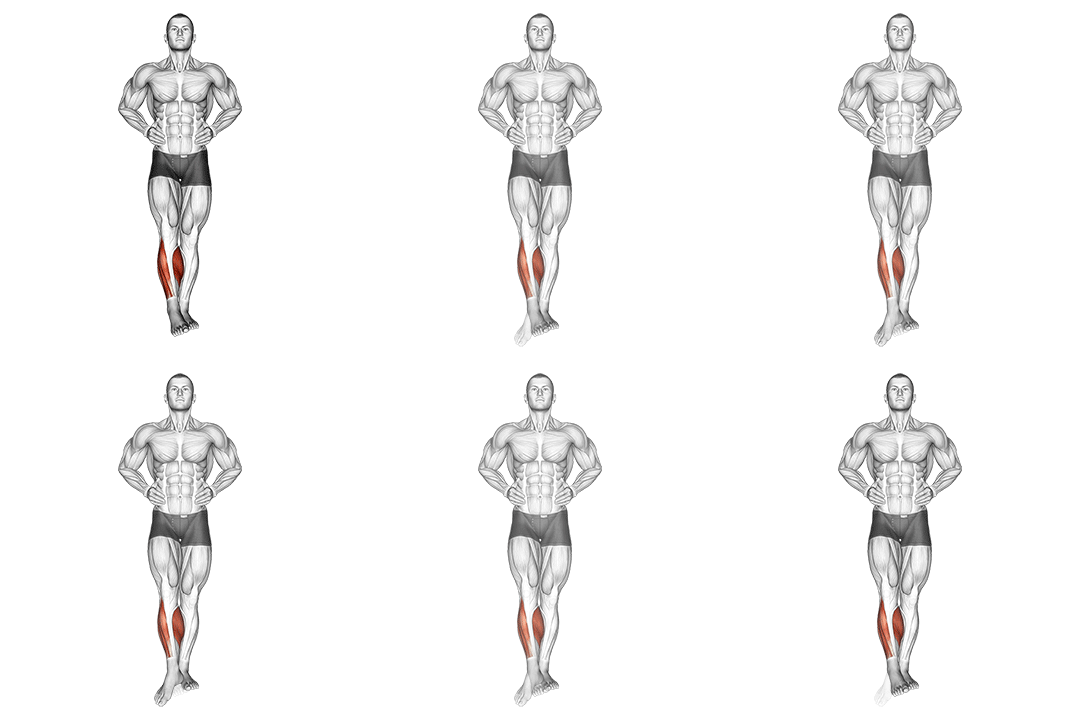
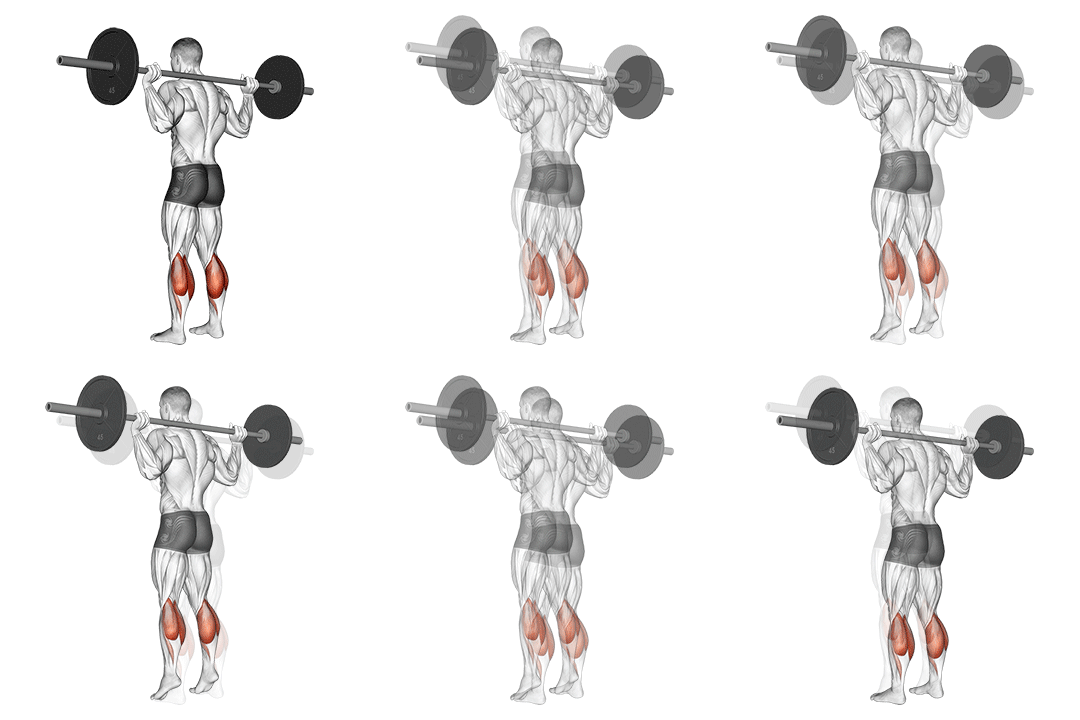
Secondary Muscles Activated
Assisted Lying Calves Stretch
Band Single Leg Reverse Calf Raise
Visual Comparison
Overview
Assisted Lying Calves Stretch vs Band Single Leg Reverse Calf Raise — two beginner-friendly, band-based isolation moves for the calves. You’ll get clear technique cues, biomechanical reasons one targets the soleus versus gastrocnemius more, equipment needs, rep ranges (8–20), and when to pick each for muscle growth or mobility. Read on to learn step-by-step form tips (ankle dorsiflexion to ~20–30°, knee angle cues), how secondary hamstring and glute involvement changes load transfer, and practical progressions you can use at home or the gym.
Key Differences
- Both exercises target the Calves using Band. The main differences are in their movement patterns and muscle activation angles.
Pros & Cons
Assisted Lying Calves Stretch
+ Pros
- Easy setup and low balance requirement
- Places calf at longer muscle lengths to optimize length-tension for flexibility and hypertrophy
- Gentle on joints — good for rehab and mobility work
- Can be held isometrically for extended time-under-tension (30–90 s) to stimulate muscle remodeling
− Cons
- Limited concentric overload for strength development
- Less secondary muscle recruitment for functional carryover
- Progression options are more limited compared to loaded concentric exercises
Band Single Leg Reverse Calf Raise
+ Pros
- Strong concentric and eccentric loading to drive muscle growth and strength
- Engages hamstrings and glutes for improved single-leg stability and transfer
- Easily progressed by increasing band tension or tempo (eccentric 3–5 s)
- Improves balance and functional plantarflexor strength
− Cons
- Requires balance and hip stability, which can limit beginners
- Higher technical demand increases chance of form breakdown under fatigue
- May require a support surface initially to avoid ankle or knee strain
When Each Exercise Wins
The reverse raise produces higher peak concentric force and allows progressive overload (more resistance, slow eccentrics, 6–12 rep ranges). That mechanical tension combined with time-under-tension drives more muscle growth than a static stretch alone.
Strength favors high force production and eccentric control. Single-leg reverse raises let you load heavier relative resistance, perform controlled 3–5 s eccentrics, and track progressive resistance more effectively.
Beginners benefit from lower balance and coordination demands. The lying stretch provides safe dorsiflexion, familiarizes you with calf tension and length-tension relationships, and reduces injury risk while teaching ankle mechanics.
If you want mobility and low-impact work, pick the assisted lying stretch. If you have a band and space and want strength, the single-leg reverse raise is better. Both require only a band and minimal space, so choose by goal.
Frequently Asked Questions
Can I do both Assisted Lying Calves Stretch and Band Single Leg Reverse Calf Raise in the same workout?
Yes. Start with the Assisted Lying Calves Stretch to prime dorsiflexion and increase range (2–3 sets of 30–60 s), then perform 2–4 sets of Band Single Leg Reverse Calf Raises for 6–15 reps to apply concentric/eccentric overload.
Which exercise is better for beginners?
Assisted Lying Calves Stretch is better for absolute beginners because it requires less balance and teaches ankle mechanics. Use it to build mobility and calf tolerance before progressing to single-leg reverse raises.
How do the muscle activation patterns differ?
The stretch emphasizes sustained activation at longer muscle lengths (higher passive tension and stretch reflex input), while the reverse raise produces short-duration peaks during concentric plantarflexion and higher eccentric control demands. That means more time-under-tension in the stretch, more peak force in the reverse raise.
Can Band Single Leg Reverse Calf Raise replace Assisted Lying Calves Stretch?
Not entirely. If your goal is mobility or rehabbing restricted ankle dorsiflexion, the lying stretch is superior. If you need strength or hypertrophy, the reverse raise can replace the stretch for load but you should still include mobility work to maintain range.
Expert Verdict
Use the Assisted Lying Calves Stretch when your priority is improving ankle mobility, increasing calf length-tension exposure, or working around balance or joint issues. Hold for 30–90 seconds at a dorsiflexion angle near 20–30° and add gentle pulses for 8–12 reps worth of tension. Choose the Band Single Leg Reverse Calf Raise when you want concentric/eccentric overload, single-leg strength, and hypertrophy — perform 6–15 reps with progressive band resistance and slow 3–5 s eccentrics. For most trainees, combine both: start sessions with stretches for range and finish with reverse raises for mechanical tension.
Also Compare
More comparisons with Assisted Lying Calves Stretch
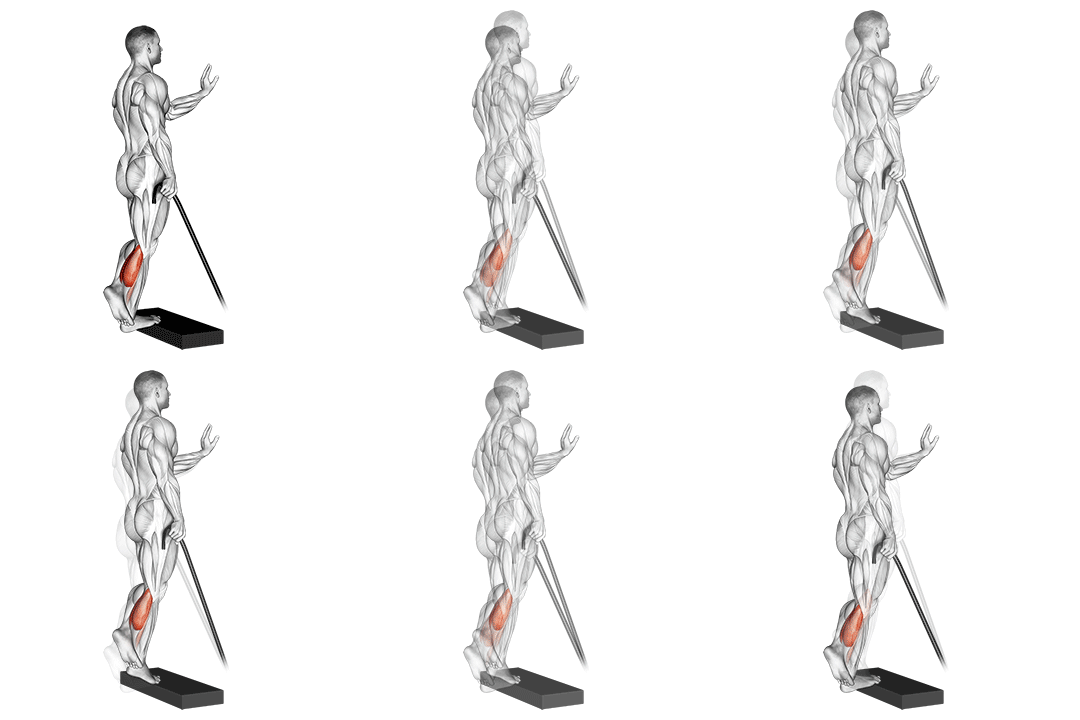
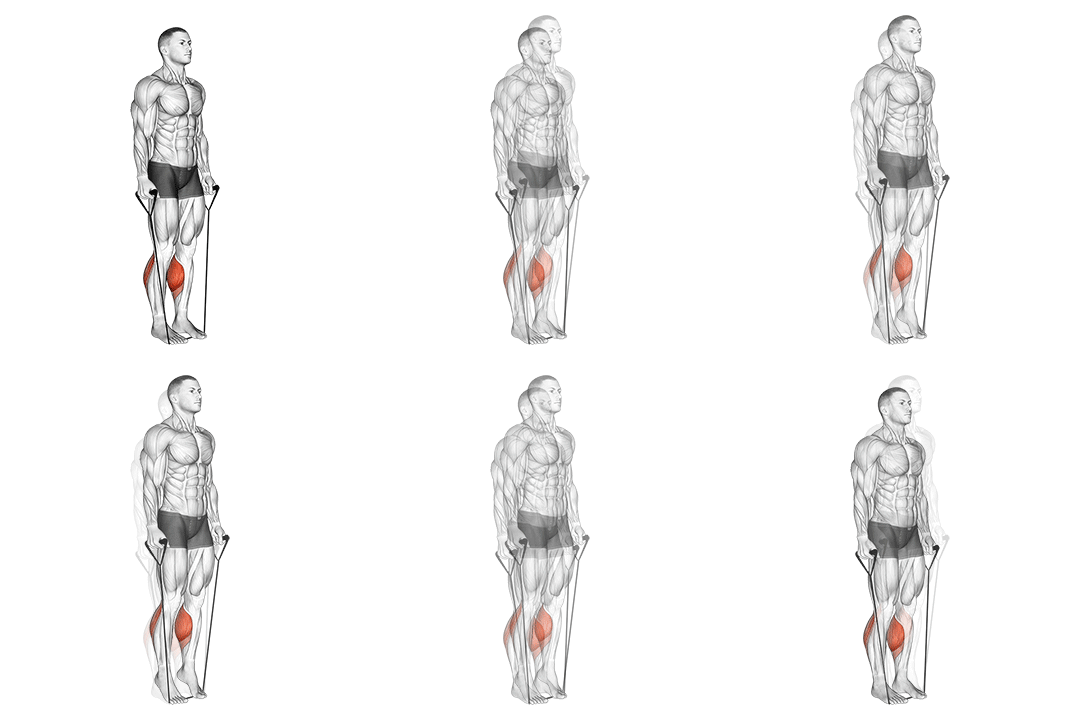
More comparisons with Band Single Leg Reverse Calf Raise
Compare More Exercises
Use our free comparison tool to analyze any two exercises head-to-head.
Compare Exercises