

Assisted Lying Calves Stretch vs Peroneals Stretch: Complete Comparison Guide
Assisted Lying Calves Stretch vs Peroneals Stretch — you’re choosing between two beginner-friendly isolation moves that help ankle mobility and calf length. In this guide you’ll get clear comparisons of primary vs secondary muscle targeting, equipment needs, technique cues, risk factors, and when to pick each one based on your goals. You’ll also get rep and hold ranges (30–60 seconds for static holds, 3×8–12 for loaded eccentric work), specific biomechanics (length-tension and force vectors), and actionable progressions so you can use the stretch that actually helps your training.
Exercise Comparison
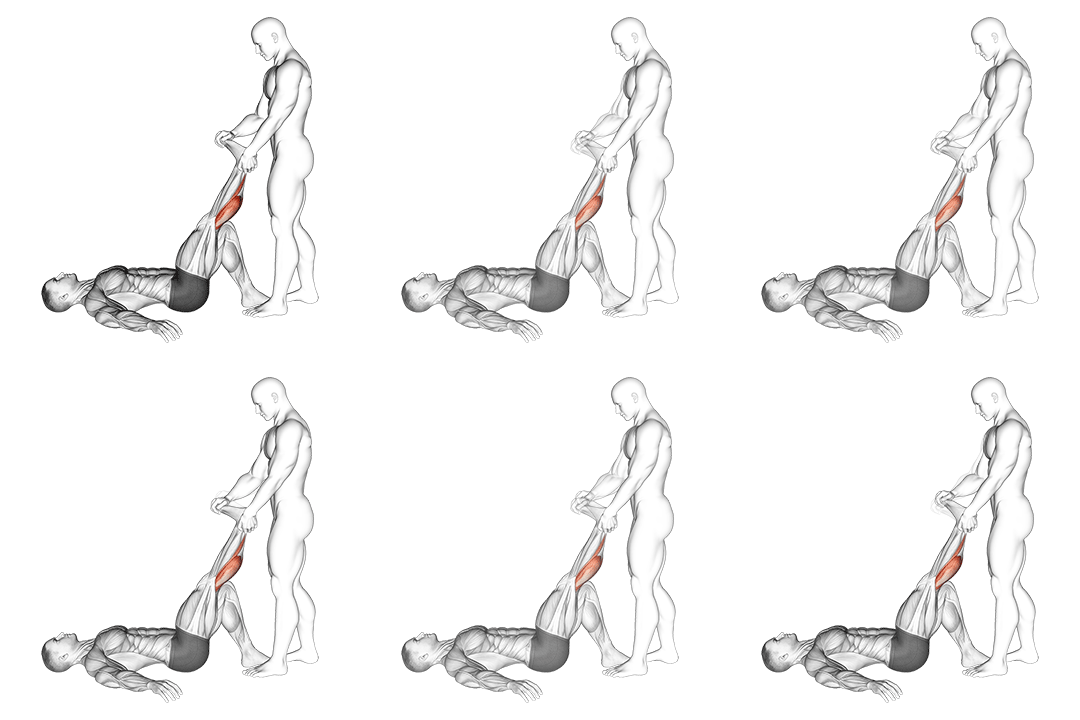
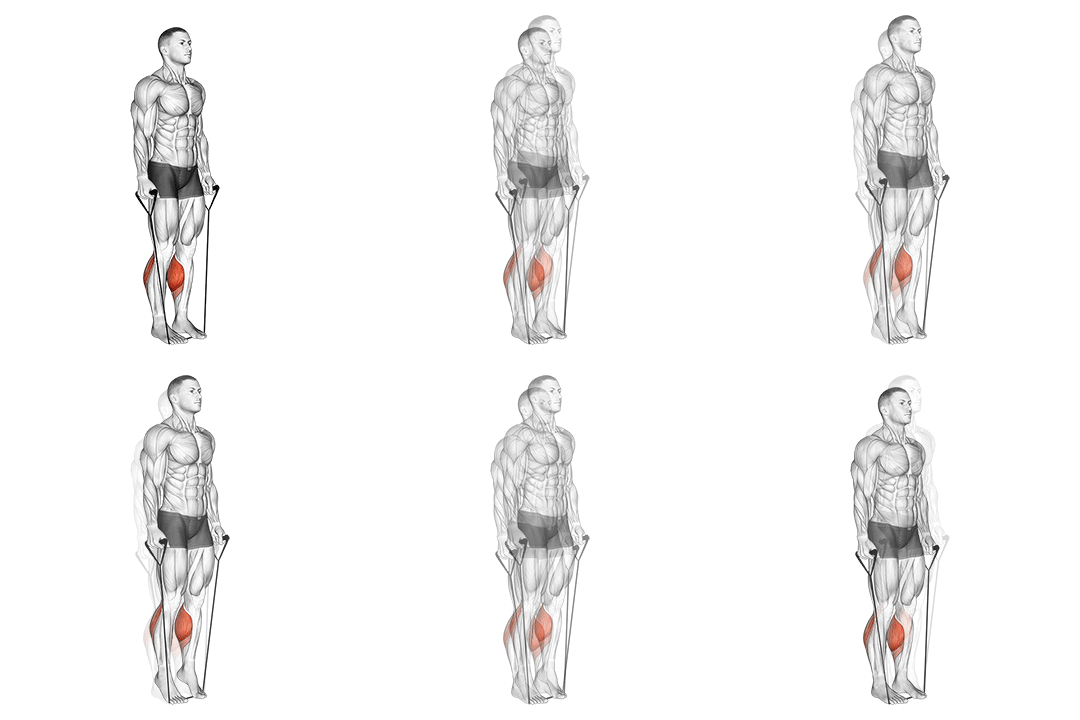
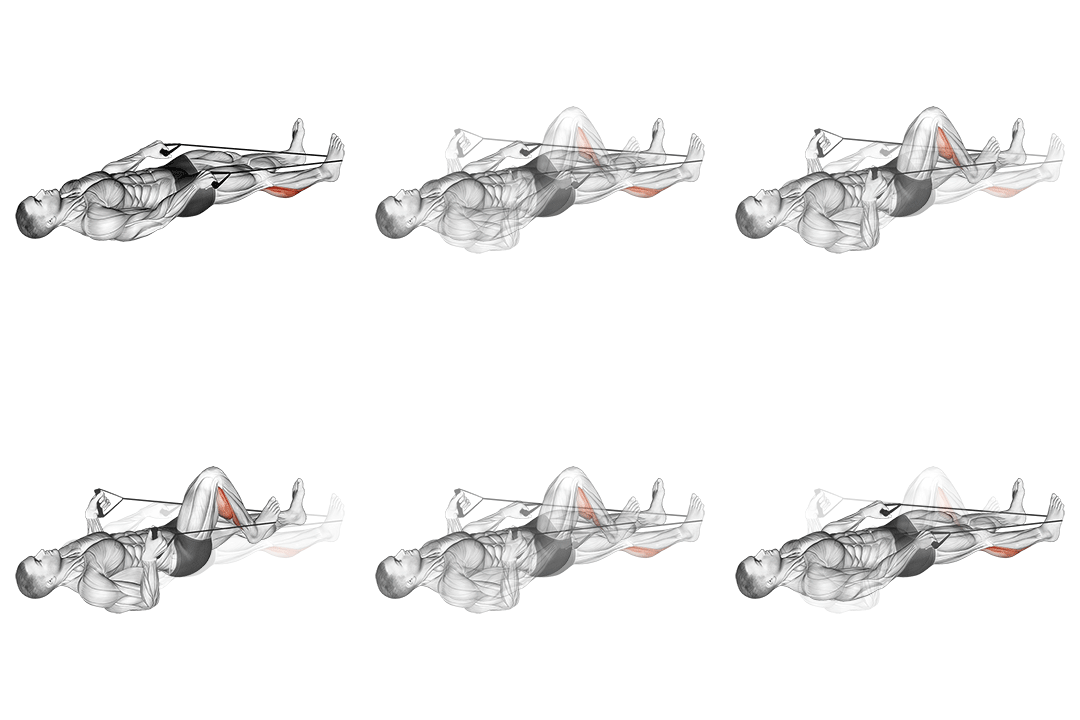
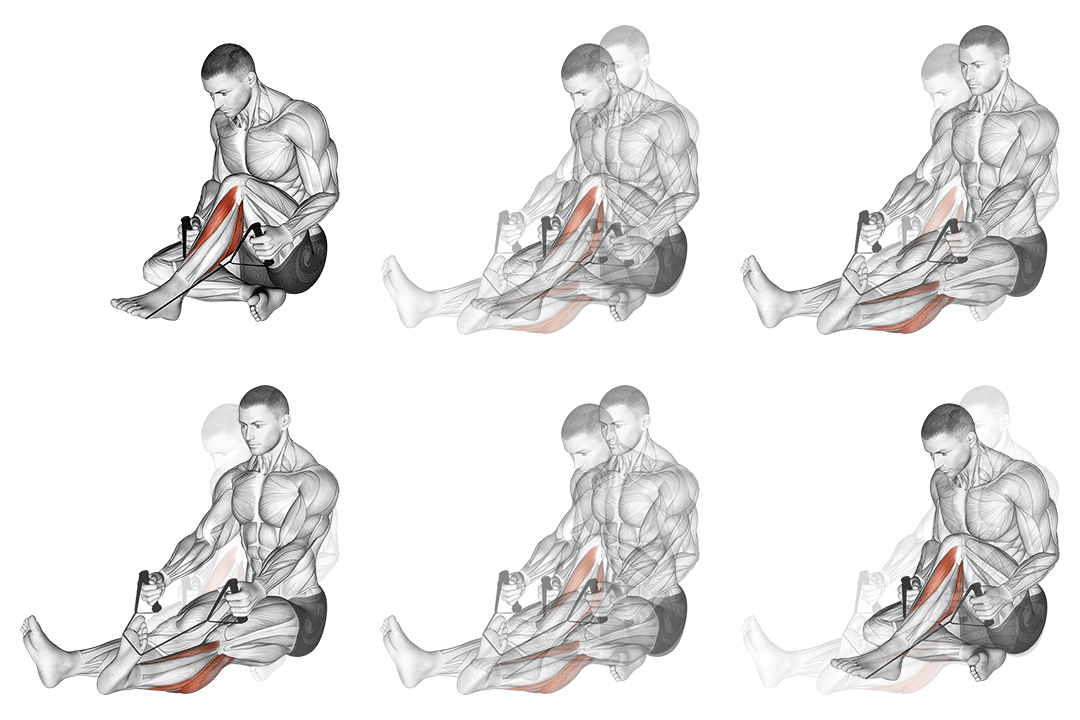
Assisted Lying Calves Stretch
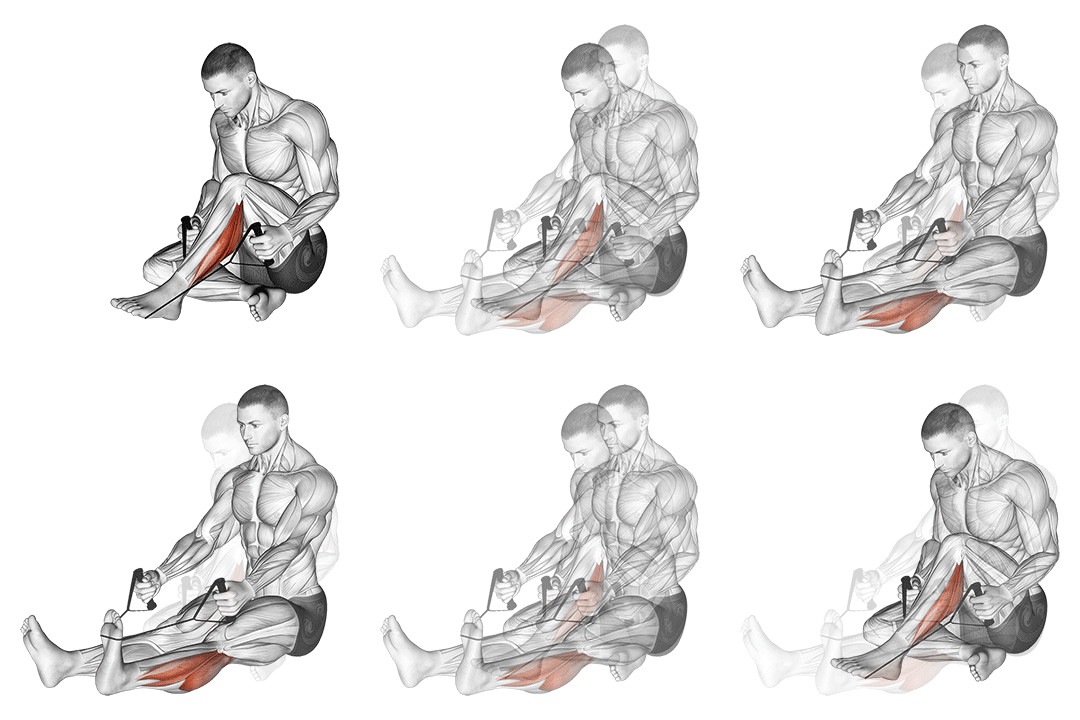
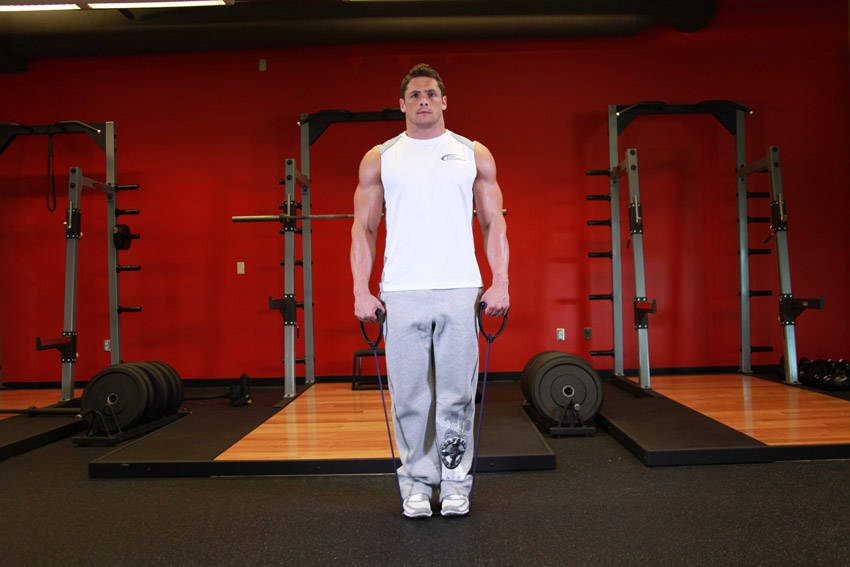
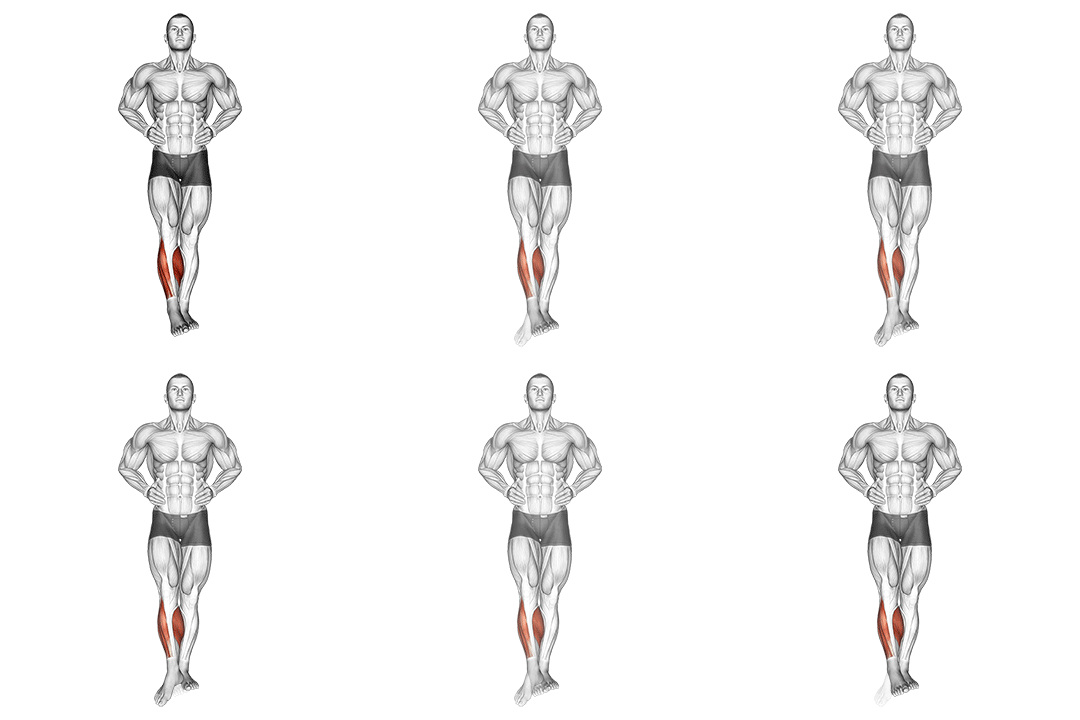
Peroneals Stretch
Head-to-Head Comparison
| Attribute | Assisted Lying Calves Stretch | Peroneals Stretch |
|---|---|---|
| Target Muscle |
Calves
|
Calves
|
| Body Part |
Lower-legs
|
Lower-legs
|
| Equipment |
Band
|
Rope
|
| Difficulty |
Beginner
|
Beginner
|
| Movement Type |
Isolation
|
Isolation
|
| Secondary Muscles |
1
|
2
|
Secondary Muscles Activated
Assisted Lying Calves Stretch
Peroneals Stretch
Visual Comparison
Overview
Assisted Lying Calves Stretch vs Peroneals Stretch — you’re choosing between two beginner-friendly isolation moves that help ankle mobility and calf length. In this guide you’ll get clear comparisons of primary vs secondary muscle targeting, equipment needs, technique cues, risk factors, and when to pick each one based on your goals. You’ll also get rep and hold ranges (30–60 seconds for static holds, 3×8–12 for loaded eccentric work), specific biomechanics (length-tension and force vectors), and actionable progressions so you can use the stretch that actually helps your training.
Key Differences
- Equipment differs: Assisted Lying Calves Stretch uses Band, while Peroneals Stretch requires Rope.
Pros & Cons
Assisted Lying Calves Stretch
+ Pros
- Direct gastrocnemius targeting with knee extended — better for overall calf lengthening
- Uses a single, inexpensive band that also allows progressive loading
- Low learning curve: supine position stabilizes the pelvis and spine
- Versatile: static holds (30–60s) or loaded eccentrics (3×6–12) for muscle adaptation
− Cons
- Less emphasis on lateral stabilizers and ankle eversion control
- Can underload the soleus unless knee-bent variations are used
- Requires correct band placement to avoid heel slippage or Achilles irritation
Peroneals Stretch
+ Pros
- Targets peroneal muscles and lateral ankle stabilizers that most calf stretches miss
- Improves eversion control, useful for ankle stability and injury prevention
- Simple foot-focused mechanics — effective for localized lateral tension
- Good adjunct to balance and proprioception drills
− Cons
- Fewer straightforward progression/loading options for muscle adaptation
- Higher risk of lateral ankle overstress if technique is poor
- Requires a rope/strap and careful foot positioning to be effective
When Each Exercise Wins
Assisted lying lets you add progressive load with a band and perform controlled eccentrics (3×6–12 reps with 3–5s negatives) and long isometric holds (30–60s), offering better time-under-tension for muscle growth in the gastrocnemius.
Because you can load and manipulate the force vector with bands, Assisted Lying supports higher mechanical tension and eccentric-focused work that translates more directly to plantarflexion strength than a lateral peroneal stretch.
The supine position stabilizes the spine and pelvis, bands let you scale intensity gradually, and the movement is easy to cue — making it simpler for new exercisers to learn safe, effective technique.
Bands are affordable, portable, and let you vary intensity from passive holds to loaded eccentrics at home; a rope-based Peroneals Stretch is useful but less versatile for home progressions.
Frequently Asked Questions
Can I do both Assisted Lying Calves Stretch and Peroneals Stretch in the same workout?
Yes. Pairing them is complementary: do Assisted Lying first to address plantarflexor length (30–60s holds or eccentric sets), then perform Peroneals Stretch for 20–40s sets to target lateral stabilizers and proprioception.
Which exercise is better for beginners?
Assisted Lying is better for beginners because the supine position stabilizes the body and band tension is easy to control, reducing technique errors and making progressive overload straightforward.
How do the muscle activation patterns differ?
Assisted Lying biases the gastrocnemius/soleus via axial dorsiflexion forces—gastrocnemius peaks with the knee extended—while Peroneals Stretch shifts activation to peroneus longus/brevis and ankle evertors through an eversion-plus-dorsiflexion vector, changing the force vector and joint moment arm.
Can Peroneals Stretch replace Assisted Lying Calves Stretch?
No — Peroneals Stretch targets lateral cuff and ankle stabilizers, not the gastrocnemius bulk. If your goal is overall calf length or progressive loading for plantarflexion strength, stick with Assisted Lying; use Peroneals as a targeted supplement.
Expert Verdict
Use Assisted Lying Calves Stretch when you want a scalable, calf-focused stretch that doubles as a low-load strengthening tool. Its band tension allows controlled dorsiflexion to target gastrocnemius (knee extended) or soleus (knee bent), with practical progressions like 30–60s holds or 3×6–12 eccentric reps. Choose Peroneals Stretch when you need to rehabilitate or strengthen lateral ankle stabilizers, improve eversion control, or address recurring ankle sprain patterns. For most trainees and home routines, start with Assisted Lying for general calf mobility and add Peroneals when lateral stability or foot mechanics are a specific goal.
Also Compare
More comparisons with Assisted Lying Calves Stretch
Compare More Exercises
Use our free comparison tool to analyze any two exercises head-to-head.
Compare Exercises