

Assisted Lying Calves Stretch vs Posterior Tibialis Stretch: Complete Comparison Guide
Assisted Lying Calves Stretch vs Posterior Tibialis Stretch — if you want better ankle mobility or to relieve lower-leg tightness, this side-by-side will help you choose. I’ll walk you through technique cues, the biomechanics behind each stretch, what muscles are actually being lengthened or unloaded, equipment needs, and practical prescription (hold times, sets, progressions). Read on to learn which stretch emphasizes the gastrocnemius versus the deep posterior compartment, which is easier to perform correctly, and when to combine them in a routine to improve ankle dorsiflexion and reduce calf soreness.
Exercise Comparison
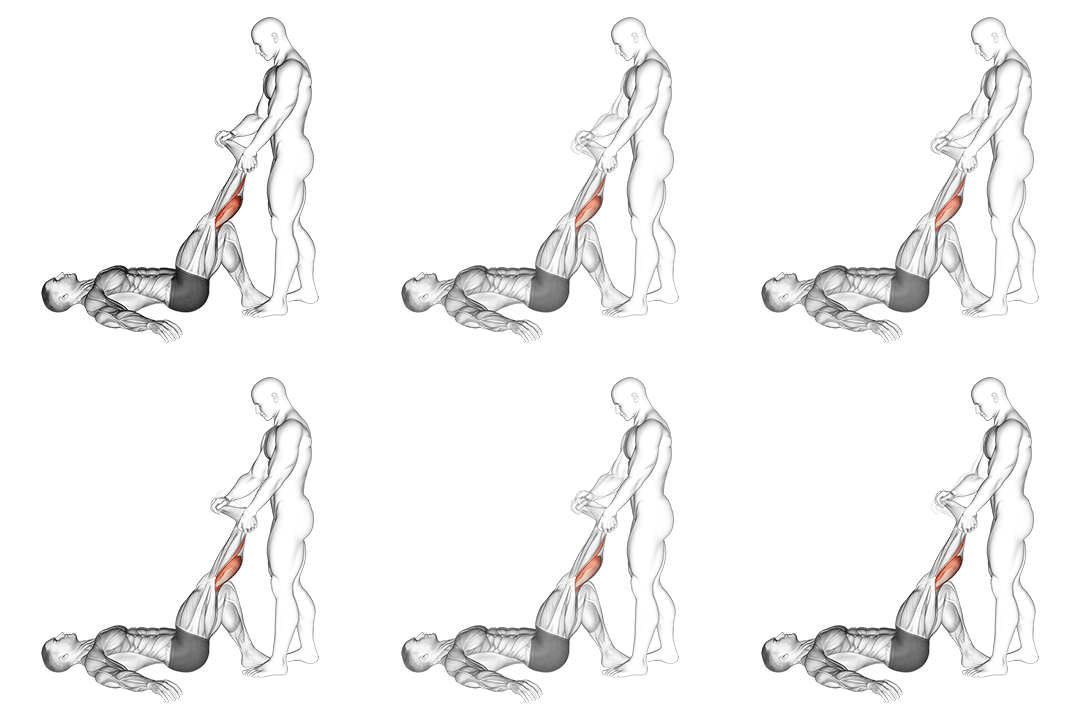
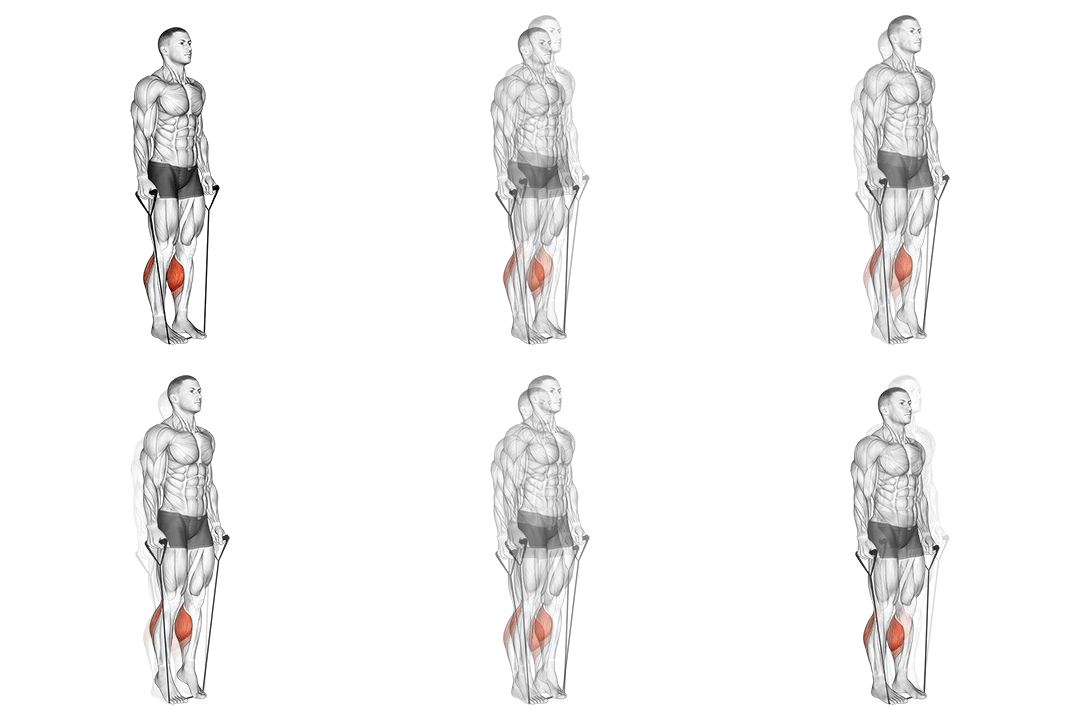
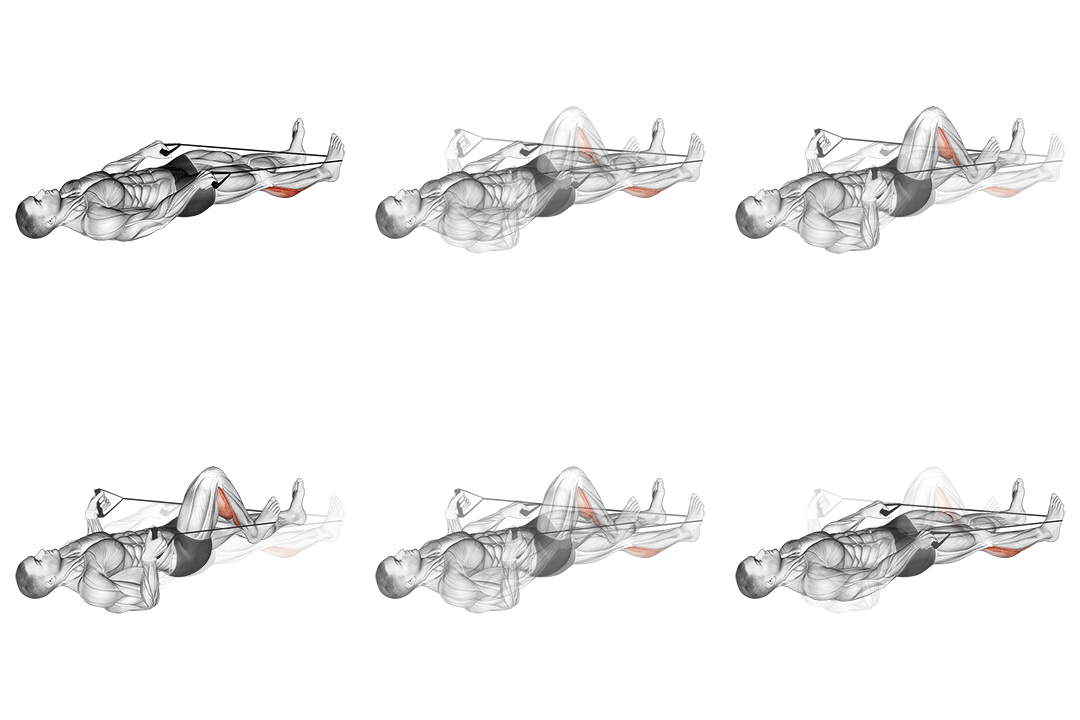
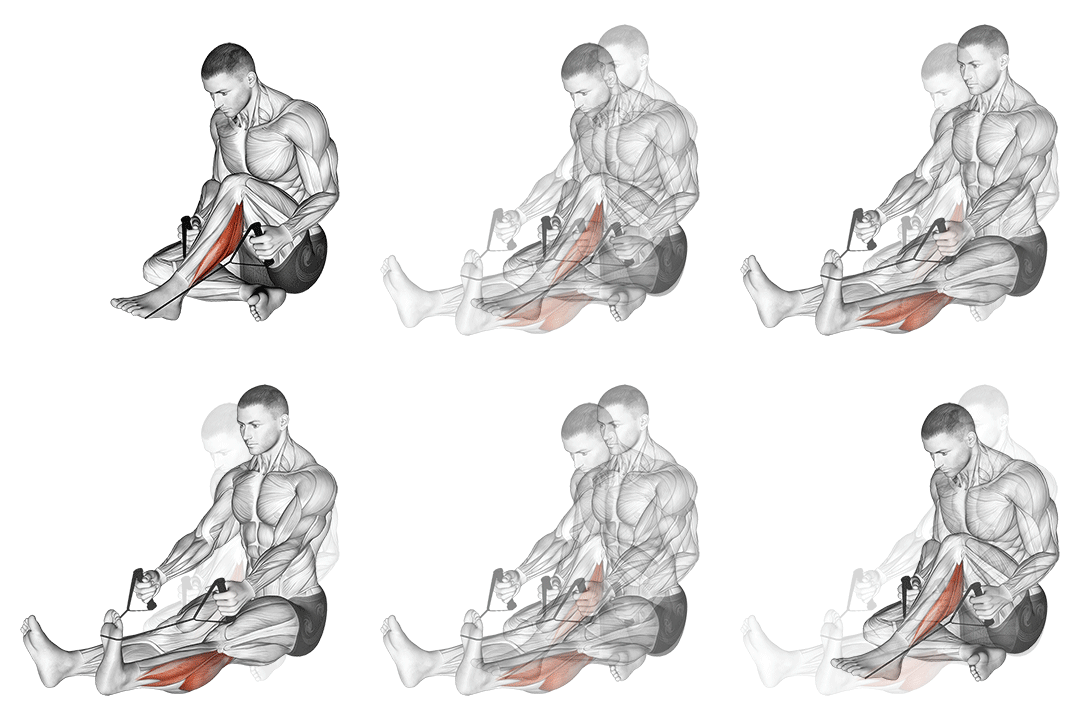
Assisted Lying Calves Stretch
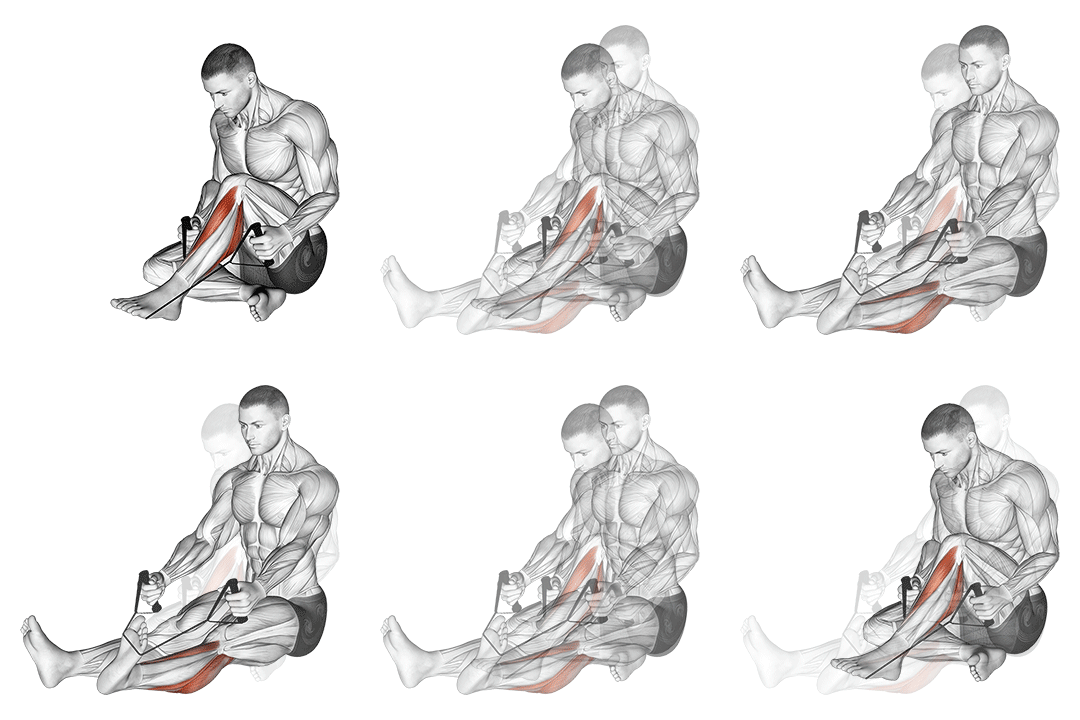
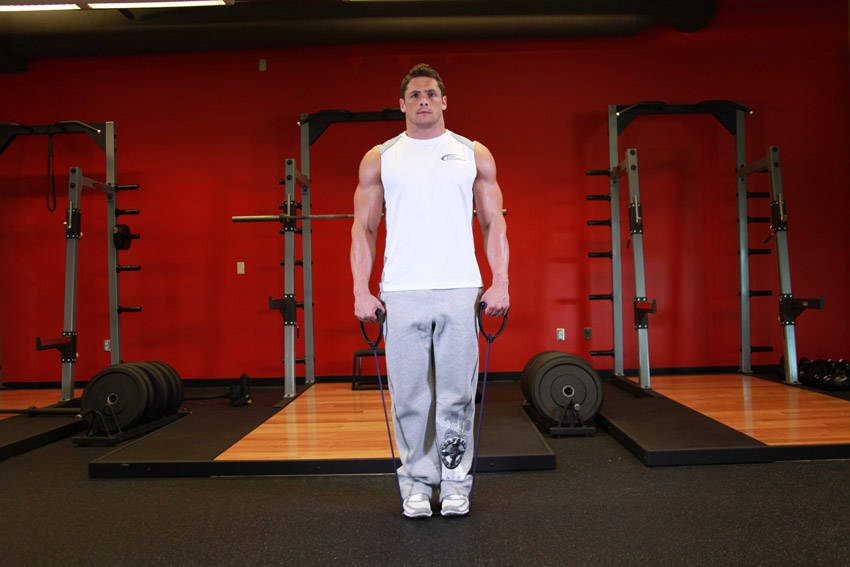
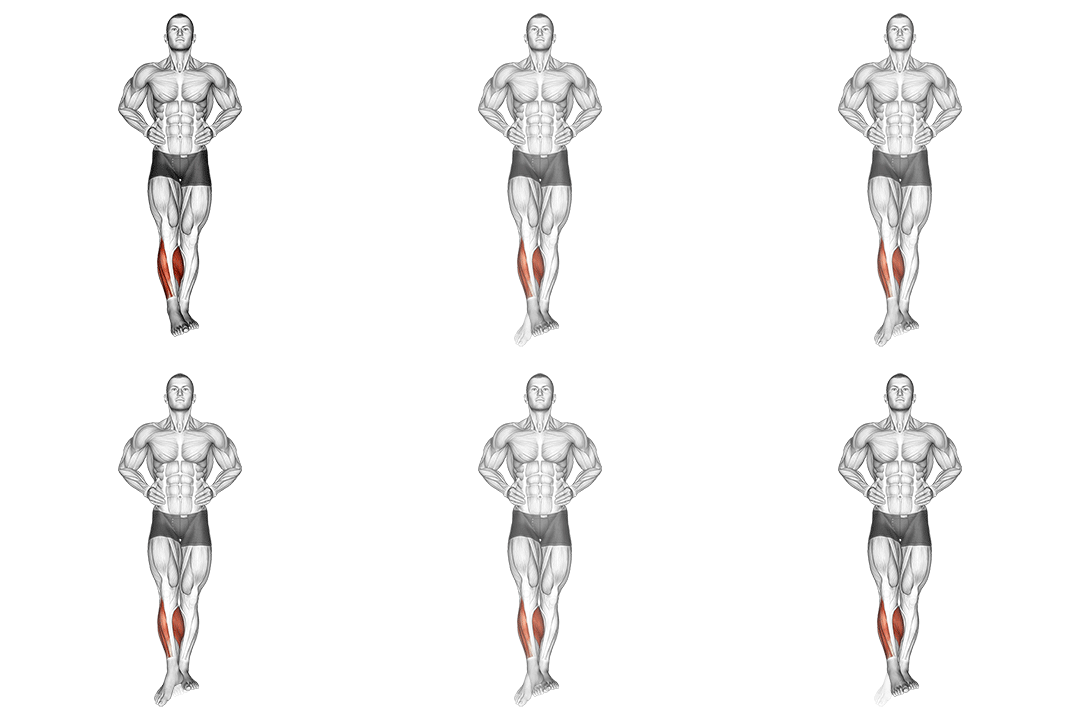
Posterior Tibialis Stretch
Head-to-Head Comparison
| Attribute | Assisted Lying Calves Stretch | Posterior Tibialis Stretch |
|---|---|---|
| Target Muscle |
Calves
|
Calves
|
| Body Part |
Lower-legs
|
Lower-legs
|
| Equipment |
Band
|
Rope
|
| Difficulty |
Beginner
|
Beginner
|
| Movement Type |
Isolation
|
Isolation
|
| Secondary Muscles |
1
|
2
|
Secondary Muscles Activated
Assisted Lying Calves Stretch
Posterior Tibialis Stretch
Visual Comparison
Overview
Assisted Lying Calves Stretch vs Posterior Tibialis Stretch — if you want better ankle mobility or to relieve lower-leg tightness, this side-by-side will help you choose. I’ll walk you through technique cues, the biomechanics behind each stretch, what muscles are actually being lengthened or unloaded, equipment needs, and practical prescription (hold times, sets, progressions). Read on to learn which stretch emphasizes the gastrocnemius versus the deep posterior compartment, which is easier to perform correctly, and when to combine them in a routine to improve ankle dorsiflexion and reduce calf soreness.
Key Differences
- Equipment differs: Assisted Lying Calves Stretch uses Band, while Posterior Tibialis Stretch requires Rope.
Pros & Cons
Assisted Lying Calves Stretch
+ Pros
- Simple setup with a band — easy for home use
- Directly lengthens gastrocnemius and soleus for improved dorsiflexion
- Scalable by band tension and hold time (30–60s, 2–3 sets)
- Low neuromuscular demand; easy to cue and teach
− Cons
- Less targeted for medial/posterior tibialis tendon mobility
- Can pull on hamstrings if performed with full knee extension
- Limited specificity for subtalar joint mechanics like inversion control
Posterior Tibialis Stretch
+ Pros
- Targets posterior tibialis and deep posterior compartment specifically
- Improves medial ankle control and subtalar joint mobility
- Useful for addressing medial shin tightness and tendon stiffness
- Can be progressed to proprioceptive holds and variable inversion angles
− Cons
- Requires precise rope placement and technique awareness
- Slightly higher risk of tendon overload if too aggressive
- Less effective at loading the main gastrocnemius muscle bellies
When Each Exercise Wins
For muscle growth you need repeated mechanical tension and ability to progressively load; the assisted lying stretch lengthens the gastrocnemius more and can be paired with eccentric calf raises (8–12 reps, 3–4 sets). That provides superior stimulus for hypertrophy of the major calf muscles.
Strength gains require force production across a functional range. The assisted lying method lets you control dorsiflexion angle (~15–25°), add resistance, and transition to loaded calf raises, offering better transfer to plantarflexion strength than a primarily tendon-focused posterior tibialis stretch.
Beginners benefit from simple, low-skill progressions; the band-based lying stretch is easy to cue, safe, and teaches ankle dorsiflexion without complex subtalar control. Start with 2 sets of 30–45s and shallow dorsiflexion before increasing range.
Bands are more common than specialized ropes and the assisted lying position requires minimal space. You can reliably perform holds, adjust band tension, and combine with bodyweight calf raises at home.
Frequently Asked Questions
Can I do both Assisted Lying Calves Stretch and Posterior Tibialis Stretch in the same workout?
Yes. Use Assisted Lying Calves Stretch first to open overall calf length (2 sets of 30–45s), then add targeted Posterior Tibialis holds (2 sets of 20–40s) to address medial tendon stiffness. Sequence global lengthening before targeted tendon work to respect the length-tension relationship and avoid overstressing tendons.
Which exercise is better for beginners?
Assisted Lying Calves Stretch is better for beginners because it has a simpler setup, clearer joint alignment cues, and lower neuromuscular demand. Start with shallow dorsiflexion and short holds, then increase range as your comfort and ankle mobility improve.
How do the muscle activation patterns differ?
The assisted lying variant produces higher passive tension in the gastrocnemius and soleus by dorsiflexing the ankle, shifting the length-tension curve toward greater passive force. The posterior tibialis stretch alters force vectors at the subtalar joint and preferentially unloads or stretches the posterior tibialis and medial structures rather than the bulk of the gastrocnemius.
Can Posterior Tibialis Stretch replace Assisted Lying Calves Stretch?
Not entirely. Posterior Tibialis Stretch is a targeted tool for medial tendon and subtalar mobility, while the assisted lying stretch provides broader calf lengthening and easier progressive loading. Use posterior tibialis work when you need medial specificity; keep the assisted lying stretch for overall dorsiflexion and strength transfer.
Expert Verdict
Pick Assisted Lying Calves Stretch when your main goal is improving ankle dorsiflexion, unloading and lengthening the gastrocnemius/soleus, or when you need an easy, scalable option for home or beginner programs. Use 2–3 sets of 30–60 seconds, and progress by increasing band tension or adding eccentric calf exercises. Choose Posterior Tibialis Stretch when you need to target medial shin pain, posterior tibialis tendon stiffness, or subtalar control — focus on gentle medial pull angles and shorter holds (20–40s) while monitoring tendon comfort. For comprehensive rehab or mobility work, include both: primary assisted lying for global calf length and posterior tibialis for targeted tendon mobility.
Also Compare
More comparisons with Assisted Lying Calves Stretch
More comparisons with Posterior Tibialis Stretch
Compare More Exercises
Use our free comparison tool to analyze any two exercises head-to-head.
Compare Exercises