

Assisted Lying Glutes Stretch vs Band Pull Through: Complete Comparison Guide
Assisted Lying Glutes Stretch vs Band Pull Through — you’re about to see how a mobility-focused isolation move stacks up against a loaded hip-dominant compound exercise. I’ll walk you through which muscles each one fires, the biomechanics behind the movement, equipment needs, safety, and when to pick one over the other. By the end you’ll know which exercise to use for mobility, muscle growth, or strength, plus specific technique cues like band placement, hip angle, and rep ranges so you can apply this in your next session.
Exercise Comparison
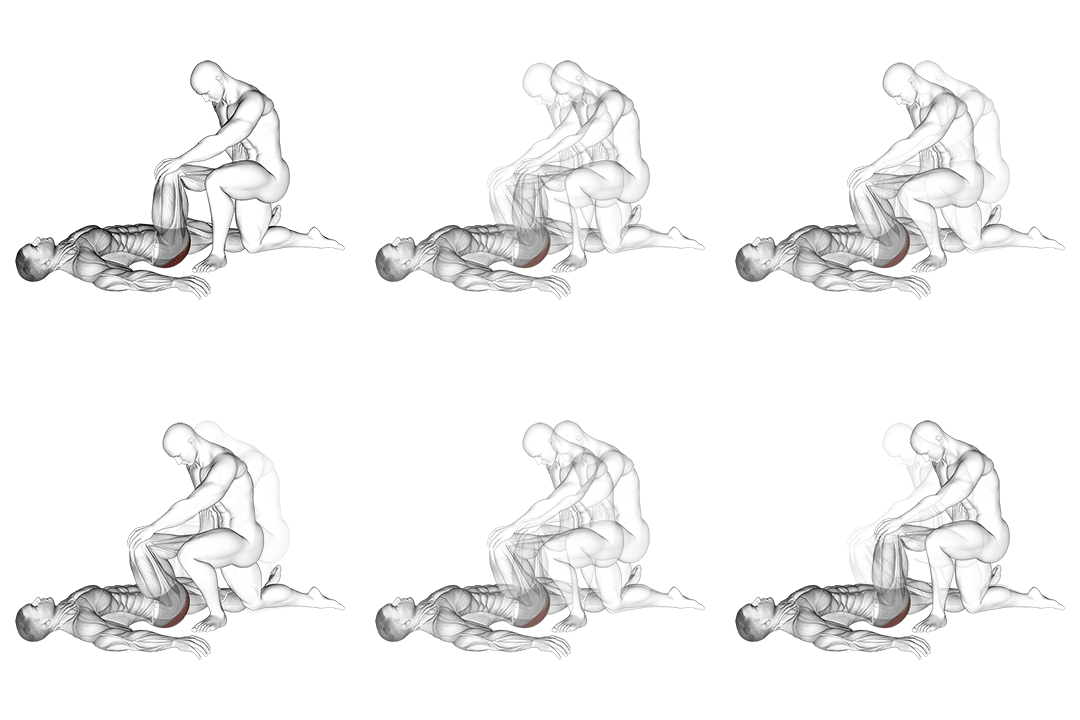
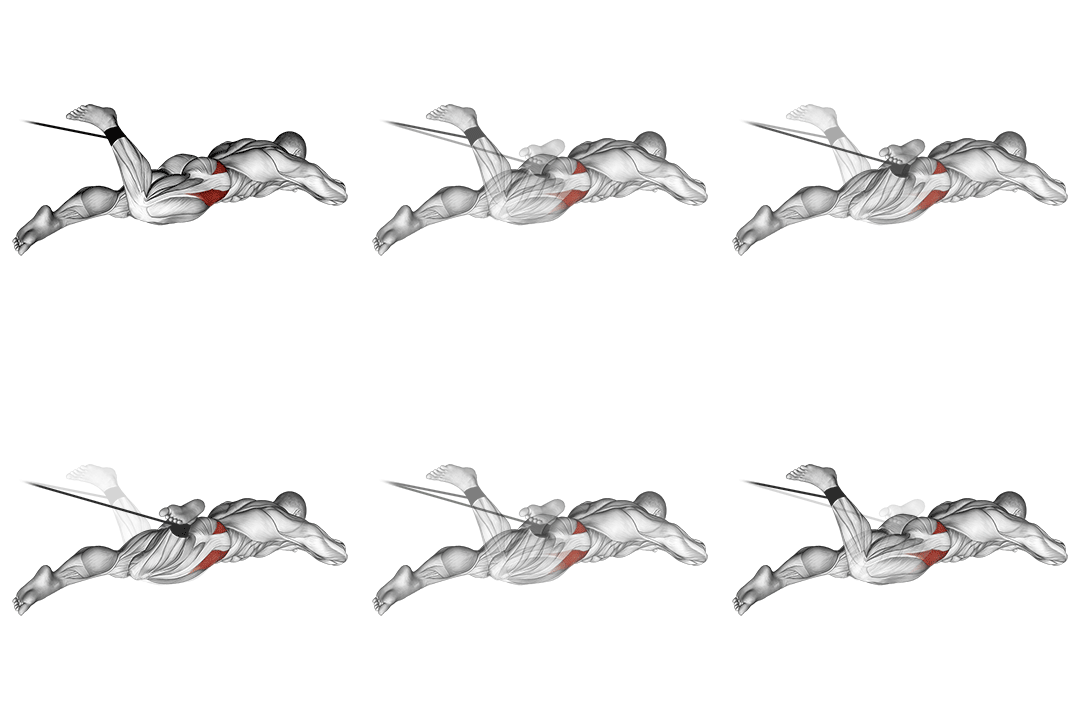
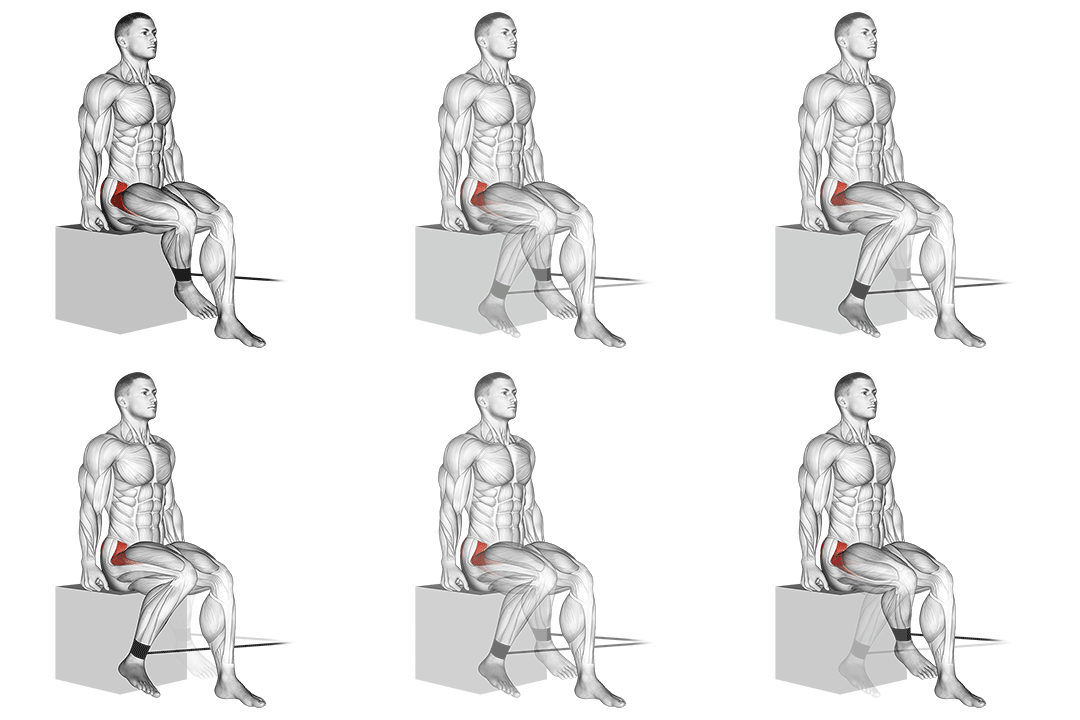
Assisted Lying Glutes Stretch
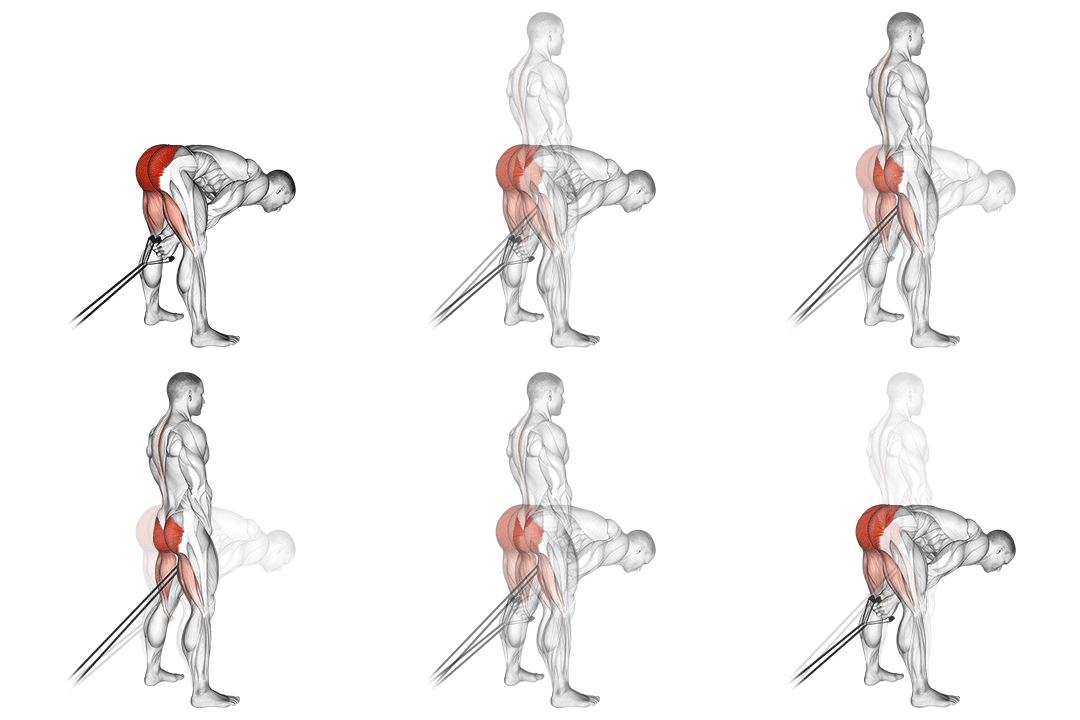
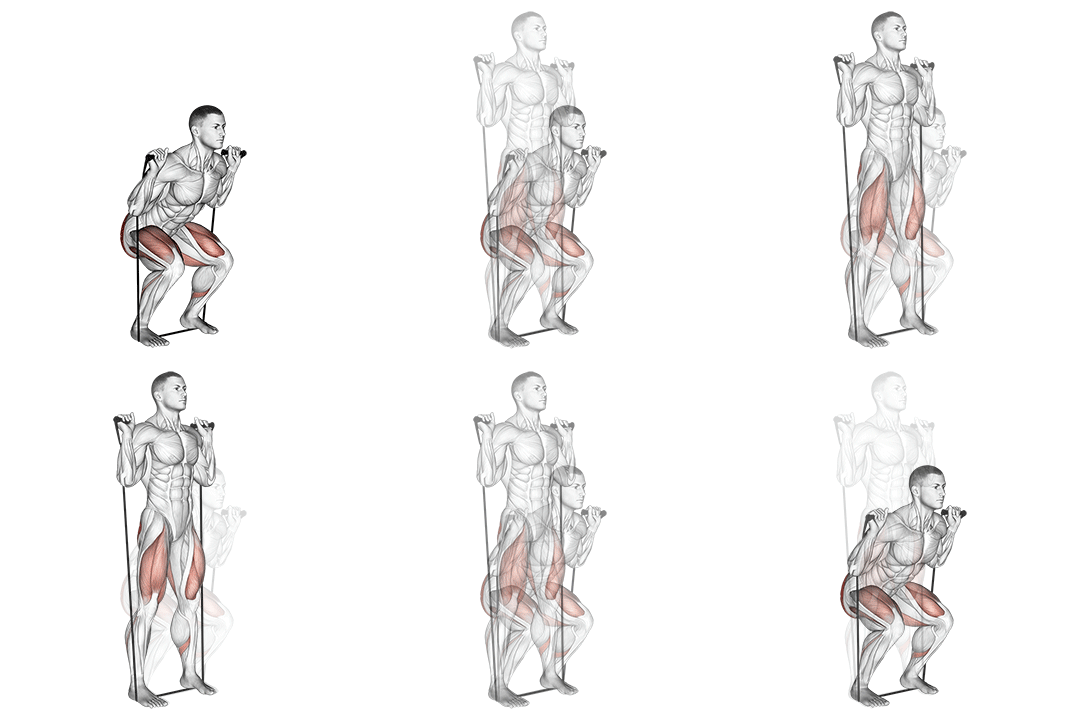
Band Pull Through
Head-to-Head Comparison
| Attribute | Assisted Lying Glutes Stretch | Band Pull Through |
|---|---|---|
| Target Muscle |
Glutes
|
Glutes
|
| Body Part |
Upper-legs
|
Upper-legs
|
| Equipment |
Band
|
Band
|
| Difficulty |
Beginner
|
Intermediate
|
| Movement Type |
Isolation
|
Compound
|
| Secondary Muscles |
1
|
2
|
Secondary Muscles Activated
Assisted Lying Glutes Stretch
Band Pull Through
Visual Comparison
Overview
Assisted Lying Glutes Stretch vs Band Pull Through — you’re about to see how a mobility-focused isolation move stacks up against a loaded hip-dominant compound exercise. I’ll walk you through which muscles each one fires, the biomechanics behind the movement, equipment needs, safety, and when to pick one over the other. By the end you’ll know which exercise to use for mobility, muscle growth, or strength, plus specific technique cues like band placement, hip angle, and rep ranges so you can apply this in your next session.
Key Differences
- Assisted Lying Glutes Stretch is an isolation exercise, while Band Pull Through is a compound movement.
- Difficulty levels differ: Assisted Lying Glutes Stretch is beginner, while Band Pull Through is intermediate.
- Both exercises target the Glutes using Band. The main differences are in their movement patterns and muscle activation angles.
Pros & Cons
Assisted Lying Glutes Stretch
+ Pros
- Easy setup and low skill requirement
- Excellent for improving passive hip range of motion and reducing neural inhibition
- Low lumbar loading — safe for users with lower-back sensitivity
- Useful as a warm-up or post-workout mobility tool (hold 20–60s)
− Cons
- Limited ability to overload for hypertrophy
- Primarily passive/isometric — minimal concentric force production
- Less carryover to compound strength movements
Band Pull Through
+ Pros
- High dynamic glute activation during concentric hip extension
- Scalable resistance and tempo for strength and hypertrophy (6–12 reps effective)
- Improves hip-hinge mechanics transferable to deadlifts and squats
- Engages posterior chain including hamstrings and lower back for functional strength
− Cons
- Requires solid hip-hinge technique and lumbar bracing
- Higher lower-back loading risk if done incorrectly
- Needs heavier bands or setup to provide sufficient stimulus
When Each Exercise Wins
Band Pull Throughs produce higher concentric force and time-under-tension across the glute maximus, making them better for hypertrophy. Use 6–12 reps with moderate-heavy band tension and controlled eccentrics to maximize muscle growth.
The pull through trains loaded hip extension and movement-specific torque, improving force production useful for deadlifts and squats. Progress by increasing band resistance and reducing reps to 4–8 for strength emphasis.
The lying stretch removes balance and heavy loading, letting beginners isolate glute activation and improve hip ROM quickly. Start with 20–30s holds and focus on feeling the glute contract at end range.
It requires a single light band and a mat, no anchoring or heavy equipment. It’s ideal for quick activation sessions, warm-ups, or mobility circuits in small spaces.
Frequently Asked Questions
Can I do both Assisted Lying Glutes Stretch and Band Pull Through in the same workout?
Yes. Use the Assisted Lying Glutes Stretch as a primer or mobility set (20–40s holds) to improve muscle activation, then perform Band Pull Throughs for loading (6–12 reps). This sequence leverages length-tension priming before concentric work.
Which exercise is better for beginners?
Assisted Lying Glutes Stretch is better for beginners because it removes balance and heavy loading, letting you learn to isolate the glute. Perform it first to build mind-muscle connection before attempting standing hinge work.
How do the muscle activation patterns differ?
The stretch emphasizes passive/isometric tension at long muscle lengths with steady low-force activation, while the pull through creates dynamic concentric contractions and higher EMG bursts in the glute maximus and hamstrings during hip extension. The pull through produces more time-under-tension under load.
Can Band Pull Through replace Assisted Lying Glutes Stretch?
No — they serve different purposes. Band Pull Throughs can replace the stretch for loaded strength work, but you’ll lose passive range-of-motion and targeted activation benefits. For optimal results, use the stretch for mobility and the pull through for overload.
Expert Verdict
Use Assisted Lying Glutes Stretch when your priority is mobility, activation, or a low-risk warm-up — it’s beginner-friendly, targets the glutes at long lengths, and reduces lower-back loading. Choose Band Pull Through when you need progressive overload, hypertrophy, or strength carryover; its hip-hinge mechanics generate higher glute force and recruit hamstrings and lumbar stabilizers. For balanced programming, start sessions with 2–3 sets of the assisted stretch (20–40s holds) to prime the glutes, then follow with 3–4 sets of Band Pull Throughs (6–12 reps) for strength or muscle growth. Be decisive: mobility first, loaded work second.
Also Compare
More comparisons with Assisted Lying Glutes Stretch
Compare More Exercises
Use our free comparison tool to analyze any two exercises head-to-head.
Compare Exercises