

Assisted Lying Glutes Stretch vs Band Stiff Leg Deadlift: Complete Comparison Guide
Assisted Lying Glutes Stretch vs Band Stiff Leg Deadlift puts a mobility-focused isolation move against a loaded compound lift. You’ll get clear, actionable guidance on technique cues, biomechanics, muscle activation, equipment needs, programming (rep ranges and progressions), and injury risk. I’ll show when to use the assisted lying stretch for activation and mobility, and when the band stiff-leg deadlift is the smarter choice for progressive glute strength and muscle growth. Read on for practical cues, set/rep ranges, and exactly how to sequence these in your sessions.
Exercise Comparison
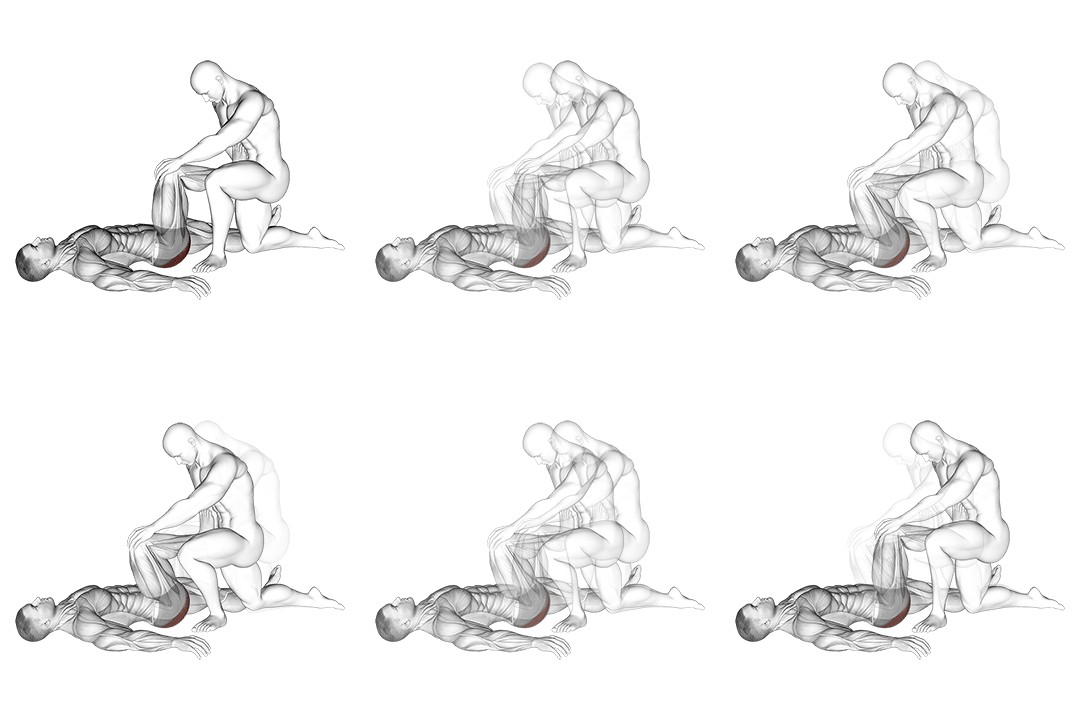
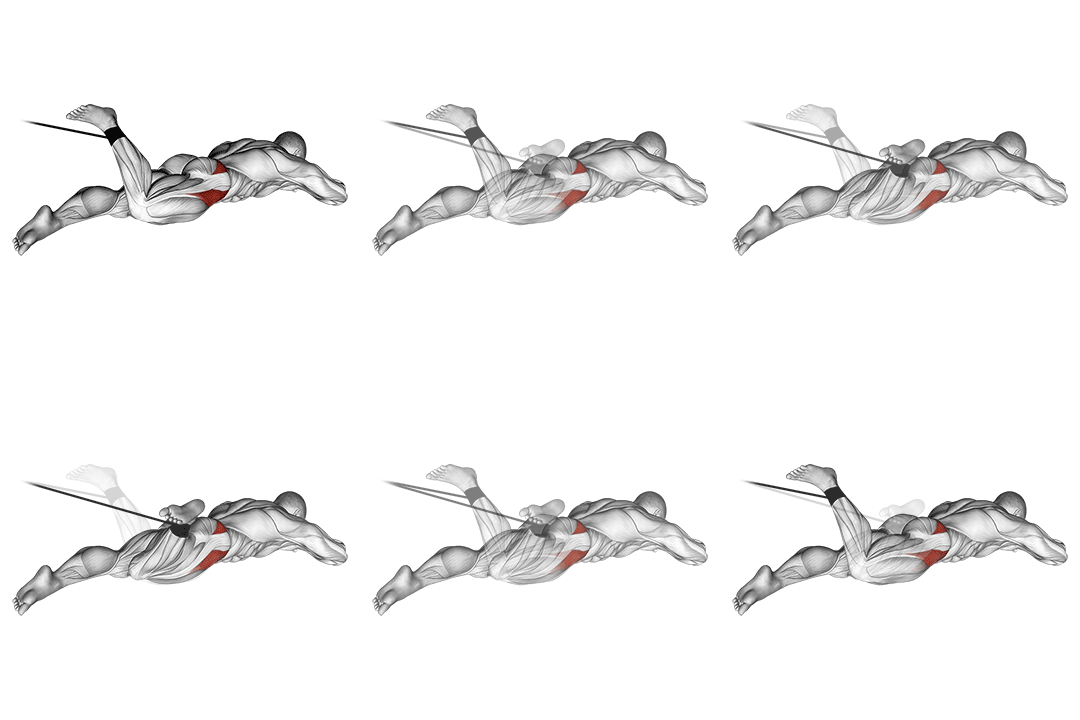
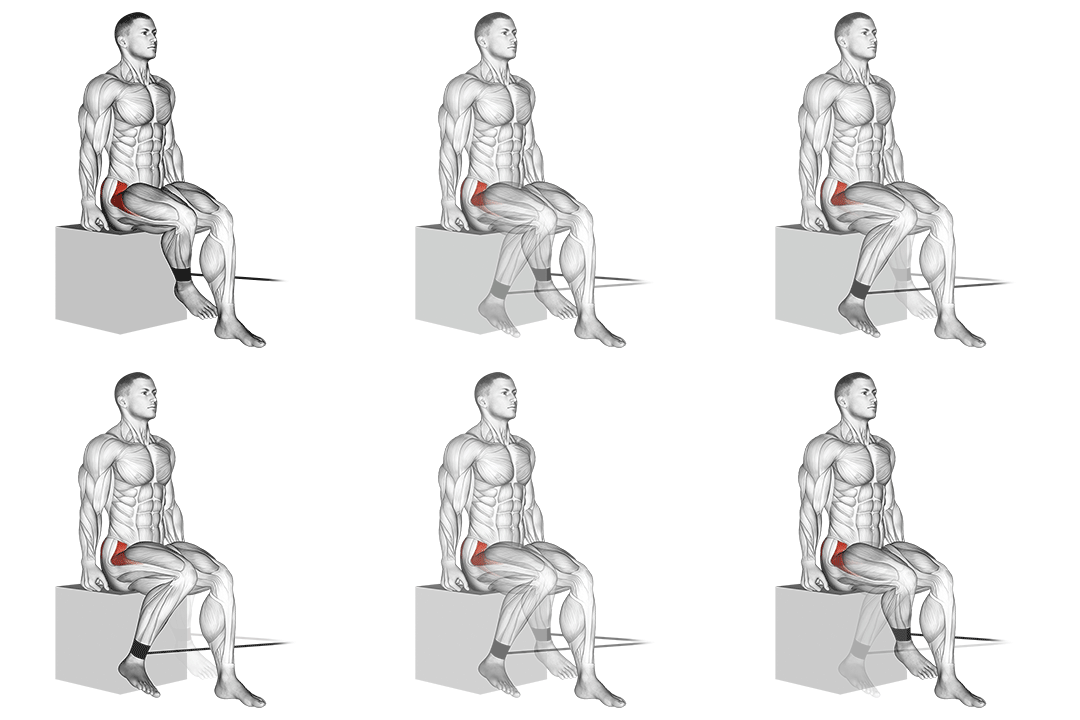
Assisted Lying Glutes Stretch
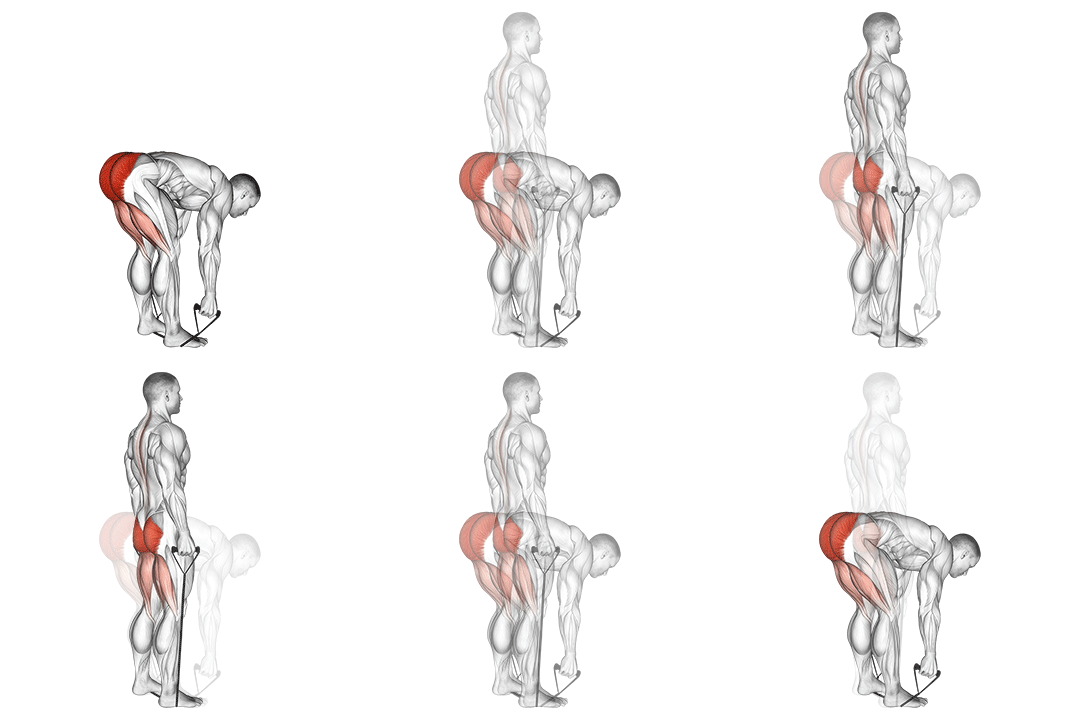
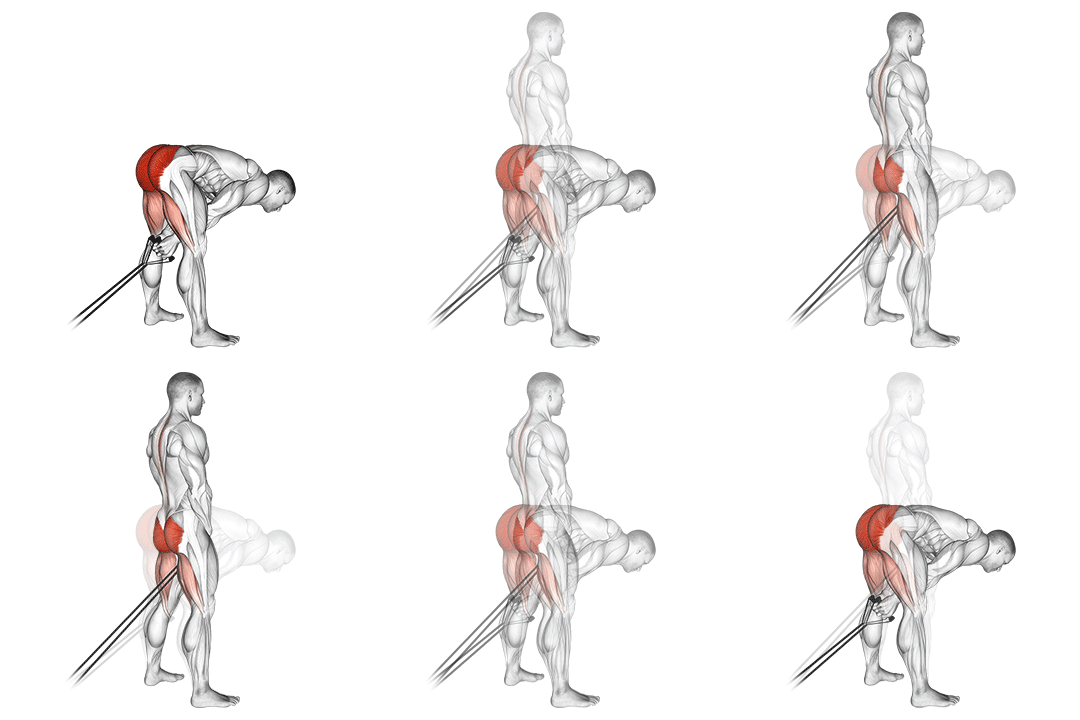
Band Stiff Leg Deadlift
Head-to-Head Comparison
| Attribute | Assisted Lying Glutes Stretch | Band Stiff Leg Deadlift |
|---|---|---|
| Target Muscle |
Glutes
|
Glutes
|
| Body Part |
Upper-legs
|
Upper-legs
|
| Equipment |
Band
|
Band
|
| Difficulty |
Beginner
|
Intermediate
|
| Movement Type |
Isolation
|
Compound
|
| Secondary Muscles |
1
|
2
|
Secondary Muscles Activated
Assisted Lying Glutes Stretch
Band Stiff Leg Deadlift
Visual Comparison
Overview
Assisted Lying Glutes Stretch vs Band Stiff Leg Deadlift puts a mobility-focused isolation move against a loaded compound lift. You’ll get clear, actionable guidance on technique cues, biomechanics, muscle activation, equipment needs, programming (rep ranges and progressions), and injury risk. I’ll show when to use the assisted lying stretch for activation and mobility, and when the band stiff-leg deadlift is the smarter choice for progressive glute strength and muscle growth. Read on for practical cues, set/rep ranges, and exactly how to sequence these in your sessions.
Key Differences
- Assisted Lying Glutes Stretch is an isolation exercise, while Band Stiff Leg Deadlift is a compound movement.
- Difficulty levels differ: Assisted Lying Glutes Stretch is beginner, while Band Stiff Leg Deadlift is intermediate.
- Both exercises target the Glutes using Band. The main differences are in their movement patterns and muscle activation angles.
Pros & Cons
Assisted Lying Glutes Stretch
+ Pros
- Great for improving glute mind-muscle connection and activation
- Low lumbar load — safer for those with back pain
- Requires minimal space and light equipment
- Effective as a warm-up or rehab tool to increase hip mobility
− Cons
- Limited ability to provide heavy mechanical tension for hypertrophy
- Primarily passive/end-range stimulus — less carryover to dynamic strength
- Progression options are limited compared with compound lifts
Band Stiff Leg Deadlift
+ Pros
- Delivers higher mechanical tension for muscle growth and strength
- Trains functional hip-hinge pattern and posterior chain coordination
- Easy to scale by changing band tension or tempo
- Provides both eccentric and concentric overload for adaptation
− Cons
- Higher technical demand — poor form increases lower-back stress
- Requires stronger bands and standing space
- Can overwork hamstrings and lumbar spine if volume or tension is excessive
When Each Exercise Wins
The band stiff-leg deadlift produces greater mechanical tension and time under tension through loaded eccentric and concentric phases, which are primary drivers of hypertrophy. Use 8–15 reps with progressive band tension and controlled 2–3 second eccentrics for optimal muscle-building stimulus.
Strength gains require progressive overload and force production—both are easier to achieve with the band deadlift due to adjustable resistance and full-range hip extension under load. Focus on heavier bands, 4–6 sets of 6–10 reps, and maintain strict hinge mechanics.
Beginners benefit from the low technical demand and low lumbar stress of the assisted lying stretch, which builds glute activation and mobility before progressing to loaded hip-hinge patterns. Use it as a primer for 2–3 sets of 10–20 second holds.
While both exercises are home-friendly, the assisted stretch needs minimal band tension and less space, making it practical for small apartments or travel. It’s also safer to perform without a spotter or heavy equipment.
Frequently Asked Questions
Can I do both Assisted Lying Glutes Stretch and Band Stiff Leg Deadlift in the same workout?
Yes. Use the assisted lying stretch as a primer or activation drill (2–3 sets of 10–20 second holds) before performing band stiff-leg deadlifts to ensure the glutes fire correctly. Follow with 3–4 working sets of deadlifts while your activation is fresh.
Which exercise is better for beginners?
Assisted Lying Glutes Stretch is better for absolute beginners because it lowers technical demand and lumbar load while teaching glute recruitment. After consistent activation work, progress to band stiff-leg deadlifts to build strength.
How do the muscle activation patterns differ?
The assisted stretch relies on end-range isometric and passive lengthening of the glute, favoring slow motor-unit recruitment and mobility gains. The band deadlift creates dynamic eccentric-concentric loading—higher peak activation during concentric hip extension and more hamstring and erector involvement due to the force vector of the hinge.
Can Band Stiff Leg Deadlift replace Assisted Lying Glutes Stretch?
Not entirely. If your goal is pure strength and hypertrophy, the band deadlift can replace the stretch for progressive overload. If you need to improve activation, mobility, or reduce lumbar stress, keep the assisted stretch in your routine as a primer or rehab tool.
Expert Verdict
Use the Assisted Lying Glutes Stretch when your priority is activation, mobility, or low-back-safe work—make it a warm-up, prehab tool, or drill for improving glute recruitment with 2–4 sets of 10–20 second holds. Choose the Band Stiff Leg Deadlift when you want progressive overload, hypertrophy, or posterior chain strength; program it for 3–5 sets of 6–15 reps with increasing band tension and controlled eccentrics. If you have lower-back issues or a weak mind-muscle connection, start with the assisted stretch for 4–6 weeks, then add band deadlifts once your hinge pattern and glute activation are solid.
Also Compare
More comparisons with Assisted Lying Glutes Stretch
More comparisons with Band Stiff Leg Deadlift
Compare More Exercises
Use our free comparison tool to analyze any two exercises head-to-head.
Compare Exercises