

Assisted Lying Glutes Stretch vs Box Skip: Complete Comparison Guide
Assisted Lying Glutes Stretch vs Box Skip — two ways to work your glutes, but with very different aims. You’ll get a clear, practical comparison that covers which muscles each hits, the biomechanics behind why one is isolation and the other compound, equipment needs, safety and progression options. Read on for specific technique cues, rep and hold ranges (for example 30–60 second holds vs 6–12 explosive reps), and scenarios showing when to use each exercise in your training plan.
Exercise Comparison
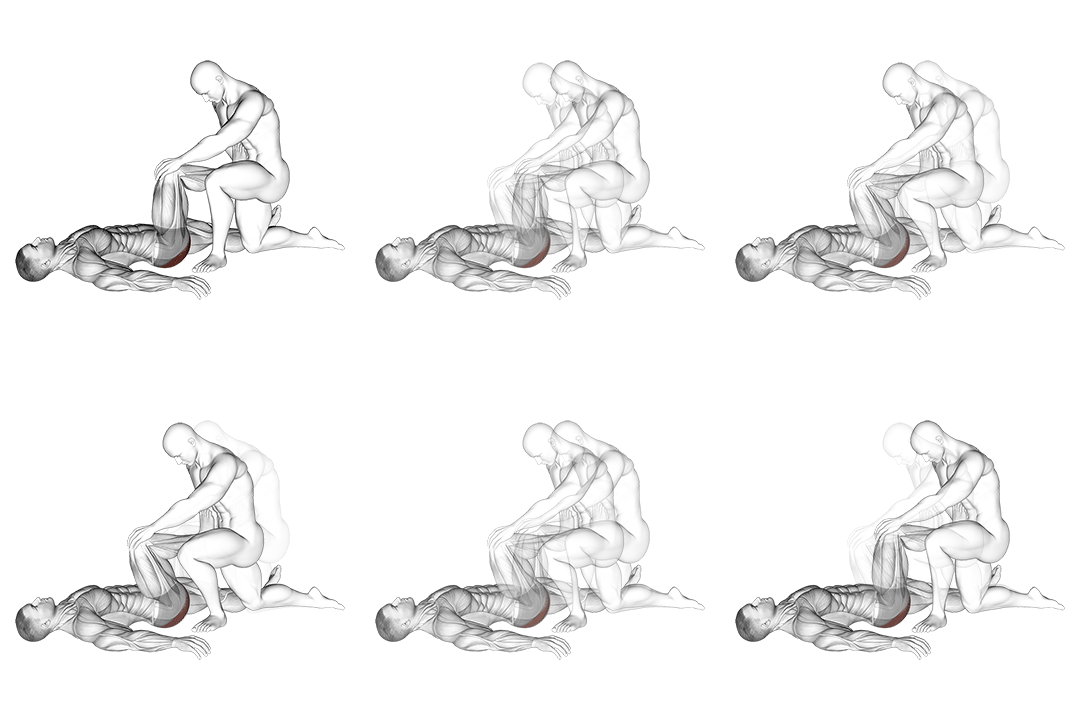
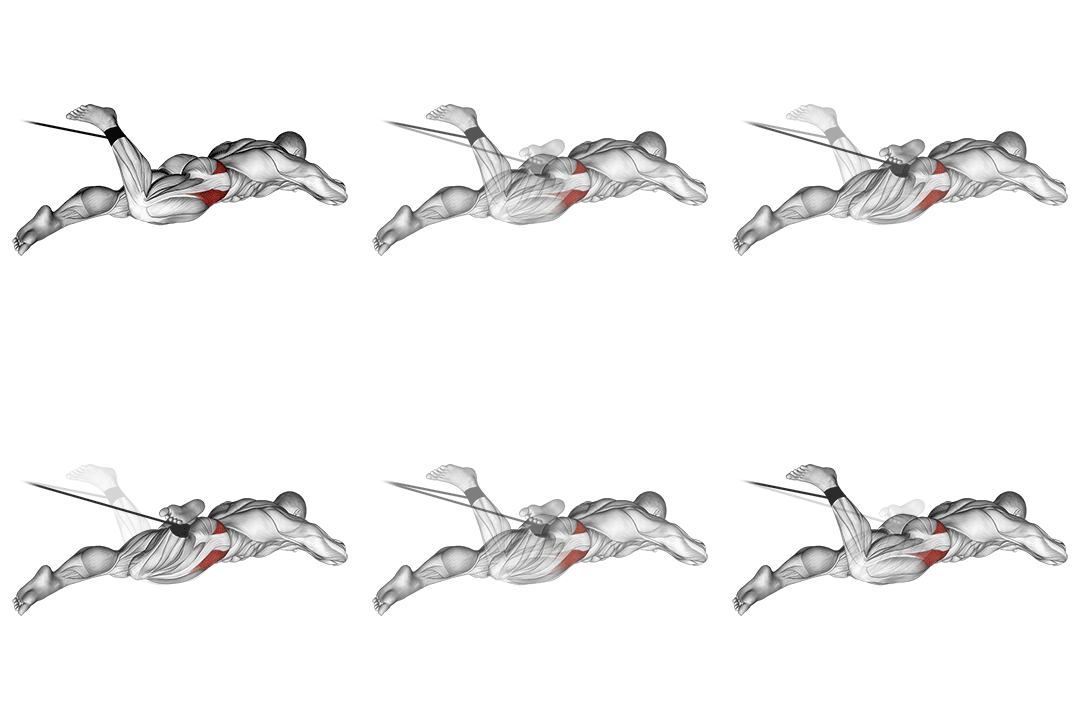
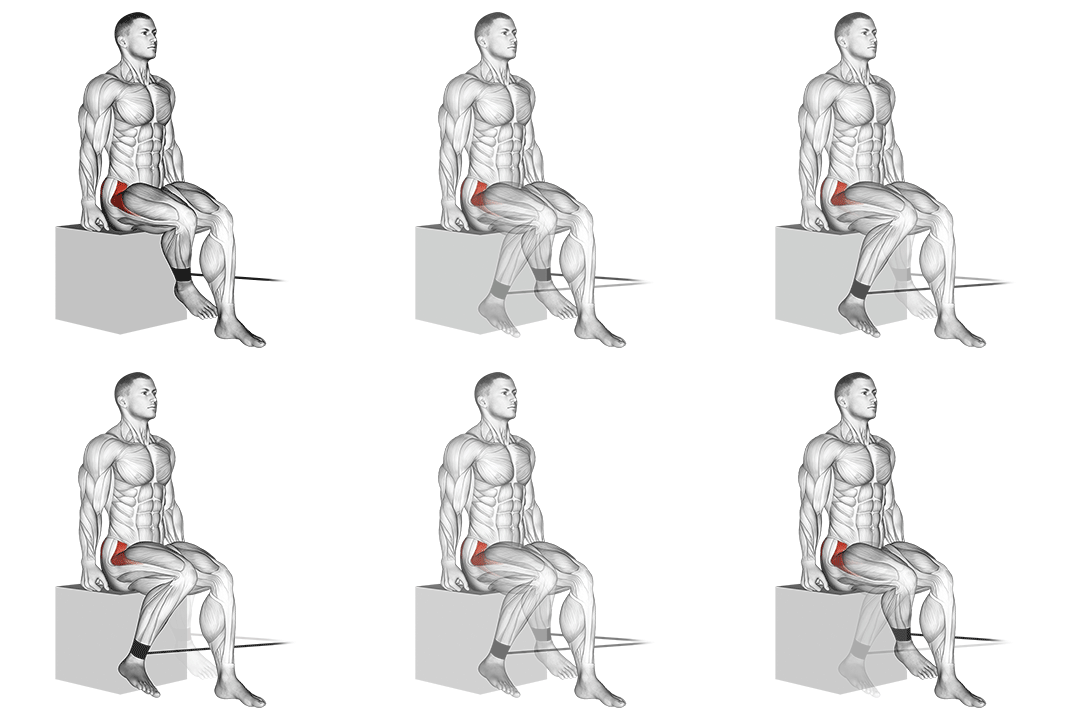
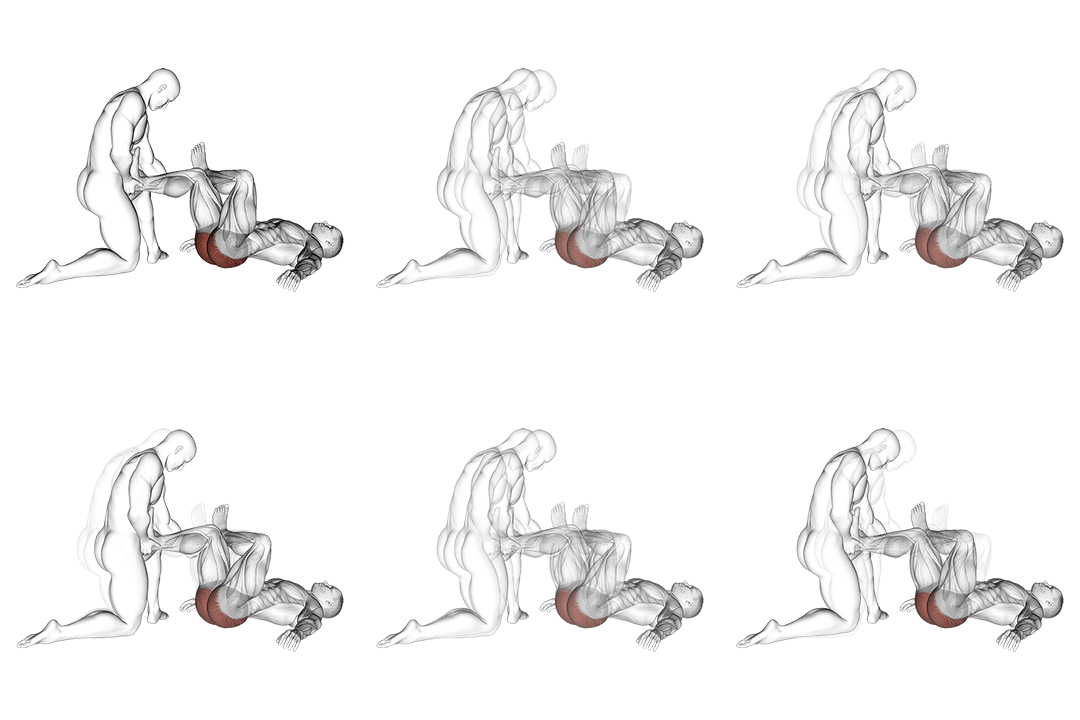
Assisted Lying Glutes Stretch
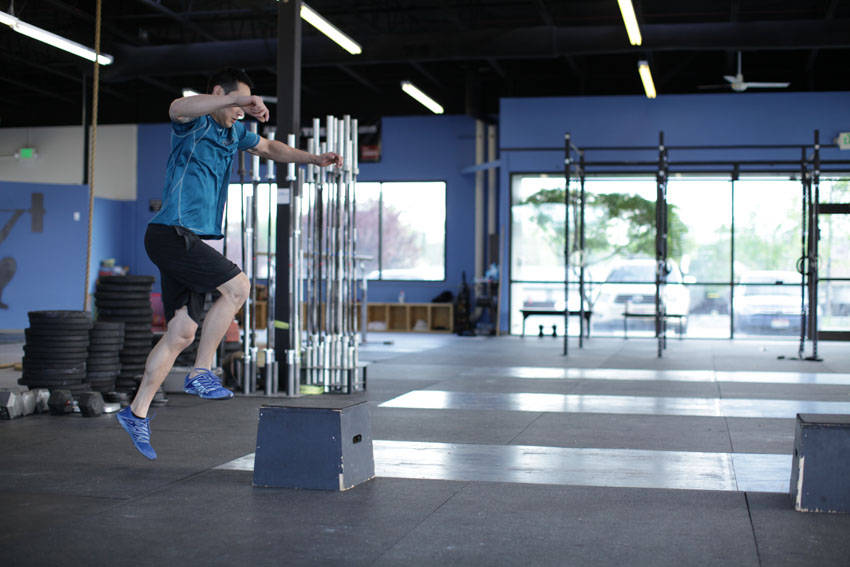
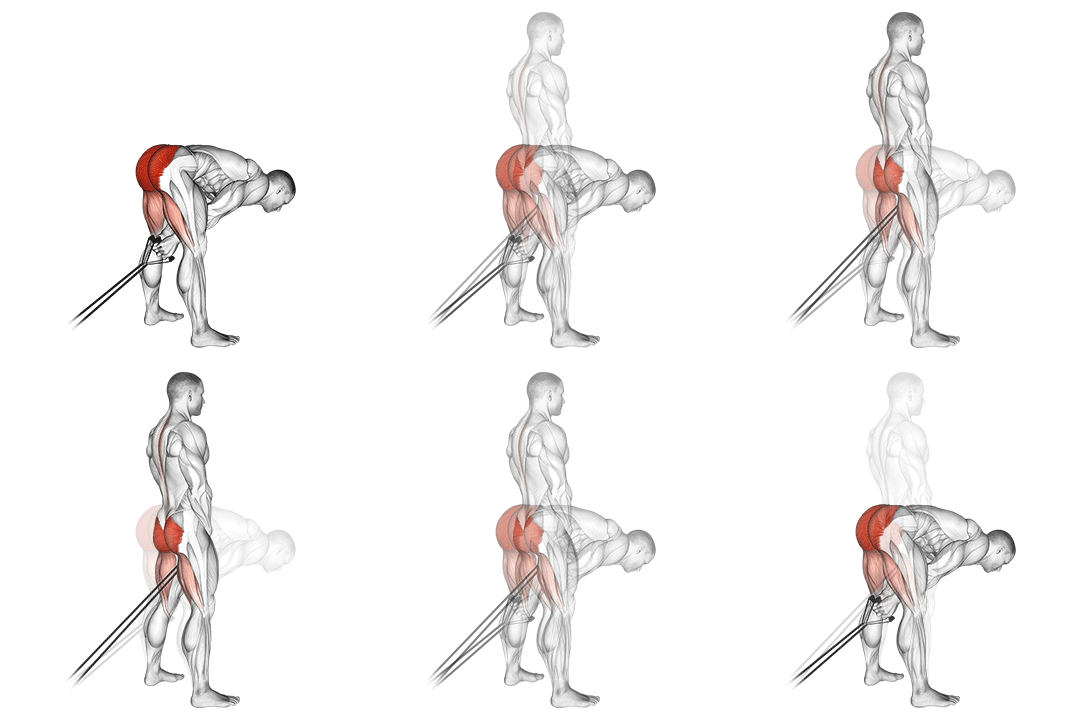
Box Skip
Head-to-Head Comparison
| Attribute | Assisted Lying Glutes Stretch | Box Skip |
|---|---|---|
| Target Muscle |
Glutes
|
Glutes
|
| Body Part |
Upper-legs
|
Upper-legs
|
| Equipment |
Band
|
Other
|
| Difficulty |
Beginner
|
Intermediate
|
| Movement Type |
Isolation
|
Compound
|
| Secondary Muscles |
1
|
5
|
Secondary Muscles Activated
Assisted Lying Glutes Stretch
Box Skip
Visual Comparison
Overview
Assisted Lying Glutes Stretch vs Box Skip — two ways to work your glutes, but with very different aims. You’ll get a clear, practical comparison that covers which muscles each hits, the biomechanics behind why one is isolation and the other compound, equipment needs, safety and progression options. Read on for specific technique cues, rep and hold ranges (for example 30–60 second holds vs 6–12 explosive reps), and scenarios showing when to use each exercise in your training plan.
Key Differences
- Equipment differs: Assisted Lying Glutes Stretch uses Band, while Box Skip requires Other.
- Assisted Lying Glutes Stretch is an isolation exercise, while Box Skip is a compound movement.
- Difficulty levels differ: Assisted Lying Glutes Stretch is beginner, while Box Skip is intermediate.
Pros & Cons
Assisted Lying Glutes Stretch
+ Pros
- Simple, low-equipment isolation for targeted glute work
- Improves hip external rotation and length-tension via 30–60s holds
- Low-impact, suitable for rehab and mobility days
- Easy to scale and perform anywhere with a band
− Cons
- Minimal concentric loading, so limited for strength gains
- Doesn't tax cardiovascular or multi-joint power systems
- May not produce significant hypertrophy without added tension strategies
Box Skip
+ Pros
- High neuromuscular demand — builds power and whole-leg strength
- Strong multi-muscle recruitment including quads, calves, adductors/abductors
- Easy to progressively overload by height, reps, or load
- Improves rate of force development and reactive strength
− Cons
- Higher impact and technical demand increases injury risk
- Requires a stable box and safe space
- Less targeted isolation of the glutes; quad dominance can occur if technique lapses
When Each Exercise Wins
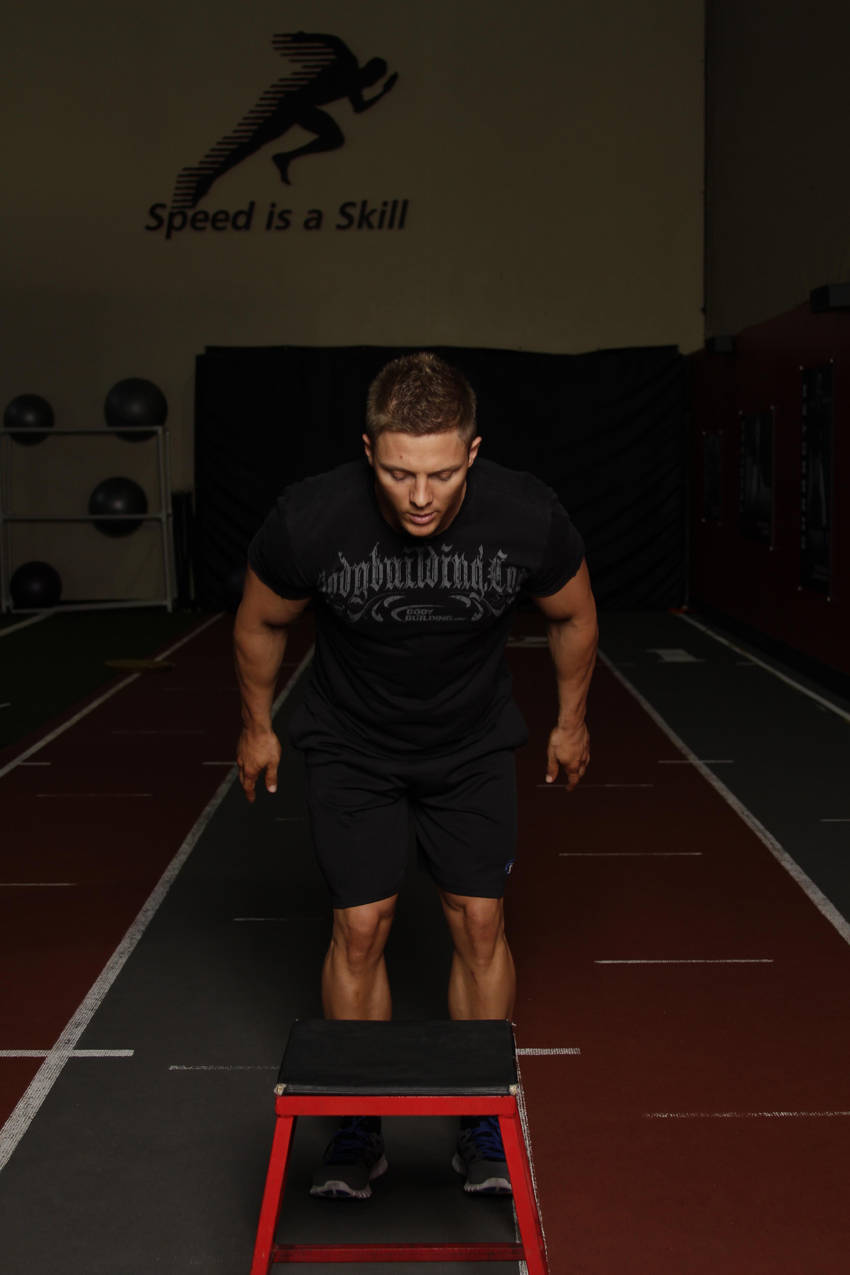
Box Skip produces higher peak forces and greater motor unit recruitment per rep, and when paired with progressive overload (higher box height, weighted vests) it better stimulates muscle growth. Use rep ranges of 6–12 for loaded box variations to maximize hypertrophic stimulus.
Box Skip trains explosive hip extension and force transfer through the kinetic chain, improving functional strength. Progress by increasing box height or adding load; emphasize full hip extension and controlled landings with 2–3 second deceleration windows.
The assisted stretch teaches hip positioning and isolates the glutes with minimal coordination demands, making it safe for new exercisers. Hold 30–60 seconds and focus on breathing and gentle active end-range contractions before advancing to dynamic work.
Requires only a band and floor space, so it's ideal for home use or limited-equipment days. It also serves well as a warm-up or recovery tool between heavier compound movements.
Frequently Asked Questions
Can I do both Assisted Lying Glutes Stretch and Box Skip in the same workout?
Yes — perform the assisted stretch as a mobility and priming tool (2–4 sets of 30–60s) before box skips to improve hip range and muscle readiness. Finish with box skips for power or conditioning, ensuring adequate rest between plyo sets (60–120s).
Which exercise is better for beginners?
Assisted Lying Glutes Stretch is better for beginners because it isolates the glutes with minimal coordination and low impact. Once you master hip control and breathing, progress to compound drills like box steps and lower-height skips.
How do the muscle activation patterns differ?
The assisted stretch emphasizes passive and isometric loading at longer muscle lengths, improving length-tension behavior, while box skips produce brief, high-amplitude concentric and eccentric bursts during push-off and landing, recruiting fast-twitch motor units and higher ground reaction forces.
Can Box Skip replace Assisted Lying Glutes Stretch?
Not entirely — box skips can substitute for strength and power goals but won’t replicate the controlled end-range loading and mobility benefits of the assisted stretch. If your priority is mobility or rehab, keep the assisted stretch; use box skips for power and progression.
Expert Verdict
Use the Assisted Lying Glutes Stretch when your goal is targeted activation, mobility, and safe low-load work — ideal for beginners, rehab, or adding end-range tension (hold 30–60 seconds, 2–4 sets per side). Choose Box Skip when you want to build power, whole-leg strength, and higher-intensity muscle stimulus; progress in 2–4 inch increments and aim for 3–5 sets of 6–12 explosive reps or 20+ low-intensity skips for conditioning. Pairing both is effective: use the stretch to improve hip range and motor control, then load compound work like box skips to drive strength and muscle growth.
Also Compare
More comparisons with Assisted Lying Glutes Stretch
Compare More Exercises
Use our free comparison tool to analyze any two exercises head-to-head.
Compare Exercises