

Assisted Lying Glutes Stretch vs Tire Flip: Complete Comparison Guide
Assisted Lying Glutes Stretch vs Tire Flip — you're comparing two very different tools for the same target: the glutes. If you want clear guidance, I'll walk you through muscle activation, equipment needs, difficulty, rep ranges, and when to use each. You'll get technique cues, biomechanics explaining length-tension and force vectors, and practical examples: band-assisted holds (30–60s) vs heavy compound sets (3–8 reps). Read on to decide which fits your program for mobility, single-joint isolation, or high-force compound work.
Exercise Comparison
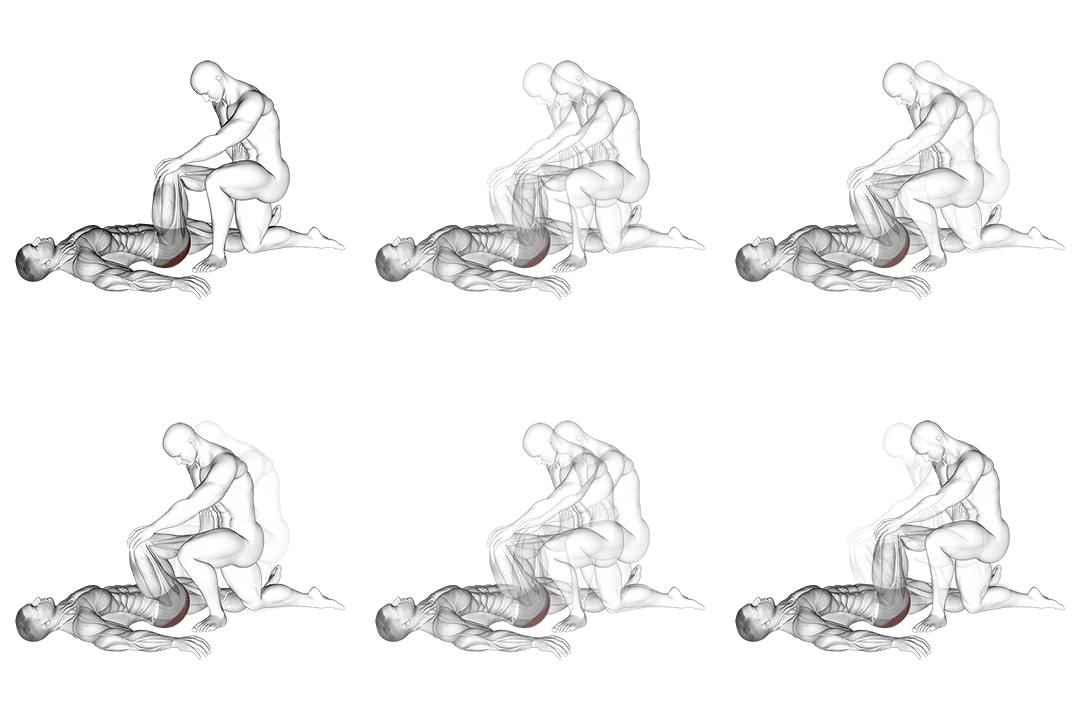
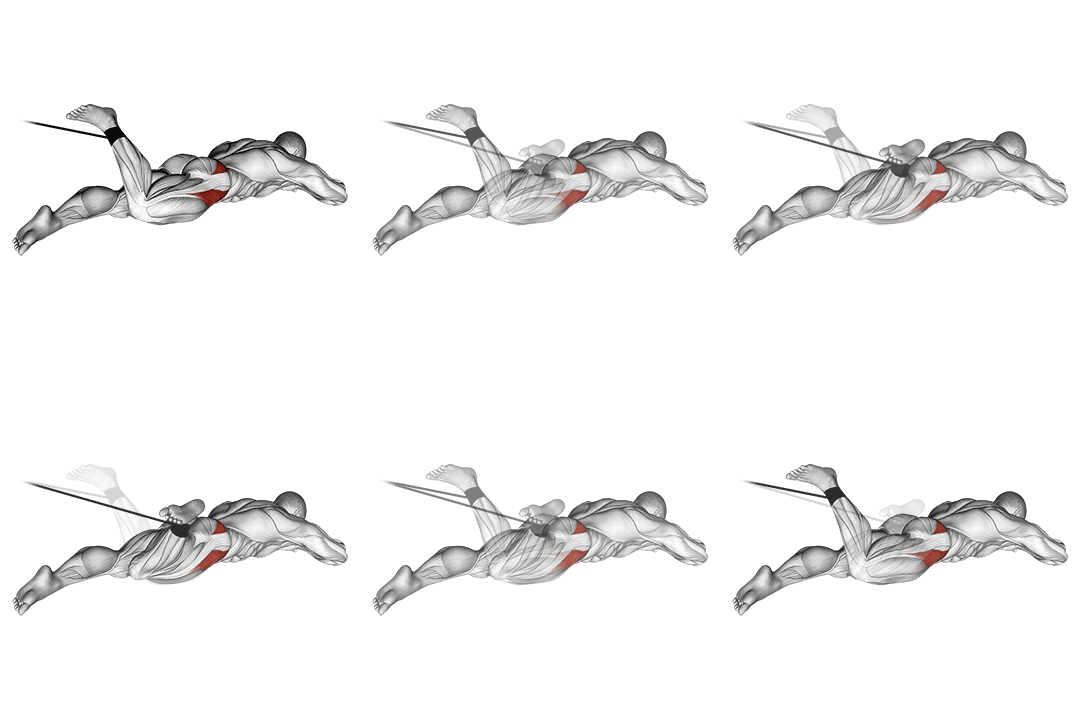
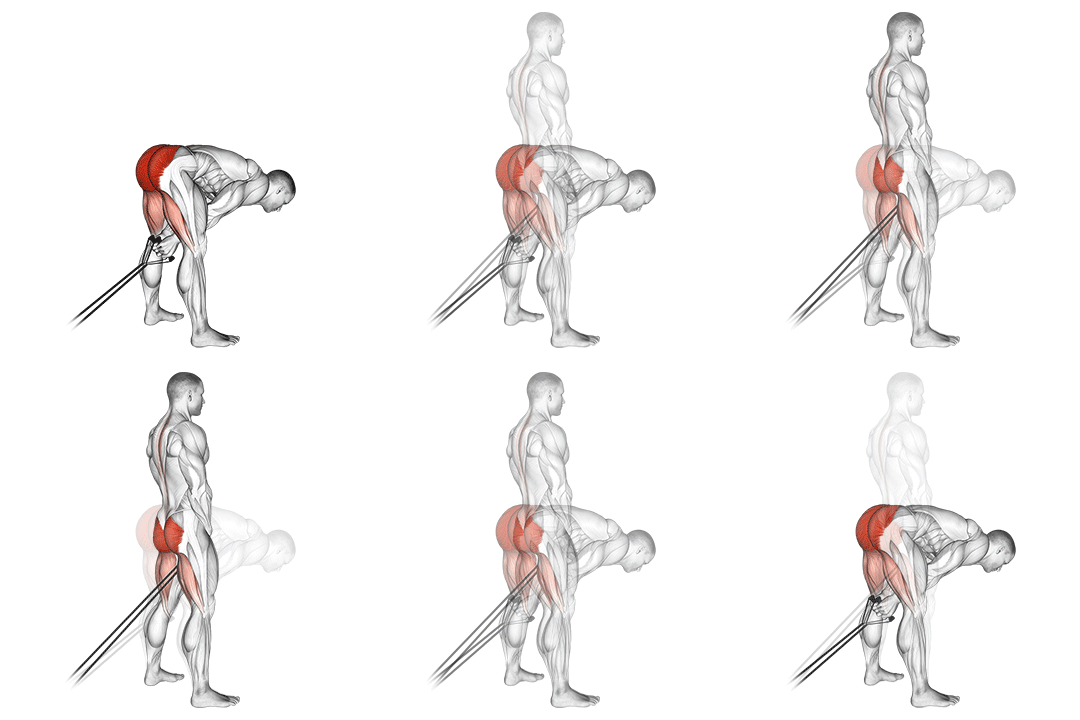
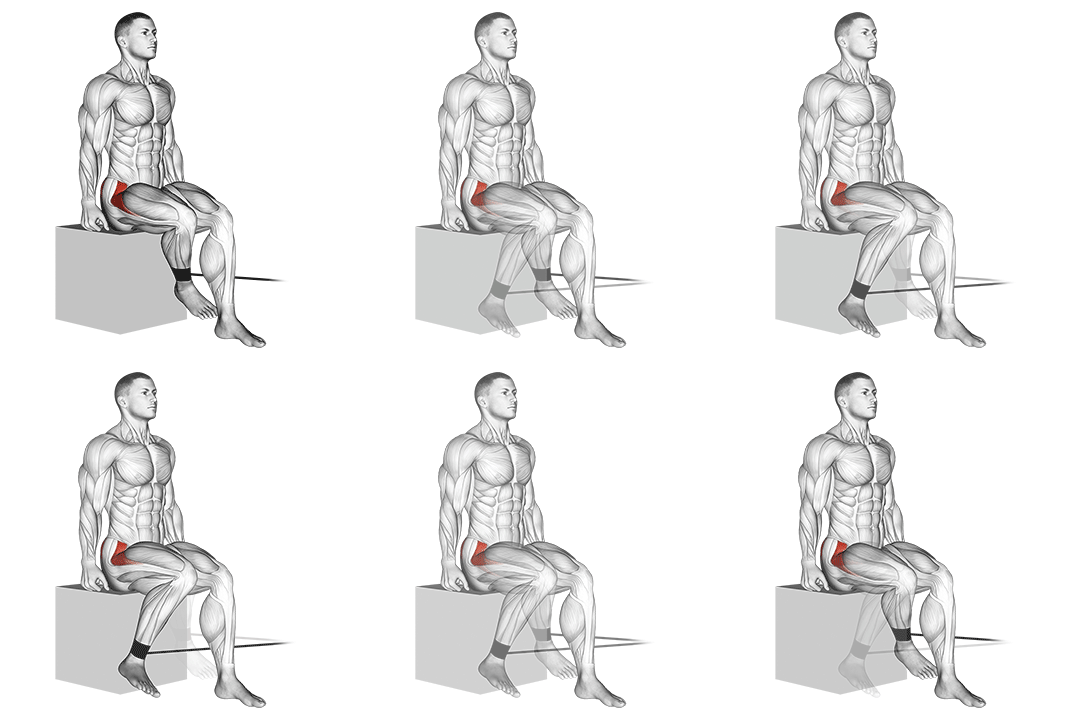
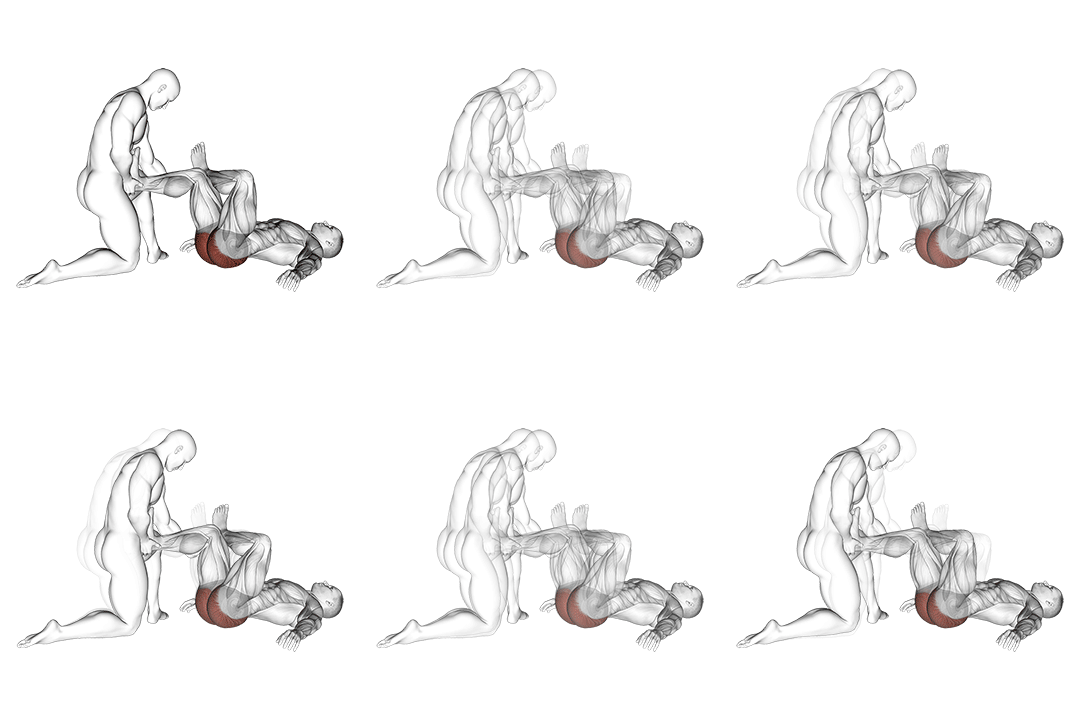
Assisted Lying Glutes Stretch
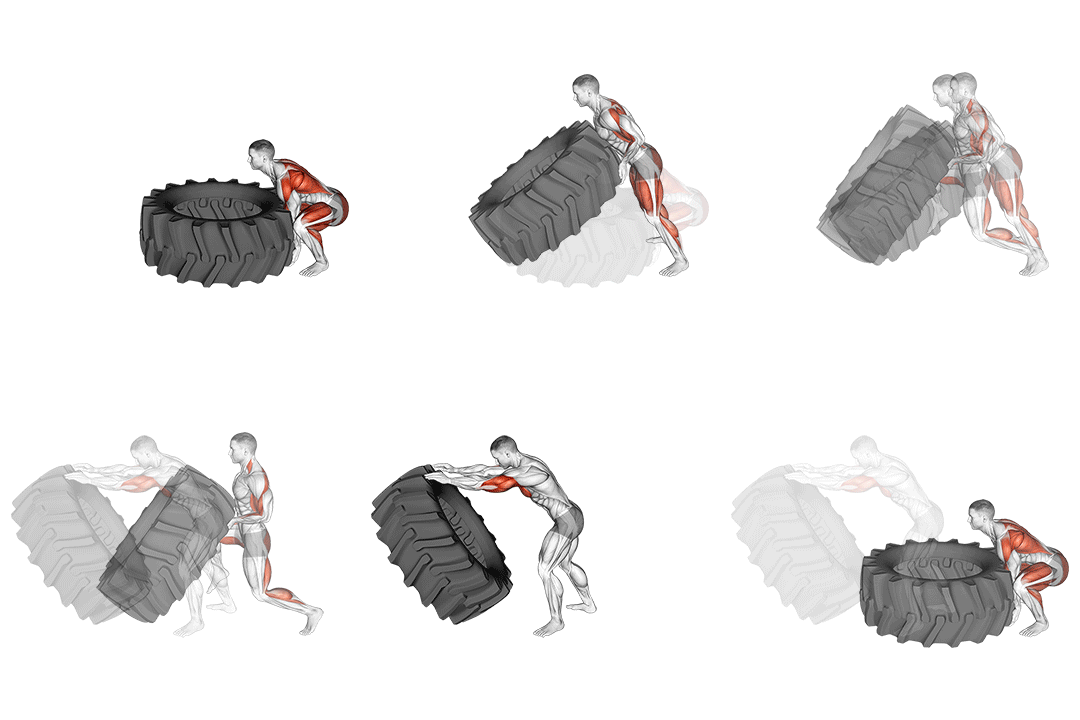
Tire Flip
Head-to-Head Comparison
| Attribute | Assisted Lying Glutes Stretch | Tire Flip |
|---|---|---|
| Target Muscle |
Glutes
|
Glutes
|
| Body Part |
Upper-legs
|
Upper-legs
|
| Equipment |
Band
|
Other
|
| Difficulty |
Beginner
|
Advanced
|
| Movement Type |
Isolation
|
Compound
|
| Secondary Muscles |
1
|
3
|
Secondary Muscles Activated
Assisted Lying Glutes Stretch
Tire Flip
Visual Comparison
Overview
Assisted Lying Glutes Stretch vs Tire Flip — you're comparing two very different tools for the same target: the glutes. If you want clear guidance, I'll walk you through muscle activation, equipment needs, difficulty, rep ranges, and when to use each. You'll get technique cues, biomechanics explaining length-tension and force vectors, and practical examples: band-assisted holds (30–60s) vs heavy compound sets (3–8 reps). Read on to decide which fits your program for mobility, single-joint isolation, or high-force compound work.
Key Differences
- Equipment differs: Assisted Lying Glutes Stretch uses Band, while Tire Flip requires Other.
- Assisted Lying Glutes Stretch is an isolation exercise, while Tire Flip is a compound movement.
- Difficulty levels differ: Assisted Lying Glutes Stretch is beginner, while Tire Flip is advanced.
Pros & Cons
Assisted Lying Glutes Stretch
+ Pros
- Directly targets glute length-tension in a safe, low-load position
- Requires minimal equipment and space (band and mat)
- Excellent for mobility, recovery, and prehab—holds 30–60s improve range
- Beginner-friendly with low injury risk and simple cues
− Cons
- Limited capacity for heavy progressive overload for hypertrophy
- Primarily passive or low-intensity active loading (10–30% MVIC)
- Less carryover to high-force, athletic triple-extension movements
Tire Flip
+ Pros
- Produces high concentric and eccentric glute force for strength
- Engages hamstrings, quadriceps, and core for full-body transfer
- Easy to progressively overload by using heavier tires or more reps
- Mimics functional triple-extension useful for athletes
− Cons
- Requires specialized equipment and space
- Higher technical demand and greater injury risk without coaching
- Not practical for home or small gyms and poor for isolated mobility work
When Each Exercise Wins
Tire flips allow heavy, high-tension concentric work and repeatable progressive overload (3–8 reps at high load or 6–12 reps for metabolic stress). The greater peak forces and eccentric control stimulate more muscle fiber recruitment necessary for muscle growth.
Tire flips train force production through a full hip extension in a loaded, functional pattern and can be progressed by increasing load or intensity, offering clear overload pathways for maximal strength improvements.
The assisted stretch teaches glute engagement and hip mobility with minimal risk. It uses simple positioning and low load, making it ideal for learning activation and reducing compensatory lumbar or quad dominance.
Bands are cheap and portable, and the stretch needs only a mat. Tire flips demand heavy equipment and space, so the banded stretch is the practical choice for home programming.
Frequently Asked Questions
Can I do both Assisted Lying Glutes Stretch and Tire Flip in the same workout?
Yes. Use the Assisted Lying Glutes Stretch as a primer or mobility drill—30–60s holds—to activate glutes before heavy tire flip sets. Doing the stretch first improves neuromuscular connection, then perform tire flips for 3–5 heavy sets to capitalize on activation.
Which exercise is better for beginners?
Assisted Lying Glutes Stretch is better for beginners because it teaches hip control and glute engagement with low load and low injury risk. Begin with banded activation and progress to standing or loaded patterns once technique and core stability improve.
How do the muscle activation patterns differ?
The assisted stretch emphasizes prolonged isometric and low-velocity tension at a lengthened muscle position, recruiting glute medius and upper glute max more. The tire flip drives high concentric and eccentric activation across glute max, hamstrings, quads, and core during triple extension and deceleration.
Can Tire Flip replace Assisted Lying Glutes Stretch?
Not entirely. Tire flips can replace the heavy, compound overload role but they don't provide the same end-range length-tension, mobility, or low-risk activation that the assisted stretch offers. Keep the stretch for prehab, mobility, and activation even if you perform tire flips.
Expert Verdict
Use the Assisted Lying Glutes Stretch when your goal is improved hip mobility, targeted glute activation, or low-risk accessory work—think warm-ups, prehab, and correcting motor patterns. Hold 30–60 seconds, keep the opposite hip down, and progress band tension or add short isometric pulses. Choose the Tire Flip when you need heavy, compound overload for strength and functional power. Program tire flips for 3–8 reps, focus on an aggressive hip hinge, neutral spine, and brace the core. For balanced training, pair the two: use banded stretches to prime glutes and tire flips to apply high force and drive progress.
Also Compare
More comparisons with Assisted Lying Glutes Stretch
Compare More Exercises
Use our free comparison tool to analyze any two exercises head-to-head.
Compare Exercises