

Band Bent-over Hip Extension vs Tire Flip: Complete Comparison Guide
Band Bent-over Hip Extension vs Tire Flip — you’re choosing between a focused glute isolation move and a full-body compound lift. I’ll walk you through how each targets the glutes, how they load the hamstrings, quads, and core, and which fits your goals, space, and experience. You’ll get clear technique cues, recommended rep ranges (8–15 for hypertrophy, 3–6 for strength), biomechanical notes on hip angle and force vectors, plus practical recommendations so you can pick the right exercise or combine them effectively.
Exercise Comparison
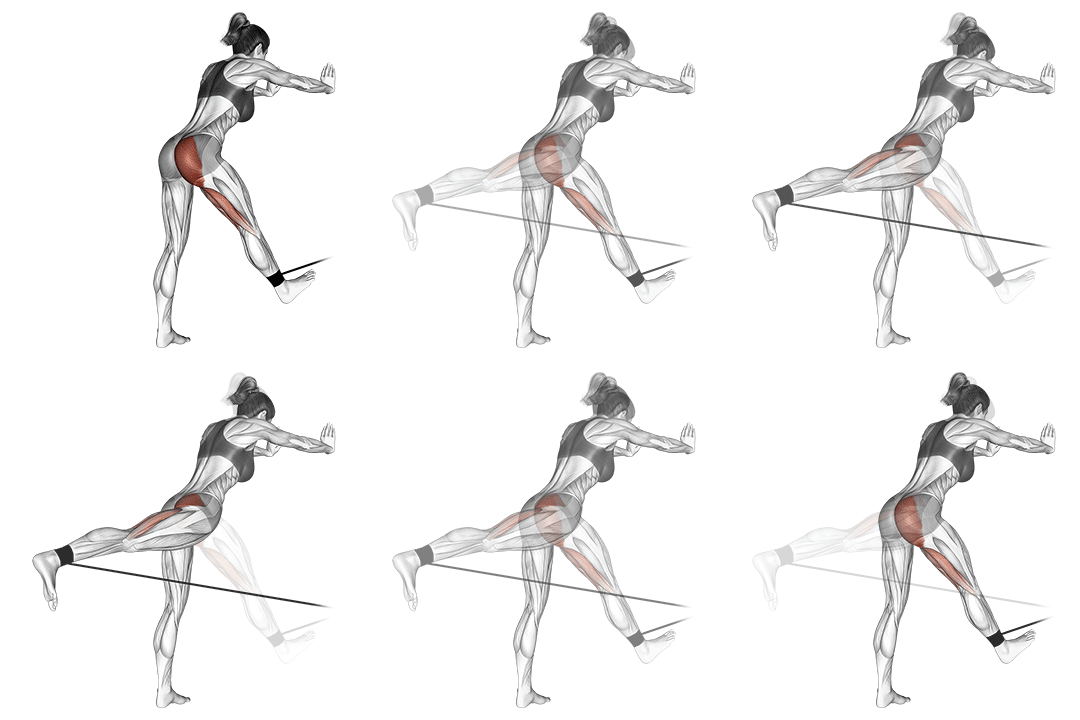
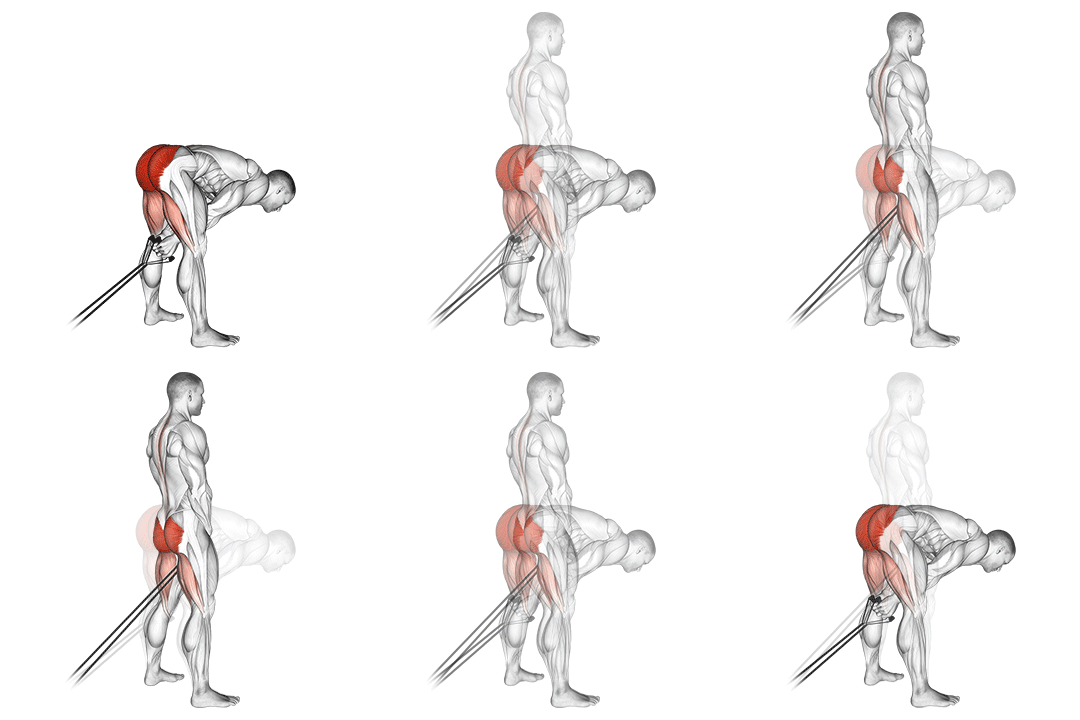
Band Bent-over Hip Extension
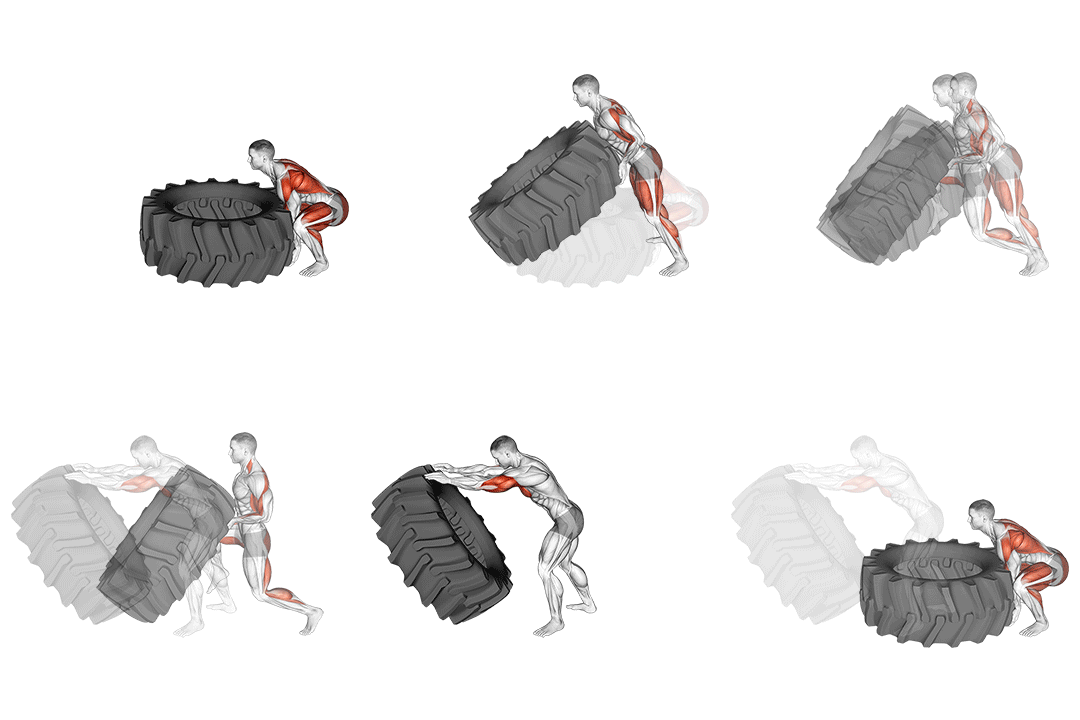
Tire Flip
Head-to-Head Comparison
| Attribute | Band Bent-over Hip Extension | Tire Flip |
|---|---|---|
| Target Muscle |
Glutes
|
Glutes
|
| Body Part |
Upper-legs
|
Upper-legs
|
| Equipment |
Band
|
Other
|
| Difficulty |
Beginner
|
Advanced
|
| Movement Type |
Isolation
|
Compound
|
| Secondary Muscles |
2
|
3
|
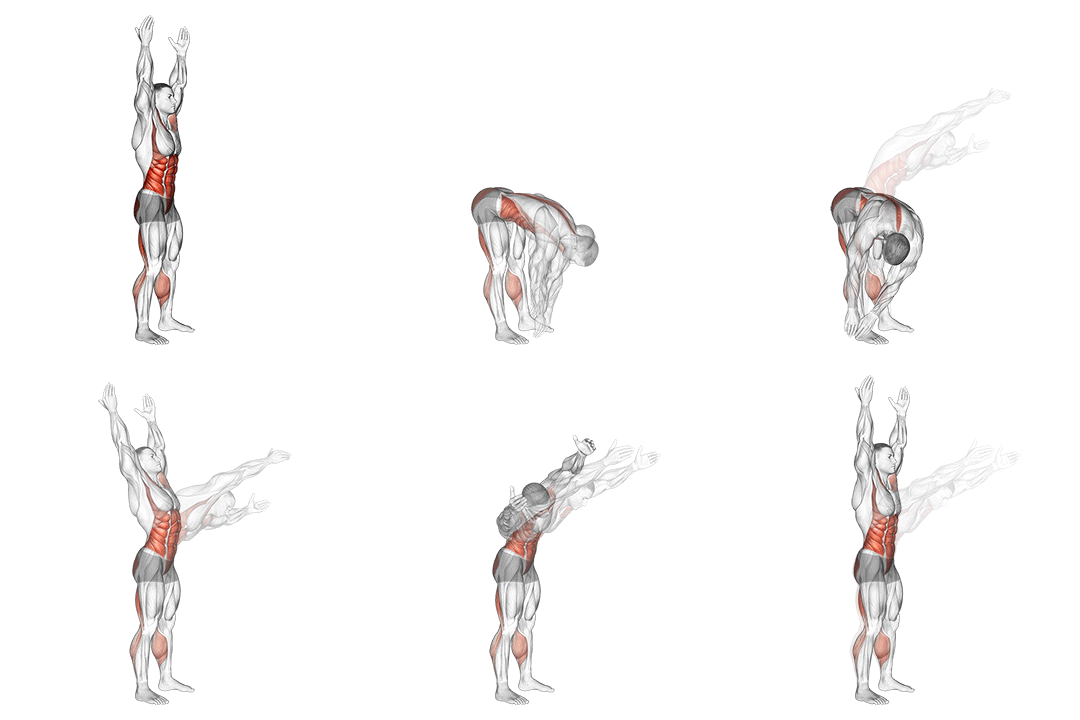
Secondary Muscles Activated
Band Bent-over Hip Extension
Tire Flip
Visual Comparison
Overview
Band Bent-over Hip Extension vs Tire Flip — you’re choosing between a focused glute isolation move and a full-body compound lift. I’ll walk you through how each targets the glutes, how they load the hamstrings, quads, and core, and which fits your goals, space, and experience. You’ll get clear technique cues, recommended rep ranges (8–15 for hypertrophy, 3–6 for strength), biomechanical notes on hip angle and force vectors, plus practical recommendations so you can pick the right exercise or combine them effectively.
Key Differences
- Equipment differs: Band Bent-over Hip Extension uses Band, while Tire Flip requires Other.
- Band Bent-over Hip Extension is an isolation exercise, while Tire Flip is a compound movement.
- Difficulty levels differ: Band Bent-over Hip Extension is beginner, while Tire Flip is advanced.
Pros & Cons
Band Bent-over Hip Extension
+ Pros
- Direct glute isolation for targeted hypertrophy and posterior chain balance
- Low equipment cost, portable, and usable in small spaces
- Easy to scale with tempo, band thickness, and rep ranges (12–20 reps for pump)
- Low-impact option with controlled eccentric and concentric phases
− Cons
- Limited maximal overload compared to heavy compound lifts
- Less quad and core recruitment, so weaker carryover to maximal force tasks
- Band tension curve can be inconsistent; requires good setup and angle to hit glutes
Tire Flip
+ Pros
- High total-body force and power production improves strength carryover
- Superior for low-rep strength and explosive training (1–6 rep effort or timed sets)
- Engages quads, hamstrings, glutes, and core together, improving functional strength
- Allows progressive overload by increasing tire mass
− Cons
- Requires specialized equipment and ample space
- Higher technical demand and greater injury risk if form fails
- Not practical for high-volume hypertrophy sessions focused solely on the glutes
When Each Exercise Wins
Isolation under controlled tension lets you target the gluteus maximus with higher time-under-tension (12–20 reps per set) and precise hip-angle loading. That focused stimulus is better for localized muscle growth than a short, maximal-effort tire flip.
Tire flips demand high peak force and full-body coordination, enabling heavier absolute loads and low-rep strength work (3–6 reps). The triple-extension pattern translates to improved raw force production and power.
Simpler hinge mechanics, lower technical demand, and lower injury risk make band extensions ideal for novices learning to load hip extension and build baseline glute strength.
Bands are cheap, portable, and require minimal space and setup. You can get effective glute training at home with progressive band tension and tempo work.
Frequently Asked Questions
Can I do both Band Bent-over Hip Extension and Tire Flip in the same workout?
Yes. Start with tire flips or heavy compound work when energy and neural drive are highest (low reps, 3–6), then follow with band bent-over hip extensions for 3–4 sets of 12–20 reps to accumulate hypertrophy-specific volume and refine hip extension mechanics.
Which exercise is better for beginners?
Band Bent-over Hip Extension is better for beginners because it isolates hip extension with low external load and simple hinge cues. It helps you learn glute activation and posterior chain control before progressing to complex, heavy lifts like the tire flip.
How do the muscle activation patterns differ?
Band extensions emphasize sustained glute contraction near terminal hip extension with increasing band tension (length-tension effect), while tire flips create brief, high-peak concentric power during triple extension and greater co-activation of quads and core for force transmission.
Can Tire Flip replace Band Bent-over Hip Extension?
Not entirely. Tire flips build strength and power but don’t provide the same isolated, high time-under-tension stimulus for glute hypertrophy. If your goal is targeted muscle growth or rehabilitation, keep band work in the program alongside heavy compound flips.
Expert Verdict
Use the Band Bent-over Hip Extension when your goal is targeted glute development, corrective work, or accessible home training. It gives precise control over hip extension mechanics, maximizes time-under-tension, and minimizes injury risk when you maintain a 30–45° hinge and neutral spine. Choose the Tire Flip when you need to build maximal strength, power, and full-body coordination — perform heavy 1–6 rep efforts or short, explosive sets to overload the posterior chain and quads. For most programs, combine both: use bands for volume and positional control, and add periodic tire flips (or equivalent heavy compound lifts) for force and power.
Also Compare
More comparisons with Band Bent-over Hip Extension
Compare More Exercises
Use our free comparison tool to analyze any two exercises head-to-head.
Compare Exercises