

Assisted Lying Gluteus And Piriformis Stretch vs Box Skip: Complete Comparison Guide
Assisted Lying Gluteus And Piriformis Stretch vs Box Skip — you’re comparing a mobility-focused isolation move with a multi-joint plyometric. In this guide you’ll get clear technique cues, biomechanics-based comparisons, and practical recommendations for strength, muscle growth, mobility, and programming. I’ll cover primary and secondary muscle activation, equipment needs, difficulty and injury risk, plus when to pick each exercise in your workouts.
Exercise Comparison
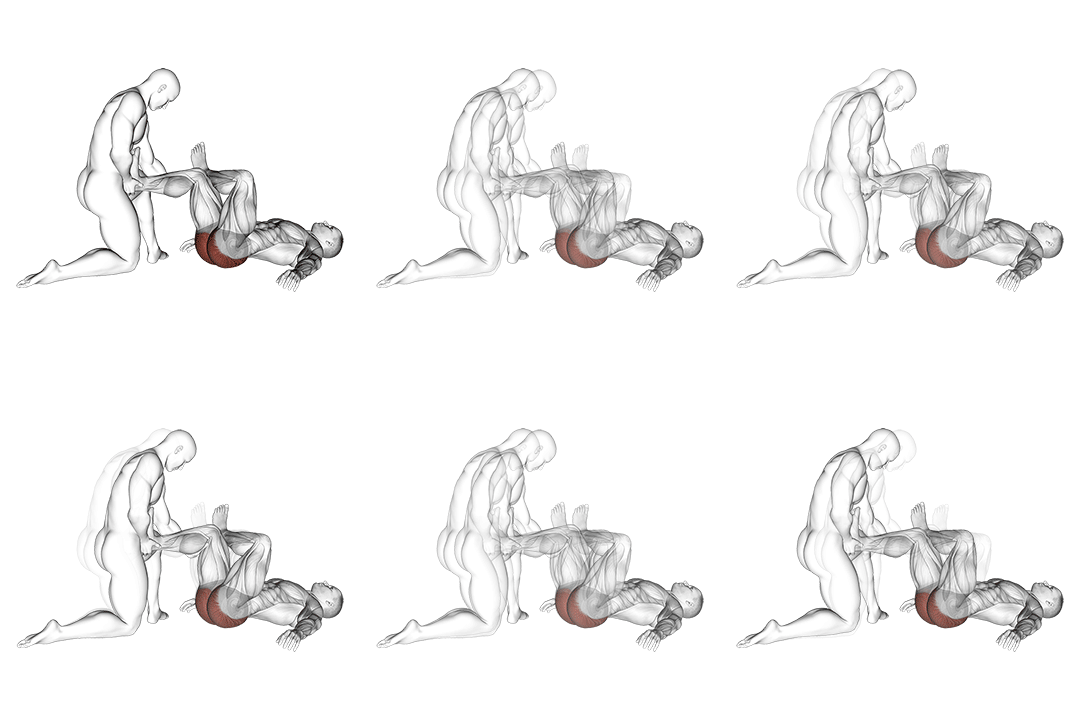
Assisted Lying Gluteus And Piriformis Stretch
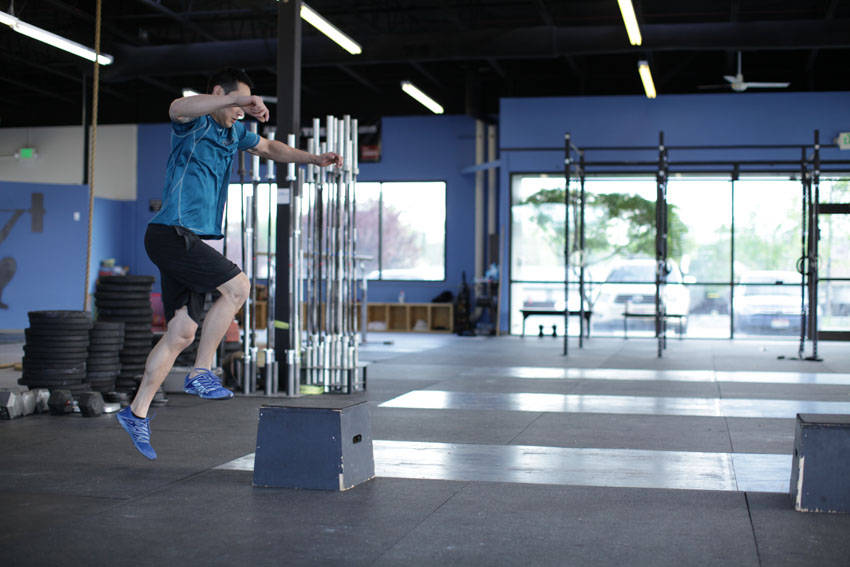
Box Skip
Head-to-Head Comparison
| Attribute | Assisted Lying Gluteus And Piriformis Stretch | Box Skip |
|---|---|---|
| Target Muscle |
Glutes
|
Glutes
|
| Body Part |
Upper-legs
|
Upper-legs
|
| Equipment |
Other
|
Other
|
| Difficulty |
Beginner
|
Intermediate
|
| Movement Type |
Isolation
|
Compound
|
| Secondary Muscles |
1
|
5
|
Secondary Muscles Activated
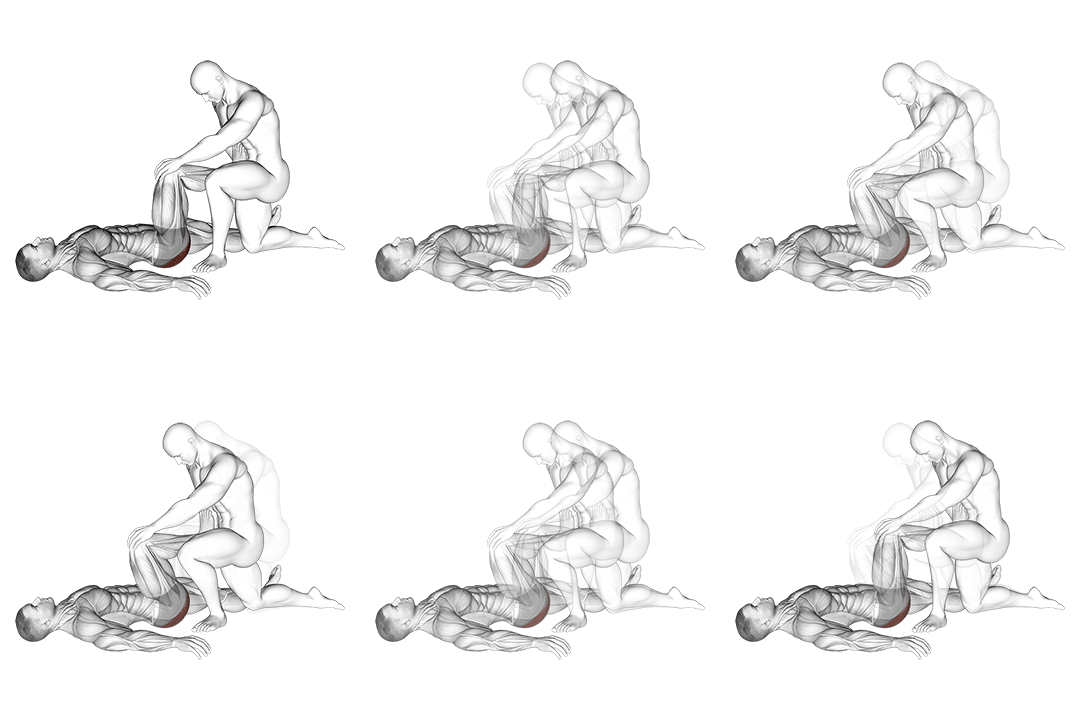
Assisted Lying Gluteus And Piriformis Stretch
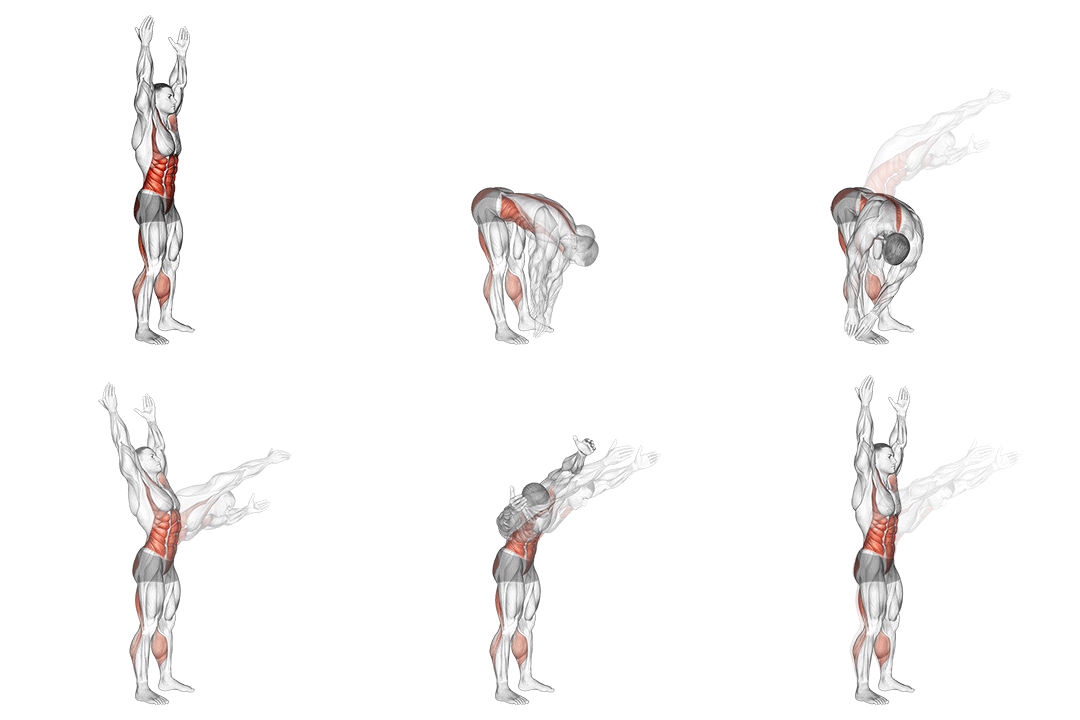
Box Skip
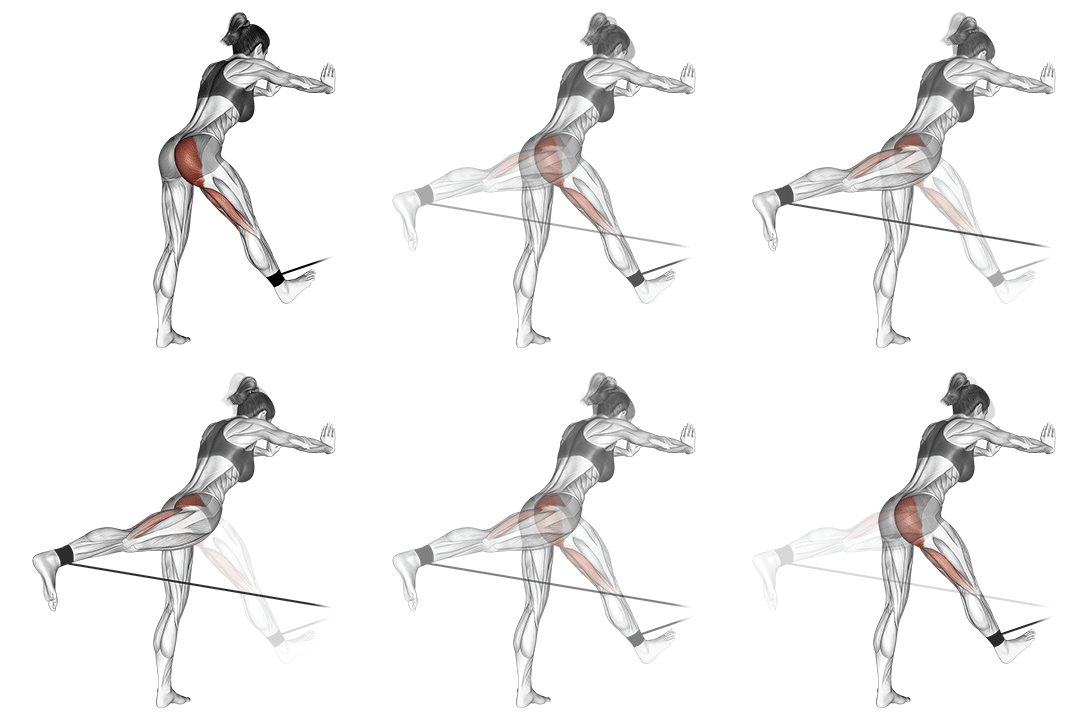
Visual Comparison
Overview
Assisted Lying Gluteus And Piriformis Stretch vs Box Skip — you’re comparing a mobility-focused isolation move with a multi-joint plyometric. In this guide you’ll get clear technique cues, biomechanics-based comparisons, and practical recommendations for strength, muscle growth, mobility, and programming. I’ll cover primary and secondary muscle activation, equipment needs, difficulty and injury risk, plus when to pick each exercise in your workouts.
Key Differences
- Assisted Lying Gluteus And Piriformis Stretch is an isolation exercise, while Box Skip is a compound movement.
- Difficulty levels differ: Assisted Lying Gluteus And Piriformis Stretch is beginner, while Box Skip is intermediate.
- Both exercises target the Glutes using Other. The main differences are in their movement patterns and muscle activation angles.
Pros & Cons
Assisted Lying Gluteus And Piriformis Stretch
+ Pros
- Improves hip external rotation and piriformis mobility
- Requires minimal equipment and space
- Low-impact with very low acute injury risk when performed correctly
- Effective for reducing neural tension and improving ROM when held 30–90 seconds
− Cons
- Does not provide substantial concentric overload for muscle growth
- Limited progression for strength and power gains
- If over-pulled, can irritate the piriformis or lumbar area
Box Skip
+ Pros
- Provides high gluteus maximus activation through explosive triple extension
- Builds power and integrated lower-body strength
- Engages quadriceps, calves, and frontal-plane stabilizers for full-leg development
- Scalable by box height, volume, and added load
− Cons
- Higher technical demand and injury risk if landing mechanics are poor
- Requires a sturdy box and safe space
- Can be taxing on joints—needs careful volume management
When Each Exercise Wins
Box Skip repeatedly loads the gluteus maximus concentrically and eccentrically and recruits fast-twitch fibers, producing a stronger hypertrophic stimulus. Use sets of 3–6 and reps of 6–12 or integrate weighted variations to drive progressive overload.
Box Skip trains powerful hip extension and landing deceleration, transferring to strength and rate-of-force development. Pair with lower-rep plyometric or loaded compound work and progressive box heights (12–24 inches) to increase force output.
The stretch is beginner-friendly, teaches hip anatomy and mobility, and carries low injury risk. Start with 2–3 holds per side of 30–60 seconds to improve range before adding dynamic drills.
It needs only a mat or towel and can be done in small spaces without a box or special footwear. Use it as part of a mobility or warm-up routine when equipment is limited.
Frequently Asked Questions
Can I do both Assisted Lying Gluteus And Piriformis Stretch and Box Skip in the same workout?
Yes. Use the Assisted Lying stretch as part of your warm-up or cool-down to improve hip range and reduce neural tension, and perform Box Skips later when your muscles are warmed up. Keep stretch holds to 30–60 seconds and perform plyometrics when you’re neurologically fresh.
Which exercise is better for beginners?
For absolute beginners the Assisted Lying Gluteus And Piriformis Stretch is better because it’s low-risk and teaches hip positioning. Start there and add simple plyometrics or low box jumps once you master movement quality.
How do the muscle activation patterns differ?
The stretch emphasizes passive lengthening and low-level isometric activation of glute medius/minimus and piriformis at ~90° hip flexion and external rotation. Box Skip uses rapid concentric hip extension and eccentric braking, engaging gluteus maximus and quads at much higher activation levels.
Can Box Skip replace Assisted Lying Gluteus And Piriformis Stretch?
No, not fully. Box Skip replaces strength and power demands but won’t reliably improve specific external rotation mobility or reduce piriformis neural tension. If mobility or pain relief is a goal, keep the assisted stretch in your routine.
Expert Verdict
Use Assisted Lying Gluteus And Piriformis Stretch when your priority is hip mobility, pain reduction, or prehab—hold 30–90 seconds per side, 2–4 reps, and focus on neutral lumbar position and relaxed breathing. Choose Box Skip when you want high glute activation, power, and compound lower-body work: progress box height gradually (start 12 inches), aim for 3–6 sets of 6–12 reps, and emphasize soft, knee-aligned landings. Be decisive: pick the stretch for mobility and recovery, pick the box skip for strength, power, and integrated muscle development, and program both strategically—stretching and mobility work before or after plyometrics enhances range and reduces injury risk.
Also Compare
More comparisons with Assisted Lying Gluteus And Piriformis Stretch
Compare More Exercises
Use our free comparison tool to analyze any two exercises head-to-head.
Compare Exercises